
Custom Cleaning Brush
Bakery Mold Cleaning Brush
Food-grade bakery mold cleaning brush with PBT or nylon filaments for mold cavities, perforated trays and embossed baking surfaces.
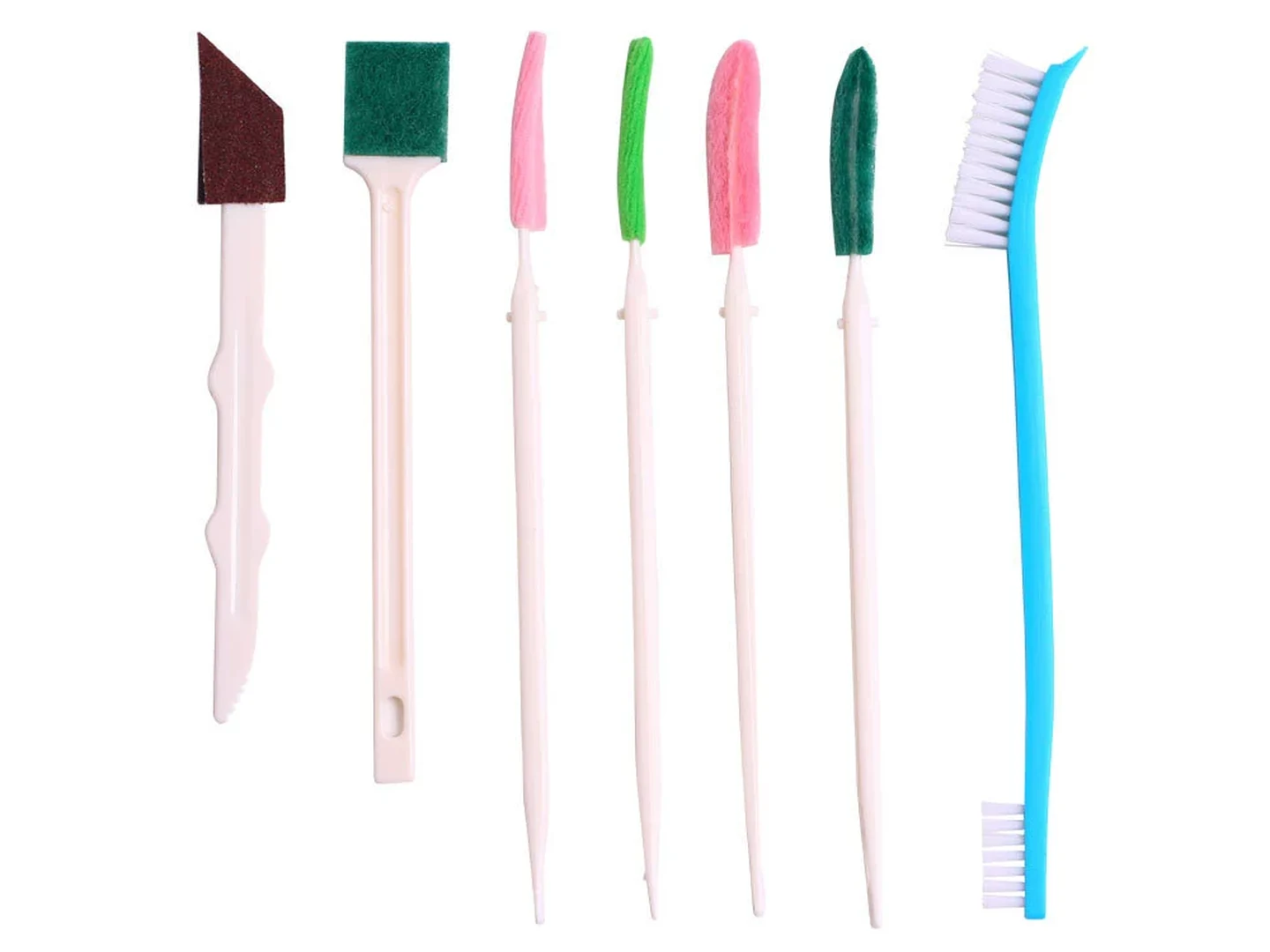
Medium brush
100 pcs
Minimum order
Worked with two hands or on a pole: chimney, gutter and pond-filter brushes, discs, cups and tank brushes.
Production lead time, once the specification is confirmed
- Up to 100 pcsWithin 7 days
- 101–5,000 pcsWithin 14 days
- 5,001–50,000 pcsWithin 21 days
- Over 50,000 pcsConfirmed with your quotation
Peak season can extend these times; the shipping date is confirmed in writing with your quotation. Sampling and shipping are quoted separately.
A food-processing filament brush engineered to clean baking mold cavities, pan decks, perforated trays and embossed baking surfaces. PBT and Nylon PA filament options remove flour, dough film, egg wash and baked-on sugars while protecting plated and non-stick mold finishes.
What can this brush do for you?
Reaches corners, grooves and embossed detail with one brush
Angled head profiles, shortened corner tufts and tapered end tufts let the same brush work the flat deck of a muffin mold, the undercut around each cavity, and recessed lettering or logos. The filament ends flex into the feature rather than skipping over it, which reduces the hand-finishing work that slows down changeovers and wash stations.
Removes baked-on egg wash and sugar films without scratching coated molds
The working contact is the cut end of a resilient PBT or nylon filament, not a metal strand. That makes it possible to break caramelized glaze, dried egg wash and dough film from tin-plated, anodized or non-stick surfaces without the scoring and exposed-metal damage a wire brush creates. Finer diameters in the 0.15–0.25 mm range are selected when surface protection is the first priority.
Holds stiffness through hot water and detergent cycles
PBT filament absorbs very little moisture, so the bristles keep their flex recovery and scrubbing pressure after repeated hot washdowns and alkaline detergent exposure. That means the brush does not turn limp halfway through a cleaning shift and does not need to be replaced because of water softening.
Clears perforations instead of packing them
Perforated baguette trays, bun pans and baking screens collect hardened dough and caramelized sugar inside the hole pattern. A perforation pick or narrow, end-tufted tip is sized to the hole diameter and pitch so the filaments enter the holes, dislodge the plug, and release it on the next rinse.
Drains and rinses clean between production runs
Open-back block designs and controlled filament spacing let loosened flour, crumbs and wash water leave the brush instead of lodging under a riveted strip or inside a sealed cavity. The brush becomes easier to inspect and faster to return to a clean, dry state at the end of the shift.
What is a Bakery Mold Cleaning Brush?
A Bakery Mold Cleaning Brush is a filament-filled cleaning tool configured for the specific contact surfaces of baking molds, loaf pans, bun pans, perforated trays and similar bakery tooling. It works as a hand-guided tool at wash stations, as a stationary tank brush inside mold washers, or as a roller brush on automated tray-cleaning lines.
In use, the operator or machine passes the brush across the mold surface. The filament ends do the actual work: they reach into cavities, follow perforation geometry, sweep across the pan deck, and release attached soil before the rinse or wash step. The brush is normally used wet with warm water and bakery detergent, but it can also be used dry to knock loose flour and crumbs from a tray before changeover.
This product is not a wire brush and is not intended to be a substitute for soaking, steaming or high-pressure washing when heavy carbonized deposits are present. It is the tool that handles the residue water spray alone cannot remove, particularly inside the details and perforations where a cloth or scraper cannot reach.
The brush should be treated as part of the food-contact environment. That means selecting food-contact-suitable resin grades, keeping the brush dedicated to the line or allergen zone, and replacing it before filament loss becomes a contamination risk.
Technical Specifications
The values below are standard design ranges for this product; final dimensions and materials are confirmed against the customer’s mold drawing, wash temperature and cleaning chemistry.
| Parameter | Standard / Options |
|---|---|
| Brush form | Hand brush, tank brush, roller brush or detail brush, selected from the mold and cleaning-line configuration |
| Filament material | PBT (standard), Nylon PA 6 or PA 6/6, PP for low-temperature applications |
| Filament diameter | 0.15–0.50 mm; finer for coated molds and detail, heavier for uncoated metal and heavy residue |
| Trim length | 15–40 mm; shorter trim near nose/edge for corner and perforation access |
| Head width | 50–150 mm, matched to cavity pitch or tray width |
| Overall length | 200–400 mm, adjusted for reach and operator clearance |
| Head profile | Rectangular, angled, tapered nose, end tufts, groove profile or mold-matched contour |
| Handle / block material | PP, HDPE or 304 stainless steel; selected for wash temperature and detergent chemistry |
| Bristle density | Standard, dense or open fill; dense for wiping film, open for debris release and drainage |
| Operating temperature | PBT: up to approx. 140°C intermittent wash exposure; PA: up to approx. 120°C continuous use; final rating per process conditions |
| Chemical exposure | Compatible with common bakery detergents and alkaline wash solutions; resin grade selected for the customer’s specific chemistry |
| Back / base design | Open-back drainage slots or solid block where extra stiffness is required |
| Brush type | Custom Roller and Conveyor Brushes |
| How it is driven | Machine-driven, mounted in the equipment |
| Cleaning target | cupcake and financier mold, baguette and loaf pan, and perforated baking sheet and screen cleaning |
| Surface or part | molds, pans, trays, cavities, holes, perforated trays, corners, and sheets |
| Residue or debris | mold, dough, sugar, flour, glaze, crumbs, carbonized deposits, and pitch |
| Mounting / connection | Fixed |
Where does this brush work best?
- Muffin, cupcake and financier molds: angled head and end tufts clean the corner between the cup and the top deck, the most common catch point for egg wash and sugar.
- Baguette and loaf pans with perforations: perforation pick or narrow tip clears baked dough plugs from the hole pattern while the side rows brush ribbed surfaces.
- Perforated baking sheets and screens: opening-sized tufts remove caramelized glaze and oil-carbon from hundreds of small holes without damaging the sheet coating.
- Embossed or lettered mold bottoms: fine PBT filaments clean recessed logos and batch codes on pan bases where heavier brushes smear residue instead of removing it.
- Cookie depositor plates and forming dies: dough pressed into cutout features is removed between flavor, color or product changes before it hardens.
- Sheet pans and bun pans after egg wash and glazing: broad medium-trim heads sweep deck areas in manual or automated wash stations.
How do I choose the right one?
Map the geometry before you specify the brush
Start with cavity depth, corner radius, perforation diameter and pitch, embossed depth, and the distance the operator’s hand can safely reach. If the brush head cannot enter the smallest feature, no amount of pressure will make it work. A mold with tight corners and fine detail usually points to a tapered nose with a shorter trim and a denser end tuft; a flat pan deck usually points to a wider head and medium trim.
Match filament material and diameter to the surface and residue
| Mold surface / residue | Suggested configuration |
|---|---|
| Coated non-stick, tin-plated or polished molds with sugar film, egg wash, light dough residue | PBT 0.15–0.25 mm, medium trim, medium density |
| Uncoated aluminum or steel molds with heavy baked-on sugar/oil | PBT or PA 0.30–0.50 mm, shorter firm trim, denser fill |
| Perforated trays with dried dough in holes | End-tufted tip sized to hole, PBT 0.20–0.30 mm, tapered profile |
| Embossed logos and shallow lettering | Fine PBT 0.15–0.20 mm, narrow tapered nose |
Finer filament protects the surface but removes residue more slowly. Heavier filament cleans faster but creates more contact pressure on coatings. When there is any doubt about coating hardness, test the brush in a worn mold or on the back of the tray before full-line use.
Select brush form for how cleaning happens
Choose a hand brush for operator-accessible wash stations and changeover cleaning; add a longer handle where the mold is deep or the operator must clear a guard. Choose a tank brush where the mold is cleaned by passing a stationary brush; choose a roller brush where the tray line is conveyorized and the brush must rotate against the product surface continuously.
When this brush is not the right tool
Do not select a filament brush as a replacement for a wire brush when the deposit is hard carbonized scale and the mold is uncoated and metal contamination is managed; use a wire brush or scraper only when the surface and process allow it. For very tight blind holes smaller than the filament tuft can enter without forcing, use a molded silicone detail pick, steam, ultrasonic cleaning or an approved scraper. If several different allergens run on the same line, use color-coded dedicated brushes rather than sharing one brush across zones.
Can I customize this brush?
This brush is configured to the mold, not sold only as a fixed stock item. Send the mold or tray drawing, the cavity and perforation dimensions, the residue type, wash temperature, cleaning chemicals, and whether cleaning is manual or automated. Photographs of dirty molds and the current cleaning station make the configuration review faster.
Adjustable elements include:
- Head geometry — width, length, angle, taper, curved contour, multi-level trim, groove profile or a head shaped to a specific cavity pattern.
- Filament — PBT, PA 6, PA 6/6 or PP; diameter from 0.15 to 0.50 mm; trim length, density, stiffness and filament color; fine tip shaping for perforations and embossed detail.
- Handle and block — straight, angled or ergonomic handle; PP, HDPE or 304 stainless steel; fixed head or replaceable head; hanging hole for wash-station storage.
- Mounting and interface — threaded handle, quick-release head, roller core diameter, shaft and bearing journals for automated lines, stationary bracket or tank-mount dimensions.
- Color and marking — color-coded filament or handle by allergen, zone or production line; laser marking or pad printing for identification.
- Packaging — bulk, individually bagged, labeled case packs or line-specific packing.
For projects that require food-contact material declarations, documentation, inspection records or third-party testing against your bakery cleaning specification, provide the requirements during customization and we will support them as part of the project.
Which filament survives the cleaning and still lasts on a bakery mold cleaning brush?
How can I tell whether the filament diameter will damage my non-stick mold?
Start with PBT 0.15–0.25 mm at medium trim and test it on a worn or scrap mold. Brush a small area, wipe the surface with a clean white cloth, and inspect under angled light. Visible coating removal, bright metal exposure or quickly bent filament tips mean you should drop to a finer diameter or lower pressure. If the residue moves easily and the surface shows no change, the configuration is safe for broader use.
Can the brush be used on molds that are still warm from the oven?
Let the mold cool below the filament’s rated continuous-use temperature before brushing. PBT handles many hot-wash conditions, but direct contact with surfaces above about 140°C can soften or permanently deform the filament ends. Warm molds often release sugar and egg wash more easily, but only within the temperature range the filament is selected for.
What should I check on the brush itself during routine use?
After each use, rinse the head with hot water and detergent, remove any trapped dough or crumb, and hang it to dry. Inspect for bent or flattened filaments, loose tufts, cracks in the block, or embedded foreign material. Replace the brush as soon as you see filament loss or permanent flex set, because a damaged brush can become a foreign-material source in food-contact production.
Does brushing replace the wash or sanitizing step?
No. Brushing loosens attached soil and reaches detail areas, but the loosened material must still be rinsed away by water or wash chemistry, and any required sanitizing step remains separate. Use the brush as part of the cleaning sequence, not as the entire sequence.
What if my tray has holes smaller than the filament tufts can enter?
Do not force a standard trim into small holes; the filaments will splay and fold, leaving residue behind. Specify a perforation pick or detail tip with a tuft size matched to the hole diameter. If the holes are too small for any filament to enter without forcing, switch to a molded detail tool, steam, or ultrasonic cleaning for that feature.
When is a filament brush the wrong choice for bakery mold cleaning?
If the mold has hard carbonized or mineral scale that a pre-soak or steam step should remove, start with those steps and use the brush afterward. If cross-contact between allergens is the main concern, use dedicated color-coded brushes rather than sharing one brush. If the only acceptable tool is a metal-free non-scratch device and the current brush cannot be confirmed as safe for the coating, do not proceed until testing confirms otherwise.
Guides that go deeper on this
Custom Manufacturing RFQ
Describe Your Application
An accurate custom quote starts with the dimensions, working surface, residue, material choice, connection, quantity, and reference files.
Drawing or photo optional — it speeds things up, it does not gate the enquiry.
Custom Brush RFQ
Send Your Brush Project
Upload a drawing, product photo, or sample photo and provide the core dimensions and cleaning conditions.
“We need a brush to remove wet residue from a stainless steel conveyor, about 800mm wide. The current brush wears quickly. We can send photos.”
“We sell drinkware and need a cleaning brush to include with the product. Quantity around 5,000 pieces.”