
Custom Cleaning Brush
Beryllium Copper Brush
Non-sparking beryllium copper wire brushes for rust, scale, and paint removal in flammable, explosive, and magnetic-sensitive environments.
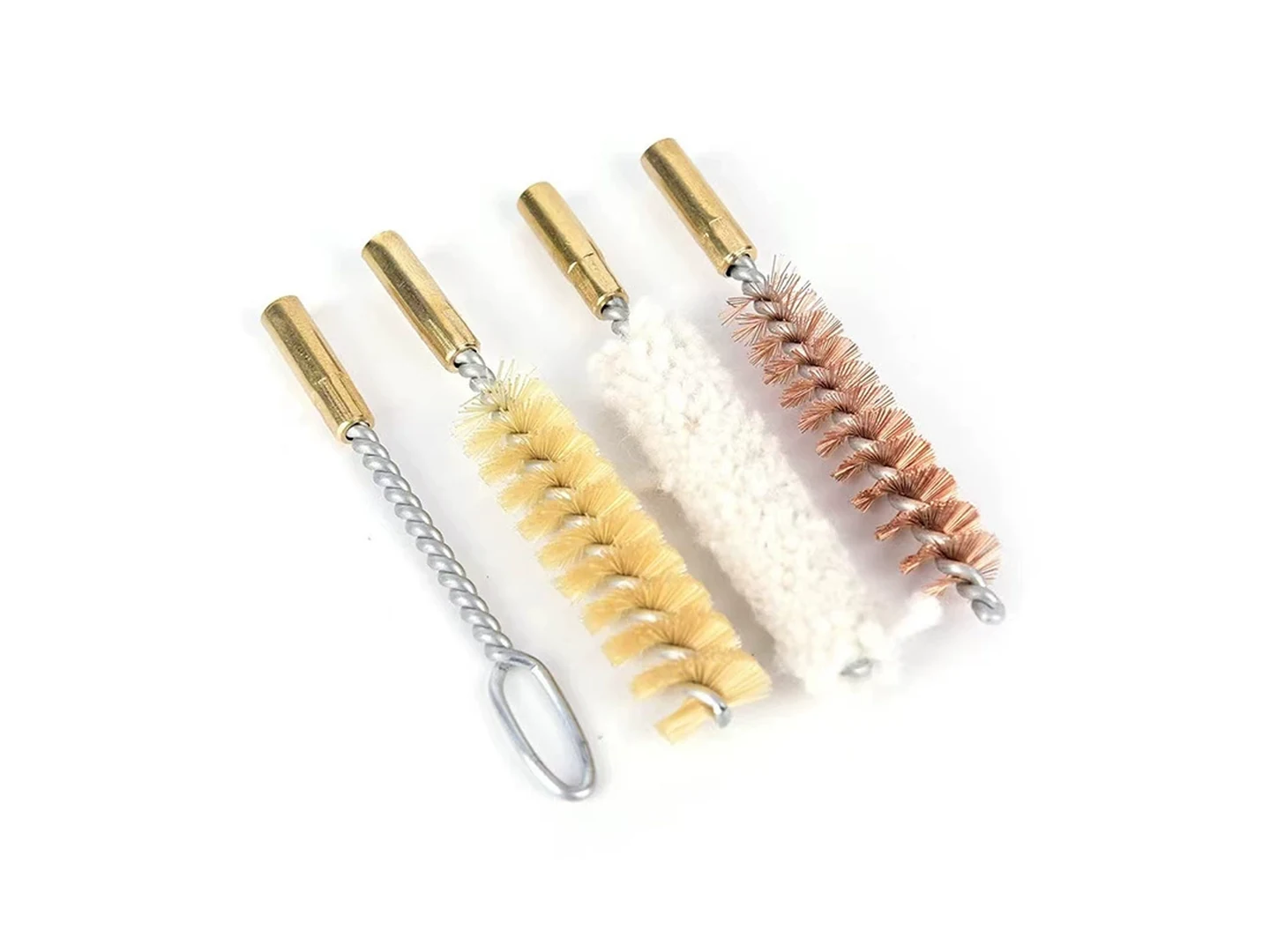
Medium brush
100 pcs
Minimum order
Worked with two hands or on a pole: chimney, gutter and pond-filter brushes, discs, cups and tank brushes.
Production lead time, once the specification is confirmed
- Up to 100 pcsWithin 7 days
- 101–5,000 pcsWithin 14 days
- 5,001–50,000 pcsWithin 21 days
- Over 50,000 pcsConfirmed with your quotation
Peak season can extend these times; the shipping date is confirmed in writing with your quotation. Sampling and shipping are quoted separately.
A non-sparking, non-magnetic wire brush with beryllium copper alloy fill for removing rust, oxide, scale, paint, and corrosion products from metal equipment, fasteners, valves, and work surfaces in flammable, explosive, or magnetically sensitive environments. Hand, end, cup, and wheel brush forms are available, each with fill and mounting selected for the specific access and residue condition.
What can this brush do for you?
Reduce ignition risk where steel brushes are not allowed
Beryllium copper wire has a much lower sparking tendency than carbon steel when the tips strike a metal surface. In petrochemical plants, grain handling, mining, fuel transfer, and similar hazardous areas, this lowers the chance that routine rust or paint removal becomes an ignition source. The brush still cuts through oxide, light scale, and coating residue, so the cleaning job does not stop just because a ferrous brush is prohibited.
Leave no ferrous contamination behind
Steel wire brushes shed fine steel particles that can embed in stainless steel, aluminum, or coated surfaces and later rust. Beryllium copper is non-magnetic and will not deposit ferrous debris. That matters on passivated stainless weldments, aircraft aluminum, electronics enclosures, instruments, and any surface where an embedded iron particle would create a corrosion site or interfere with a magnetic inspection.
Harder and longer-wearing than brass
Brass wire brushes are soft and wear quickly on scale, dried paint, and corrosion products. Beryllium copper keeps copper’s non-sparking character while adding enough hardness to remove heavier residue with fewer passes. It lasts longer than brass under the same hand or power brushing conditions, yet remains far less aggressive than carbon steel wire of the same diameter.
Resist corrosion on the brush itself
The fill does not rust in humid, marine, or chemical-washdown environments. There is no red rust staining on the workpiece or the maintenance bench, and the brush storage life is not shortened by ordinary moisture exposure. The block, hub, and handle materials are still selected to match the environment, but the working wire remains corrosion-resistant.
Cover hand and power cleaning with one material
Hand brushes clean flat surfaces, narrow gaps, bolt heads, and small parts. Wheel brushes follow weld seams and grooves. Cup brushes cover large flat areas and plate edges. End brushes reach internal bores, threaded holes, and pipe ends. When the whole maintenance procedure must stay non-sparking and non-magnetic, the same beryllium copper fill extends across the tool kit.
What is a Beryllium Copper Brush?
A Beryllium Copper Brush is an industrial cleaning and surface preparation brush whose working fill is beryllium copper alloy wire instead of carbon steel, stainless steel, or brass. The alloy combines copper’s low sparking tendency and non-magnetic behavior with the hardening effect of a small beryllium addition. The result is a wire that is strong enough for practical rust, oxide, scale, and paint removal while avoiding the two main objections to ferrous wire brushes: ignition risk in hazardous atmospheres and ferrous particle contamination on the workpiece.
The brush is normally selected when a maintenance or surface finishing procedure would otherwise use a wire brush, but a standard carbon steel brush is either prohibited by the site hazard classification or unacceptable because the part must remain free of magnetic or rust-forming debris. During use, the wire tips strike, scrape, and lift corrosion products and coating residue by mechanical action. Hand forms are operator-guided; powered forms mount on drills or grinders and must be run within the rated speed specified for the specific brush, not a generic steel-wire range.
No brush removes every ignition risk. The brush must be matched to the atmosphere and work permit, and all associated mounting hardware, handles, and adapters must also be non-sparking where the procedure requires it. Wire brushing always creates fine metal particles, so ventilation, dust control, and personal protection should be part of the work plan.
Technical Specifications
The table below shows typical standard ranges for common configurations. Final dimensions, wire construction, and mounting are confirmed per SKU and can be adjusted for the project.
| Parameter | Value / Options |
|---|---|
| Brush type | Hand brush, wheel brush, cup brush, end brush, selected per application |
| Fill material | Beryllium copper alloy wire, typically C17200; non-sparking, low magnetic permeability |
| Wire diameter | 0.15–0.50 mm (0.006–0.020 in), selected by form; thinner for light oxide, thicker for scale and paint |
| Wire construction | Crimped, knotted, or straight; crimped for general cleaning, knotted for heavier residue and longer life |
| Hand brush dimensions | Overall length 250–300 mm; block width 30–50 mm; trim length 25–40 mm |
| Wheel brush dimensions | Diameter 100–200 mm; face width 15–30 mm; arbor hole 16–32 mm |
| Cup brush dimensions | Diameter 75–125 mm; threaded or arbor mount per tool |
| End brush dimensions | Diameter 15–50 mm; shank 6 mm (1/4 in) round |
| Handle / body | Hardwood, high-density plastic, or copper alloy construction; no exposed ferrous hardware on hand brushes |
| Operating speed | Powered forms have a manufacturer-rated maximum RPM and mounting; do not substitute generic steel-wire speed ratings |
| Environment | Suitable for humid, marine, and chemical-washdown use; fill does not rust |
| How it is driven | Machine-driven, mounted in the equipment |
| Cleaning target | fuel storage operation, combustible dust industry, and mining and underground service cleaning |
| Surface or part | valves, metal, thread, pipes, aluminum, carbon steel, hubs, and holes |
| Residue or debris | rust, corrosion, oxide, scale, paint, particles, coating residue, and dust |
| Mounting / connection | Threaded Removable / Arbor-Hole Mount |
Where does this brush work best?
- Petrochemical, refinery, and fuel storage operations: cleaning valve bodies, flange faces, pipe threads, bolt heads, and hand tools where flammable vapor may be present.
- Combustible dust industries: grain elevators, flour mills, feed plants, sugar processing, woodworking, and coal handling; removing rust and oxidized deposits from conveyors, mixers, gates, and maintenance components.
- Mining and underground service: non-sparking hand and end brushes for equipment that may encounter methane or coal dust.
- Marine and offshore: corrosion removal on non-ferrous deck fittings, fuel system components, and pump internals without rust-contaminating brush debris.
- Aerospace and avionics: cleaning aluminum structure, electrical enclosures, connectors, and non-magnetic tool zones where ferrous particle contamination is restricted.
- Electronics, MRI, and munitions facilities: removing light oxide and coating residue without introducing magnetic particles or sparking risk.
How do I choose the right one?
Match the brush form to the surface and access
Hand brushes suit flat surfaces, narrow gaps, bolt heads, and small parts. End brushes reach internal bores, threaded holes, pipe ends, and cavities. Cup brushes cover large flat areas, corners, and plate edges. Wheel brushes follow grooves, weld seams, and long linear passes. Start by identifying what the operator must reach, not just what needs to be cleaned.
Select wire diameter and construction for residue aggressiveness
Thinner crimped wire in the 0.15–0.25 mm range removes light oxidation, thin paint, and surface film. Medium 0.25–0.35 mm wire handles general rust and paint. Thicker knotted wire in the 0.35–0.50 mm range is used for scale, heavy corrosion, and weld preparation. Beryllium copper is less aggressive than carbon steel at the same wire size, so choose a coarser fill or plan multiple passes if a steel brush would have been the previous choice.
| Condition | Recommended beryllium copper configuration |
|---|---|
| Light rust or oxide on flat surface | Hand brush, 0.20–0.25 mm crimped wire |
| Heavy rust, scale, or weld prep | Wheel brush, 0.35–0.50 mm knotted wire |
| Internal threads or pipe ends | End brush, 0.15–0.30 mm wire |
| Large flat areas and corners | Cup brush, 0.30–0.40 mm crimped or knotted wire |
| Strictly non-magnetic area | Confirm alloy lot and use non-magnetic handle, hub, and adapter; no ferrous hardware |
| Wet or chemical exposure | Beryllium copper fill with corrosion-resistant block or hub; no steel core |
Verify tool mounting and speed
For powered forms, the arbor diameter, thread size, or shank must match the tool. The maximum RPM is specified for the brush construction and diameter, not copied from a comparable steel wire wheel. Exceeding it can cause wire breakage, balance loss, or hub failure. Non-sparking mounting hardware should be used wherever the work procedure requires it.
Confirm non-sparking and non-magnetic requirements
Beryllium copper has a low sparking tendency and low magnetic permeability, but it cannot be declared incapable of producing a spark under every condition. Validate the selected form, mounting, and operating speed against the site’s hazardous-area classification and permit requirements. If the application has a strict zero-magnetic-contamination specification, request alloy traceability and confirm that handle, hub, and adapter materials meet the same requirement.
Consider surface preservation
Beryllium copper avoids ferrous embedment, but copper smears can still remain on stainless steel. If the surface is passivation-sensitive, use a dedicated brush for the alloy, clean the surface after brushing, and confirm that copper contamination limits in the material specification are acceptable.
When another brush may fit better
For thick mill scale, burned-on carbon, or very rapid stock removal, a carbon steel brush is faster where the atmosphere permits it, and an aluminum bronze non-sparking brush offers harder fill for stubborn residues. For highly polished or soft surfaces, brass or nylon may be gentler. For passages too small for a standard end brush, a tube brush with a smaller core is the better choice.
Can I customize this brush?
Beryllium copper brushes are specified around the work environment and part geometry, not selected from fixed stock dimensions. To define the right configuration, we will need the part or surface to be cleaned, access dimensions, residue type, cleaning chemical if any, temperature, tool RPM and arbor for powered forms, and the handle form for hand brushes.
We can adjust:
- Form and geometry: hand brush block size, trim length, overall length; wheel diameter, face width, arbor or thread; cup diameter, depth, thread; end brush diameter and shank.
- Fill: wire diameter, crimp or knot pattern, trim length, and fill density.
- Mounting: non-sparking adapter, copper alloy or brass hub, plastic or hardwood handle, non-ferrous shank.
- Handle and body: shape, material, length, grip, hanging hole, and identification marking.
- Color, marking, and packaging: custom color coding, pad or laser marking, bulk packing, or individual packaging for worksite issue.
If your project requires material traceability, beryllium content declaration, inspection documentation, or third-party testing for a hazardous-area procedure, we can support those requirements during project definition.
Which filament is safe on the surface a beryllium copper brush touches?
Is a beryllium copper brush completely non-sparking?
Beryllium copper has a very low sparking tendency compared with carbon steel, but no hand or power tool can be declared incapable of producing any spark in every condition. Treat it as one part of a controlled work procedure. Verify the brush form, mounting hardware, and operating speed against the site’s hazardous-area classification and permit requirements before use.
Can I use it to clean stainless steel without contaminating the surface?
It will not deposit ferrous particles, which is the usual concern with steel wire brushes. However, copper smears can remain on the surface. If the stainless part is passivation-sensitive, use a dedicated brush, clean the surface after brushing, and confirm that the applicable material specification accepts the residual copper level.
How often should I inspect or replace the brush?
Check before each shift for broken, bent, or matted wires, cracks in the block or hub, loose mounting, and uneven trim. Replace the brush when fill density drops enough to change contact pressure, when wires become work-hardened and brittle, or after any impact that deforms the hub, handle, or arbor.
Does wire brushing with beryllium copper create a dust hazard?
Any wire brushing generates fine metal particles, and beryllium-containing alloys require controlled handling. Use local exhaust or vacuum extraction where possible, wear appropriate respiratory and face protection, avoid high-speed dry operation outside controlled areas, and follow workplace exposure and waste-handling rules for beryllium copper fines.
What is the difference between this brush and a brass wire brush?
Beryllium copper is harder and more wear-resistant than brass, so it removes heavier rust and scale with fewer passes and lasts longer. Brass is softer and may be preferred for very soft surfaces. Both are non-ferrous and have a lower sparking tendency than carbon steel.
Can I use a beryllium copper wheel brush on any angle grinder?
No. The brush must match the grinder’s arbor or thread, and the grinder’s maximum speed must not exceed the brush’s rated RPM. Some non-sparking applications also require non-ferrous adapters and mounting nuts; using a steel adapter can reintroduce both the sparking risk and the ferrous contamination the brush was selected to avoid.
Guides that go deeper on this
How to Choose the Right Car Wheel Brush for Rust Removal
Read this guideGuideHow to Choose Wire Wheel Brush
Read this guideGuideAbrasive Nylon Grit and Filament Selection
Read this guideGuideBrush Speed, Engagement, and Heat
Read this guideGuideNon-Sparking Wire Brush: Brass, Bronze or Beryllium Copper?
Read this guideCustom Manufacturing RFQ
Describe Your Application
For an accurate quotation, please provide the main dimensions, material preference, working surface, residue, quantity, and a drawing or photo.
Drawing or photo optional — it speeds things up, it does not gate the enquiry.
Custom Brush RFQ
Send Your Brush Project
Upload a drawing, product photo, or sample photo and provide the core dimensions and cleaning conditions.
“We need a brush to remove wet residue from a stainless steel conveyor, about 800mm wide. The current brush wears quickly. We can send photos.”
“We sell drinkware and need a cleaning brush to include with the product. Quantity around 5,000 pieces.”