
Custom Cleaning Brush
Bottle Filling Line Brush
Custom bottle filling line brush for star wheels, guide rails, neck supports, and transfer points. PBT, PP, or nylon filaments with stainless steel core.
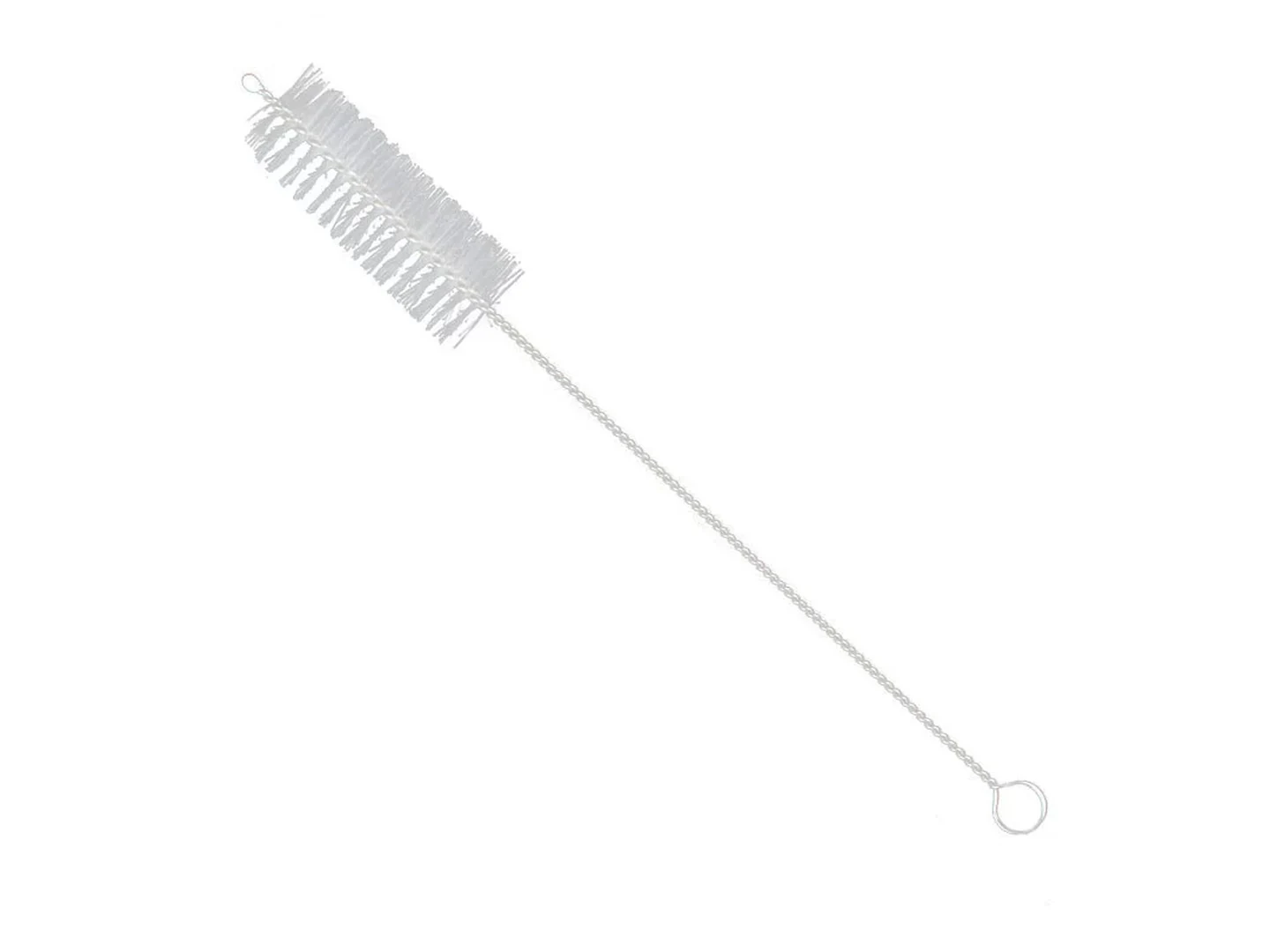
Small brush
500 pcs
Minimum order
Held in one hand: tube, bottle, detail and swab brushes — including long-handled ones with a small head.
Production lead time, once the specification is confirmed
- Up to 500 pcsWithin 7 days
- 501–50,000 pcsWithin 14 days
- Over 50,000 pcsWithin 21 days
Peak season can extend these times; the shipping date is confirmed in writing with your quotation. Sampling and shipping are quoted separately.
A hand-guided cleaning tool built for beverage filling lines that reaches into star wheels, guide rails, neck supports, and transfer points where product drips, syrup, label fibers, and cap dust collect. Interchangeable head forms, filament materials, and stainless steel cores let you match the brush to the exact gaps and residues on your line.
What can this brush do for you?
Reaches the narrow gaps that CIP and spray systems miss
Star wheels, guides, and transfer points contain tight channels where product residue builds up and regular washdown cannot fully penetrate. The head profiles of this brush — cylindrical, tapered, and tufted-end — are sized to enter those gaps and mechanically loosen the buildup. That means fewer bottle jams, fewer label misalignments, and less risk of microbial growth in hidden spots.
Open filament construction washes clean instead of holding residue
A brush that traps syrup and fiber becomes a contamination source itself. This filling line brush uses open tuft spacing and filament engagement of 2–8 mm so loosened residue releases easily during rinsing. After use, you can flush the brush under water or detergent and it dries quickly, ready for the next sanitation cycle.
Filament and core materials built for washdown conditions
PBT, polypropylene, and nylon filaments each handle beverage washdown chemicals and hot water up to 85°C, while the stainless steel 304 core resists corrosion from repeated detergent exposure. PBT offers stiffness and chemical resistance, nylon adds abrasion resistance, and polypropylene provides a lower-cost option for lighter cleaning.
Head forms match the surface, not just the line
Flat guides, round pins, V-shaped channels, and polished sensor faces all need different contact geometry. Cylindrical heads clean bores and guide pins, tapered heads follow V-grooves, tufted-end heads scrub corners and end faces, and sponge or silicone heads protect polished rails and optical sensors from scratching.
Sized for operator reach without climbing on machinery
Overall lengths from 200 to 450 mm and working lengths from 120 to 300 mm let operators clean the far side of a star wheel or the underside of a turret while standing safely on the floor. A balanced handle reduces fatigue during long changeover cleanings.
What is a Bottle Filling Line Brush?
A Bottle Filling Line Brush is a manual cleaning tool used by beverage plant operators during changeovers, sanitation shifts, and troubleshooting. It is designed to remove residue from the mechanical components that guide bottles through the filling process: star wheels, feed screws, neck rails, conveyor side guides, transfer points, and the outer surfaces of filling nozzles.
Unlike a general-purpose bottle brush, this tool is configured for the geometry of filling line equipment. Its cleaning head may be cylindrical, tapered, tufted-end, sponge, or silicone, and its filament material is selected based on the residues present — syrup, product drips, label fibers, cap dust, and washdown residue. The core is typically stainless steel for stiffness and corrosion resistance, with an ergonomic handle for hand use.
The brush is used after production stops, before the next product run, or whenever visible residue appears on guide surfaces. It is a complement to CIP and automated cleaning, not a replacement. Where spray balls and jets cannot reach, the operator applies the brush with detergent or hot water to restore clean, residue-free transfer surfaces.
Technical Specifications
The table below shows the standard configuration ranges for the Bottle Filling Line Brush. All parameters can be adjusted to match your specific filling line equipment.
| Parameter | Standard Options / Range |
|---|---|
| Head diameter | 20–70 mm, selected to fit the widest gap or bore to be cleaned |
| Working length | 120–300 mm, the portion of the head that contacts the surface |
| Overall length | 200–450 mm, including handle, for reach and control |
| Filament diameter | 0.10–0.50 mm, chosen by residue type and surface sensitivity |
| Filament material | PBT, Polypropylene (PP), Nylon (PA); other materials available on request |
| Core / handle | Stainless steel 304 (standard); optional plastic handle or overmold grip |
| Head form | Cylindrical, tapered, tufted-end, sponge, silicone |
| Contact engagement | 2–8 mm; open filament spacing for residue release |
| Operating temperature | Washdown water or detergent solutions up to 85°C |
| Drainable construction | Open-back or spaced tufts to allow wash-through and fast drying |
| Brush type | Custom Handheld Detail Brushes |
| How it is driven | Hand-guided |
| Cleaning target | star wheel and feed screw, guide rail and neck support, and transfer point cleaning |
| Surface or part | star wheels, transfer points, necks, rails, gaps, guide rails, nozzles, and guides |
| Residue or debris | dust, syrup, fiber, cap dust, label fibers, product drips, filler, and beverage residue |
| Mounting / connection | Shaft-Mounted / Quick-Change Coupling |
For highly soiled areas, a higher filament density or stiffer material may be used. For delicate surfaces, sponge or silicone heads are recommended. All dimensions are customizable per project.
Where does this brush work best?
- Star wheels and feed screws at the filler inlet and outlet, where syrup and product drips accumulate in the pockets and cause bottles to jam or slip.
- Guide rails and neck supports on the filler turret, where dried beverage residue builds around the neck ring area and can affect bottle orientation.
- Transfer points between the rinser, filler, and capper, where label fibers and cap dust collect on dead plates and side transitions.
- Conveyor side guides and wear strips that carry sticky film, paper dust, and product mist along the bottle path.
- Filler nozzle exteriors and vent tube areas where product splashes dry onto surfaces and need gentle but thorough removal.
- Any flat or curved metal, plastic, or coated surface on the filling line that requires manual spot cleaning during sanitation or product changeover.
This brush is used in soft drink, juice, beer, bottled water, dairy, and other beverage plants where bottle handling equipment runs continuously and residue control is critical for quality and line efficiency.
How do I choose the right one?
Measure the gap or feature you need to clean
Start by measuring the width of the guide slot, the diameter of the bore, or the clearance between two components. The head diameter should be slightly smaller than the gap so the brush can enter, but large enough that the filaments make firm contact with both sides. A head that is too small will not scrub effectively; a head that is too large will bind or fold over.
Pick the filament material for the residue and chemistry
PBT is the best all-around choice for beverage lines because it resists most washdown chemicals, holds stiffness in hot water, and has good wear life. Nylon is better when the residue is abrasive, such as label fibers or cap dust. Polypropylene is lower in cost and sufficient for light syrup films, but softer and less chemical-resistant. If the brush will contact polished metal, anodized surfaces, or optical sensors, choose sponge or silicone instead of any filament.
Match the head form to the contact surface
Cylindrical heads work for round holes, guide pins, and bores. Tapered heads follow V-grooves and wedge-shaped gaps. Tufted-end heads reach into corners and across flat faces. Sponge or silicone heads are for no-scratch cleaning of sensors, glass, or delicate coatings.
Choose filament diameter and density for the cleaning aggressiveness
Thin filaments (0.10–0.20 mm) are softer and better for light dust and film. Thicker filaments (0.30–0.50 mm) are stiffer and can scrub dried syrup or tougher residue. Open spacing lets debris wash through and prevents the brush from loading up; denser spacing provides more scrubbing action but requires more rinsing afterward.
Set handle length and core for operator access and safety
The overall length should let the operator reach the cleaning area without overreaching or climbing. The stainless steel core provides stiffness for pushing into gaps, but for very long reaches or awkward angles, a shorter, more rigid brush may be easier to control. Consider a hanging loop or color-coded handle for quick identification and storage.
When to use a different tool
If the residue is hard mineral scale, baked-on carbon, or rust, use a wire brush or abrasive pad. For cleaning the inside of filling nozzles or very narrow bore passages (below 20 mm), use a dedicated tube brush. For automated or continuous cleaning, a fixed brush assembly may be more suitable. This hand brush is for manual spot cleaning and changeover sanitation, not for aggressive mechanical descaling.
Can I customize this brush?
Yes. Bottle Filling Line Brushes are almost always made to order because filling line geometry varies from plant to plant. To define your custom configuration, we need the following information: the equipment type and location (star wheel, guide, transfer, etc.), the width and depth of the gap to be cleaned, the surface material (stainless, plastic, coated, sensor), the residue type, the washdown chemical and temperature, and the handle preference. A drawing or photo of the area helps us match the profile.
We can adjust:
- Head geometry — diameter, working length, profile (cylindrical, tapered, tufted-end, sponge, silicone), trim shape, and custom contours for specific guide shapes.
- Filament options — material (PBT, PP, PA, or others), diameter from 0.10 to 0.50 mm, stiffness, color coding by zone or product line, and tuft spacing.
- Core and handle — stainless steel 304 or 316, plastic rod, galvanized wire, or coated core; handle length, grip material, overmold, hanging loop, and color.
- Mounting interface — if the brush will be used with an extension handle, quick-release coupling, or fixed bracket, we can add the appropriate shank or adapter.
- Packaging and marking — individual poly bags, bulk cartons, private label, or identification marking.
For projects that require material documentation, washdown test reports, or third-party inspection, we can support those requirements during the customization process. Provide your specific compliance needs at RFQ stage.
Which filament survives the cleaning and still lasts on a bottle filling line brush?
How do I keep the brush itself from becoming a contamination source?
After each use, rinse the head under hot water or detergent to remove loosened residue, then hang the brush to dry. Inspect the tufts for trapped debris before the next use. Open filament spacing helps, but if you see buildup that does not rinse away, switch to a more open tuft pattern or replace the brush.
Can I use this brush during production to wipe off a guide while the line is running?
No. The brush is intended for use when the line is stopped or during a sanitation window. Using any hand tool on moving equipment creates a safety hazard and risks dropping bristles or handle parts into the product stream. Always lock out the equipment before manual cleaning.
How do I know when to replace the brush?
Replace when the filaments become permanently bent, broken, or shorter than the original trim length, when the core shows signs of corrosion or bending, or when the head no longer makes firm contact with the surface you are cleaning. A brush that requires extra pressure to clean effectively has lost its working geometry and should be replaced.
Can I use this brush on anodized or polished stainless rails without scratching?
Filament materials like PP and soft nylon with rounded filament ends can clean anodized and polished surfaces without visible scratching if used with light pressure. For truly scratch-sensitive surfaces such as optical sensors, polished deco plates, or coated glass, select the sponge or silicone head option instead of filament.
What if my washdown chemical is caustic or acidic?
Specify the chemical name, concentration, and temperature when ordering. PBT and nylon both offer good resistance to common caustic detergents used in beverage plants, but not all materials tolerate strong acids or solvents. We will select a filament and core combination that will survive your specific cleaning chemistry.
Can I get different brush colors for different production zones to prevent cross-contact?
Yes. Filament color, handle color, and even the tuft pattern can be customized for zone identification. Many plants use color coding to keep brushes assigned to specific lines or allergen groups. Provide your color scheme and we will match it.
Guides that go deeper on this
We have not written a guide specific to this one yet. The material that covers selection, filament, dimensions, maintenance and sourcing is collected in the technical resources library.
Custom Manufacturing RFQ
Describe Your Application
For a custom quote, we need the key dimensions, surface or part, residue, material preference, quantity, and reference image or drawing.
Drawing or photo optional — it speeds things up, it does not gate the enquiry.
Custom Brush RFQ
Send Your Brush Project
Upload a drawing, product photo, or sample photo and provide the core dimensions and cleaning conditions.
“We need a brush to remove wet residue from a stainless steel conveyor, about 800mm wide. The current brush wears quickly. We can send photos.”
“We sell drinkware and need a cleaning brush to include with the product. Quantity around 5,000 pieces.”