
Custom Cleaning Brush
Crevice Scrub Brush Plastic Antibacterial Black Handle
This crevice scrub brush uses stiff antibacterial PBT or PP filaments and a black PP handle to clean grout lines, window tracks and appliance seams.
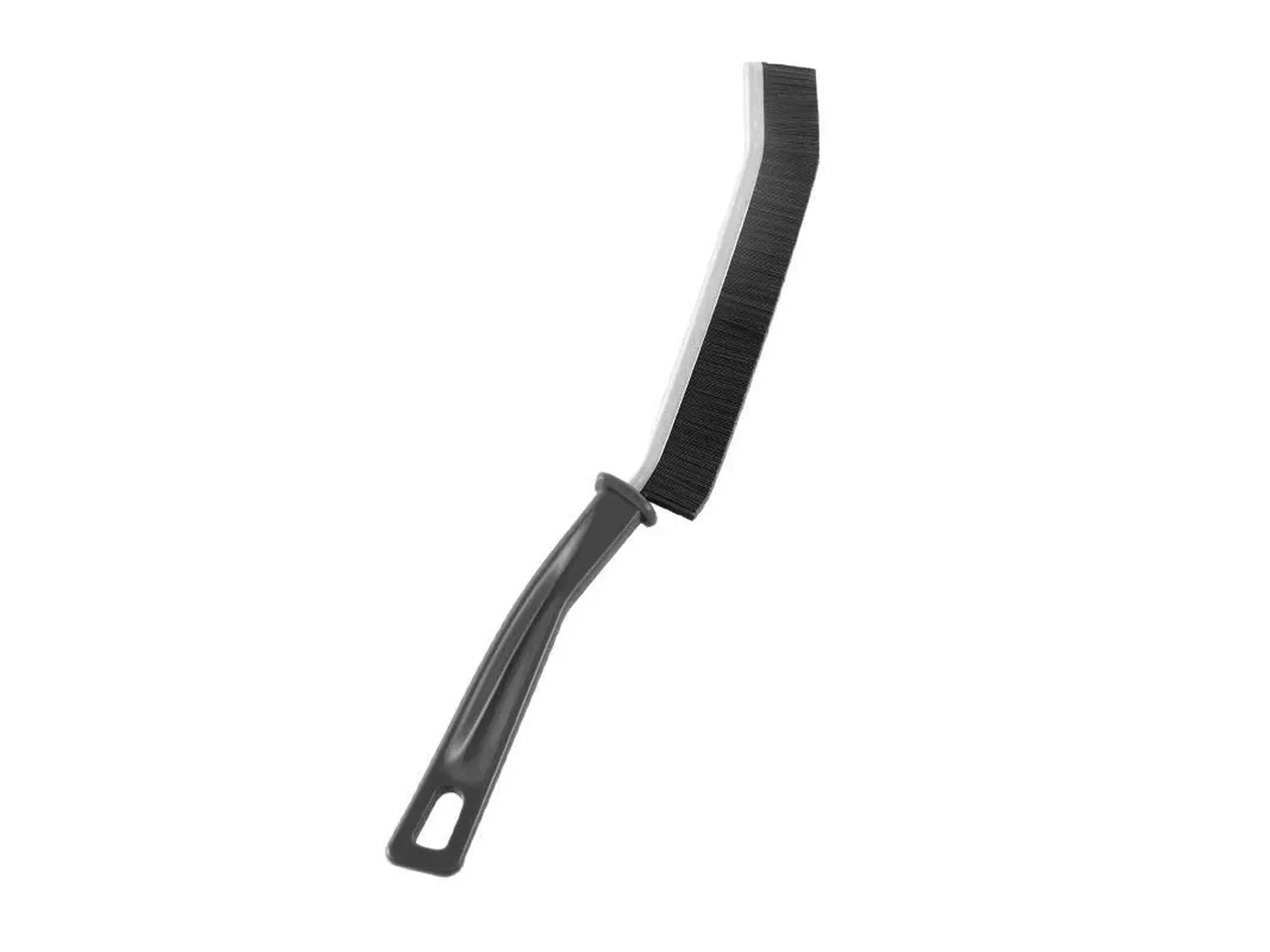
Small brush
500 pcs
Minimum order
Held in one hand: tube, bottle, detail and swab brushes — including long-handled ones with a small head.
Production lead time, once the specification is confirmed
- Up to 500 pcsWithin 7 days
- 501–50,000 pcsWithin 14 days
- Over 50,000 pcsWithin 21 days
Peak season can extend these times; the shipping date is confirmed in writing with your quotation. Sampling and shipping are quoted separately.
This hand-held crevice scrub brush combines a narrow, stiff filament head with a black antibacterial plastic handle to clean grout lines, track channels, appliance seams, and other tight gaps that broad cleaning tools cannot reach. The antibacterial synthetic filaments resist microbial growth on the brush itself, while the compact head concentrates scrubbing force exactly where residue collects.
What can this brush do for you?
Enter Gaps That Flat Brushes and Sponges Cannot Reach
The filament bundle is trimmed to a narrow, tapered profile with a head width that can be as small as a few millimeters. This allows the brush to seat fully inside grout joints, track channels, and seam gaps, contacting residue that would otherwise remain untouched. The concentrated contact area means the operator’s effort goes into the crevice, not onto surrounding surfaces.
Keep the Cleaning Tool Itself from Becoming a Contamination Source
The filaments are made with an antibacterial synthetic material—typically PBT or PP with an antibacterial additive. In damp bathroom, kitchen, and janitorial environments, brushes can harbor odor-causing bacteria and mold on their own filaments. The antibacterial treatment inhibits that growth, so the brush stays fresher between uses and is less likely to transfer microbes back onto cleaned surfaces.
Apply Enough Stiffness to Break Up Hard, Dried Residue
Filament diameters up to 0.80 mm provide the rigidity needed to fracture limescale, dried soap film, and burned-on food deposits. Because the working tip is small, the applied pressure is concentrated, reducing the downward force required by the operator. For softer surfaces, thinner filaments can be specified to reduce scratch risk.
Survive Wet, Chemical-Laden Cleaning Routines
The handle is molded from polypropylene, a plastic that resists water absorption, common cleaning chemicals, and impact. The black color masks staining from grime and cleaning agents, so the brush retains a professional appearance after repeated use. The filament materials PBT and PP also tolerate typical detergents, bleach solutions, and mild acids without immediate degradation.
Lightweight Build for Long Detail-Cleaning Sessions
Weighing only a fraction of a wire brush or metal scraper, this brush is easy to maneuver with one hand. The handle geometry is designed for a stable grip during push-pull and twisting motions, helping operators clean dozens of fixtures, tile lines, or equipment joints without excessive hand fatigue.
What is a Crevice Scrub Brush Plastic Antibacterial Black Handle?
A crevice scrub brush is a hand-guided cleaning tool that concentrates a short bundle of stiff synthetic filaments into a narrow working end. Unlike wide scrub brushes or sponges, the filament head is shaped to enter gaps, seams, and joints, where it removes residue by direct mechanical abrasion rather than by broad surface contact.
The plastic handle is injection-molded from polypropylene, finished in black as standard. The handle’s length and grip profile are balanced for one-hand control, allowing the operator to push the filament tip into a gap and apply directed pressure. The filaments are set into the handle end either in a straight row, a circular tuft, or a wedge-shaped bundle, depending on the crevice geometry the brush is designed to service.
The antibacterial property is built into the filament material, not applied as a surface coating. During filament production, an antibacterial agent is compounded into the PBT or PP resin, so the effect is distributed through the material and is not worn away by scrubbing. This helps control bacterial and fungal growth on the brush’s own filaments—it does not sanitize or disinfect the surfaces being cleaned.
This brush is a detail-cleaning tool. It is intended for localized scrubbing of narrow, hard-to-reach areas. It is not a replacement for large-area scrub brushes, floor brushes, or surface mops, and it should not be used as a sanitizing device. The cleaning result comes from the physical removal of residue; any required disinfection must still be performed as a separate step using appropriate chemicals or equipment.
Technical Specifications
The table below shows the standard configuration ranges for this crevice scrub brush. Because the product is manufactured to order, all dimensions and material choices can be adjusted to match your target crevice size, residue type, and handle preference.
| Parameter | Standard Range / Options | Selection Notes |
|---|---|---|
| Overall length | 120–200 mm (hand-held); up to 450 mm for extended reach | Choose shorter for close, controlled work; longer for behind-fixture or deep-track access. |
| Head width | 3–20 mm (crevice-optimized); wider configurations up to 100 mm available | Match to the narrowest gap you need to enter. A head wider than the gap cannot clean the full depth. |
| Working length | 10–60 mm typical; up to 120 mm for deep gaps | The exposed filament length that actually contacts the crevice. Longer working lengths reach deeper but are less laterally stiff. |
| Trim length | 8–20 mm for stiff scrubbing; 20–40 mm for more flexible contact | Shorter trim = stiffer feel. Longer trim = greater filament flex and conformability. |
| Filament diameter | 0.10–0.80 mm | 0.3–0.5 mm suits most grout and track cleaning; 0.6–0.8 mm for heavy limescale or baked residue; 0.1–0.3 mm for scratch-sensitive surfaces. |
| Filament material | PBT, PP, or antibacterial synthetic filament blend | PBT is stiffer and more abrasion-resistant; PP is more flexible and chemical-tolerant. Antibacterial additive can be compounded into either. |
| Handle material | Polypropylene (PP), black standard; other colors available | PP resists water, common cleaning chemicals, and impact. Black hides soil and maintains appearance. |
| Handle diameter | 8–35 mm | Thicker handles give more grip area for heavy pressure; thinner handles are easier to angle into tight spaces. |
| Use temperature | 5–100°C continuous | Avoid steam sterilization or autoclave temperatures above 100°C, which can deform PP and PBT. |
| Chemical exposure | Tolerates common detergents, bleach solutions, and mild acids/alkalis | Not recommended for prolonged immersion in strong solvents such as ketones, aromatic hydrocarbons, or concentrated oxidizing acids. |
| Brush type | Custom Handheld Detail Brushes | |
| How it is driven | Hand-guided | |
| Cleaning target | tile grout and corner seam, window and sliding door track, and plumbing fixture cleaning | |
| Surface or part | gaps, seams, plastic, channel, tracks, profiles, joints, and grout lines | |
| Residue or debris | soap scum, grease, mold, burned residue, food particles, mineral deposits, biofilm, and dust | |
| Mounting / connection | Fixed |
Where does this brush work best?
This crevice scrub brush is built for localized detail cleaning in both residential and commercial settings. The most common uses include:
- Tile grout and corner seams: removing soap scum, mold, and mineral deposits from grout lines in showers, kitchen backsplashes, and floor joints. The narrow head fits inside 3–10 mm grout joints without riding on the tile surface.
- Window and sliding door tracks: scrubbing accumulated dust, pet hair, and grime from the bottom channel where rollers sit. The brush tip reaches under the sliding panel without removing the door.
- Appliance and equipment seams: cleaning refrigerator gasket grooves, stove top edges, oven door seams, and control panel gaps. The stiff filaments dislodge dried food and grease that cloths cannot pull out.
- Plumbing fixtures: scrubbing around faucet bases, sink rims, drain strainers, and shower door corners. The small head works around curved metal and plastic profiles without scratching adjacent finished surfaces when softer filaments are specified.
- Cookware and bakeware details: removing burned residue from pot handle rivets, lid rims, and seam welds. Unlike metal scrapers, plastic filaments do not gouge non-stick coatings if filament stiffness is selected correctly.
- Food service and janitorial detail cleaning: counter edge joints, equipment gaps, floor drain covers, and other areas where food particles and biofilms accumulate in narrow spaces. The antibacterial filament helps keep the tool itself hygienic in these high-moisture environments.
How do I choose the right one?
Start with the crevice geometry
Measure the width of the narrowest gap you need to clean at its opening, and the depth you need to reach. The brush head width should be equal to or slightly smaller than the gap width, and the working length should be at least as long as the gap depth. If the gap has an irregular profile (e.g., a dovetail slot or undercut), a tapered or wedge-shaped head may be preferable to a straight rectangular one.
Match filament stiffness to the residue and surface
For hard, mineralized, or baked-on deposits, choose thicker filaments (0.5–0.8 mm) and a shorter trim length for maximum stiffness. For soft soap scum, light grease, or delicate surfaces such as polished stone, anodized aluminum, or acrylic, select thinner filaments (0.1–0.3 mm) or a longer trim to reduce scratching. PBT filaments are stiffer than PP at the same diameter, so PP is the gentler choice when surface protection is a priority.
Choose the handle for the operator’s reach and comfort
Hand-held lengths of 120–200 mm work well for countertop, fixture, and close-range detail cleaning. If the crevice is behind an appliance, inside a deep track, or requires standing access to floor-level gaps, specify an extended handle up to 450 mm. Handle diameter and shape can be adjusted for gloved hands, repeated cleaning cycles, or branding requirements.
Verify chemical and temperature compatibility
Both PP and PBT filaments tolerate typical detergents, diluted bleach, and mild acids. If the brush will be used with stronger chemicals—such as oven cleaners, solvent degreasers, or concentrated acids—provide the SDS and exposure conditions so we can confirm compatibility or recommend an alternative filament material. Continuous use above 100°C is not recommended.
When a different brush or tool may be a better fit
If the gap is narrower than about 2 mm, a rigid plastic filament may not enter effectively; consider a wire detail brush or a nylon monofilament with a very small diameter. If the area to clean is larger than a few square centimeters, a full-size scrub brush or deck brush will be faster and less fatiguing. If the surface is soft (e.g., bare wood, vinyl, or painted finishes), even thin plastic filaments can leave marks—test in an inconspicuous area first or switch to a natural fiber brush.
Can I customize this brush?
Yes. This crevice scrub brush is produced to order, so the dimensions, filament, handle, and finishing details can all be matched to your project. To specify a custom configuration, provide the following information: crevice opening width and depth, the type of residue to be removed, the surface material being cleaned, any chemical or temperature constraints, the preferred handle length and grip, and any packaging or labeling requirements. A sample part, drawing, or photo of the target crevice will accelerate the process.
- Head geometry: width, working length, trim length, and profile (straight, tapered, wedge, pointed, or multi-row).
- Filament material and stiffness: PBT or PP base; antibacterial additive at the required concentration; filament diameter and crimp/straight configuration.
- Handle design: overall length, diameter, shape (straight, contoured, loop-end), color (black standard, custom colors available), and grip texture.
- Marking and private label: molded-in logo, pad printing, laser marking, or custom packaging with your brand.
- Packaging: bulk, individual polybag, hang-tab card, retail sleeve, or case pack per your distribution channel.
For projects that require material documentation, third-party testing, inspection reports, or regulatory support for your target market, we can assist with those requirements during the customization process. Please note that such documentation is provided per project and is not part of the standard product specification.
Which filament survives the cleaning and still lasts on a crevice scrub brush plastic antibacterial black handle?
Does the antibacterial filament disinfect the surfaces I clean?
No. The antibacterial agent is compounded into the brush filament to inhibit microbial growth on the brush itself. It does not sanitize or disinfect the crevice, grout line, or fixture being cleaned. Surface disinfection must still be performed with appropriate chemicals or equipment after residue removal.
How do I clean and maintain the brush to preserve its antibacterial properties?
Rinse the filament head thoroughly after each use to remove loosened debris and cleaning chemical residue. Allow the brush to air dry in a well-ventilated area before storing. Do not soak the brush in hot water above 100°C or leave it submerged in strong solvents, as this can degrade both the filament and the antibacterial additive. With normal use, the antibacterial effect remains functional for the life of the filaments.
How can I tell when the brush filaments are worn out?
Inspect the working end regularly. If the filaments are splayed, bent, or shortened by more than 20% of the original trim length, the brush will no longer reach the bottom of the crevice or apply consistent pressure. Replace the brush when the tip no longer seats fully into the gap or when scrubbing requires noticeably more force to achieve the same result.
Will this brush scratch my tiles, grout, or metal fixtures?
It depends on the filament diameter, material, and the hardness of the surface. PBT filaments at 0.5 mm or larger can leave fine scratches on polished metal, acrylic, or soft stone. For those surfaces, specify PP filaments at 0.3 mm or less, or request a test sample. Always test the brush in an inconspicuous area before cleaning visible surfaces in bulk.
Can this brush be used with bleach or acid-based cleaners?
Yes, for typical diluted household bleach solutions and mild acid cleaners such as citric acid or vinegar. Both PP and PBT filaments resist these chemicals at normal concentrations and contact times. However, prolonged immersion or repeated exposure to high-concentration acids, alkaline oven cleaners, or solvent degreasers can cause filament embrittlement or handle degradation. Rinse the brush immediately after use with any aggressive chemical, and provide the chemical SDS during specification if in doubt.
Guides that go deeper on this
We have not written a guide specific to this one yet. The material that covers selection, filament, dimensions, maintenance and sourcing is collected in the technical resources library.
Custom Manufacturing RFQ
Describe Your Application
An accurate custom quote starts with the dimensions, working surface, residue, material choice, connection, quantity, and reference files.
Drawing or photo optional — it speeds things up, it does not gate the enquiry.
Custom Brush RFQ
Send Your Brush Project
Upload a drawing, product photo, or sample photo and provide the core dimensions and cleaning conditions.
“We need a brush to remove wet residue from a stainless steel conveyor, about 800mm wide. The current brush wears quickly. We can send photos.”
“We sell drinkware and need a cleaning brush to include with the product. Quantity around 5,000 pieces.”