
Custom Cleaning Brush
Pot Scrub Brush
Custom pot scrub brush with nylon or PP fill for pots, kettles, trays, tanks and food-contact surfaces. Hand grip or 1/2 in, M8, M10 thread options.
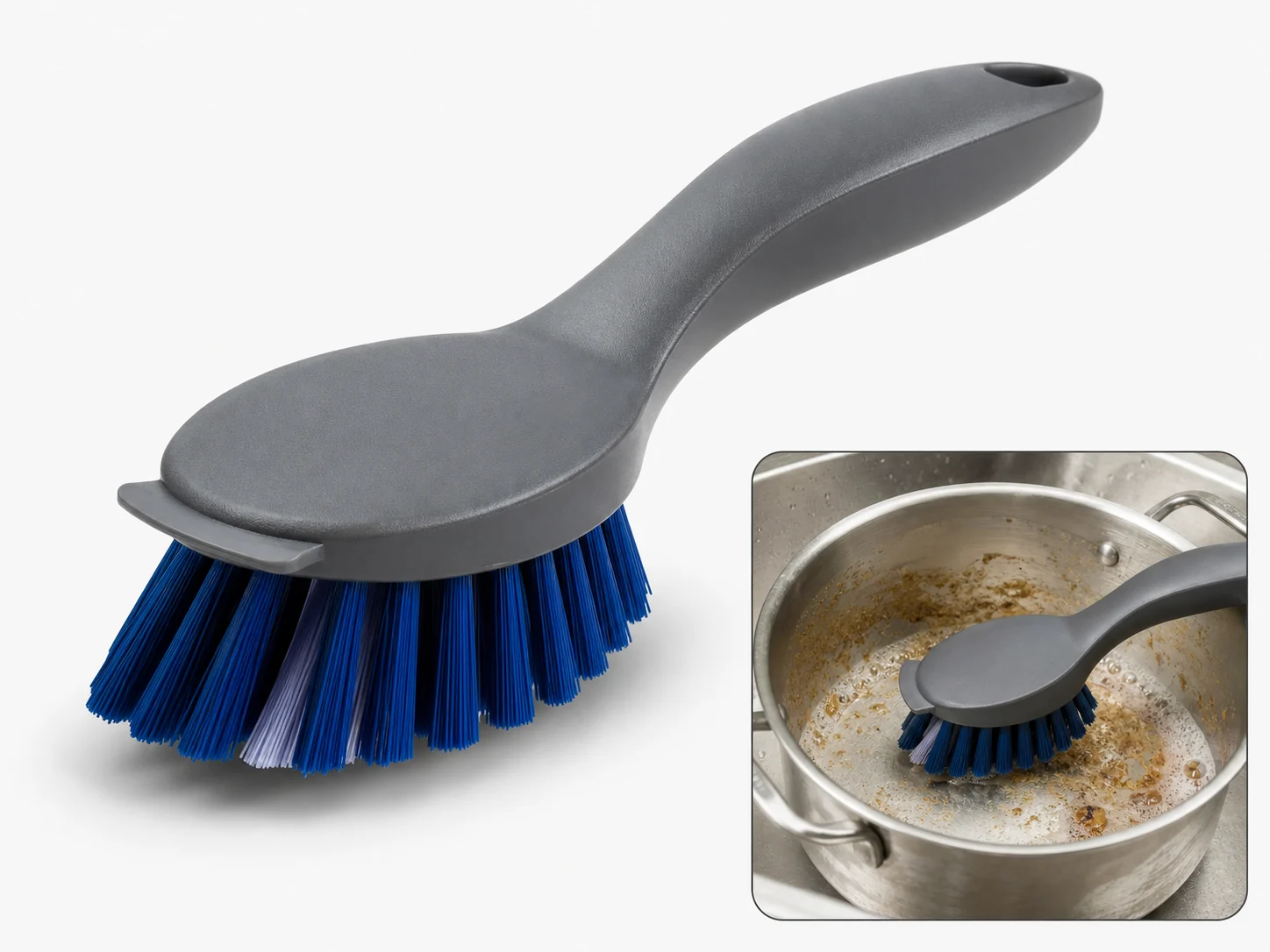
Medium brush
100 pcs
Minimum order
Worked with two hands or on a pole: chimney, gutter and pond-filter brushes, discs, cups and tank brushes.
Production lead time, once the specification is confirmed
- Up to 100 pcsWithin 7 days
- 101–5,000 pcsWithin 14 days
- 5,001–50,000 pcsWithin 21 days
- Over 50,000 pcsConfirmed with your quotation
Peak season can extend these times; the shipping date is confirmed in writing with your quotation. Sampling and shipping are quoted separately.
A heavy-duty hand-guided scrub brush with dense nylon or polypropylene fill for washing pots, kettles, trays, tanks and other food-contact equipment surfaces where cooked-on starch, oil, pulp and scale must be removed without metallic contact. Supplied with a hand grip or a 1/2 in, M8 or M10 thread for fixture or extension use.
What can this brush do for you?
Dense Fill Cleans the Full Pot Face
The head packs nylon or PP filaments at a density matched to the deposit. The brush works across the whole face rather than only the center, so the operator can scrub the sidewall, bottom, rim and radius in fewer passes.
Non-Metallic Contact Protects Food-Contact Finishes
Filament tips remove oil, starch and light scale without the scoring that a wire brush or scraper can leave on stainless steel or lightly coated surfaces. Where the surface is especially fragile, the filament diameter and trim can be reduced to soften the contact.
Trim Reaches Around Rims, Rivets and Bottom Corners
Longer trim flexes into the transition between the pot bottom and sidewall, and works under handles, rims and rivet brackets that a flat pad cannot clean. Head width can be matched to the pot curvature so the brush stays on the surface while working the corners.
Holds Up to Repeated Hot-Water and Chemical Washdown
Nylon and PP filaments do not absorb water, will not rot, and resist common food-plant detergents. They keep their stiffness through repeated wash cycles instead of softening into a mat like natural fiber fill.
One Interface for Hand Use or Mounted Scrubbing
The same head can be supplied with a molded hand grip for kettle washing, or with a 1/2 in, M8 or M10 thread so it fits an extension pole, deck handle or inline holder. Replacement heads can be kept in stock without changing the handle or fixture.
What is a Pot Scrub Brush?
A Pot Scrub Brush is a hand-operated or mounted scrubbing tool built from a block or backing with dense rows of staple-set nylon or PP filament and a handle or threaded ferrule. It is used in food plants and commercial kitchens where pots, kettles, trays, tanks and process equipment need a firm scrubbing action but should not be scratched by metallic contact.
During use, the operator wets the brush, applies detergent or hot water, and works the surface with push-pull or circular strokes. The trim length controls how much the filament tips flex: shorter trim transfers more pressure to the deposit, while longer trim reaches into corners and around internal features. Operating temperature, detergent type and rinse steps all matter because the head must keep its shape through repeated cycles.
This is not a wire brush for carbonized scale or a sponge for delicate nonstick coatings. It sits between those tools: aggressive enough to remove cooked-on starch, baked oils and soft mineral films, but soft enough to preserve the working surface of the vessel being cleaned.
Technical Specifications
The values below are the standard build range for a custom Pot Scrub Brush. Head width, trim length, filament diameter and interface are adjusted to the actual pots, vessels or machine parts being cleaned.
| Parameter | Value / Options |
|---|---|
| Head width | 20–300 mm, selected to cover the pot bottom or wash face |
| Trim length | 20–80 mm, set by the required reach and scrubbing pressure |
| Overall length | 180–1200 mm, from hand-grip scrubbers to extended-reach tools |
| Filament diameter | 0.20–0.80 mm; finer for sensitive surfaces, heavier for hardened deposits |
| Fill material | Nylon PA or Polypropylene PP, selected for residue, detergent and temperature |
| Head backing / block | PP, nylon, stainless steel or project-specified material |
| Handle or thread | Hand grip, 1/2 in, M8, M10 or custom thread and depth |
| Operating temperature | 0–140°C for PP and nylon heads; exact limit depends on grade and exposure time |
| Filament stiffness | Semisoft at 0.20–0.30 mm, medium at 0.35–0.50 mm, firm at 0.60–0.80 mm; tuft density also affects stiffness |
| Moisture resistance | Non-absorbent fill; no rot or mildew growth under normal washdown conditions |
| Brush type | Custom Handheld Detail Brushes |
| How it is driven | Hand-guided |
| Cleaning target | steam-jacketed kettle, sheet pan, and dough trough cleaning |
| Surface or part | pots, trays, corners, thread, fixtures, tanks, pans, and equipment surfaces |
| Residue or debris | scale, oil, starch, pulp, dough, fiber, food debris, and oil film |
| Mounting / connection | Hand grip, 1/2 in, M8, M10 or custom thread and depth |
Where does this brush work best?
- Steam-jacketed kettles, stock pots and sauce pans where starch, sauce and oil films build up around the bottom radius and sidewall.
- Sheet pans, hotel pans and roasting trays where caramelized sugar, fats and protein need to be worked loose without steel-wool scratching.
- Dough troughs, mixing bowls and ingredient bins where flour, dough, oil and starch cling to corners and welded joints.
- Flake washers, produce handling paths and washdown stations where fiber, pulp, scale and soil collect on contact surfaces and machine components.
- Prep tables, sinks and utensil stations where general food debris and washdown soil are removed between shifts.
How do I choose the right one?
Match the fill material to the residue and washdown chemistry
Choose PP for general food-contact washdown, acid or alkaline detergents, and lower-cost runs where the soil is soft or moderate. Choose nylon PA where the brush will see heavier scrubbing, repeated flexing and tougher deposits, because nylon wears longer under abrasion. If the cleaning line alternates between hot water and aggressive detergents, specify the exact chemical mix and peak temperature so the correct grade can be chosen.
Size the head to the pot, not the operator habit
Large open kettles and tray bottoms clean faster with a wide head in the upper part of the range, while rims, corners, rivets and handles need a narrower head or a formed profile. The head should follow the surface without rocking; measure the bottom diameter, corner radius and any internal obstructions before selecting width and trim.
Set trim and filament diameter for the deposit
Shorter trim and heavier filament put more force into flat, hardened deposits. Longer trim and finer filament reach into concave bottoms and around fittings with less risk of surface marking. If the surface is polished stainless, start medium; drop to a finer diameter if visible hazing appears.
Decide whether the brush is hand-held or mounted
A hand grip is appropriate when operators scrub pots, trays and sinks by hand. If the brush must attach to a pole, deck handle or machine fixture, specify the existing thread standard — 1/2 in, M8 or M10 — along with the thread gender and engagement depth. Guessing the thread leads to loose mounted brushes or stripped ferrules.
When this brush is not the right tool
Use a brass or stainless wire brush when the surface is uncoated and the residue is carbonized, rusted or heavy mineral scale that filament tips cannot break. Use a sponge or microfiber tool for PTFE and highly sensitive nonstick coatings. Use a tube brush for valve bodies, pipes and narrow ports, and a floor scrubber brush for large floor areas. A pot scrub brush is for open, accessible food-contact surfaces where moderate-to-firm non-metallic scrubbing is appropriate.
Can I customize this brush?
Pot Scrub Brushes are configured around the actual pot, vessel or wash station. To define the build, provide the surface material, pot diameter and corner radius, residue type, cleaning chemical, water temperature, handle or thread standard, and any food-plant color-coding requirement.
We can adjust:
- Head geometry — width, length, profile, angled or curved blocks for pot corners and rims
- Filament system — nylon PA or PP, 0.20–0.80 mm diameter, trim length, tuft spacing and density
- Backing material — PP, nylon, stainless steel or a project-specific compatible material
- Handle and interface — hand grip, ergonomic shape, hanging hole, 1/2 in, M8, M10 or custom thread, extension-pole compatibility
- Color and marking — food-plant color coding, pad print or laser marking for lot or zone identification
- Packaging — bulk cartons, individual polybags, replacement-head kits or project-specific packing
If your project requires material declarations, documentation, inspection or third-party testing support, include those requirements at the customization stage so the brush is built and documented to your process.
How do you tell when a pot scrub brush is worn out?
How do I know if the trim is too long or too short?
Press the brush against the surface at the working angle. Correct trim lets the filament tips contact the surface while the backing stays off the surface under moderate pressure. If the backing nearly touches under light pressure, the trim is too short or the filament is too soft. If the filaments flatten and the brush feels floppy with little contact force, the trim is too long or the fill is too sparse.
Can this pot scrub brush be used on nonstick or coated pots?
Only with the finest PP or nylon diameter in the range and light to moderate pressure, and only after testing a hidden or sacrificial area. PTFE and similar coatings can be dulled or scratched by stiff filament tips. For those surfaces, a sponge, microfiber pad or a soft-trim brush is the more suitable choice.
Does brushing replace soaking or scraping?
No. Heavy caramelized, carbonized or dried deposits should be loosened first with soaking, steam or chemical action. The brush removes softened residue, films and light scale as part of the wash sequence. After brushing, rinse the surface and sanitize if the process requires it.
What should I check during inspection between shifts?
Look for flattened, matted or broken filament tips, loose or missing tufts, cracks in the backing, and wear or cross-threading on the handle or ferrule. If the tips no longer spring back when pressed or the brush requires noticeably more passes to clean a standard surface, it is time to replace the head.
Which thread should I specify for a mounted pot scrub brush?
Measure the mating thread on the existing handle, pole or machine fixture and provide its diameter, pitch and gender. The common options are 1/2 in, M8 and M10, but these are not interchangeable. Also state the engagement depth so the ferrule seats fully without bottoming out.
What happens if the brush is used on a surface hotter than the listed limit?
PP and nylon filaments can soften, deform, lose their shape and shed fibers when the surface temperature stays above the material limit. Scrub kettles and roasting trays only after they have cooled into the operating range, or specify a different heat-stable filament grade at the project stage if the process cannot wait for cooling.
Guides that go deeper on this
We have not written a guide specific to this one yet. The material that covers selection, filament, dimensions, maintenance and sourcing is collected in the technical resources library.
RELATED BRUSH RESOURCES
Recommended Reading & Related Brush Resources
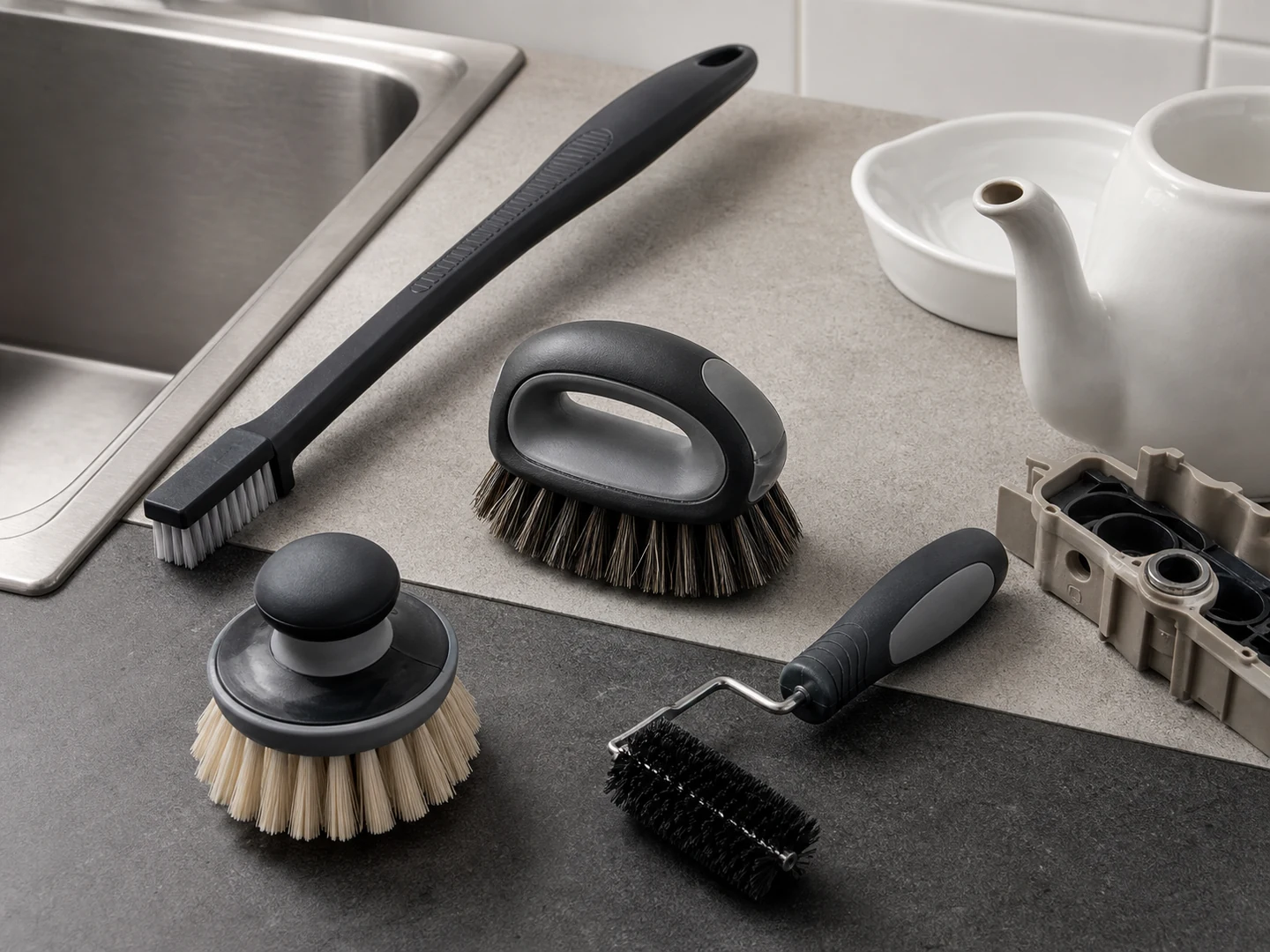
Custom Handheld Detail Brushes
Choose a handheld detail brush when you need direct control in seams, recesses, fittings,…
See how this type is built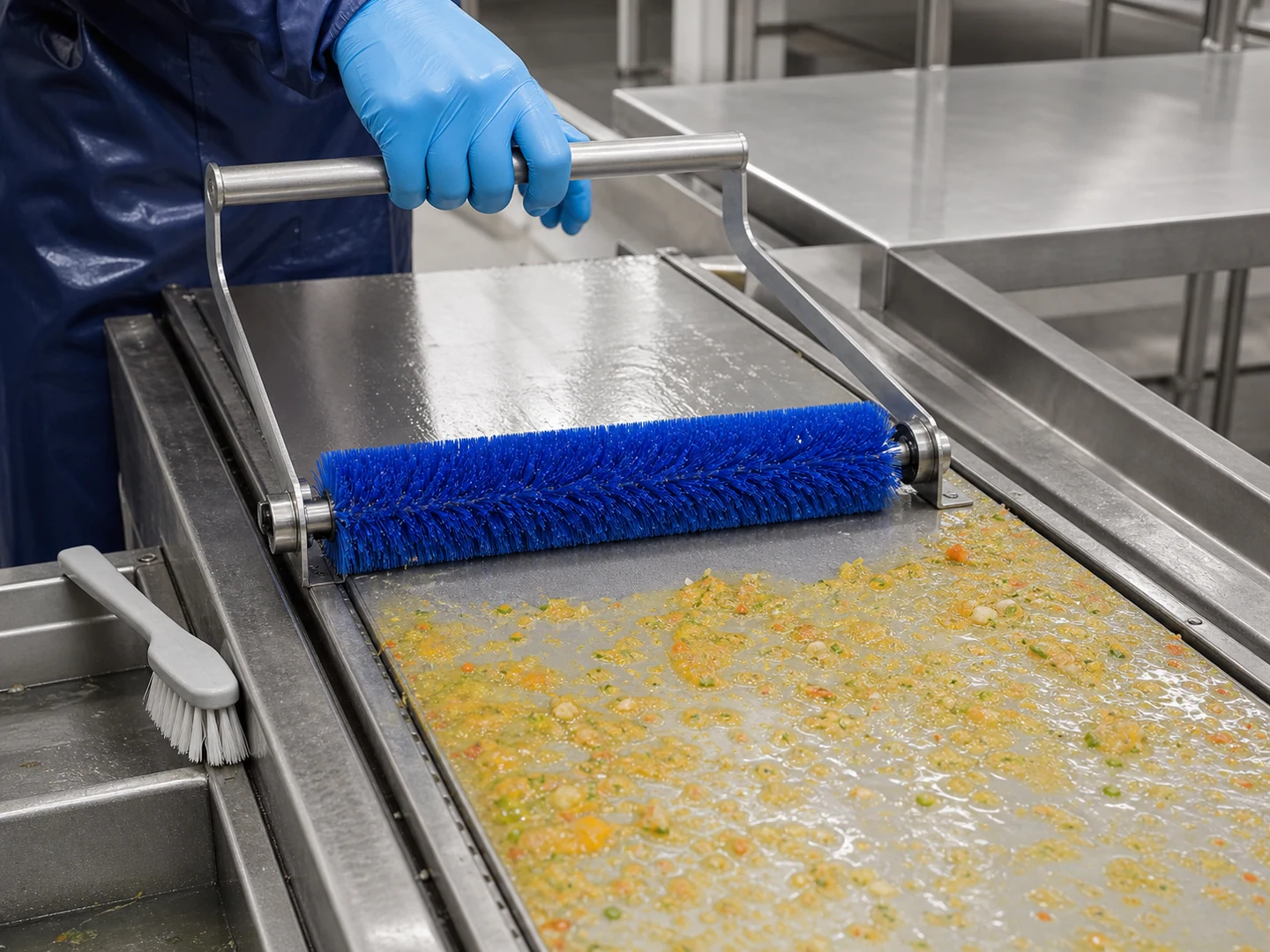
Food Equipment Cleaning
For Food Equipment Cleaning, the brush must reach the working area, disturb or collect…
See the cleaning job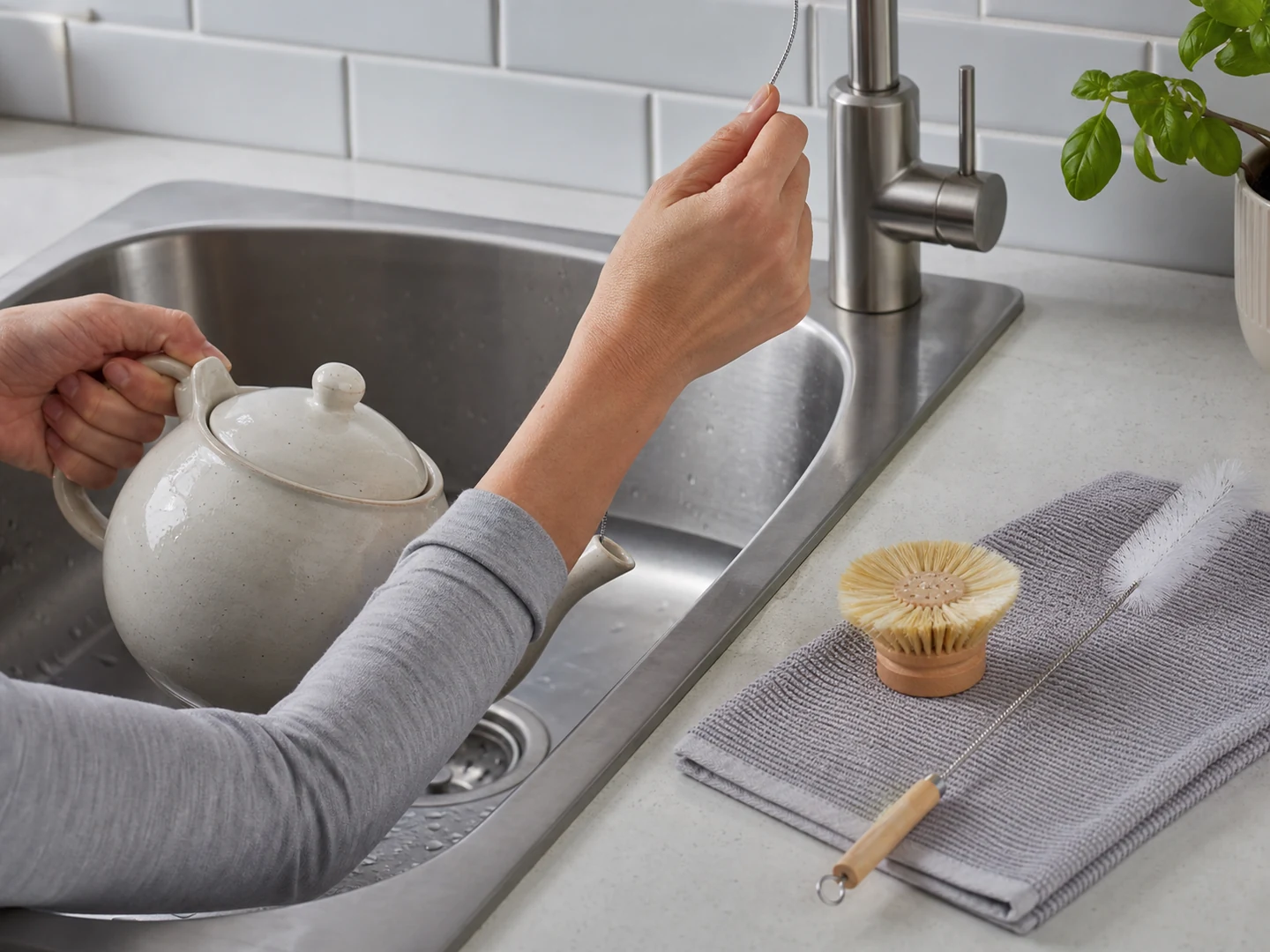
Household Dish, Teapot & Kitchen Detail Cleaning
For Household Dish, Teapot & Kitchen Detail Cleaning, the brush must reach the working…
See the cleaning job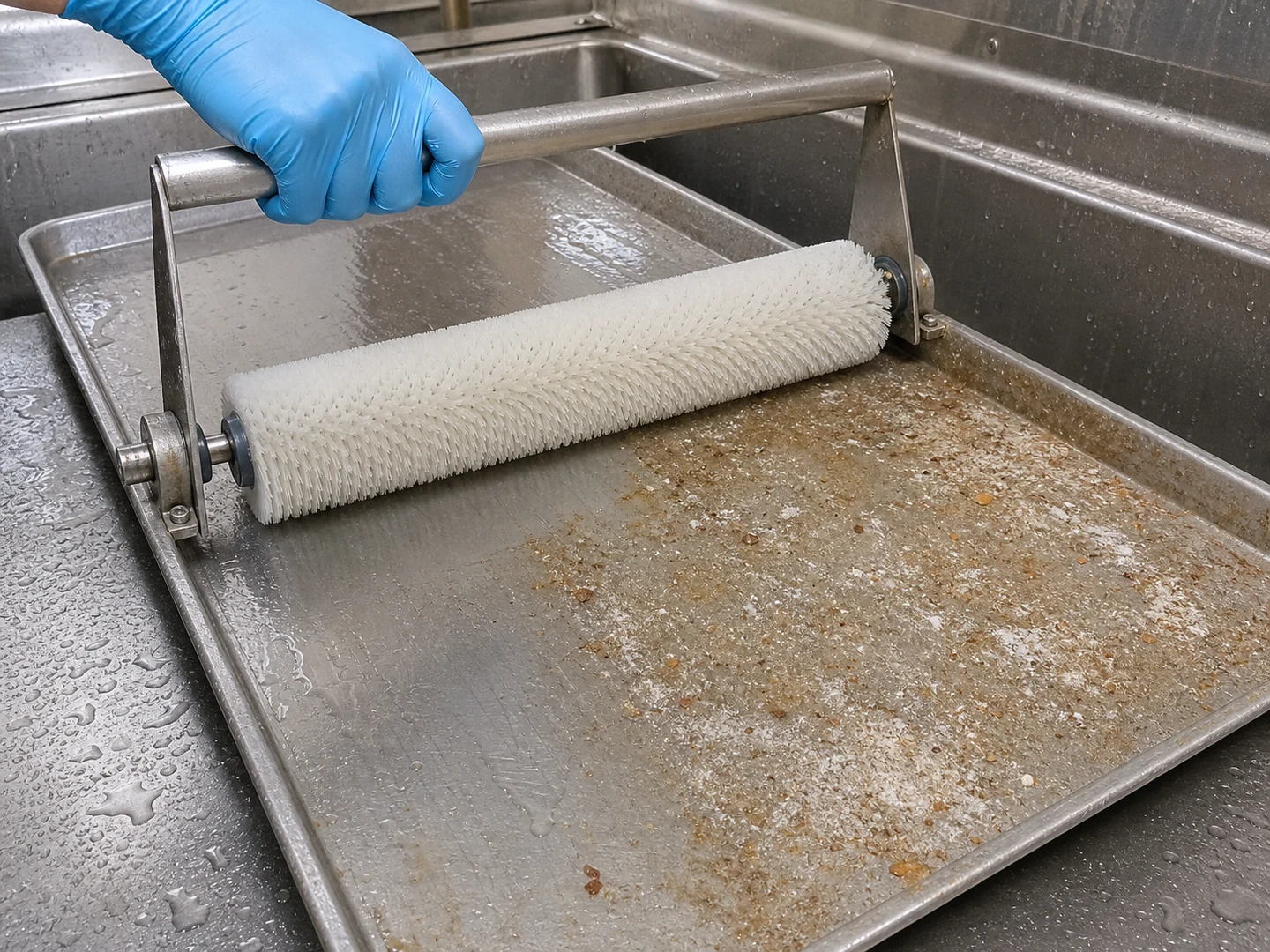
Bakery Tray Cleaning
For Bakery Tray Cleaning, the brush must reach the working area, disturb or collect…
See the cleaning job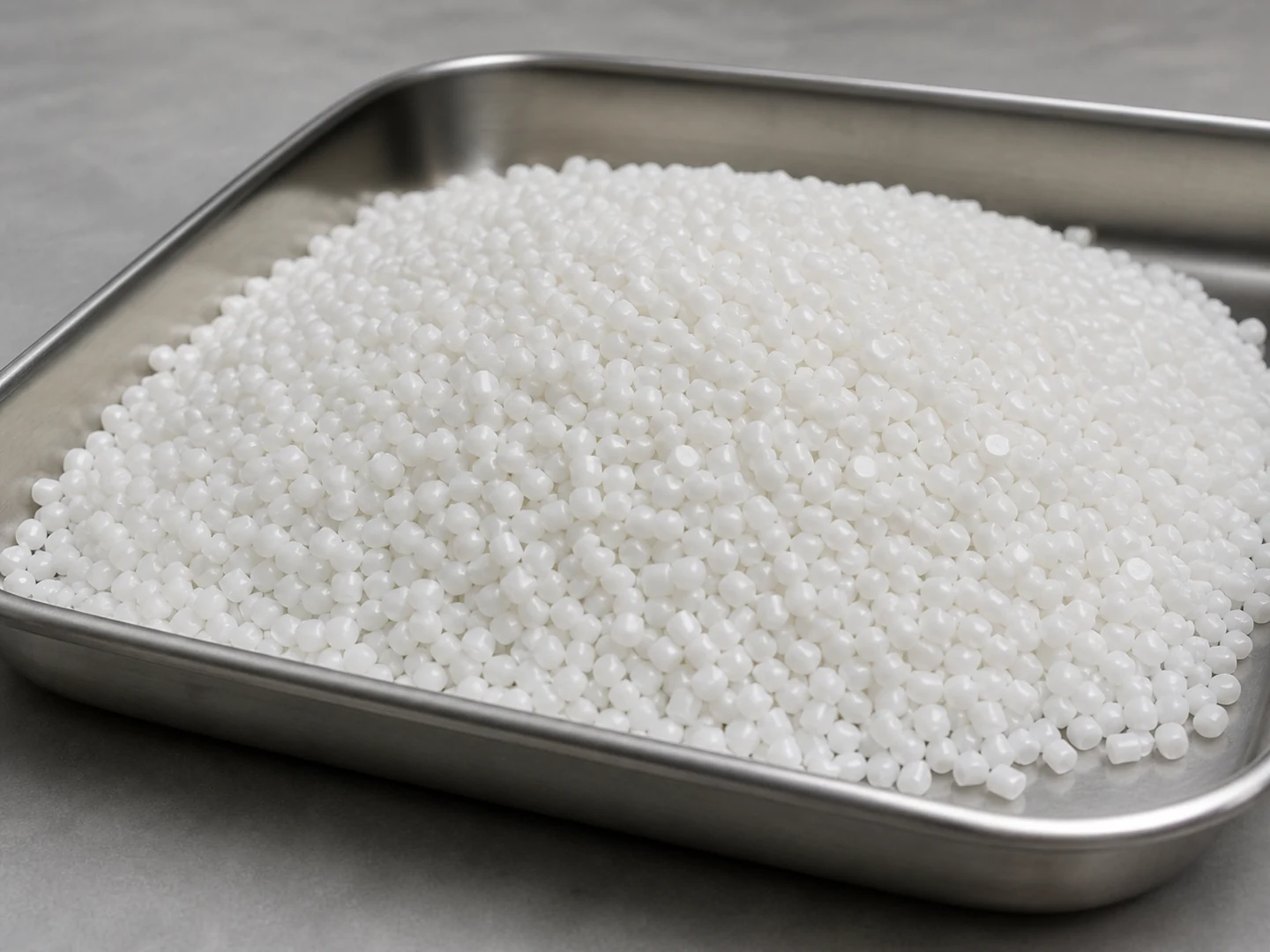
Polypropylene PP
Choose Polypropylene PP based on its stiffness, recovery, wear, wet-service, chemical, and temperature behavior.…
Compare this material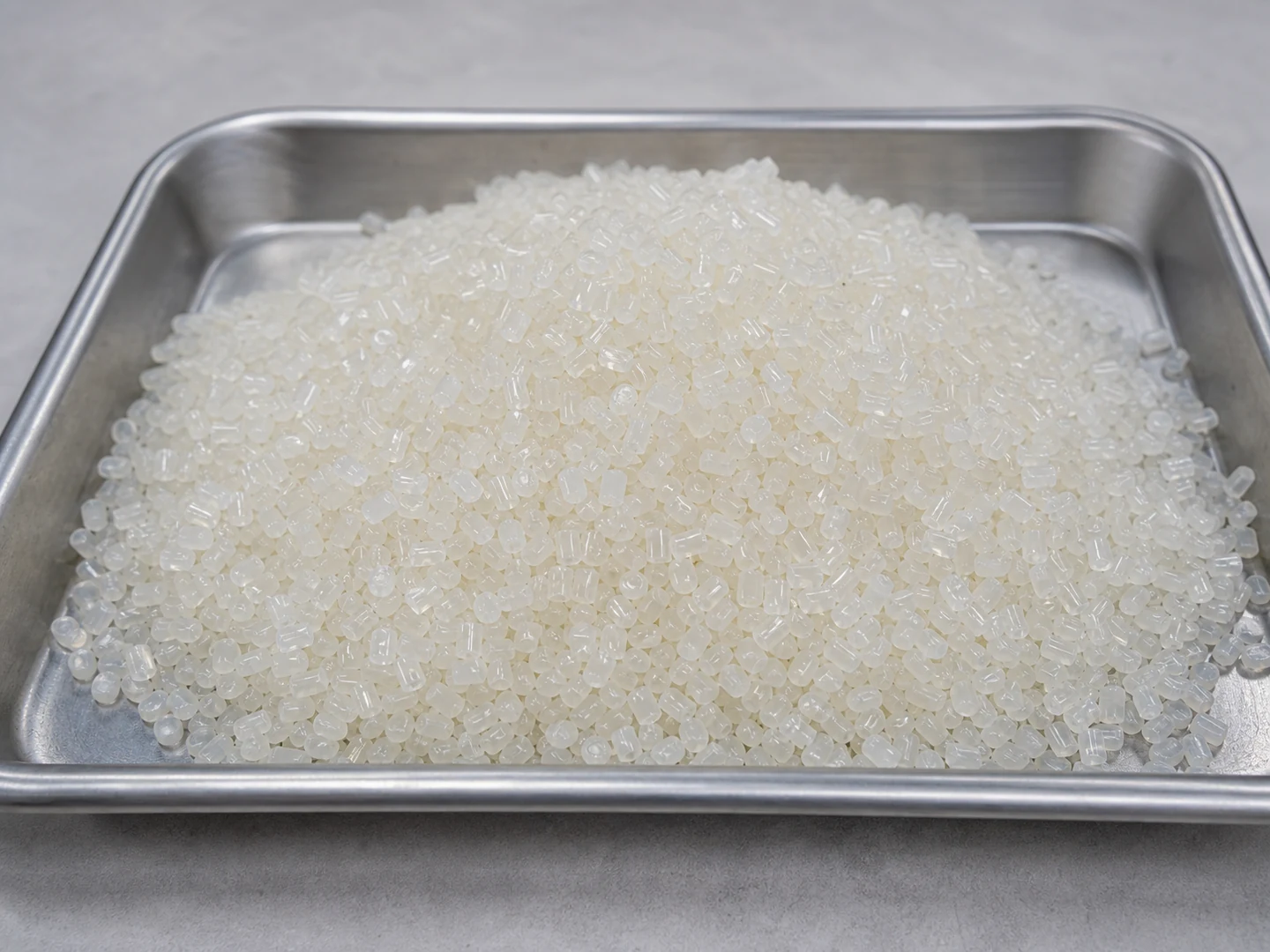
Nylon PA
Choose Nylon PA based on its stiffness, recovery, wear, wet-service, chemical, and temperature behavior.
Compare this material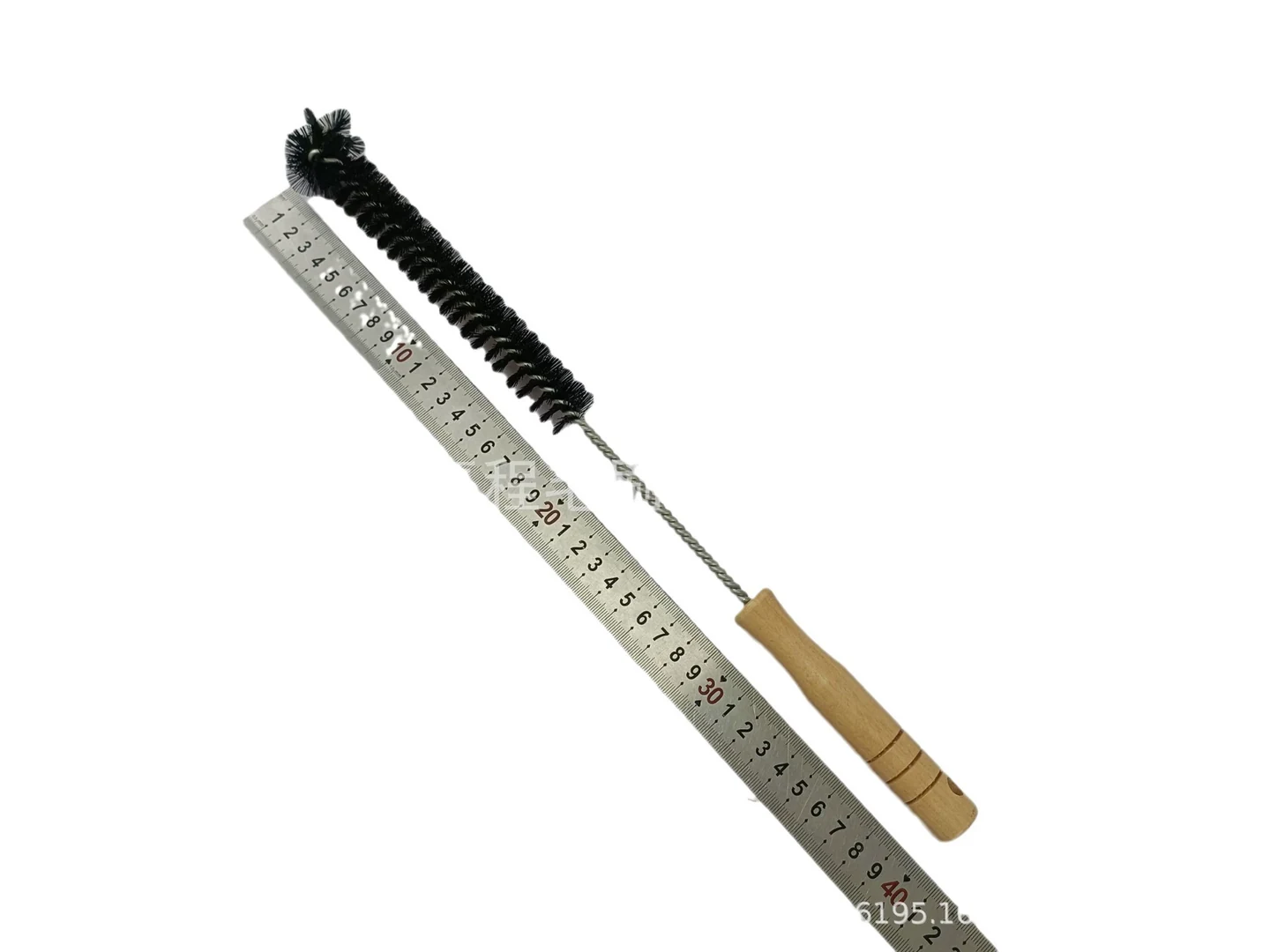
Brush Medical Scrub
Two-sided surgical hand scrub brush with nylon nail brush and sponge side for preoperative…
Compare the specification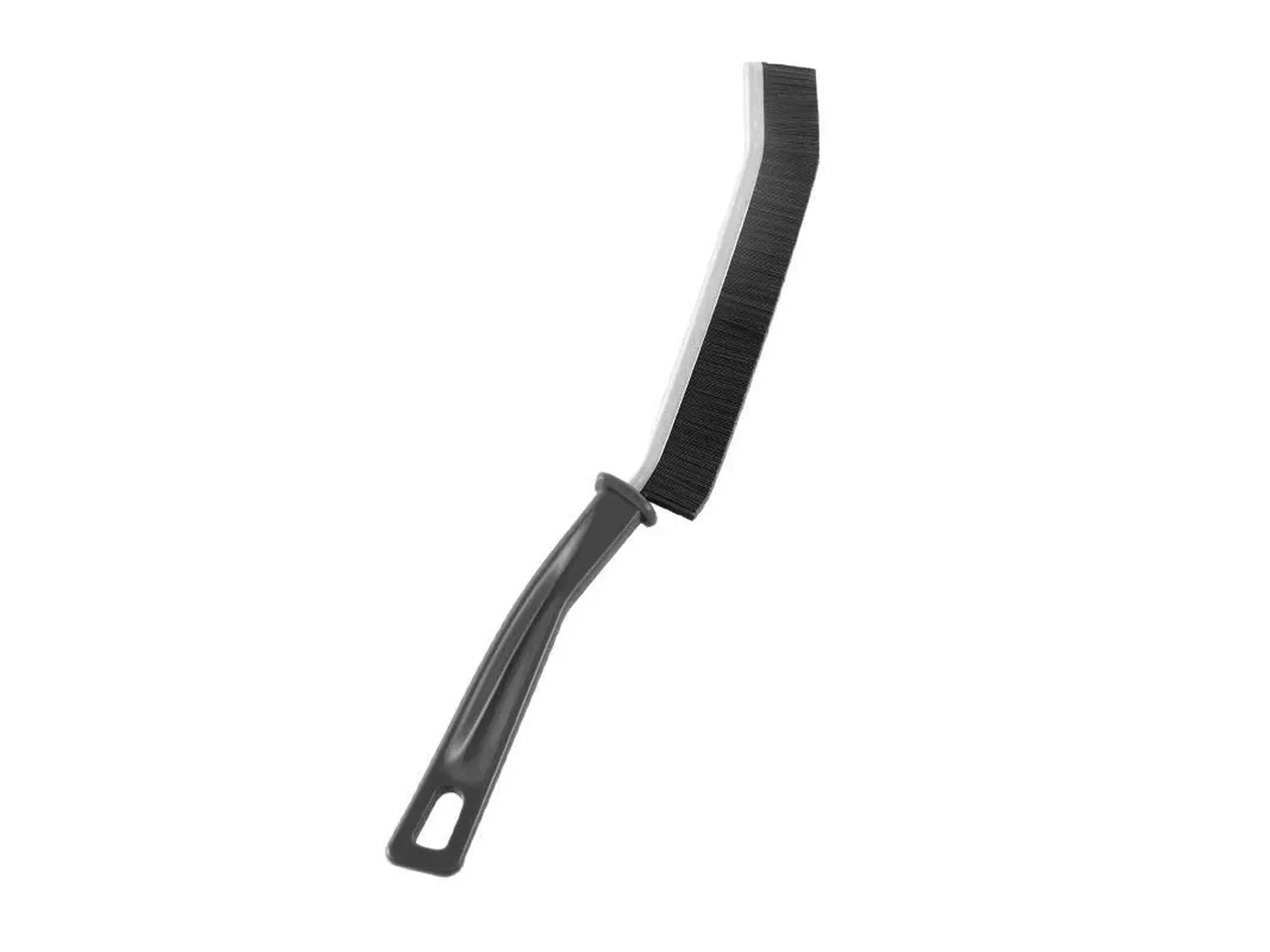
Crevice Scrub Brush Plastic Antibacterial Black Handle
This crevice scrub brush uses stiff antibacterial PBT or PP filaments and a black…
Compare the specificationCustom Manufacturing RFQ
Describe Your Application
Please share the brush dimensions, working area, residue type, material direction, quantity, and a drawing or photo for quotation.
Drawing or photo optional — it speeds things up, it does not gate the enquiry.
Custom Brush RFQ
Send Your Brush Project
Upload a drawing, product photo, or sample photo and provide the core dimensions and cleaning conditions.
“We need a brush to remove wet residue from a stainless steel conveyor, about 800mm wide. The current brush wears quickly. We can send photos.”
“We sell drinkware and need a cleaning brush to include with the product. Quantity around 5,000 pieces.”