
Custom Cleaning Brush
Fender Well Brush
Long-reach nylon PA fender well brush for cleaning fender wells, wheel arches, rims, and tire sidewalls without removing the wheel.
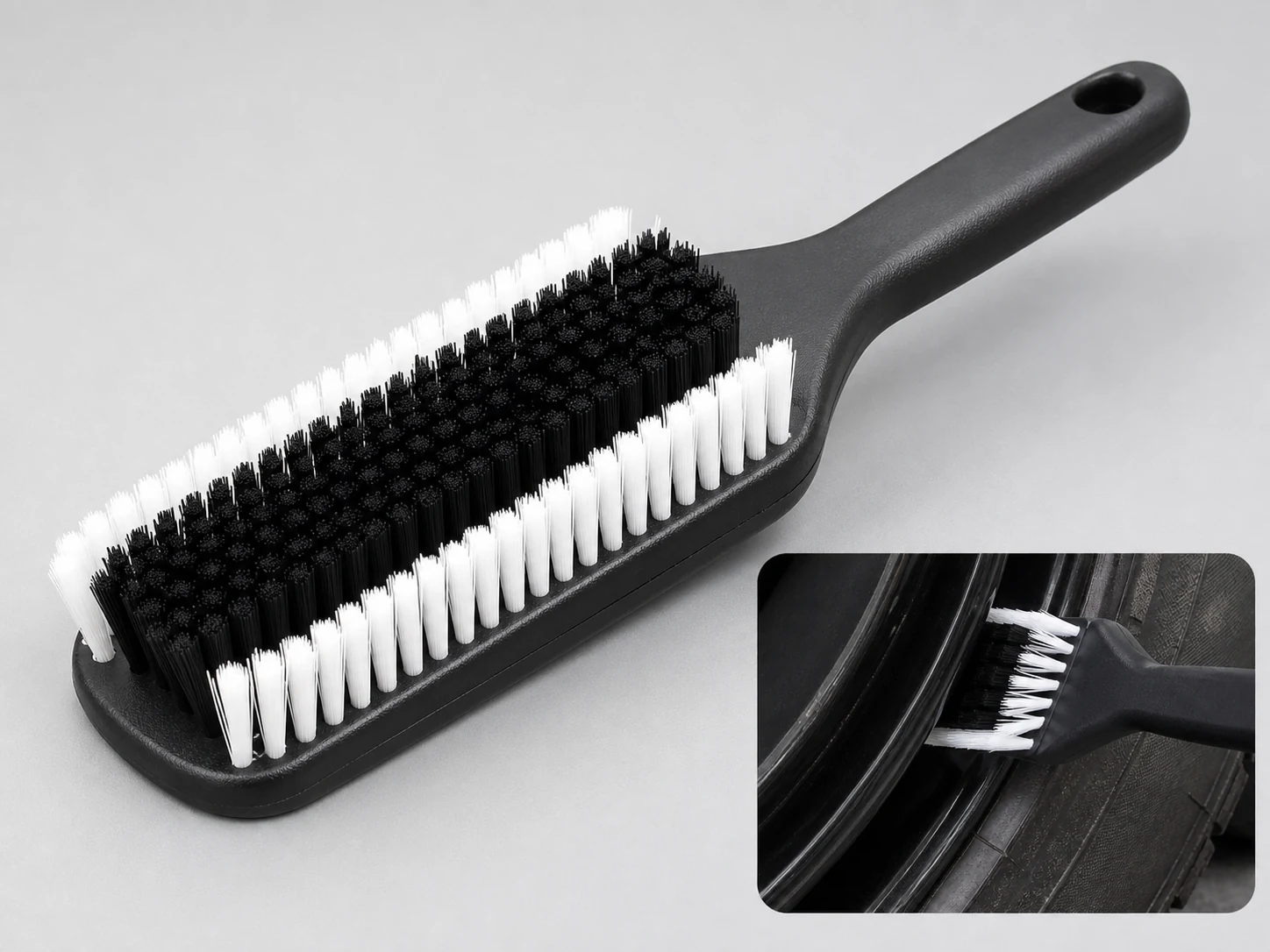
Medium brush
100 pcs
Minimum order
Worked with two hands or on a pole: chimney, gutter and pond-filter brushes, discs, cups and tank brushes.
Production lead time, once the specification is confirmed
- Up to 100 pcsWithin 7 days
- 101–5,000 pcsWithin 14 days
- 5,001–50,000 pcsWithin 21 days
- Over 50,000 pcsConfirmed with your quotation
Peak season can extend these times; the shipping date is confirmed in writing with your quotation. Sampling and shipping are quoted separately.
A long-reach nylon PA cleaning brush engineered for fender wells, wheel arches, rims, and tire sidewalls. The extended handle and shaped filament head let operators remove brake dust, road film, mud, salt, and detailing residue from wheel areas without removing the wheel or damaging painted and coated surfaces.
What can this brush do for you?
Full fender well access without lifting or removing the wheel
The 300–500 mm handle places the brush head deep inside the wheel arch while the vehicle stays on the ground. An operator can scrub the liner, shock tower area, and upper arch behind the tire without a lift or wheel removal. For mobile detailers and quick-service car washes, that reach directly removes one of the slowest steps in a wheel-well cleaning routine.
Cleans brake dust and road film while protecting clear coat and liner surfaces
Nylon PA filaments are abrasive enough to dislodge embedded brake dust, salt, and dried road film, yet flexible enough to deflect rather than gouge when pressure increases. Fine filament diameters in the 0.10–0.25 mm range, used with light deflection, safely contact clear-coated rims and painted fender liners. Thicker filaments up to 0.40 mm provide more scrubbing force for heavy mud and tire dressing buildup.
Covers broad fender well areas and reaches narrow spokes and lug recesses
The brush head works as a dual-zone tool. The main body, typically 100–300 mm wide, clears large liner surfaces quickly. A tapered end or reduced-width side zone reaches between spokes, around lug nuts, and into inner rim barrels. One brush can handle most of the wheel-and-well job instead of forcing the operator to switch between a wide scrub brush and a detail brush.
Filament layout that releases mud and grime instead of packing it
Open, evenly spaced filament rows allow water and cleaning solution to flush through the brush. Nylon PA has low moisture absorption, so the bristles do not swell, soften, or hold the mud they just removed. After a heavy wheel-well job, a quick hose-down restores the brush to working condition and keeps the next panel from being cross-contaminated with old grime.
Handle and core built for repeated wet, soapy, chemical exposure
The handle and internal core are selected for wet hands, wheel cleaners, degreasers, and repeated use in wash bays. A 20–35 mm handle diameter with a non-slip or overmolded grip gives positive control when hands are wet with soap or wheel cleaner. The core resists bending under side pressure against the tire and fender liner.
What is a Fender Well Brush?
A Fender Well Brush is a hand-guided cleaning tool with an extended handle and a shaped nylon PA filament head, designed to clean the wheel well area that a sponge, mitt, or short wheel brush cannot reach comfortably. It is used by professional detailers, car wash operators, and fleet maintenance crews who need to remove brake dust, road film, melted tire dressing, mud, and salt from the inner wheel arch, liner, tire sidewall, rim barrel, and spoke area.
In use, the operator works the head in push, pull, and rotating strokes behind the tire and across the liner. The long handle provides the reach; the filament head provides the contact. The brush is usually paired with a wheel cleaner, degreaser, or alkaline wash solution. The filament stiffness and head geometry determine how aggressively the brush works, which is why this product can be configured for soft clear-coated surfaces or for heavily textured plastic liners and aggressive tires.
This is not a wire brush for rust scale or baked-on corrosion, and it is not intended for hot exhaust components or underbody metal that requires heavy mechanical scraping. It is a maintenance tool for the wheel area: the job is complete residue removal without surface damage and without taking the wheel off.
Technical Specifications
The values below represent the standard configuration range. Dimensions, filament diameter, and handle geometry are adjusted to the customer’s vehicle platform, wash process, and target surfaces.
| Parameter | Value / Options |
|---|---|
| Overall length | 300–500 mm, matched to fender well depth and operator reach |
| Head width | 100–300 mm, selected for the gap between tire and liner plus target coverage area |
| Working length (filament coverage) | 120–300 mm on the brush head |
| Filament diameter | 0.10–0.40 mm; finer for clear-coated rims and painted liners, heavier for mud and heavy grime |
| Filament material | Nylon PA (PA6, PA6.6, or PA6.12 selected for chemical and temperature exposure) |
| Core / shaft diameter | 3–10 mm, steel, coated steel, or polymer depending on stiffness and corrosion requirements |
| Handle diameter | 20–35 mm, with straight or ergonomic grip options |
| Filament trim | Straight, flagged (split tips), or angled taper for detail zones; spiral pattern optional |
| Contact deflection guide | Use 1–5 mm filament deflection on painted and clear-coated surfaces; 3–10 mm on tires, textured plastics, and uncoated metal |
| Operating environment | Compatible with typical pH-neutral to moderately alkaline wheel cleaners and degreasers; PA grade specified for severe chemical or hot-water wash conditions |
| Brush type | Custom Handheld Detail Brushes |
| How it is driven | Hand-guided |
| Cleaning target | professional auto detailing studio, car wash and quick-service wash operation, and fleet and rental vehicle maintenance cleaning |
| Surface or part | roads, rims, sidewalls, wheel arches, tire sidewalls, plastic, spokes, and gaps |
| Residue or debris | salt, mud, road film, brake dust, dressing, corrosion, rust scale, and paint |
| Mounting / connection | Fixed |
Where does this brush work best?
- Professional auto detailing studios — cleaning fender well liners and inner wheel arches before applying dressing, where brake dust and road film must be removed without marring the surrounding paint.
- Car wash and quick-service wash operations — speeding up wheel and tire cleaning on high-volume lines, where a single long-reach brush covers the well, rim, and sidewall without switching tools.
- Fleet and rental vehicle maintenance — keeping wheels and wheel wells free of salt, mud, and grime on vehicles that see continuous road exposure.
- Truck, bus, and commercial vehicle wheels — larger diameter wheels and deeper arches require longer handles and wider heads; this brush configuration can be sized up accordingly.
- Marine trailers and salt-exposed equipment — removing salt and road film from trailer wheels and fender areas where corrosion starts if residue is left in place.
How do I choose the right one?
Start with the reach you actually need. Measure from the grip position to the deepest point of the fender well behind the tire. The overall handle length must allow the brush head to contact that depth without forcing the operator to lean over the fender or work in an awkward posture. A handle that is too short makes the operator press the tire with the back of the hand; too long reduces control.
Match head width to the access gap and coverage area. The head must pass between the tire sidewall and the fender liner at full suspension compression. At the same time, it should be wide enough to cover the main liner surface without excessive strokes. For tight gaps around low-profile tires, a narrower head or a tapered two-zone head is the safer choice.
Select filament diameter for the surface and the residue. Coated rims and painted fender liners call for finer filaments (0.10–0.25 mm) and moderate deflection. Heavy mud, salt crust, and years of tire dressing on textured plastic liner material can justify 0.30–0.40 mm filaments with more aggressive bristle action. When in doubt, start with a finer filament and increase force; it is easier to clean longer than to repair a scratched wheel.
Specify the chemical and wash environment. Standard nylon PA handles common wheel cleaners, but strong acids, solvent-based dressings, or high-temperature wash solutions may require a more resistant PA grade or a coated core to prevent filament degradation and core corrosion. Tell us what chemicals and water temperature the brush will see so the material set matches the process.
When to choose a different brush. Use a brass or stainless wire brush for rust scale, baked-on metallic deposits, or heavy corrosion where nylon cannot provide enough cutting force. Use a short, stiff tire brush for pure tire sidewall scrubbing on mud-terrain tires when long reach is not needed. Use a narrow detail brush for lug nut bores and tiny crevices that even the tapered zone of this brush cannot access. This fender well brush is the right tool when the job is accessible wheel-area grime removal without wheel removal.
Can I customize this brush?
Fender well brushes are configured to the vehicle platform, wash process, and operator method. To define a custom configuration, provide the fender well depth, tire-to-liner gap at full suspension travel, wheel diameter, target residues, cleaning chemicals, water temperature, and preferred grip style. A drawing, vehicle sample, or sample brush is helpful but not required to start.
We can adjust:
- Handle geometry — length, straight or offset shaft, ergonomic grip, hanging hole, or extended two-handle design for deep truck arches
- Head geometry — width, length, taper, angled tip, dual-zone layout, or form-fitting head for a specific vehicle arch
- Filament selection — diameter, fill density, trim (straight, flagged, spiral), PA grade, or color-coded filament zones for different surfaces
- Core and hardware — steel, coated steel, or polymer shaft; crimp or molded retention; corrosion-resistant construction for wash-bay use
- Grip and marking — TPE overmold, custom color, molded logo, pad print, laser marking, or identification coding
- Packaging — bulk, individual bag, retail card, private-label kit, or project-specific packing
If your project requires material documentation, inspection reports, or third-party testing for a retail or OEM program, we can support those requirements during the customization process.
Which filament survives the cleaning and still lasts on a fender well brush?
What is the difference between this fender well brush and a regular tire brush?
A tire brush is typically short-handled and optimized for tire sidewall scrubbing with stiff bristles. A fender well brush adds the reach needed to get behind the tire and into the wheel arch, and its head geometry is usually wider or tapered to cover both liner surfaces and wheel detail areas. Many operators buy the fender well brush as the primary wheel-area tool and keep a dedicated tire brush only for heavy sidewall scuffing.
Can this brush be used with acid-based wheel cleaners?
Standard nylon PA tolerates mild acidic wheel cleaners used at normal dilution, but concentrated acid or prolonged soaking can degrade the filament. If your process uses acid-based products, specify the chemical name and concentration so we can select a more resistant PA grade or recommend a dilution and contact time that protects the brush. Always test any new chemical on a small, inconspicuous area before full use.
How do I know if the brush head is too wide for my application?
Check the clearance between the tire sidewall and the fender liner at full suspension compression. The brush head should pass through that gap without jamming. If the head binds or forces the operator to angle the handle sharply, reduce the head width or order a tapered head. When in doubt, measure the narrowest point and allow at least 10–15 mm of extra clearance for mud and liner movement.
Does this brush scratch painted fender wells or clear-coated wheels?
With the correct filament diameter and moderate pressure, nylon PA does not scratch intact clear coat or painted liner surfaces. Use finer filaments and light deflection on coated surfaces; avoid heavy pressure with thick filaments on glossy finishes. Flagged (split-tip) filaments provide the most gentle contact for sensitive paint.
How should the brush be cleaned after heavy mud and brake dust use?
Hose the head thoroughly with clean water to flush debris out of the filament rows. For dressing residue or oily film, soak the head in a mild detergent solution, agitate, and rinse. Store the brush hanging with bristles facing down so water drains away from the handle and core. Do not store a wet brush with the head compressed or resting against a hard surface, as this can deform the filaments.
How long do the nylon filaments last in daily commercial use?
With daily use in a typical car wash or detailing operation, the brush performs well for roughly 3–12 months depending on chemicals, pressure, and surface roughness. Replace the brush when the filaments become permanently bent, clumped, brittle, or noticeably shorter, or when cleaning efficiency drops and the operator must use significantly more force to remove the same grime.
Guides that go deeper on this
RELATED BRUSH RESOURCES
Recommended Reading & Related Brush Resources
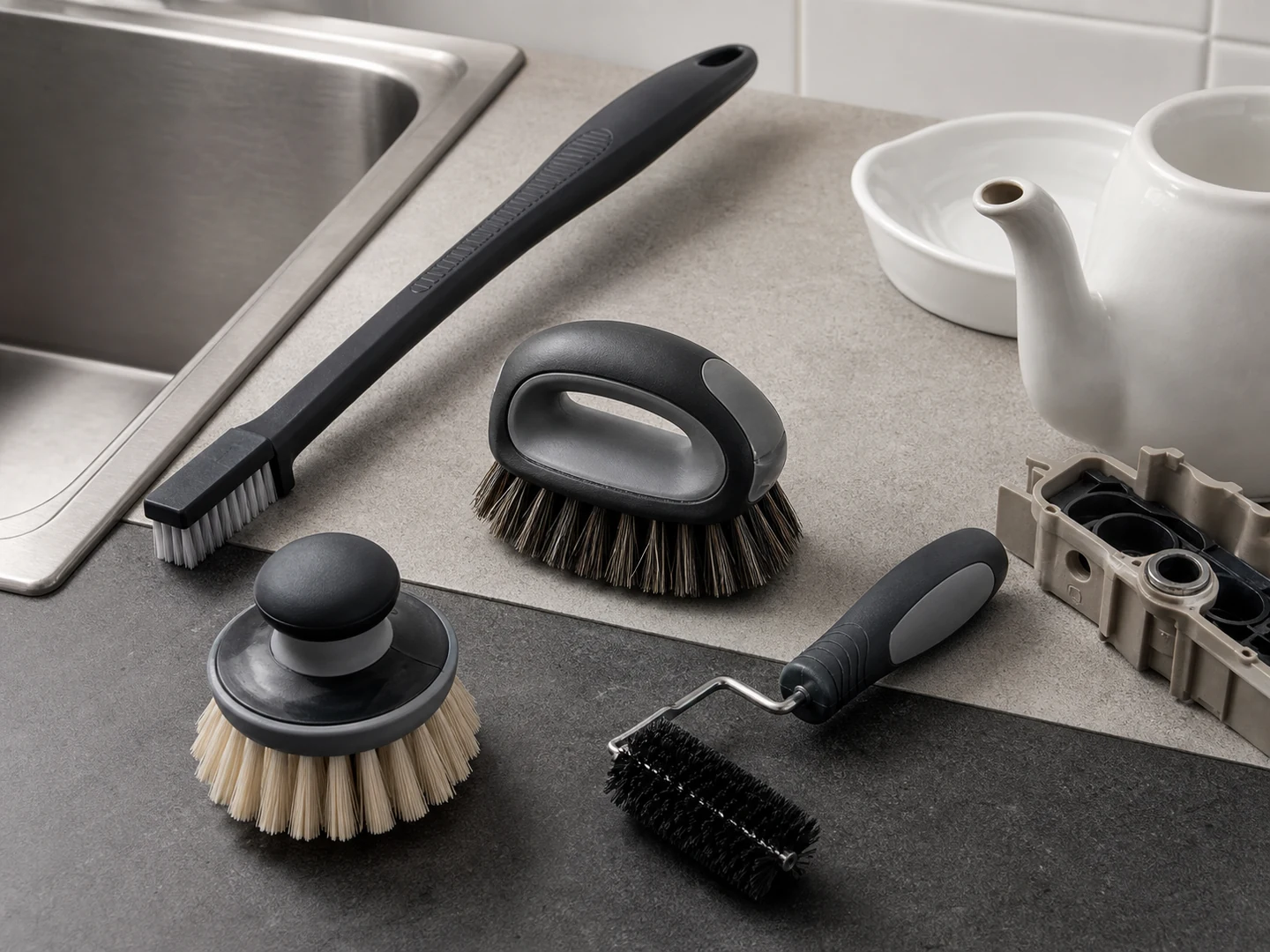
Custom Handheld Detail Brushes
Choose a handheld detail brush when you need direct control in seams, recesses, fittings,…
See how this type is built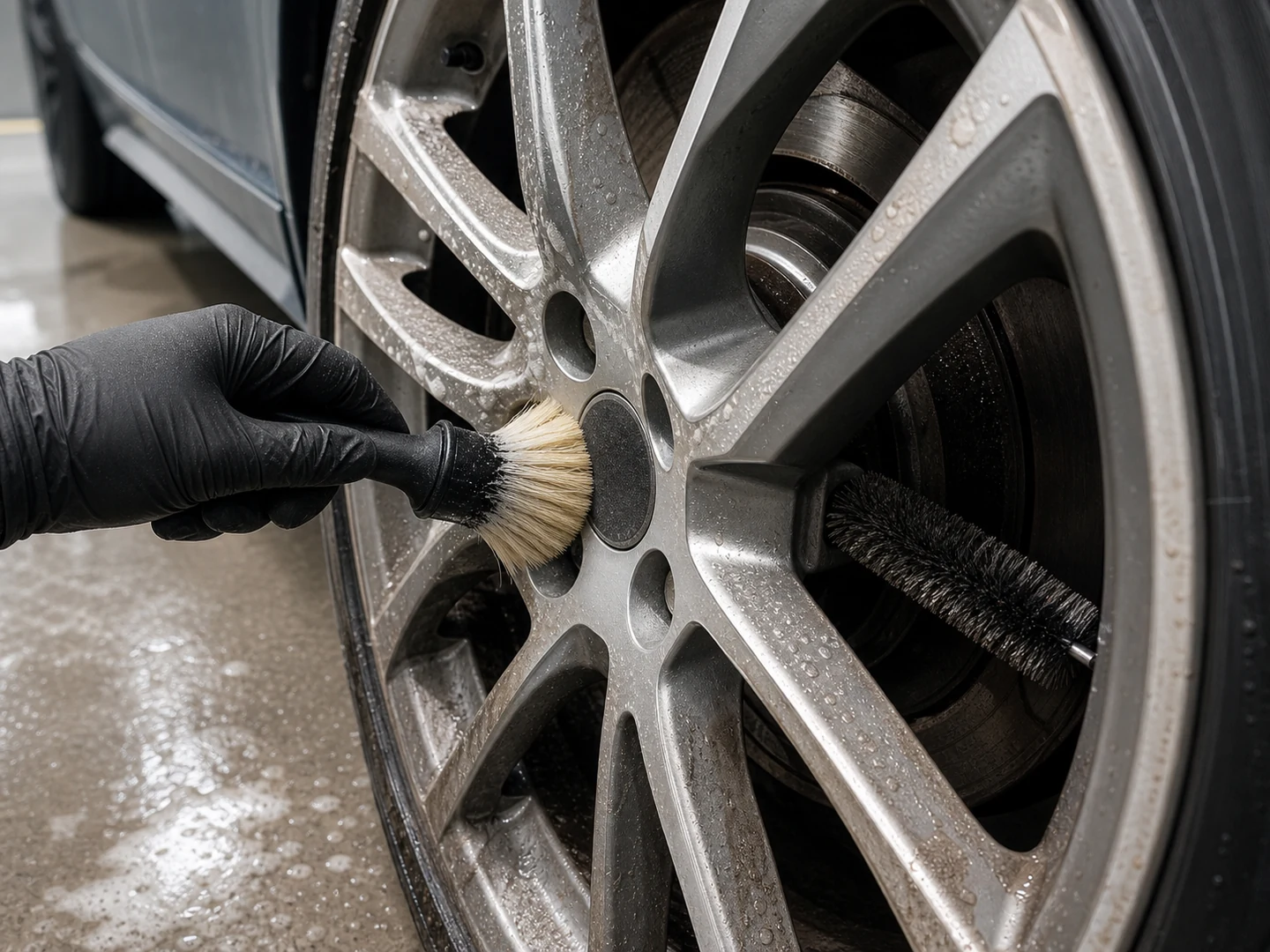
Wheel & Rim Cleaning
For Wheel & Rim Cleaning, the brush must reach the working area, disturb or…
See the cleaning job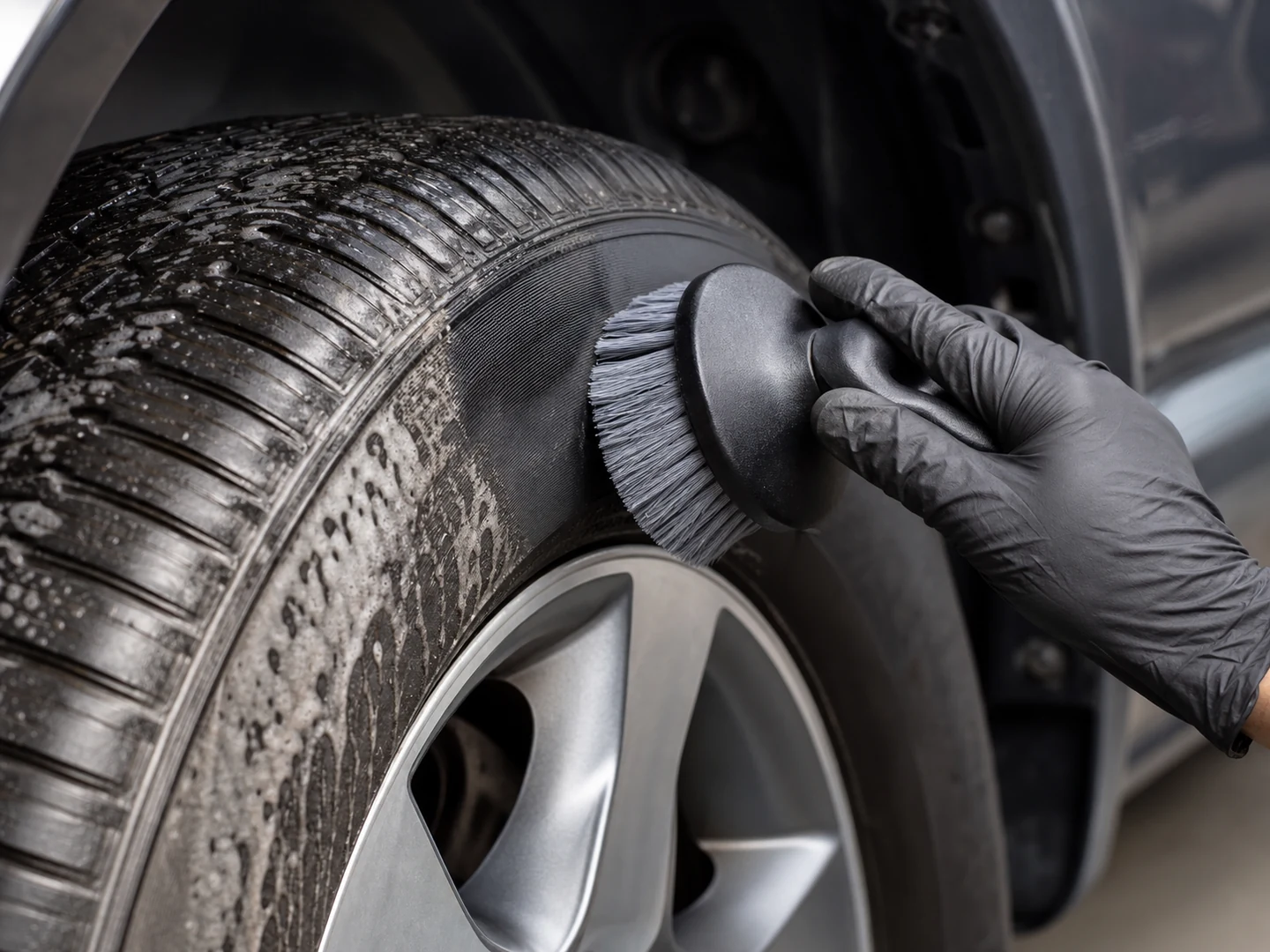
Tire Cleaning
For Tire Cleaning, the brush must reach the working area, disturb or collect silt…
See the cleaning job
Automotive Detail Cleaning
For Automotive Detail Cleaning, the brush must reach the working area, disturb or collect…
See the cleaning jobCustom Manufacturing RFQ
Describe Your Application
Please include the main sizes, application, residue, preferred material, interface, quantity, and any drawing or sample available.
Drawing or photo optional — it speeds things up, it does not gate the enquiry.
Custom Brush RFQ
Send Your Brush Project
Upload a drawing, product photo, or sample photo and provide the core dimensions and cleaning conditions.
“We need a brush to remove wet residue from a stainless steel conveyor, about 800mm wide. The current brush wears quickly. We can send photos.”
“We sell drinkware and need a cleaning brush to include with the product. Quantity around 5,000 pieces.”