
Custom Cleaning Brush
Golf Ball Cleaning Brush
Custom golf ball cleaning brushes for hand use and ball washer inserts. Nylon, PP, or brass wire sized to clean dimples without dulling ball covers.
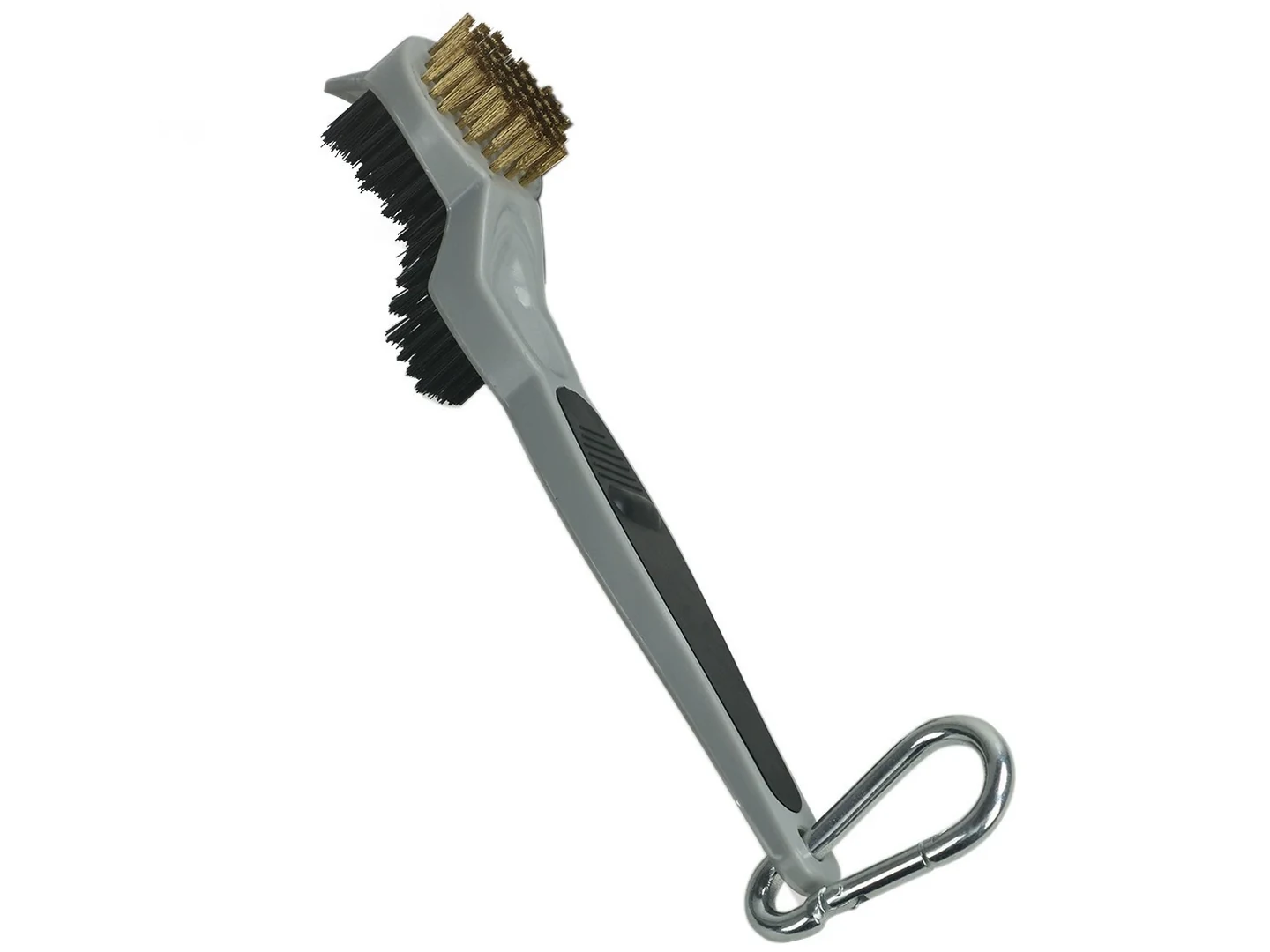
Small brush
500 pcs
Minimum order
Held in one hand: tube, bottle, detail and swab brushes — including long-handled ones with a small head.
Production lead time, once the specification is confirmed
- Up to 500 pcsWithin 7 days
- 501–50,000 pcsWithin 14 days
- Over 50,000 pcsWithin 21 days
Peak season can extend these times; the shipping date is confirmed in writing with your quotation. Sampling and shipping are quoted separately.
A Golf Ball Cleaning Brush is a bristled cleaning tool for lifting mud, grass, sand, and general outdoor dirt out of the dimpled cover of golf balls. It is available as a hand-held brush or a machine-mounted insert for ball washers, with filament material, stiffness, and density matched to the ball surface and the cleaning environment.
What can this brush do for you?
Reaches into dimples instead of pushing debris over them
Dirt collects inside recessed dimples, not only on the raised land area. The filament diameter and trim length are selected so individual bristles bend into the dimple and lift out mud and grass rather than wiping across the top of the cover. One pass through a ball washer removes what a cloth or flat sponge leaves behind.
Works wet or dry without changing contact behavior
Nylon PA and polypropylene filaments absorb very little water, so the brush keeps the same bristle stiffness in a soaked ball washer or during a dry rub on the tee box. Brass wire is available for hardened deposits, but only on non-cosmetic surfaces where the cover finish is not a concern.
Limits contact pressure on the ball cover
The curved head profile spreads bristle contact over the ball surface, and the flexing tips release force instead of dragging a hard edge across the cover. Fine-gauge nylon or PP is specified for premium urethane, Surlyn, and logoed balls so repeated cleaning does not dull the finish.
Sheds grass and sand instead of holding it
Open row spacing and crimped or straight filament choices let loose debris fall away when the brush is flushed with water or tapped against a bucket. In ball washer service, this keeps the bristle field from turning into a mud mat that smears the next ball.
Adapts to a hand tool or a washer insert
The same bristle formula can be built as an ergonomic hand brush, a replaceable rectangular insert for a ball washer channel, or a rotating disc with a shaft bore. You can standardize one cleaning behavior across pro shop counters, carts, range operations, and reconditioning lines.
What is a Golf Ball Cleaning Brush?
A Golf Ball Cleaning Brush is a bristled hand tool or replaceable brush insert designed specifically for the outer cover of a golf ball. It differs from a general cleaning brush in two ways: the bristle layout is arranged for a curved, dimpled surface, and the filament stiffness is matched to the soft urethane, Surlyn, or painted cover so contact removes dirt without scratching or dulling the ball.
In hand use, the operator rolls the ball against the brush with a circular or push-pull motion. In a ball washer, the brush block is mounted around the ball path so the rotating ball or brush passes across the cover while water and detergent carry loosened mud, grass, and sand away. A built-in handle or machine mounting interface is selected at order time to match the work area.
This is a surface cleaning tool, not a sanitizer and not an abrasive for removing paint, deep stains, or heavy scale. Its job is regular removal of field debris while preserving the ball cover in high-use environments.
Technical Specifications
The production ranges below cover the standard configurations. Final values are matched to ball diameter, dimple depth, washer housing, and cleaning process.
| Parameter | Value / Options |
|---|---|
| Overall length | 120–450 mm for hand-held tools; insert block length set by washer housing |
| Head width | 3–100 mm, depending on hand brush size or washer channel width |
| Working length | 10–120 mm — the section carrying cleaning bristles |
| Trim length (bristle length) | 8–40 mm; longer trim flexes into dimples, shorter trim gives more scrubbing force |
| Filament diameter | 0.10–0.80 mm; finer for sensitive covers, heavier for range balls |
| Handle diameter | 8–35 mm for hand-held configurations |
| Filament materials | Nylon PA, Polypropylene PP, Brass wire — selected by debris and cover sensitivity |
| Base / backing material | PP, nylon, wood, or metal core depending on mounting and water exposure |
| Bristle pattern | Straight rows, herringbone, spiral, or radial; matched to hand motion or ball rotation path |
| Mounting / interface | Integral handle, screw/snap insert, shaft bore, or custom bracket |
| Use temperature | 5–100°C material-dependent; confirm chemical and water exposure separately |
| Brush type | Custom Handheld Detail Brushes |
| How it is driven | Hand-guided |
| Cleaning target | pro shop and clubhouse ball washer, driving range and practice ball, and cart-mounted and portable cleaning station cleaning |
| Surface or part | holes, bores, channel, housings, pads, and rolls |
| Residue or debris | sand, mud, scale, dried mud, and paint |
| Mounting / connection | Integral handle, screw/snap insert, shaft bore, or custom bracket |
If the ball washer uses a rotating brush, the head diameter and shaft bore must be specified to fit the drive shaft. Hand brush dimensions are selected to keep the tool controllable while the operator rolls the ball against the bristle field.
Where does this brush work best?
- Pro shop and clubhouse ball washers: replaceable insert brushes clean customer and rental golf balls between rounds; nylon PA or PP works with standard washer water and mild detergent.
- Driving range and practice ball cleaning: heavily soiled range balls with packed sand or dried mud need firmer nylon or brass wire; the brush can be built as a machine insert or a wide hand brush for manual tub cleaning.
- Used ball reconditioning and resale preparation: gentle nylon filaments remove surface dirt before grading, imprinting, or repackaging without dulling the original cover finish.
- Cart-mounted and portable cleaning stations: compact hand brushes with short handles clip or hang alongside a water bottle, giving players a quick way to clean a ball between holes.
- Manufacturer or distributor surface checks: a controlled bristle brush removes line debris after molding or coating before visual inspection of the ball surface; fine filaments avoid marking.
How do I choose the right one?
Decide where the brush will run
Start by confirming whether the brush is hand-held or machine-mounted. Hand tools are selected by handle length, handle diameter, and head width that fits the operator’s grip and the ball. Machine inserts are selected by the washer housing channel width, mounting hole positions, shaft bore, and clearance around the ball path. Measure those before choosing the bristle configuration.
Match filament material to the debris and the cover
| Cleaning condition | Suggested filament | Cover consideration |
|---|---|---|
| Mud, grass, light sand on urethane or Surlyn balls | Nylon PA, 0.25–0.35 mm | Standard choice; safe for most covers |
| Damp grass, detergent or chemical exposure | Polypropylene PP, 0.15–0.25 mm | Lower moisture absorption; lighter scrubbing |
| Caked or hardened sand on practice balls | Nylon PA, 0.40–0.60 mm | Test on sample cover before full run |
| Mineralized residue or heavy scale on range balls only | Brass wire, 0.20–0.40 mm | May dull gloss; not for premium or clearcoated balls |
Set trim length and bristle pattern around the dimple, not only the ball diameter
Standard golf balls share the same diameter, but dimple depth and spacing vary by brand. Longer trim (30–40 mm) flexes into deep dimples and is gentler on the cover. Shorter trim (10–20 mm) provides more scrubbing pressure for caked dirt but increases the chance of cover dulling if the filament is too stiff. The bristle pattern should be aligned with the main motion path: straight rows for push-pull cleaning, radial or spiral patterns for rotating washer drums.
Check the environment
Water, mild detergent, UV exposure, and operating temperature affect base, handle, and filament life. Polypropylene backing and handles resist moisture and chemicals well; nylon is tougher but absorbs more water. If the process uses anything stronger than mild detergent, confirm chemical compatibility before finalizing the material mix.
Know when a different brush fits better
Do not use this brush to remove paint overspray, label adhesive, deep oxide, or baked-on scale — that requires a solvent, abrasive pad, or harsher wire brush. Do not use it on golf club faces or grooves; a club brush with short stiff bristles is the correct tool for that job. If the goal is sanitizing or disinfecting balls, brushing must be paired with an approved cleaning or sanitizing solution; the brush alone only removes surface debris.
Can I customize this brush?
Golf ball cleaning brushes are configured around the specific ball type, washer design, and cleaning process. To start, provide the ball cover material, dimple depth if known, cleaning environment (hand, washer, tub, or line), mounting constraints, detergent or water conditions, and target cleaning cycles. A drawing or sample of the washer housing or an existing brush helps us match the interface.
We can adjust:
- Filament system — material (Nylon PA, PP, brass wire), diameter, trim length, crimp or straight, color, and bristle density
- Head geometry — width, working length, flat or curved face, channel shape, disc/roller form, or double-sided design
- Handle — length, diameter, grip shape, soft-touch overmold, hanging hole, or molded branding
- Mounting / interface — screw/snap insert, shaft bore, threaded hub, keyway, or custom bracket for your washer model
- Base / backing — PP, nylon, wood, or metal core based on water and chemical exposure
- Color and marking — custom colors, pad print, laser marking, logo, or identification code
- Packaging — bulk, individual bag, retail sleeve, repair kit, or private label packing
If your project requires material documentation, inspection, or third-party testing support, we can assist with those requirements during the customization process.
When is a golf ball cleaning brush worn out rather than just dirty?
How do I know which filament is safe for a premium urethane golf ball cover?
Start with fine nylon PA in the 0.20–0.30 mm range and a medium trim length. Run the brush on several sample balls through the same wet or dry motion you will use in production, then inspect the cover under strong light for dulling or micro-scratches. If the finish still looks unchanged after repeated cycles, the filament is safe. Save brass wire for range balls where cosmetic condition is not a requirement.
Will one brush head clean all dimple patterns?
Standard ball diameter is the same, but dimple depth, spacing, and shape differ between brands. A brush with flexible fine filaments and a trim length long enough to reach the deepest dimples will usually adapt across patterns. If you have both very shallow and very deep dimple balls in the same operation, we can sample multiple trim lengths or a mixed-density bristle field to verify coverage on both.
Does the brush replace the water flush inside a ball washer?
No. The brush loosens and dislodges mud, grass, and sand, but the flush carries the loosened debris out of the washer. If the washer spray is weak or blocked, debris will re-settle on the bristles and the next ball will come out dirty. Keep the water flow directed across the bristle field for best results.
What should be checked during routine brush inspection?
Look for permanently flattened bristles, missing tufts, splayed ends, or matting in the rows. Check the base for cracks and the mounting holes for elongation. Run a few test balls and compare cleaning time against a new brush. When the brush needs two or three passes to do what one pass used to do, plan a replacement.
Can this brush be used dry without water?
Yes. A hand-held nylon or PP version knocks off loose grass and dry sand quickly. Wet mud will smear if brushed dry, so use a wet brush or wipe the ball after a dry pass. Brass wire used dry removes more material and is more likely to scratch the cover, so reserve it for environments where cover finish is not a concern.
What is the difference between this brush and a golf club cleaning brush?
A golf ball brush uses longer, more flexible filaments that follow the curved dimpled surface. A club brush uses short, stiff bristles to scrape dirt from grooves and face edges. Using a club brush on a golf ball can scratch the cover, and using a ball brush on a club face will not dig material out of the grooves. Keep the two tools separate.
Guides that go deeper on this
We have not written a guide specific to this one yet. The material that covers selection, filament, dimensions, maintenance and sourcing is collected in the technical resources library.
Custom Manufacturing RFQ
Describe Your Application
For a custom quote, we need the key dimensions, surface or part, residue, material preference, quantity, and reference image or drawing.
Drawing or photo optional — it speeds things up, it does not gate the enquiry.
Custom Brush RFQ
Send Your Brush Project
Upload a drawing, product photo, or sample photo and provide the core dimensions and cleaning conditions.
“We need a brush to remove wet residue from a stainless steel conveyor, about 800mm wide. The current brush wears quickly. We can send photos.”
“We sell drinkware and need a cleaning brush to include with the product. Quantity around 5,000 pieces.”