What Is a PCB Cleaning Brush?
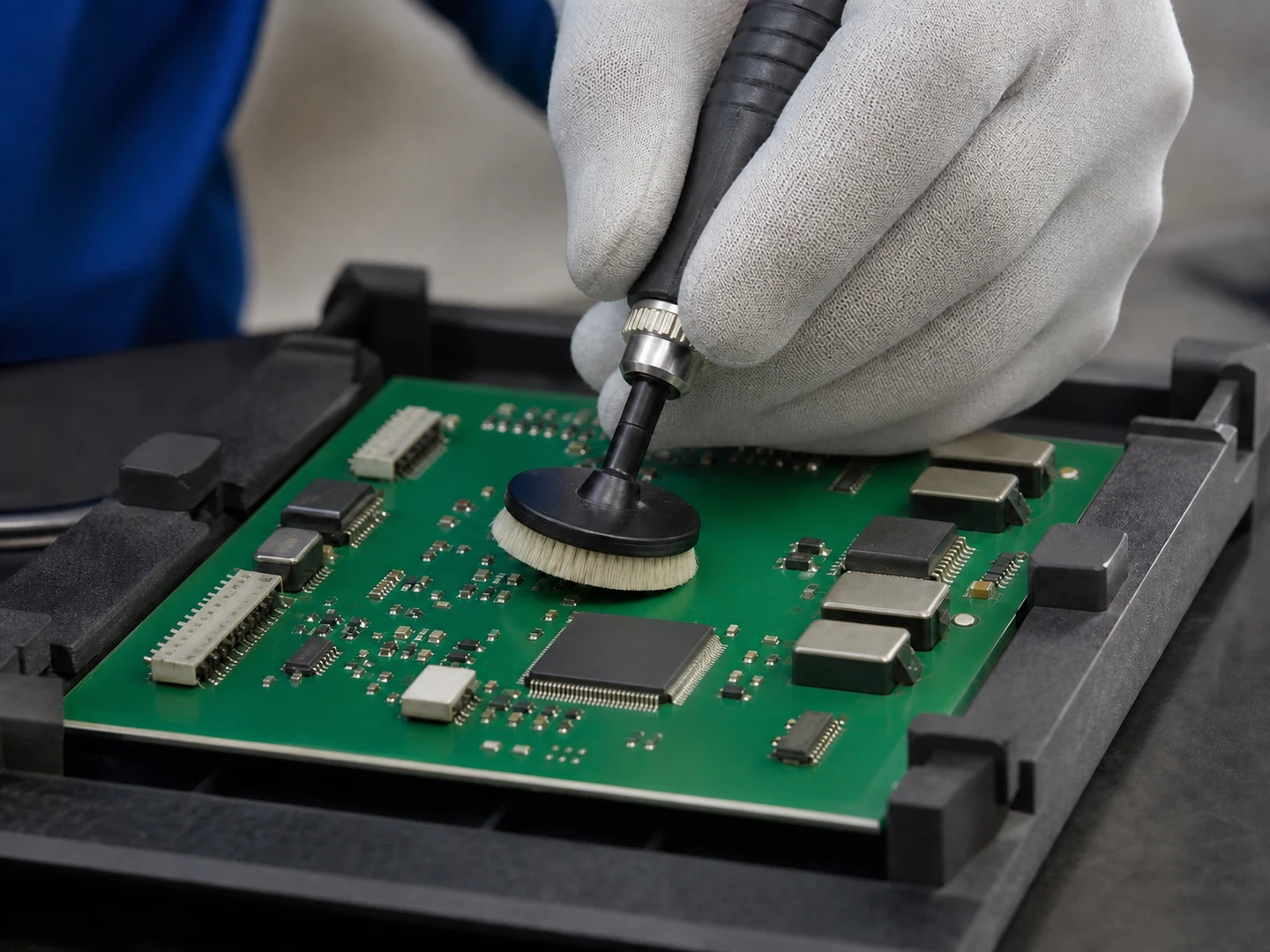
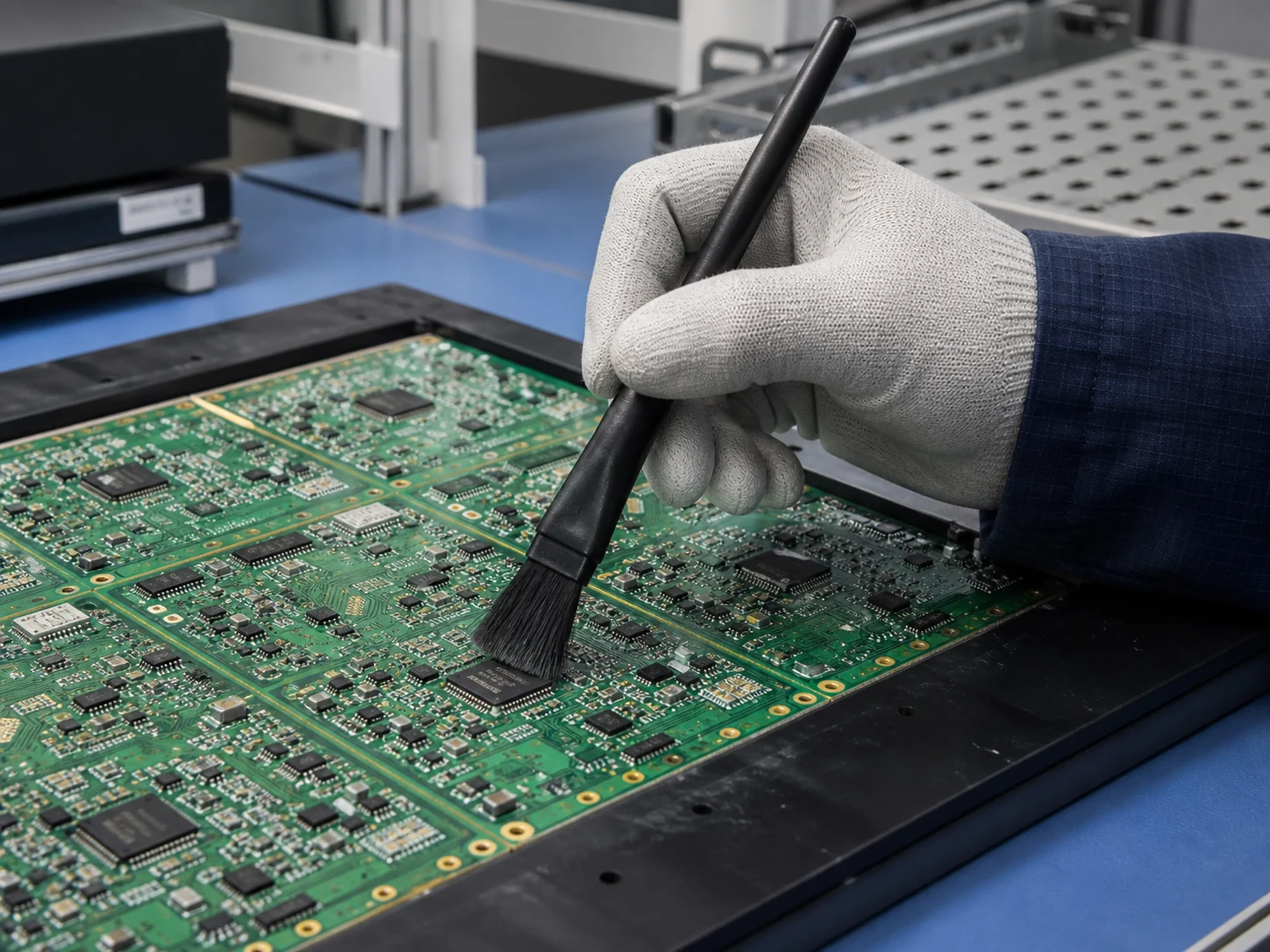
A PCB cleaning brush is a hand tool designed to apply cleaning solvents and mechanically agitate residues from printed circuit board surfaces, assemblies, and components. Brushes used in electronics manufacturing and rework must balance effective scrubbing with the need to prevent static build-up, minimize particulate shedding, and leave behind as little foreign material as possible.
Common Types of PCB Cleaning Brushes
Not all cleaning brushes are safe for board-level work. The most common options found in production and rework environments include:
- Anti-static (dissipative) brushes – made with conductive fibers or carbon-loaded handles to bleed static charge to ground.
- Soft nylon brushes – general-purpose, often used with solvents; can be treated for static dissipation.
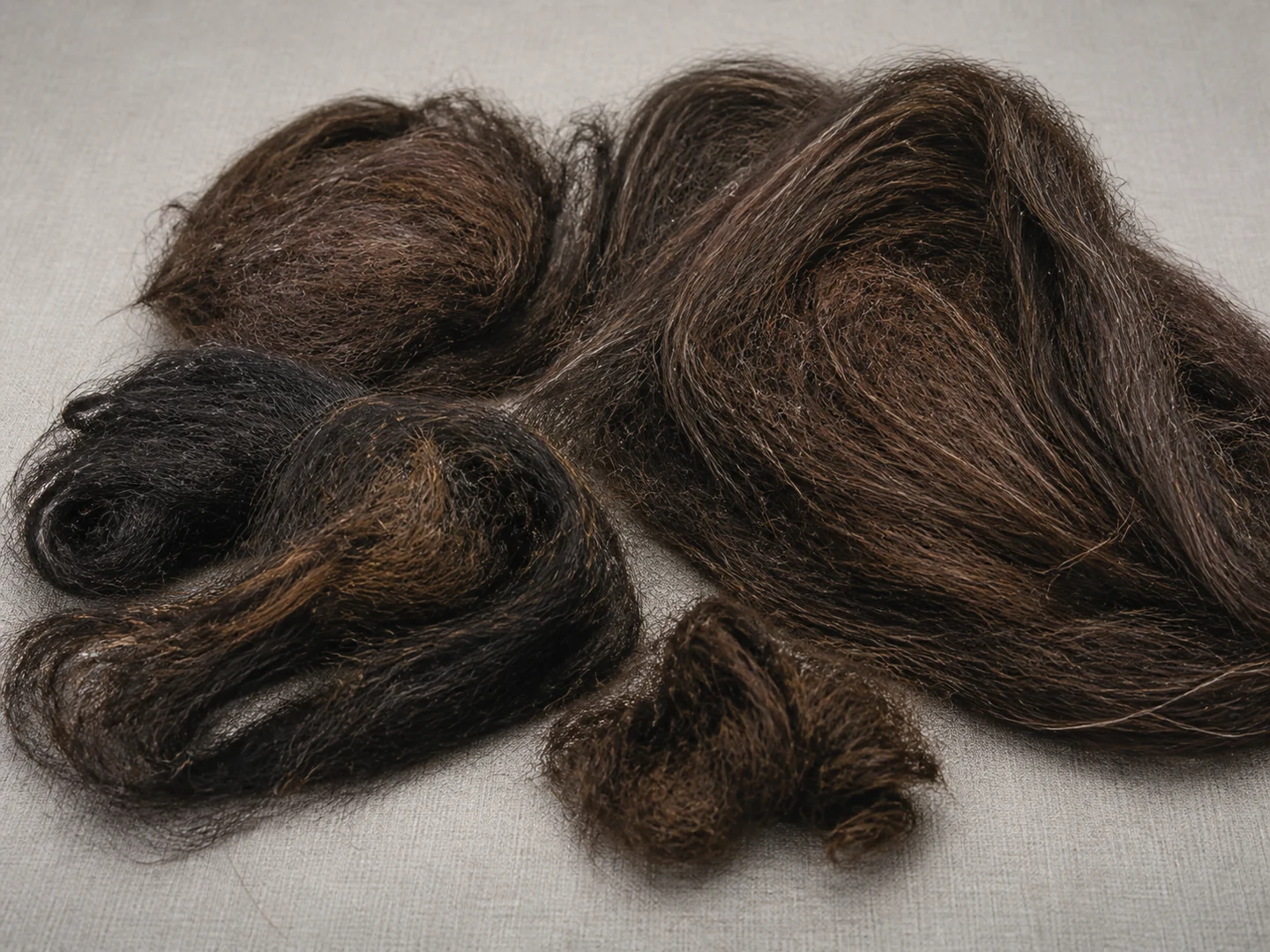
- Natural bristle brushes – typically horsehair or goat hair, valued for low abrasion and low particle generation.
- Low-residue cleanroom brushes – engineered to release minimal fibers and extractables, compatible with aggressive solvents.
- Conductive brushes – often used when connecting the brush directly to an ESD ground is needed.
The right choice depends on the cleaning task, the sensitivity of the assembly, and the manufacturing environment.
ESD-Control Brush Options Compared
When static protection is critical, brush resistance and grounding path become decision factors. The table below summarizes typical characteristics:
| Brush Type | Surface Resistance | Typical Application | Important Note |
|---|---|---|---|
| Conductive | 10³–10⁵ Ω | Direct ground connection; very high-sensitivity components | Requires verified ground path; can be too stiff for fine-pitch parts |
| Static-dissipative | the documented static-dissipative range | General ESD-safe workstations; hand cleaning | Often provides a comfortable balance of protection and usability |
| Insulative (standard) | outside the selected static-control range | Non-ESD-sensitive areas; mechanical cleaning only | Can generate damaging static voltages; avoid on unprotected boards |
These ranges are typical and should be confirmed against a manufacturer’s test data before being used in a verified ESD control plan.
Low-Residue Brush Material Selection
Residue left behind by brush fibers, coatings, or binders can lead to corrosion, leakage currents, or adhesion problems. Material selection directly affects cleanliness:
| Material | Shedding / Residue Risk | Solvent Compatibility | Typical Cleaning Pressure |
|---|---|---|---|
| Soft nylon (untreated) | Low to moderate; can shed when worn | Good with most alcohols and hydrocarbons | Light to medium |
| Anti-static nylon | Low; similar to untreated nylon | Check coating compatibility with aggressive solvents | Light to medium |
| Natural bristle (horsehair) | Very low; refined grades often used in cleanrooms | Limited with strong acids or ketones | Light only |
| Cleanroom foam/polyester | Extremely low; often pre-washed | Excellent with most cleaning chemistries | Very light; minimal mechanical action |
Choosing a brush with pre-washed bristles and a non-shedding ferrule design can further reduce contamination.
How to Choose the Right PCB Cleaning Brush
Use this checklist to align the brush with the job requirements:
- Component sensitivity – Are there exposed device leads, fine-pitch ICs, or bare die? Choose softer bristles.
- Flux residue type – Rosin-based, water-soluble, or no-clean pastes require different solvent and mechanical action.
- Static-control needs – If the station has a wrist strap and grounded mat, a dissipative brush that connects to the same ground is often sufficient.
- Shedding risk – For optical assemblies or RF circuits, use ultra-low-lint natural bristle or cleanroom polyester.
- Solvent exposure – Check that the handle, ferrule, and bristles can withstand the cleaning solvent without degrading.
- Cleaning pressure – Fragile lead frames and thin traces require light touch; a stiffer brush is only for robust connectors or housings.
- Brush size and shape – Small, angled brushes access tight areas; wider brushes speed up large board cleaning.
Common Mistakes When Cleaning PCBs with Brushes
Even experienced operators can make errors that compromise board reliability. Avoid these missteps:
- Using wire brushes near components – Metal bristles can cut traces, short pins, and generate ESD. Reserve wire tools for chassis or connector cleaning off the board.
- Ignoring brush grounding – A dissipative brush only works when it is properly connected to a common point ground. An ungrounded dissipative brush can become a static generator.
- Choosing by cost alone – The lowest-cost brush may shed fibers, react with solvents, or lack any ESD-control property.
- Applying too much pressure – Scrubbing hard enough to deform bristles risks lifting pads, cracking ceramic capacitors, or bending leads.
- One brush for all chemistries – Cross-contamination between different flux types can create corrosive mixes. Dedicate brushes or clean them thoroughly between chemistries.
- Not replacing worn brushes – As bristles fatigue, they shed more and lose their original stiffness, reducing cleaning effectiveness and increasing contamination.
When a Brush Isn’t Enough: Process Validation and ESD Audits
A brush is only one part of a reliable cleaning process. Manual brushing cannot support uniform results across all boards, and it often fails to meet the consistency needed for high-reliability applications. Consider these situations where a brush alone is insufficient:
- Process validation is required – When the cleaning step is part of a documented manufacturing flow (e.g., IPC, mil-spec), automated cleaning systems with validated parameters and residue testing (ion chromatography, SIR testing) are necessary.
- Residue limits are tight – If ionic cleanliness must be below 1.56 μg/cm² NaCl equivalent, manual brushing is rarely consistent enough. A vapor degreaser or ultrasonic system with verified rinse cycles may be mandatory.
- ESD audit review – During an ESD audit, if the facility cannot demonstrate that brushes are part of the grounded workstation and that they are regularly tested for resistance, the auditor may flag the process. Switching to a documented ESD brush program with periodic verification is advisable.
- Complex geometry or high density – Boards with tight under-component clearances, RF shields, or stacked connectors often need spray-under-immersion or jet cleaning to reach all areas.
A brush can be a useful tool in a wider cleaning strategy, but it should not be treated as a standalone solution for critical applications without process data to back it up.
Final Takeaway
The best PCB cleaning brush matches the cleaning task and the board’s sensitivity without introducing new risks. Start by identifying the most vulnerable component on the board, then choose a dissipative or conductive brush with solvent-compatible, low-residue bristles. Keep the brush grounded, inspect it regularly, and consider automated cleaning when consistency and verification are non-negotiable. Selecting the right brush is a small decision that pays off in fewer field returns and higher product confidence.
Frequently Asked Questions
Can I use a regular paintbrush for PCB cleaning?
Ordinary paint brushes are typically not ESD-safe, may shed significant fibers, and can have adhesives or coatings that dissolve in cleaning solvents. They are not recommended for any board-level cleaning where reliability matters.
How do I test if a brush is dissipative?
Use a surface resistance meter or a megohmmeter with appropriate electrodes. Measure from the bristles to the handle’s grounding point. The reading should fall within the dissipative range (typically the documented static-dissipative range required by your process) and should be recorded for your ESD control log.
What is the difference between anti-static and ESD-safe?
“Anti-static” often refers to materials that resist triboelectric charging, while “ESD-safe” implies a broader system approach that includes grounding and static dissipation. In brushes, an anti-static brush may be dissipative but must be used within a grounded ESD program to be fully effective.
Can I clean a PCB with a wire brush if I’m careful?
Wire brushes, even soft brass bristles, pose a high risk of scratching solder mask, cutting fine traces, shorting pins, and creating microscopic metal debris that can cause electrical leakage. They should be avoided directly on PCB surfaces and components.
How often should I replace a PCB cleaning brush?
Replace the brush when bristles begin to flare, break, or lose stiffness, or after a set number of cycles defined by your process. If visual inspection shows shedding or chemical degradation, retire the brush immediately.
Do I need different brushes for different fluxes?
Yes, it is good practice to segregate brushes by flux type to prevent cross-contamination. Rosin flux residues can mix with no-clean residues and become harder to remove or form corrosive compounds if not completely cleaned.
Are natural bristle brushes always the lowest-residue option?
High-quality natural bristle brushes can offer very low particle shedding, but they must be processed for cleanroom use and verified for ionic cleanliness. Not all natural bristle brushes are created equal; always review test data or perform your own residue test before adopting one for critical cleaning.
What solvent should I use with my brush?
The solvent depends on the flux type and the board’s material compatibility. Isopropyl alcohol (IPA) is common for rosin fluxes, but many no-clean chemistries require tailored solvent blends. Always check the brush’s material compatibility with the chosen solvent to avoid degrading the bristles or handle.
Technical References
- EOS/ESD Association — ESD Fundamentals
- EOS/ESD Association — Principles of ESD Control
- British Plastics Federation — Thermoplastics
Which bristle material fits this job — Nylon PA, Horsehair or Goat Hair?
| Material | Continuous temperature (°C) | Peak temperature (°C) | Water absorption |
|---|---|---|---|
| Nylon PA | 93 | 121 | 0.3–9% by PA grade and conditioning |
| Horsehair | 60–80 | 100–120 | 8–15% |
| Goat Hair | 50–70 | 90–110 | 12–20% |
Figures as published by Brushtec / DuPont. Confirm the exact grade against the supplier datasheet before ordering.
When are Handheld Detail Brushes the wrong choice for pcb cleaning?
- Handheld Detail Brushes — Use a tube brush, powered brush, scraper, wipe, sponge, or vacuum when the target is internal, heavily bonded, or highly delicate.
- Nylon PA — The nylon family spans several grades, so heat, moisture and chemical limits should follow the selected PA resin rather than a generic nylon value.
- Horsehair — Not for aggressive scrubbing or wet chemical process cleaning.
- Goat Hair — Best suited to soft dusting, polishing, and sensitive-surface contact; not a substitute for aggressive scrubbing or a validated wet chemical-process fill.
What should replace Handheld Detail Brushes for pcb cleaning?
- Handheld Detail Brushes — Handheld detail brushes cover general precision cleaning; auto-detailing brushes impose tighter controls for painted, polished, leather, display, and trim surfaces.
- Nylon PA — Compare Nylon PA with PP, PBT, PET. Change material when wet stiffness, temperature, chemical resistance, conductivity, particle shedding, or surface marking becomes the limiting factor.
- Horsehair — Compare Horsehair with Boar bristle, goat hair, microfiber. Change material when wet stiffness, temperature, chemical resistance, conductivity, particle shedding, or surface marking becomes the limiting factor.
- Goat Hair — Compare Goat Hair with Boar bristle, goat hair, microfiber. Change material when wet stiffness, temperature, chemical resistance, conductivity, particle shedding, or surface marking becomes the limiting factor.