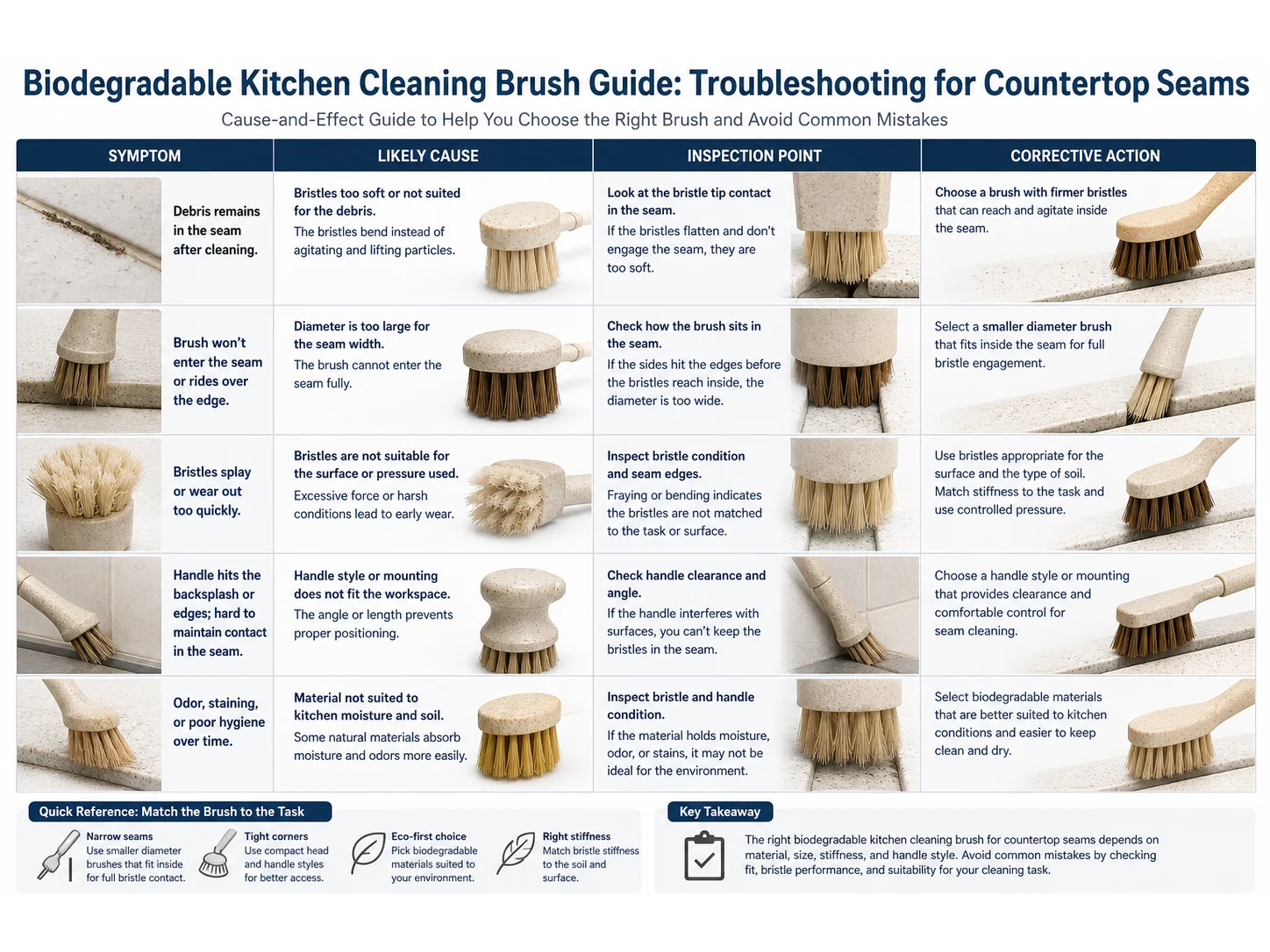
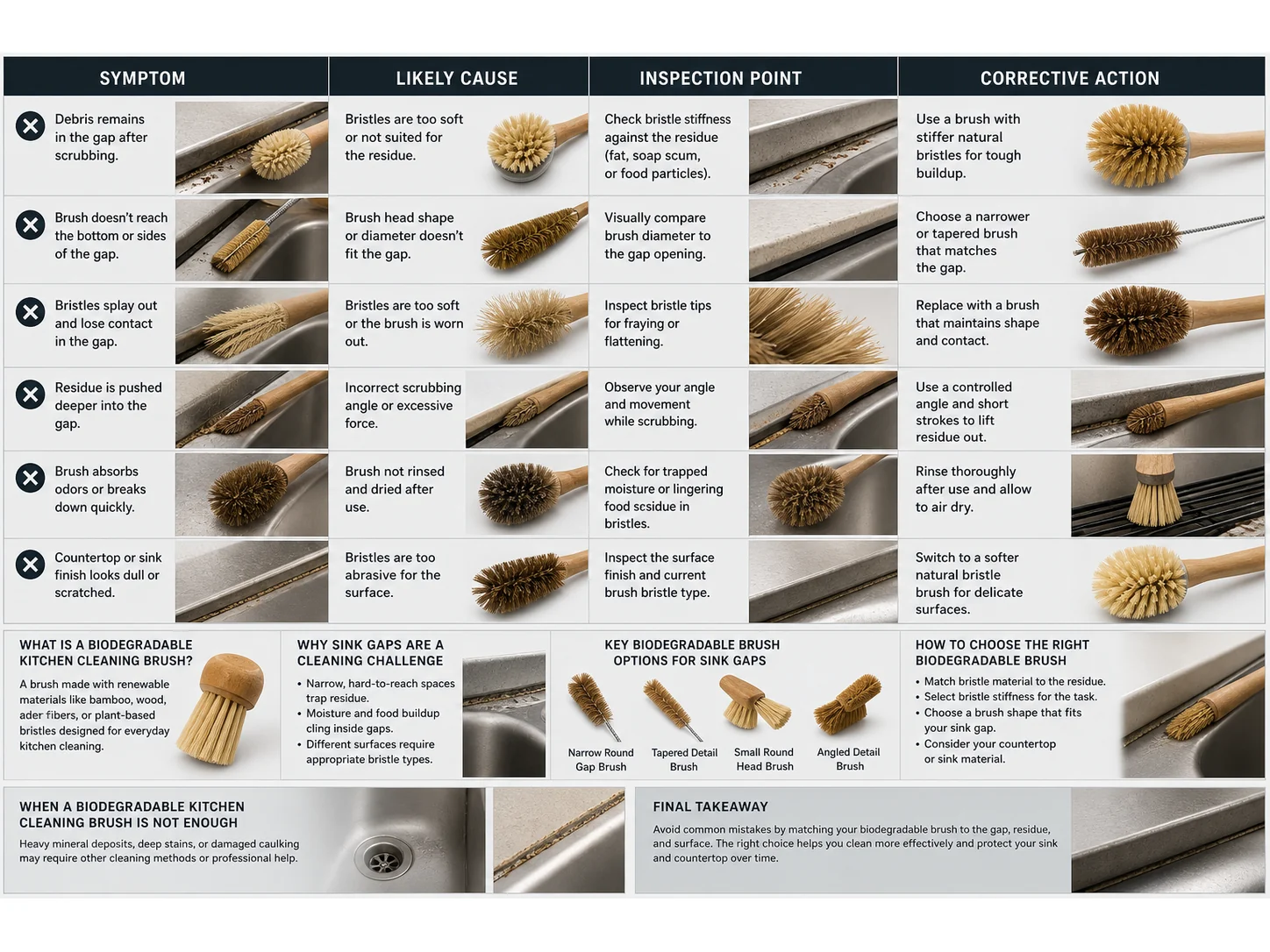
What Is a Biodegradable Kitchen Cleaning Brush?
A biodegradable kitchen cleaning brush is a cleaning tool with a handle and bristles made from materials capable of decomposing through natural biological processes (e.g., plant fibers, untreated wood, biodegradable plastics). In the context of juicer filter cleaning, it is a specialty brush designed to reach into narrow mesh surfaces and dislodge particles without harming metal or plastic screens. The key benefit is a more sustainable end-of-life compared to petroleum-based nylon brushes, especially in high-consumption settings where brushes are frequently replaced.
Common Material, Design, and Construction Options
For grill brush bristle-shedding risk, this article cites the CDC MMWR — Wire Bristle Grill-Brush Ingestion Injuries instead of treating wire-bristle grill cleaning as a harmless detail.
For kitchen cleaning examples, the FDA — Food Safety in Your Kitchen supports the distinction between normal cleaning, food handling, and hygiene habits.
For general foodborne-illness prevention language, the CDC — Preventing Food Poisoning is used as the public-health reference.
For the material or regulatory boundary in this section, the supporting reference is eCFR — 21 CFR 177.1500 Nylon Resins.
For the material or regulatory boundary in this section, the supporting reference is eCFR — 21 CFR 177.1520 Olefin Polymers.
For the material or regulatory boundary in this section, the supporting reference is eCFR — 21 CFR 177.1630 Polyethylene Phthalate Polymers.
When specifying a custom biodegradable brush, you will encounter several practical choices. The main elements to define are:
- Bristle material: Natural fibers like tampico, sisal, or coconut coir; biodegradable synthetics such as PLA (polylactic acid) fibers; or mixed blends. Each offers different stiffness, water absorption, and durability.
- Handle material: Untreated beechwood, bamboo, or compostable bioplastic. Wood handles should be finished with food-safe oils if constant moisture is expected.
- Core and mounting: Twisted wire (stainless steel or galvanized), staple-set, or molded one-piece construction. The core affects how well bristles stay in place and whether metal contamination is a risk.
- Bristle stiffness: Soft (for delicate mesh), medium (general pulp removal), or firm (for dried-on residue). Stiffness is influenced by fiber type, diameter, and trim length.
- Shape and diameter: Straight, tapered, or conical; diameter must match the juicer filter’s inner width to ensure effective contact without jamming.
Key Design Choices for Juicer Filter Cleaning: A Comparison
| Design Element | Biodegradable Option | Non-Biodegradable Alternative | Best For | Considerations |
|---|---|---|---|---|
| Bristles | Tampico, sisal, coir, PLA | Nylon, polyester, PP | Tampico (medium, durable), sisal (aggressive but can scratch), PLA (consistent stiffness, full biodegradability in industrial compost) | Tampico softens when wet, sisal may be too abrasive, PLA requires specific composting conditions. |
| Handle | Untreated wood, bamboo, bioplastic | Polypropylene, ABS | Wood (comfortable grip, biodegradable), bamboo (fast-growing resource), bioplastic (consistent shape) | Wood may warp or crack if not dried properly; some bioplastics degrade only in high-heat composting. |
| Core/Wire | None (one-piece molded), or stainless steel wire | Galvanized steel, nylon filament | Stainless steel is durable and food-safe if rust-resistant; molded one-piece avoids metal entirely. | Galvanized wire can corrode; stainless steel is not biodegradable but extends brush life. |
| Stiffness | Soft, medium, hard (adjusted by fiber choice and trim) | Same grading system | Soft for fine mesh, medium for standard pulp, hard for stubborn dried residue | Hardness must be balanced with risk of scratching juicer screen. |
How to Choose the Right Custom Brush for Juicer Filters
Residue Type and Surface Sensitivity
Identify what you are cleaning: citrus pulp, leafy greens, berry seeds, or dried-on fibers. Soft mesh filters (e.g., ultrafine stainless steel, nylon screens) demand softer bristles to prevent micro-scratches. If the residue is baked-on or sugary, a medium-stiff bristle with good scrubbing action may be needed, but always test a sample on the actual filter material.
Equipment Interface and Size Requirements
Measure the inner diameter, depth, and any narrowing of the juicer filter cavity. The brush diameter should be slightly smaller than the smallest point it must enter, yet large enough to make firm contact with the walls. For conical filters, specify a tapered brush profile. Also note if the brush must attach to a handle extension or a rotary tool; this affects the core design.
Wet or Chemical Exposure
Juicer cleaning often involves water, detergents, and sometimes sanitizing solutions. Check if the biodegradable materials can withstand repeated wet-dry cycles without swelling, cracking, or losing bristle integrity. Natural fibers like tampico perform well but may shed initially. Bioplastic handles may degrade if exposed to hot water above 60°C (140°F). Confirm compatibility with your cleaning chemicals.
Hygiene Expectations and Maintenance Frequency
In commercial kitchens, brushes may need daily sanitization. A one-piece molded brush without metal wire is easier to rinse and less likely to trap bacteria. If using wood, ensure it is sealed with a food-grade oil and inspected regularly for cracks. Ask the supplier for guidance on maximum temperature and drying protocols to prevent mold.
Common Mistakes When Ordering Custom Biodegradable Brushes
- Skipping sample testing: Always test a prototype on your exact juicer filter, using your cleaning process, before committing to a bulk order.
- Ignoring bristle retention: A handle that looks good but loses bristles after a few uses causes frustration and potential contamination. Ask for retention test data or request a staple-set alternative.
- Focusing only on cost drivers per unit: Cheaper materials may degrade faster, requiring more frequent replacement and canceling out the environmental benefit.
- Not specifying the core material: Assuming a “biodegradable brush” excludes metal cores can lead to receiving a brush with non-degradable galvanized wire. Clarify if any metal is allowed.
- Overlooking brush length: A handle too short for deep juicer reservoirs forces the operator to get hands messy, defeating the purpose.
- Assuming all “biodegradable” claims are equal: Verify what standard (e.g., EN 13432, ASTM D6400) the materials meet and whether the brush will actually break down in your local waste management system.
When a Biodegradable Kitchen Cleaning Brush Is Not Enough
A biodegradable brush is ideal for daily cleaning of fresh pulp and soft residues, but it may not handle extreme conditions. If your process involves:
- High-temperature steam cleaning above 80°C regularly
- Abrasive mineral deposits that require scouring powder
- Extremely fibrous or baked-on carbonized residues that demand metal scraper tools
- Strict hygiene protocols requiring autoclave sterilization
Then a biodegradable brush might not withstand the conditions or could degrade too quickly. In such cases, consider a hybrid approach: use a durable reusable handle with replaceable biodegradable heads, or select a high-temperature bioplastic if available. Always request a technical drawing from the supplier and review the materials breakdown, especially if the brush will be used in a certified organic or food safety-compliant facility. A small pilot run under real-world conditions is the safest way to confirm fitness.
Final Takeaway: A Pre-Order Verification Checklist
Before placing a custom order, make sure you have:
- A precise mechanical drawing with diameter, length, bristle trim, and any taper.
- Samples tested on your actual juicer filter in your cleaning environment.
- Written confirmation of all materials (handle, bristle, core, coatings) and their biodegradability certifications.
- Data on bristle loss, water absorption, and maximum temperature limits.
- Clarity on lead times, minimum order quantities, and disposal instructions.
By checking these details, you can avoid costly reorders and ensure the brush performs as expected while supporting your sustainability goals.
Frequently Asked Questions
What materials are typically used for biodegradable brush handles and bristles?
Handle materials commonly include untreated beechwood, bamboo, or compostable bioplastics. Bristles are often made from plant fibers such as tampico, sisal, coir, or from PLA (polylactic acid), a polymer derived from corn starch or sugarcane. The specific choice depends on stiffness needs and environmental conditions.
How do I measure my juicer filter to provide accurate specs for a custom brush?
Use calipers to measure the inner diameter at the filter’s widest and narrowest points, and the depth from rim to bottom. Note any conical shape or gradient. Provide these dimensions in millimeters or inches along with a simple sketch to the brush manufacturer. Specify if the brush needs to pass through a narrow neck.
Can a biodegradable brush handle acidic juices or frequent soapy washes?
Most natural fibers and wood handles are resilient to weak acids found in fruit juices, but prolonged exposure to citric acid or strong detergents may accelerate wear. Always test a sample. A sealed wood handle or a one-piece bioplastic brush generally withstands frequent washing better than unsealed wood.
What is the typical lead time for custom biodegradable brushes?
Lead times vary widely depending on design complexity and order volume, but for a custom brush with new tooling, expect several weeks for sampling and production. Provide your specifications early and discuss timelines upfront with the manufacturer.
Should I request a sample or drawing before placing a bulk order?
Yes. A pre-production sample allows you to check fit, bristle stiffness, and durability on your exact filter. Ask for a technical drawing first to confirm dimensions, then proceed to a physical sample. This step prevents costly mismatches.
How do I maintain a biodegradable brush to extend its life?
Rinse thoroughly after each use, shake off excess water, and hang to dry in a well-ventilated area. Avoid soaking for long periods. If the handle is wood, occasionally rub it with a food-safe mineral oil to prevent cracking. Replace the brush when bristles become frayed or matted.
Are biodegradable brushes as effective as traditional nylon brushes for removing pulp?
Yes, especially when the correct stiffness and bristle material are chosen. Tampico, for example, provides excellent scrubbing power similar to medium nylon without scratching. The main trade-off is that natural fibers may wear slightly faster in very abrasive conditions, so design the brush with performance specifications, not just material claims.