What Is a Stainless Steel Wire Brush?
The useful comparison for stainless Steel Wire Brushes vs Standard Cleaning Brushes: Which Works Better for Rust Removal? is not simply which option sounds stronger or cheaper. Start with base material, burr or oxide level, target finish, brush speed, pressure, and acceptable surface change. Then compare cleaning access, material compatibility, service life, and the point where brushing creates more risk than benefit.
A stainless steel wire brush is a cleaning tool with bristles made from stainless steel alloy, known for corrosion resistance, moderate hardness, and reduced risk of leaving carbon steel contamination on surfaces. It is used to remove rust, scale, paint, and debris from metal surfaces, especially where ferrous contamination could cause galvanic corrosion or compromise hygiene or material specifications.
For material-selection language, this section is supported by World Stainless — Corrosion Resistance of Stainless Steels.
For material-selection language, this section is supported by British Plastics Federation — Thermoplastics.
For brush terminology and construction language, this section references American Brush Manufacturers Association — Brush Lingo.
Unlike standard carbon steel wire brushes, stainless steel brushes do not leave behind iron particles that can rust later, making them a safer choice for stainless steel fabrications, food-grade equipment, and marine applications.
Standard Cleaning Brushes vs. Stainless Steel Wire Brushes
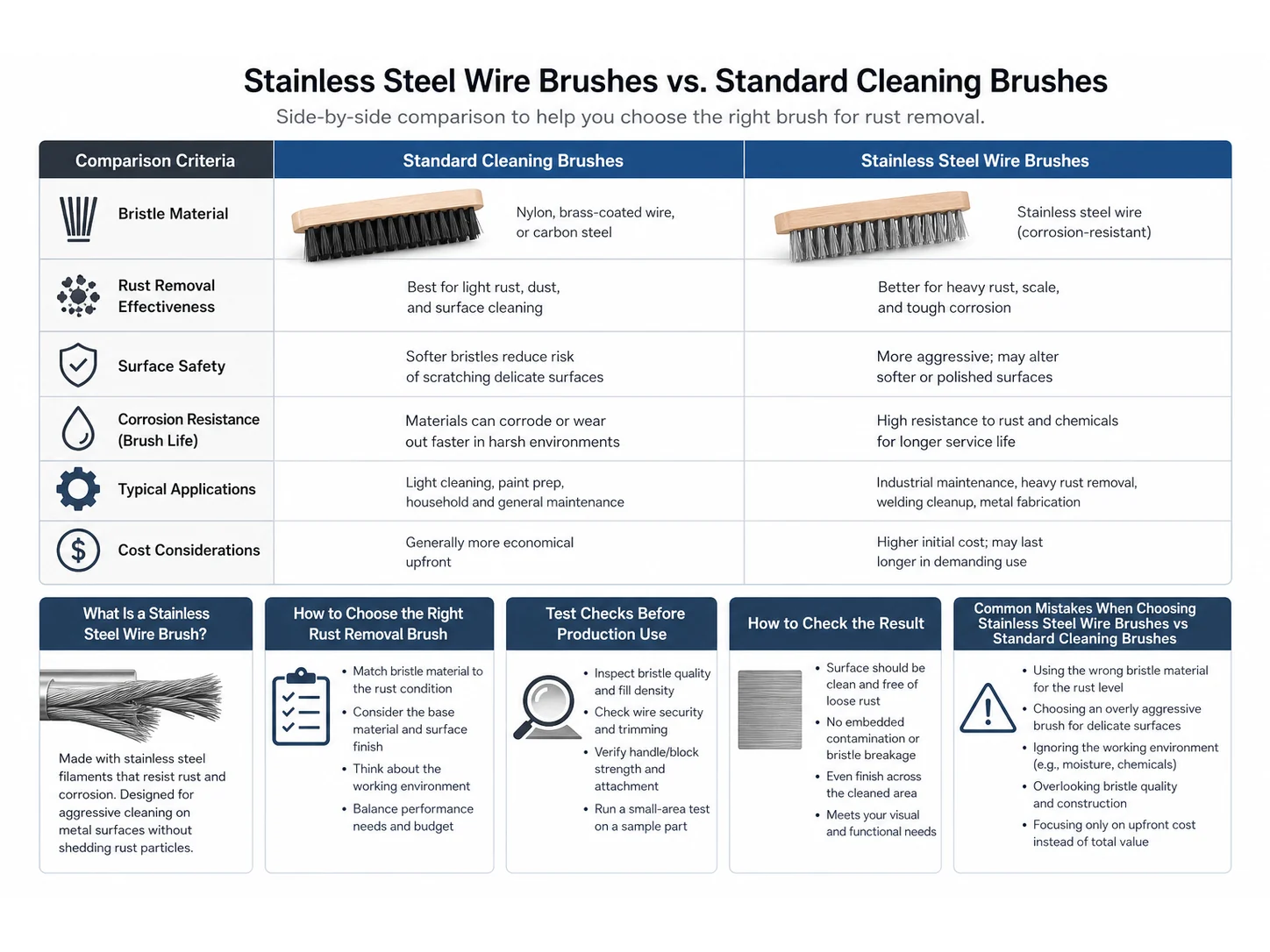
Not all wire brushes are the same. The table below compares stainless steel wire brushes with other common brush types based on factors critical to rust removal.
| Brush Type | Wire Material | Rust Removal Effectiveness | Surface Safety | Corrosion Resistance | Best Use Cases | Limitations |
|---|---|---|---|---|---|---|
| Stainless Steel Wire Brush | Stainless steel (304, 316, etc.) | High on loose rust and light scale; moderate on heavy mill scale | Safe for stainless steel, aluminum, and sensitive metals when used correctly | Excellent, does not rust or leave iron residue | Stainless steel parts, food machinery, marine hardware, auto bodywork, cleaning after welding | Softer than carbon steel, slower for heavy rust; can contaminate if used on both SS and CS without cleaning |
| Carbon Steel Wire Brush | Carbon steel | Very high for heavy rust and scale removal | Risky on stainless steel, can embed carbon steel particles causing rust staining | Poor, bristles rust easily, and can transfer rust to workpiece | Mild steel structures, heavy descaling before painting, non-sensitive surfaces | Cannot be used on stainless or aluminum if corrosion resistance is needed; short brush life in wet conditions |
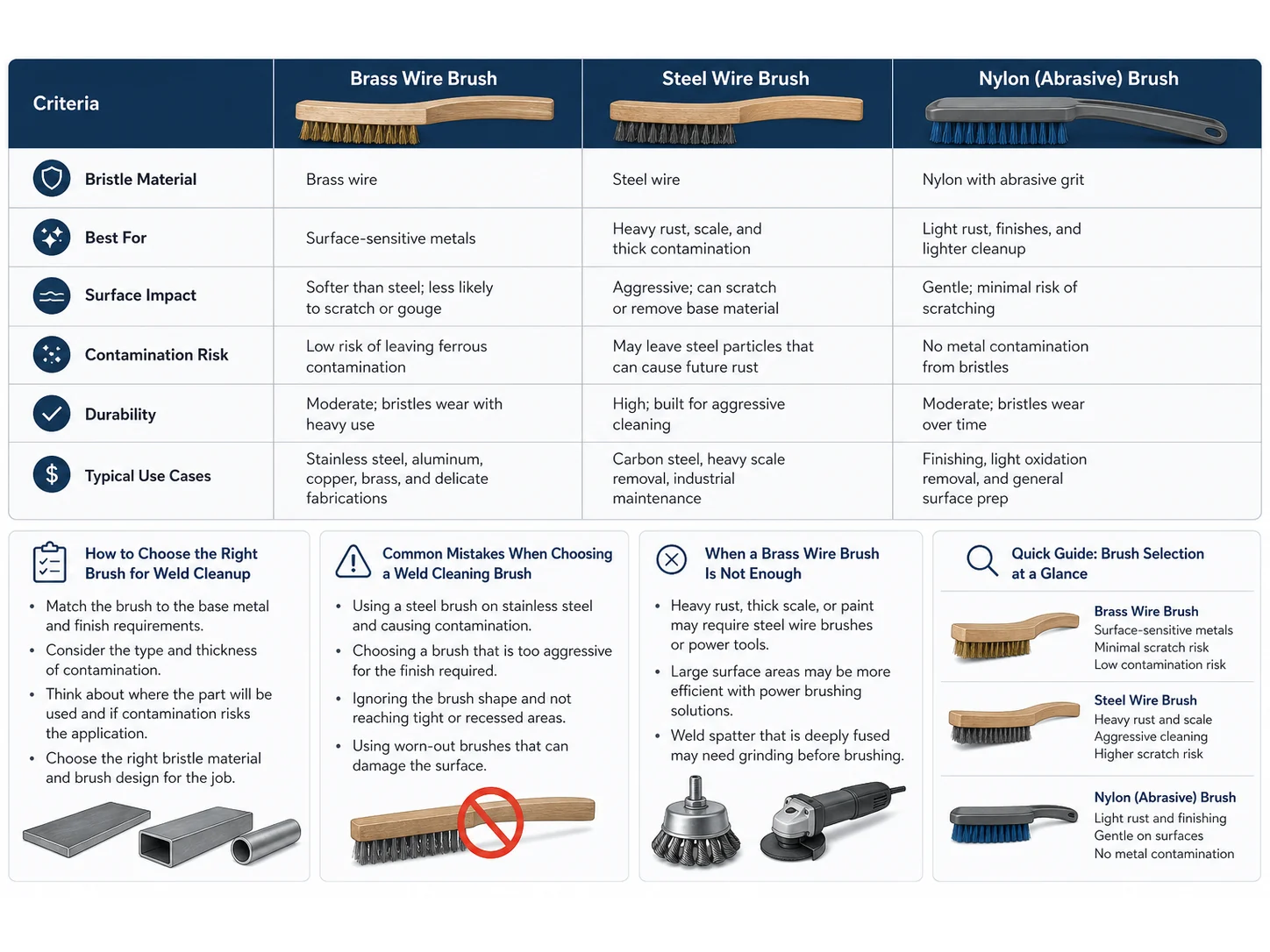
| Brass-Coated or Bronze Wire Brush | Steel core with brass/bronze coating, or solid brass | Low to moderate, removes light surface rust but not heavy scale | Safe for most metals, non-sparking, gentle on stainless and aluminum | Good, brass/bronze is corrosion-resistant but may leave copper residue that can cause galvanic issues on some alloys in wet environments | Cleaning brass fittings, electrical contacts, delicate metal restoration, avoiding ferrous contamination | Wears quickly, less aggressive; copper residue can promote corrosion on certain materials; not for heavy rust |
| Nylon Abrasive Brush | Nylon with embedded abrasive grit (silicon carbide, aluminum oxide) | Low to moderate, effective on light rust and paint without damaging base metal | Very safe, ideal for painted surfaces, soft metals, and finishing | Excellent, nylon is inert and non-corrosive | Removing rust from aluminum, fiberglass, automotive body panels, where metal wire brushes would scratch | Not for heavy rust or mill scale; wears faster on sharp edges; slower material removal |
How to Choose the Right Rust Removal Brush
For B2B equipment maintenance, selecting the right brush extends asset life and reduces rework. Stainless steel wire brushes are essential when working on stainless steel or any application where ferrous contamination is unacceptable. Standard carbon steel brushes remain the economical choice for heavy rust on mild steel structures. Brass and nylon brushes serve niche roles where surface preservation is paramount. Always match the brush to the base metal and the severity of corrosion, and consider dedicated brushes for stainless steel to prevent cross-contamination.
Practical Use Note
In daily use, the practical test is simple: check whether the brush reaches the full contact area, removes the target residue, and leaves the surface in the required condition. Record what changes when base material, burr or oxide level, target finish, brush speed, pressure, and acceptable surface change changes, because many brush failures are caused by the working condition shifting rather than by the brush body alone.
How to Check the Result
After brushing, inspect both the cleaned area and the brush. A good result removes the target soil while leaving the surface, bristles, mounting, and nearby components in acceptable condition. If cleaning improves only when pressure is increased sharply, the brush specification or the surrounding process should be reviewed.
Bottom Line
The best result comes from matching stainless steel wire brushes vs standard cleaning brushes: which works better for rust removal? to the real cleaning task rather than forcing one brush to solve every condition. Confirm access, residue, surface limits, and replacement routine first; then use a small trial or inspection step before scaling the method into daily work.
Frequently Asked Questions
Can I use a stainless steel wire brush on carbon steel?
Yes, but it’s generally overkill for carbon steel unless you need to avoid iron contamination. Stainless steel brushes are slower on heavy carbon steel rust. Reserve them for stainless or mixed-metal jobs where rust-free results are critical.
How do I prevent cross-contamination when using a stainless steel brush on multiple metals?
Designate separate brushes for stainless steel and carbon steel. If sharing is unavoidable, thoroughly clean the brush with a solvent and inspect for embedded carbon particles before touching stainless surfaces. Even a few stray carbon particles can cause rust spots.
Do stainless steel wire brushes remove rust as fast as carbon steel brushes?
No, stainless steel bristles are generally softer and less aggressive than hardened carbon steel. For light to moderate rust on stainless steel, the speed difference is negligible, but for thick scale on carbon steel, a carbon steel brush works significantly faster.
Are there specific stainless steel grades for wire brushes, and which is best for marine environments?
Yes, 304 stainless is common for general use, but 316 (marine grade) offers higher resistance to saltwater corrosion. For offshore or coastal equipment maintenance, 316 stainless steel wire brushes are recommended to maximize brush life and prevent chloride-induced degradation.
When should I use a nylon brush instead of a stainless steel wire brush?
Choose nylon abrasive brushes when the workpiece is aluminum, fiberglass, or painted, or when you cannot risk any scratching or metal transfer. Nylon is also preferable for final surface preparation before coating, as it won’t leave embedded metal particles.