What Is a Cleaning Brush Mold?
A dedicated mold cleaning brush is worth specifying only when the cavity and vent geometry justify it. Check drawings, dimensions, mounting interface, filament material, stiffness, sample testing, and actual working conditions before deciding. If the problem is caused by machine setup, chemical choice, blocked access, or damaged surfaces, a brush may be only one part of the fix.
A cleaning brush mold is the tooling used to produce the brush block, handle, or holder that secures the bristles in place. In custom brush manufacturing, the mold determines the exact shape, mounting interface, and bristle pattern layout. Unlike standard catalog brushes, a custom mold is designed and fabricated based on the buyer’s specifications. It is a one-time investment that enables precise repeatability for large production runs or critical applications.
When Do You Need a Custom Mold?
- When standard dimensions do not fit your equipment: For example, a boiler tube cleaning brush must match an exact inner diameter (ID) and length that is not commercially available.
- When the mounting interface is proprietary: If your cleaning system uses a specific thread, bayonet, or quick-connect coupling, a custom mold can incorporate the correct connector.
- When the operating environment demands special materials: High heat, chemicals, or abrasive media may require bristle and holder materials that are not offered in standard products.
- When you need a high volume of identical brushes: Custom tooling reduces per-unit cost for large quantities and ensures consistency.
- When cleaning a unique surface geometry: Irregular channels, narrow gaps, or curved profiles may need a custom bristle pattern and holder shape.
What Information Do Custom Brush Buyers Need to Provide?
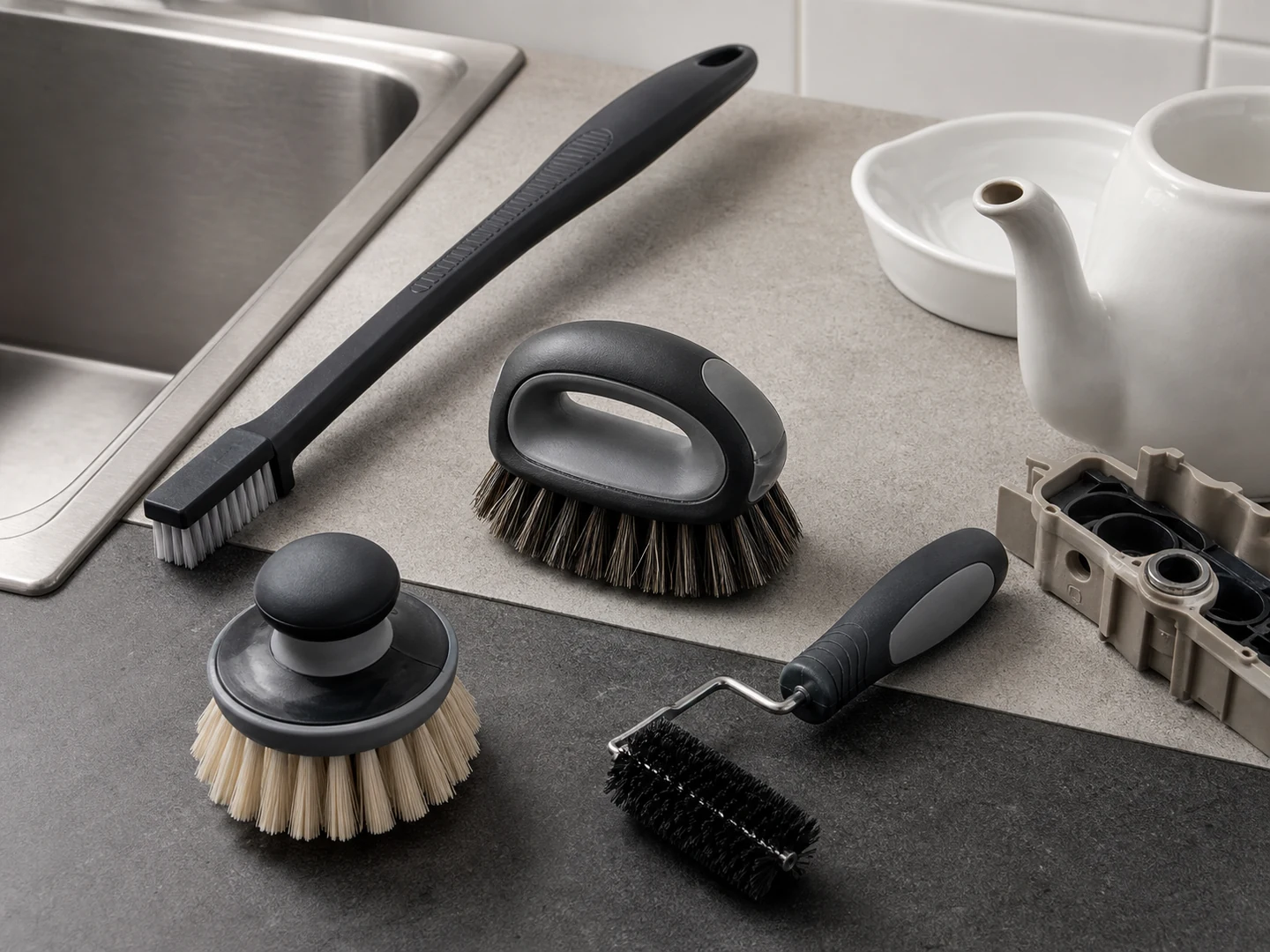
- Brush type definition: Describe the brush style (tube brush, spiral brush, flat strip brush, roller brush, cup brush, etc.).
- Drawings or CAD files: Provide detailed dimensions, tolerances, and material callouts. A dimensioned sketch is the minimum; a 3D model is ideal.
- Existing sample brush: If you have a worn-out brush or competitor sample, sending it as a reference helps the manufacturer understand the form and function.
- Dimensions: Specify overall length (OAL), brush diameter, bristle trim length (free length), core/holder diameter, and any special features like chamfers or notches.
- Bristle material requirements: Identify the filament type (nylon, abrasive nylon, polypropylene, natural fiber, wire) and any specific properties like temperature resistance, stiffness, or FDA compliance.
- Core or holder material: Specify plastic (e.g. nylon, polypropylene), metal (steel, stainless steel, brass), or wood.
- Mounting interface: Exact thread size, keyway, shaft diameter, or coupling type.
- Quantity: Estimated annual usage and initial order quantity. This influences mold design and amortization.
- Application details: What is being cleaned? What contaminants? Frequency of use? Manual or automated? This helps determine the right bristle density and wear resistance.
- Operating environment: Temperature range, exposure to chemicals, moisture, or UV.
- Packaging and documentation: Any special labeling, bundling, or test certificates required.
Common Material and Construction Options Compared
| Bristle Material | Best For | Temperature Limit | Typical Applications | Custom Mold Notes |
|---|---|---|---|---|
| Nylon 6/12 | General purpose, wet or dry | Up to 120°C | Bottle brushes, drain brushes, light industrial | Good abrasion resistance; available in many diameters and colors |
| Abrasive Nylon | Deburring, rust removal, aggressive cleaning | Up to 150°C | BBQ cleaning wire brush, metal prep, weld cleaning | Requires stiffer backing; may need larger filament diameter |
| Polypropylene | Chemical resistance, cost-effective | Up to 90°C | Acid tank cleaning, wet environments | Softer; not for heavy abrasion |
| Natural Fiber (Tampico, Bassine) | High water/liquid absorption, gentle cleaning | Up to 80°C | Surface polishing, food processing, delicate parts | Can be hygroscopic; mold design must allow drying |
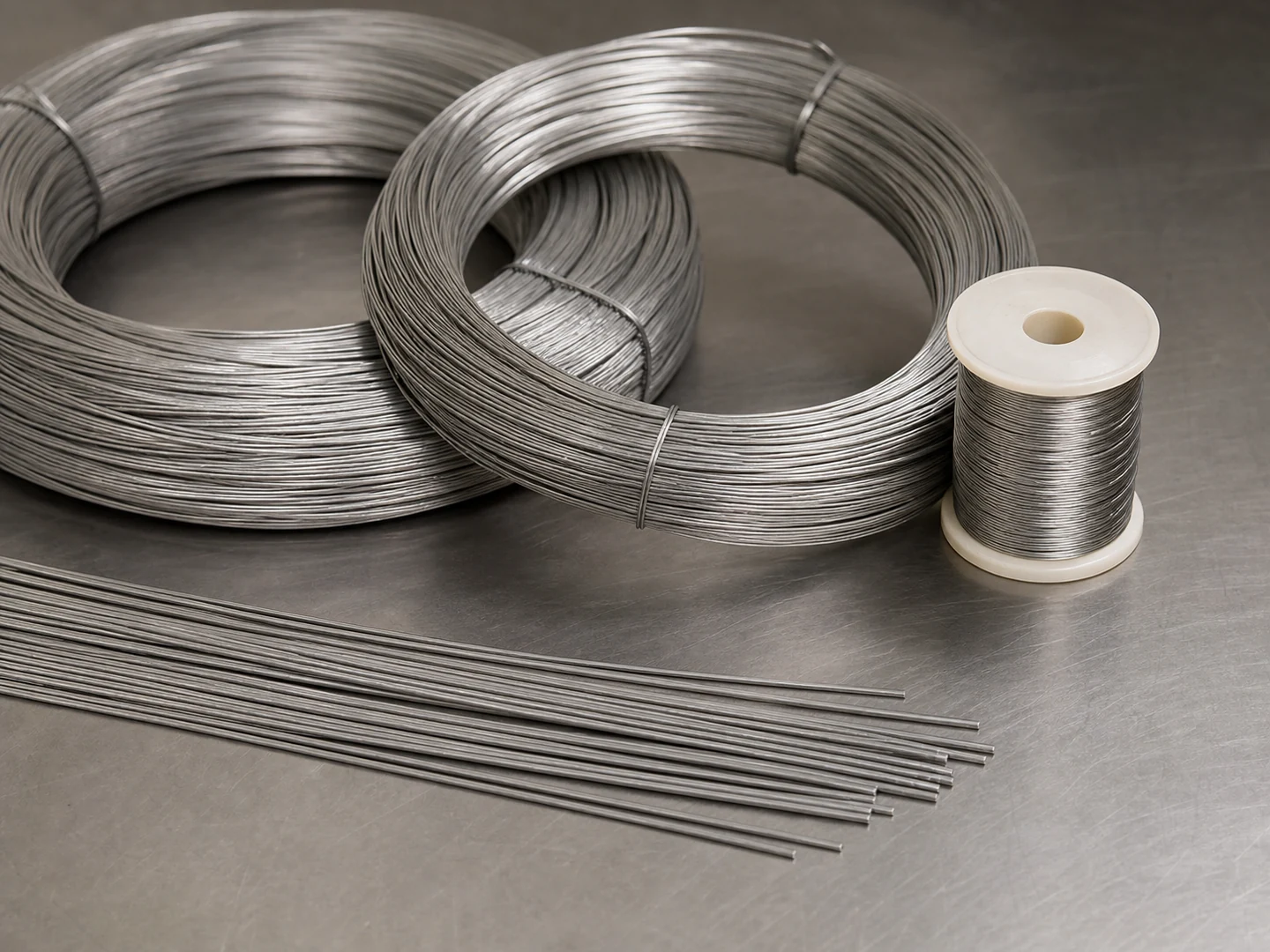
| Steel Wire (Carbon/Stainless) | Heavy-duty rust/paint removal, high heat | Up to 250°C+ | Boiler tube cleaning brush, chimney brush, industrial scrubbers | Requires strong holder; wire fatigue is a concern |
Core and holder materials are equally important. Common options include:
- Plastics (Nylon, PP, ABS): Lightweight, corrosion-resistant, and suitable for many general cleaning applications. Nylon is preferred for its strength and temperature tolerance.
- Metals (Steel, Stainless Steel, Brass): Necessary when the brush must withstand high torque, high heat, or chemical exposure. Stainless steel is common in food and pharmaceutical environments.
- Wood: Used occasionally for very large, low-cost brushes where weight and chemical exposure are not concerns.
How to Structure an Effective RFQ for Custom Cleaning Brushes
- Start with a clear scope: “Custom molded brush for cleaning 2-inch boiler tubes, stainless steel bristle, 18-inch overall length.”
- Attach a drawing with tolerances: Show critical dimensions and acceptable deviations.
- Request material data sheets: Confirm the bristle and holder material on the quote.
- Define validation requirements: Will you need a prototype or sample before full production? How many samples and what approval process?
- Specify packaging and labeling: Palletization, individual bagging, or bulk packing.
- Ask about mold ownership: Will the mold be customer-owned and transferable, or are there restrictions?
- Include delivery and shipping terms: Incoterms, production schedules, and shipping method.
Common Mistakes in Custom Mold Purchases
- Providing incomplete or ambiguous drawings: Missing dimensions or unclear views lead to misinterpretation and possibly faulty molds.
- Focusing only on cost without evaluating mold quality: low-cost mold materials can wear quickly or produce inconsistent brushes.
- Forgetting to account for environmental factors: A brush that works in a dry factory may fail quickly in a wet CIP system if not specified correctly.
- Not testing samples before committing to full production: A pre-production sample run is essential to verify fit and function.
- Treating all bristle materials as interchangeable: Different nylon grades have different stiffness, water absorption, and heat deflection.
- Underestimating the production schedule for mold fabrication: Custom molds can take several weeks; plan your project timeline accordingly.
- Ordering too few units: If the mold cost is significant, a small production batch may make the per-unit cost prohibitive.
When a Standard Brush Is Enough
- The required dimensions align with common catalog sizes (e.g., 6 inch poly chimney cleaning brush, standard tube brushes).
- The application does not involve extreme temperatures or chemicals.
- Quantities are low and the mold amortization never breaks even.
- production schedule is critical and you cannot wait for mold fabrication.
- The cleaning task is not specialized: e.g., general shop sweeping, occasional BBQ grate brushing.
- You can adapt a standard brush with minor modifications (e.g., cutting the handle length) without affecting functionality.
Final Takeaway
Deciding to invest in a custom cleaning brush mold comes down to three factors: fit, performance, and volume. If off-the-shelf options cannot match your equipment dimensions, operating conditions, or quality requirements, and if the order quantity justifies the tooling cost, a custom mold is the right path. Always start with detailed specifications, involve your supplier early, and validate with samples. For simple, low-volume jobs, a standard brush remains the practical choice.
Frequently Asked Questions
What is the difference between a mold and a tooling charge?
A mold is the physical tool used to shape the brush holder or block. The tooling charge is the one-time fee to design and fabricate that mold. It is separate from the per-unit cost of the brushes.
Can I use a custom cleaning brush mold for small quantities?
It is possible, but usually not cost-effective. The mold cost may spread over too few units, making each brush expensive. For small runs, consider alternative manufacturing methods like CNC machining the holder instead of injection molding.
How long does it take to make a custom brush mold?
production schedules vary based on complexity, typically ranging from 2 to 8 weeks. Simple single-cavity molds are faster; multi-cavity or intricate molds take longer. Always confirm the timeline with your supplier when placing the order.
What if my custom brush doesn’t meet expectations after testing?
A pre-production sample and a clear approval process are essential. If the sample fails, work with the manufacturer to adjust bristle density, material, or dimensions. Most reputable suppliers will collaborate to resolve issues before mass production.
Do I always need a drawing to request a custom brush mold?
A dimensioned sketch or CAD file is strongly recommended to avoid errors. If you only have a physical sample, a manufacturer can reverse-engineer it, but this adds time and may introduce inaccuracies. Providing a drawing ensures your specifications are clearly communicated.
What are common bristle materials for high-heat cleaning brushes?
For temperatures above 200°C, stainless steel wire is a typical choice. Abrasive nylon can handle up to around 150°C. Always check the continuous service temperature of the filament, not just the melting point.
How do I decide between a custom mold and a standard brush for chimney cleaning?
If your chimney has a non-standard diameter or shape, or if you need a specific brush-to-rod connection, a custom brush may be necessary. For common sizes like 6 or 7 inches, standard chimney cleaning brushes are readily available and more economical.
Is a sample always required before full production?
For custom molds, it is highly advisable to get a sample run. Even if the mold is made to exact drawings, small variations in bristle set or material batch can affect performance. A sample confirms everything works as intended.
Technical References
Which bristle material fits this job — Nylon PA, AISI 304 Stainless Steel Wire or Abrasive Nylon?
| Material | Continuous temperature (°C) | Peak temperature (°C) | Water absorption | Hardness |
|---|---|---|---|---|
| Nylon PA | 93 | 121 | 0.3–9% by PA grade and conditioning | Medium to firm; filament diameter and trim length control bending force. |
| AISI 304 Stainless Steel Wire | 400 | 500 | 0% | Rockwell B 70–95 depending on temper and cold work |
| Abrasive Nylon | 120 | 150 | 0.1–1.0% | Abrasive filament; stiffness and cutting level is controlled by PA base, grit type, grit size, filament diameter and trim height. |
Figures as published by Brushtec / DuPont; Alleima; Perlon. Confirm the exact grade against the supplier datasheet before ordering.
When are Handheld Detail Brushes the wrong choice for cleaning brush manufacturing?
- Handheld Detail Brushes — Use a tube brush, powered brush, scraper, wipe, sponge, or vacuum when the target is internal, heavily bonded, or highly delicate.
- Nylon PA — The nylon family spans several grades, so heat, moisture and chemical limits should follow the selected PA resin rather than a generic nylon value.
- AISI 304 Stainless Steel Wire — Avoid using AISI 304 as the default in marine, brine, hypochlorite, and persistent chloride environments; use AISI 316 when higher pitting and crevice-corrosion resistance is required.
- Abrasive Nylon — Exposed grit can change a surface finish, and high heat or aggressive chemicals can weaken the polymer carrier.
What should replace Handheld Detail Brushes for cleaning brush manufacturing?
- Handheld Detail Brushes — Handheld detail brushes cover general precision cleaning; auto-detailing brushes impose tighter controls for painted, polished, leather, display, and trim surfaces.
- Nylon PA — Compare Nylon PA with PP, PBT, PET. Change material when wet stiffness, temperature, chemical resistance, conductivity, particle shedding, or surface marking becomes the limiting factor.
- AISI 304 Stainless Steel Wire — Use AISI 316 stainless steel wire for chloride, marine, dairy, beverage, chemical washdown, or higher pitting-resistance requirements. Use carbon steel for dry aggressive cutting and brass or abrasive nylon for lower marking risk.
- Abrasive Nylon — Compare Abrasive Nylon with PP, PBT, PET. Change material when wet stiffness, temperature, chemical resistance, conductivity, particle shedding, or surface marking becomes the limiting factor.