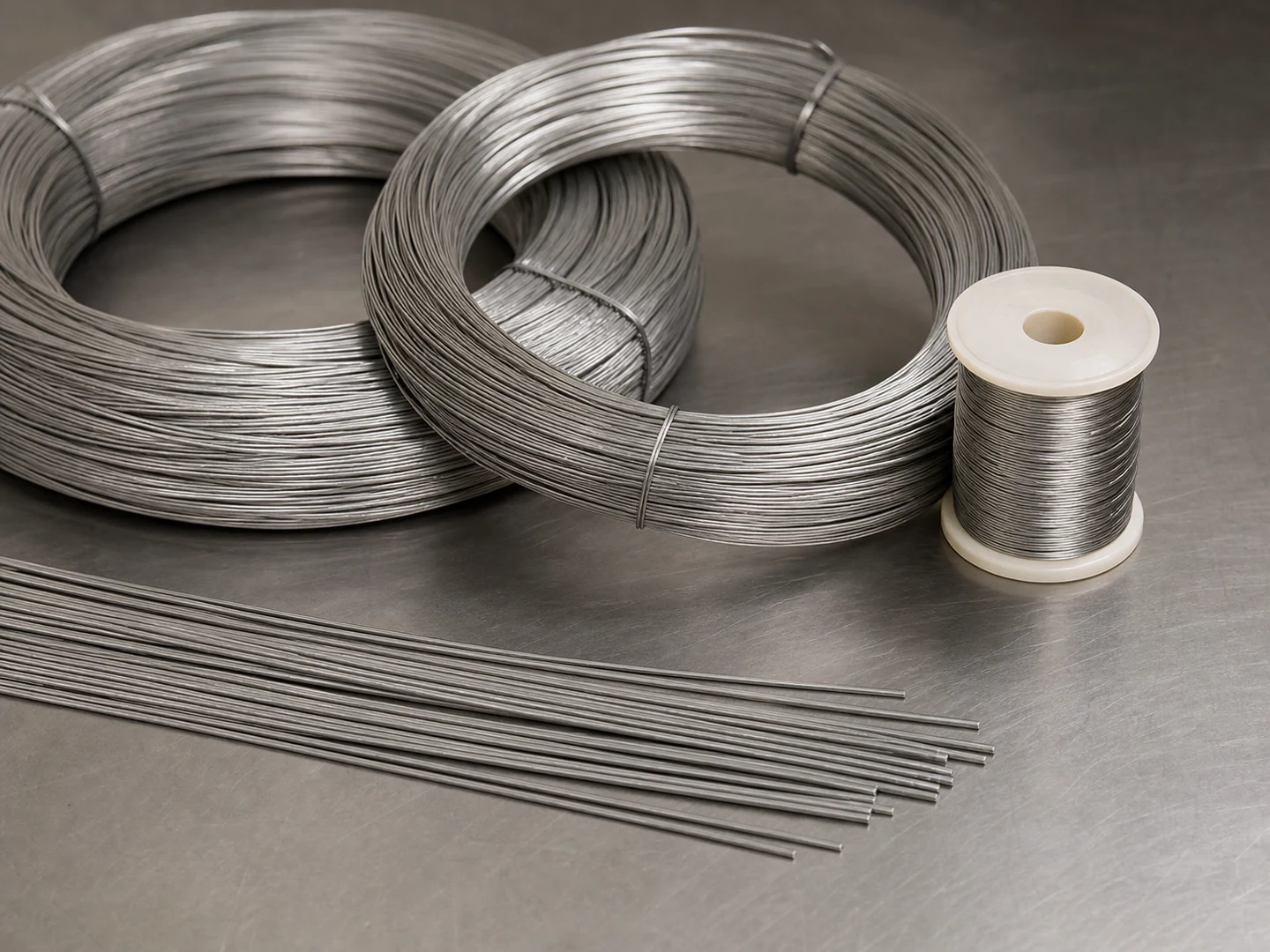
What Is a Stainless Handle Brush Component?
A stainless handle brush component is the grip or shaft portion of a brush tool made from stainless steel—typically AISI 304 or 316—that connects the working end (bristles, wire, abrasive) to the user or machine. Unlike wood, plastic, or aluminum handles, stainless handles offer superior corrosion resistance, durability under autoclaving or chemical cleaning, and consistent stiffness. This component can be a simple rod, a twisted wire handle, or a machined part with complex geometries, depending on the brush function.
When Should You Customize the Handle Component?
For material-selection language, this section is supported by World Stainless — Corrosion Resistance of Stainless Steels.
For brush terminology and construction language, this section references American Brush Manufacturers Association — Brush Lingo.
Customizing a stainless handle brush component becomes worth the investment when one or more of these conditions exist:
- Off-the-shelf lengths, diameters, or grip styles do not fit your workstation, holder, or robotic end-of-arm tooling.
- The brush must withstand continuous contact with aggressive chemicals, high-pressure washdowns, or sterilization cycles and standard-passivated handles fail prematurely.
- You require integrated features such as a threaded stud, keyway, quick-connect fitting, or a magnetic mounting point for automated assembly or alignment.
- Operator fatigue needs reduction through carefully contoured grips, knurling, or angled handles that stock products do not provide.
- Your volume is high enough that a custom design can unitize the handle and brush head into a single, easily replaceable module, cutting total cost over time.
Common Customization Options for Stainless Handle Brushes
Most custom stainless handle brush components are built around five variables:
Material Grade and Finish
- 304 Stainless: Good general corrosion resistance for indoor or mild environments.
- 316 Stainless: Needed for marine, food-processing, or pharmaceutical exposure due to molybdenum content resisting chloride pitting.
- Passivation and Electropolishing: Enhances the chromium oxide layer for better hygiene and lower particle adhesion.
Handle Geometry
- Straight Rod: Simple, economical; often used for twisted-in-wire brushes.
- Contoured or Knurled Grip: Reduces slippage; common for manual operations.
- Bent or Offset Handle: Provides clearance for reaching around obstructions; may require custom bending fixtures.
- Hollow or Tube Handle: Used when weight reduction or fluid flow through the handle is needed.
Attachment Interface
- Threaded End (male or female): For detachable brush heads or mounting to an arm.
- Hex or Square Shank: For power tool chucks or automated collets.
- Weldment or Adapter Plate: Integrates the handle into a larger assembly.
Length and Diameter Tolerance
- Standard tolerances are often ±0.5 mm; custom jobs may require ±0.1 mm or tighter to fit existing fixtures.
Comparison Table: Standard vs. Custom Stainless Handle Brush
| Factor | Standard Stainless Handle | Custom Stainless Handle Component |
|---|---|---|
| Cost per unit | Lower, amortized over large runs | Higher due to tooling and design |
| production schedule | Usually off-the-shelf or short | Requires engineering, prototyping, and approval |
| project quantity requirement | Often none or very low | Typically higher to cover setup costs |
| Dimensional match | Limited to catalog sizes | Exact fit to your holder, robot, or workstation |
| Material options | Common grades (304) | Can specify 316, 17-4 PH, duplex, or other alloys |
| Surface finish | Mill finish or basic passivation | Electropolish, bead-blast, specified Ra values |
| Ergonomic features | None or basic grip | Custom knurling, contouring, venting |
| Process documentation | Standard product data sheet | Material certs, inspection reports, PPAP if required |
How to Prepare a Custom Handle Specification
Submitting a clear RFQ for a custom stainless handle brush component reduces quoting errors and speeds up the sampling process. Include the following in your inquiry:
- Brush type: Will the handle be used with a twisted-in-wire brush, a cylinder brush, a strip brush, a disc brush, or another form?
- Drawing or sample: A dimensioned sketch, CAD file, or physical sample of the desired handle—even a rough shape annotated with critical dimensions—greatly reduces ambiguity.
- Key dimensions: Overall length, handle diameter, grip zone length, thread size and pitch, or shank dimensions.
- Bristle material: If the brush head will be formed on the same handle, state bristle type (stainless wire, nylon, brass, abrasive filament) and trim length.
- Core or holder material: Clarify if the handle itself forms the core (as in spiral-wound brushes) or if it will accept a separate brush section.
- Mounting interface: How the handle attaches to the tool, machine, or operator: description of mating part, torque requirements, anti-rotation needs.
- Quantity: Estimated annual usage and first article quantities help the supplier suggest the right manufacturing method.
- Application: What the brush will clean, deburr, polish, or apply—and the substrate material.
- Operating environment: Temperature range, chemicals present, washdown frequency, autoclaving cycles, or ESD requirements.
- Packaging and documentation: Cleanroom packaging, individual labeling, certificates of conformance, or test reports needed.
Common RFQ Mistakes and How to Avoid Them
- Assuming one drawing is enough for all suppliers. Each manufacturer may interpret “standard tolerances” differently. Always specify critical-to-function dimensions and allowed variation.
- Neglecting the brush-to-handle junction. A custom handle that fails where it meets the brush head is a common field failure. Define how the two parts connect—epoxy, crimping, welding, or mechanical fastening.
- Overspecifying surface finish. Mandating a mirror polish on an internal handle for a non-cleanroom application adds cost and production schedule without benefit.
- Ignoring ergonomic data. A handle diameter that feels good in a quick trial may cause fatigue over an 8-hour shift. Reference anthropometric data or involve operators early.
- Forgetting cleaning and sterilization validation. If the brush must be cleaned or sterilized, state the method (autoclave, CIP, gamma) so the handle material and surface finish are chosen accordingly.
When a Standard Stainless Handle Brush Is Enough
Customization is not always justified. A standard stainless handle brush—often a stainless steel wire brush with a plastic or wood handle for manual use, or a simple twisted-wire brush with a 304 rod handle—works well when:
- The handle is not the weak point in the current tool and no field failures have been traced to grip or mounting issues.
- The brush is used in a general maintenance or janitorial setting where occasional replacement is acceptable.
- Volume is low and the one-time engineering cost of a custom handle cannot be amortized over a production run.
- A quick-adjust tool holder or universal adapter can accommodate small dimensional mismatches.
- The operator can comfortably work with a standard straight handle and no unique reach or angle requirements exist.
Final Takeaway
Deciding whether to customize a stainless handle brush component comes down to three practical checks: fit, function, and frequency. If a standard handle fits your tooling, functions reliably in your environment, and is replaced often enough that a custom project quantity requirement creates waste, stay with a catalog solution. If any of those three fails, invest the time to define a handle specification that solves the real operational problem—and involve the supplier early with a clear RFQ to keep the custom development efficient and on-budget.
Frequently Asked Questions
What is the project quantity requirement for a custom stainless brush handle?
It varies by complexity and manufacturing method. Simple turned rod designs may have lower minimums than stamped-and-welded assemblies. Always ask for a min/max range and clarify whether the minimum requirement details applies to the handle only or to the complete brush assembly.
Can I mix handle materials—for example, a stainless core with a plastic grip sleeve?
Yes, many custom designs use a stainless steel core for strength and a thermoplastic or silicone overmold for grip and insulation. Just be clear in your specification about material bonding requirements and chemical resistance of the sleeve.
How do I test a prototype custom handle before committing to a production run?
Request first-article samples for dimensional check, fit test on your equipment, and a limited field trial. For critical applications, you may add a corrosion test coupon, pull test, or cycle test protocol to the qualification plan.
Do custom stainless handles require special care during cleaning?
Stainless steel resists most cleaning agents, but avoid prolonged contact with chlorinated cleaners or abrasive pads that can damage the passive layer. Passivation or electropolishing makes cleaning easier in hygienic applications.
Is it possible to adapt an existing standard brush with a custom handle?
Sometimes. If the brush head can be safely detached and reattached to a new handle through threading, welding, or a compatible adapter, a retrofit may be possible. Evaluate whether the rework meets the original performance and safety expectations.
How does handle customization affect brush balance and operator fatigue?
Even small changes in handle weight or center of gravity matter for handheld tools. A longer steel handle increases reach but can shift the balance point toward the user, potentially increasing wrist strain. Prototype testing with operators is recommended.
Will a custom handle component delay my entire brush order?
Custom elements inevitably extend production schedule because of drafting, quoting, and sampling steps. Plan an extra a project-specific schedule on top of standard delivery, depending on complexity. Clear documentation upfront helps minimize design iterations.