
Custom Cleaning Brush
Juicer Cleaning Brush
Food-grade nylon juicer cleaning brush for centrifugal and masticating juicers. Reaches strainer baskets, auger flutes, pulp outlets.
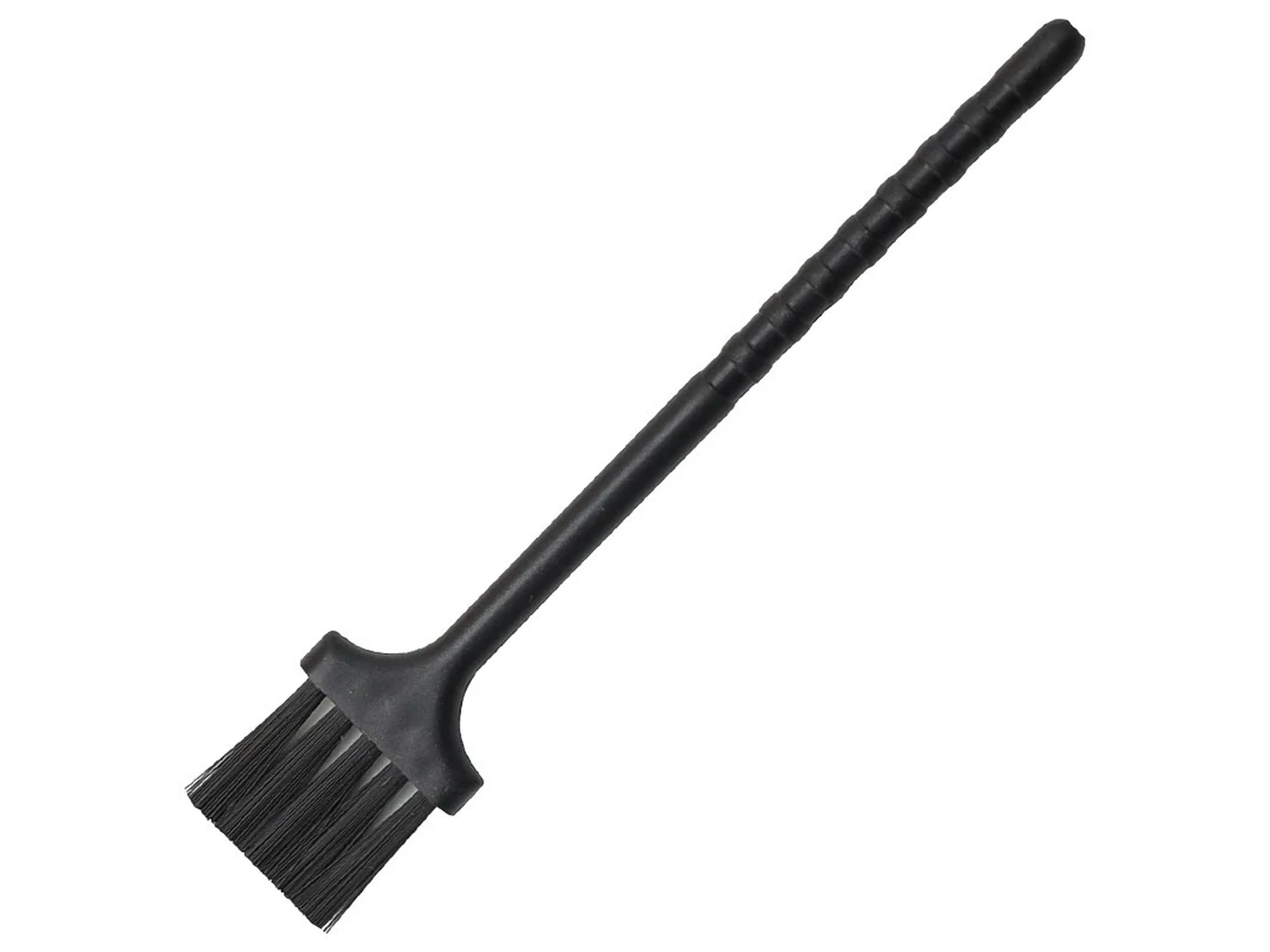
Small brush
500 pcs
Minimum order
Held in one hand: tube, bottle, detail and swab brushes — including long-handled ones with a small head.
Production lead time, once the specification is confirmed
- Up to 500 pcsWithin 7 days
- 501–50,000 pcsWithin 14 days
- Over 50,000 pcsWithin 21 days
Peak season can extend these times; the shipping date is confirmed in writing with your quotation. Sampling and shipping are quoted separately.
A food-contact nylon hand brush engineered for the tight cleaning points on centrifugal and masticating juicers — fine filter screens, auger flutes, feed tubes, and pulp outlets. It lifts wet pulp, fiber, seeds, and dried juice film from food-contact surfaces without bending stainless mesh or scratching plastic housings.
What can this brush do for you?
Cleans Strainer Basket Slots Without Bending the Mesh
The filament diameter and trim length are matched to the slot geometry of centrifugal juicer filter baskets. Thin, controlled-flex nylon filaments slip into the slots, release fibrous pulp, and spring back instead of snagging or bending the fine stainless wire. Keep the basket draining and separating at full capacity between batches rather than watching it clog from the center out.
Reaches Auger Flutes, Juice Channels, and Pulp Outlets
The slim 15–30 mm head and angled or tapered working end follows the screw profile of a masticating auger. Operators can scrub the full depth of each flute, clear compacted fiber from juice outlets, and loosen seed fragments packed into the end cap — areas a sponge or general-purpose brush simply cannot enter.
Firm Enough for Dried Pulp, Soft Enough for Screens and Plastics
Filament stiffness is controlled by diameter in the 0.20–0.80 mm range instead of being left to a generic stock fill. Fine filaments protect coated plastic and fine mesh; stiffer filaments supply more mechanical action against dried starch and citrus sugar. The brush is tuned so it removes residue from the part, not material from the part.
Stands Up to Hot Water, Detergents, and Citrus-Acid Rinses
Nylon PA and PP fill materials tolerate the wet, acidic cleaning routine common in juice bars and food plants. The filaments retain shape and stiffness through repeated washdowns, so replacement follows actual wear rather than material softening or discoloration.
One Handle Platform Covers Multiple Juicer Components
Molded grip handles, extended handles, or threaded bases allow the same head platform to be used in the sink, mounted on a wand for taller machines, or supplied as a replaceable head for an existing OEM handle. One stocked brush can service filter baskets, augers, reamers, and juice collection trays.
What is a Juicer Cleaning Brush?
A Juicer Cleaning Brush is a hand-operated cleaning tool built specifically for removable juicer components rather than for general kitchen scrubbing. It has a narrow rectangular, tapered, or double-sided head filled with nylon or polypropylene filaments and a handle or mounting base. The brush is designed for the surfaces most likely to retain juice residue: fine stainless filter mesh, food-grade plastic housings, cutting discs, and the narrow channels that carry juice and pulp.
In use, operators scrub along the direction of the filter basket slots, rotate the head inside the feed tube, or chase the thread profile of the auger with push-pull and twisting strokes. The brush works against disassembled, food-contact components after the machine has been switched off, unplugged, and separated according to the manufacturer’s instructions.
This is not a motor-base brush, an electrical-contact cleaning tool, or a wire brush. It is not rated for use on a running juicer, and it is not intended to replace chemical soaking or sanitizing where the residue is hardened, carbonized, or biologically sensitive.
Technical Specifications
| Parameter | Value / Options |
|---|---|
| Head width | 15–30 mm standard; wider or narrower custom heads available |
| Head profile | Flat, tapered, angled, double-sided, notched, or custom molded geometry |
| Trim length | 20–80 mm, matched to mesh slot depth, auger flute, or feed tube |
| Overall length | 150–250 mm standard; custom for handle reach or OEM placement |
| Filament diameter | 0.20–0.80 mm, selected by required stiffness and surface sensitivity |
| Fill material | Nylon PA 6/66, PP, or PBT |
| Handle / interface | Molded PP grip; angled, loop, extended, or threaded base (1/2 in, M8, M10) |
| Filament layout | Straight, crimped, flagged, multi-row, side-layer, angled tip, or center notch |
| Operating temperature | Up to 100°C continuous for PP/nylon grades; 140°C short-term with PBT |
| Chemical exposure | Resistant to common food-industry detergents, citric acid, and alkaline cleaners; grade confirmed per cleaning chemical |
| Food-contact use | Materials selected for food-contact cleaning applications; project-specific documentation available on request |
| Brush type | Custom Handheld Detail Brushes |
| How it is driven | Hand-guided |
| Cleaning target | centrifugal juicer strainer basket and cutting disc, masticating juicer auger, and citrus press and commercial orange or lime cleaning |
| Surface or part | filters, baskets, slots, tubes, housings, plastic, screens, and profiles |
| Residue or debris | pulp, fiber, seeds, starch, and sugar |
| Mounting / connection | Molded PP grip; angled, loop, extended, or threaded base (1/2 in, M8, M10) |
All dimensions are adjustable for the target juicer model, screen slot pitch, auger profile, and operator preference. The table lists standard working ranges; final filament diameter, trim length, and head geometry are confirmed during sampling against the actual parts.
Where does this brush work best?
- Centrifugal juicer strainer baskets and cutting discs. The fine filter slots trap pulp, fiber, and seed fragments after every batch. Nylon filaments clear the slots without bending the mesh edges or flattening the screen.
- Masticating juicer augers, housings, and end caps. A tapered head follows the screw flutes, clears compacted fiber from the juice outlet, and reaches the retaining-end cap where seeds collect.
- Citrus presses and commercial orange or lime juicers. Reamer cones, strainer cones, and juice collection trays all need quick, scratch-free residue removal between service intervals.
- Commercial juice bars, cafés, and breakfast stations. Fast turnaround cleaning at the sink is part of the service flow. One brush cleans all removable components without changing tools.
- Fresh-produce and juice processing lines. Where pulp extractors, flake washers, pulp tanks, and handling trays are cleaned with the same washdown routine, the same brush platform can cover nearby food-contact equipment.
- OEM juicer accessory kits. Fitted as the supplied cleaning brush in the product carton or service kit so consumers and technicians start with the correct tool for the machine’s specific parts.
How do I choose the right one?
The right configuration starts with the juicer parts that actually need cleaning, because a centrifugal filter basket and a masticating auger create different contact problems. Work through the following checks before committing to a sample.
Match the head geometry to the part
For a filter basket or cutting disc, a flat, field-filled head covers more area in fewer strokes. For auger flutes, juice channels, and pulp ports, a tapered or angled head follows the screw profile and enters the outlet. If one brush has to cover both jobs, request a double-sided head with two working profiles.
Select filament stiffness for the residue and the surface
Fine 0.20–0.35 mm filaments are a good starting point for fine mesh and coated plastic. Use 0.40–0.60 mm for wet pulp, starch film, and general juicing residue. Move to 0.60–0.80 mm for dried citrus sugar or thick fibrous material. If the brush leaves scuff marks or flattens mesh slots, reduce the diameter or switch from nylon to a softer PP fill.
Set trim length and overall length for access and control
Short trim of 20–40 mm gives more scrubbing pressure on flat filter plates, while 60–80 mm reaches into deep feed tubes and collection channels. Overall length should let an operator work comfortably inside a sink without overreaching. For taller equipment or hoppers, use an extended handle or a threaded base for a wand.
Check the cleaning chemistry and temperature
Confirm the detergent, acid rinse, and water temperature before selecting filament material. Nylon and PP handle ordinary detergent exposure; PBT is the option when the washdown temperature approaches 140°C. Avoid strong solvents or oxidizing cleaners unless the specific filament grade is qualified for them.
Decide on a handle or mounting interface
A molded PP or ergonomic grip suits daily hand use. A threaded base — 1/2 in, M8, or M10 — allows the head to mount on a staff or existing OEM handle. If the brush will be a replacement part in a service kit, specify the mating interface and whether the head should be replaceable to reduce ongoing cost.
Use this as a starting point for common applications:
| Juicer part / residue | Recommended starting configuration |
|---|---|
| Centrifugal filter basket, fine mesh, wet pulp | Flat head, 0.30–0.40 mm flagged nylon, 40–50 mm trim |
| Masticating auger flutes and juice outlet | Tapered/angled head, 0.50–0.60 mm nylon, 50–70 mm trim |
| Citrus press reamer and strainer cone | PP or fine nylon, 0.25–0.35 mm, flagged |
| Feed tube walls, dried starch | Wider head, 0.40–0.60 mm straight nylon, 20–40 mm trim |
| Pulp outlet, small ports | Mini tapered tip or custom narrow head |
When to use a different brush or method. Choose a stainless-wire or abrasive brush only if the part material tolerates it and the residue is hardened scale, rust, or carbonized deposit. For narrow tubes, ports under about 10 mm, or closed channels, use a tube brush. For single-use hygienic applications where cross-contamination between batches must be eliminated, use a disposable brush. For baked-on pulp or sugar deposits, pre-soak in warm detergent or citric acid solution before brushing instead of forcing the brush to do the entire job.
Can I customize this brush?
Juicer cleaning brushes are configured around the machine they are built for. To define a custom brush, send a drawing or clear photos of the filter basket slot pitch, auger diameter and flute depth, feed tube inside diameter, and the handle or mounting interface. Also note the cleaning detergent, water temperature, and whether the brush will be sold as an OEM accessory or used in a food plant.
We can adjust:
- Head dimensions and shape — width, length, thickness, taper, angle, double-sided construction, notch, or custom molded profile
- Filament system — material (Nylon PA 6/6, PA 612, PP, or PBT), diameter, trim length, crimp or flag, density, row pattern, and color
- Handle and interface — molded ergonomic grip, loop handle, extended handle, threaded base (1/2 in, M8, M10), bayonet, or replaceable head system
- Working end details — pointed detail tip, rounded scraper, keyhole or flange cleaner, center notch for auger shafts
- Marking and identification — custom color, molded logo, pad print, laser marking, or project ID code
- Packaging — bulk, individual polybag, retail card, OEM carton kit with the juicer, or service-part packing
If the project requires material documentation, food-contact compliance support, inspection, or third-party testing, we can assist with those requirements during customization.
When does a worn a juicer cleaning brush stop being safe to use?
How can I tell whether the brush is safe for my juicer’s filter screen?
Use a spare filter basket or a non-visible edge. Brush the screen with normal pressure for 20–30 strokes, then inspect the slot edges under light. If the slots are bent, flattened, or show scratch marks, the filament is too stiff or too blunt; request a smaller diameter or flagged PP filament. Also feel for snagging — if bristles pull metal fibers, that is the wrong configuration.
What should I do before brushing juicer parts?
Unplug or disconnect the machine, remove all detachable parts, and let any hot components cool down. Do not brush the motor base, power cord, or electrical connectors. Remove bulk pulp and seeds by hand first; the brush is for film and trapped fiber, not for loosening large solids.
How do I clean the juicer brush itself after use?
Rinse in warm water, pull loose fibers from between the filaments, and hang the brush with bristles facing down to dry. If plant sanitation requires, expose the brush to the same approved sanitizing rinse and temperature as the juicer parts, provided the filament material supports it. Storing a wet brush on a counter can allow residue and biological growth to build up.
Does brushing replace soaking or sanitizing?
No. Brushing loosens and removes attached residue, but it does not dissolve mineral scale, remove carbonized sugars, or sanitize. Pre-soak hardened or filmed parts in warm detergent or citric acid solution when needed, and follow your standard sanitation steps after brushing. The brush is one step in the cleaning sequence, not the entire sequence.
How often should the juicer cleaning brush be replaced?
In commercial juice bar and food plant use, inspect weekly. Replace the brush when filaments lose spring-back, tips split, tufts shed, the block cracks, or the head no longer reaches the bottom of a slot. A practical warning sign is when cleaning the same part takes noticeably longer or still leaves visible film.
Can the brush clean the juicer without taking the machine apart?
No. The brush is designed for disassembled food-contact parts — feed tubes, augers, filter baskets, bowls, and trays. It cannot safely reach inside an assembled juicer, and brushing around a running motor or blade assembly risks injury and damages parts. Always follow the juicer manufacturer’s disassembly and cleaning instructions.
Guides that go deeper on this
Custom Manufacturing RFQ
Describe Your Application
For an accurate quotation, please provide the main dimensions, material preference, working surface, residue, quantity, and a drawing or photo.
Drawing or photo optional — it speeds things up, it does not gate the enquiry.
Custom Brush RFQ
Send Your Brush Project
Upload a drawing, product photo, or sample photo and provide the core dimensions and cleaning conditions.
“We need a brush to remove wet residue from a stainless steel conveyor, about 800mm wide. The current brush wears quickly. We can send photos.”
“We sell drinkware and need a cleaning brush to include with the product. Quantity around 5,000 pieces.”