
Custom Cleaning Brush
Leather Cleaning Brush
Round or flagged nylon PA tips lift dust, wax and dried polish from leather grain, seams and welts without scratching or burnishing the surface.
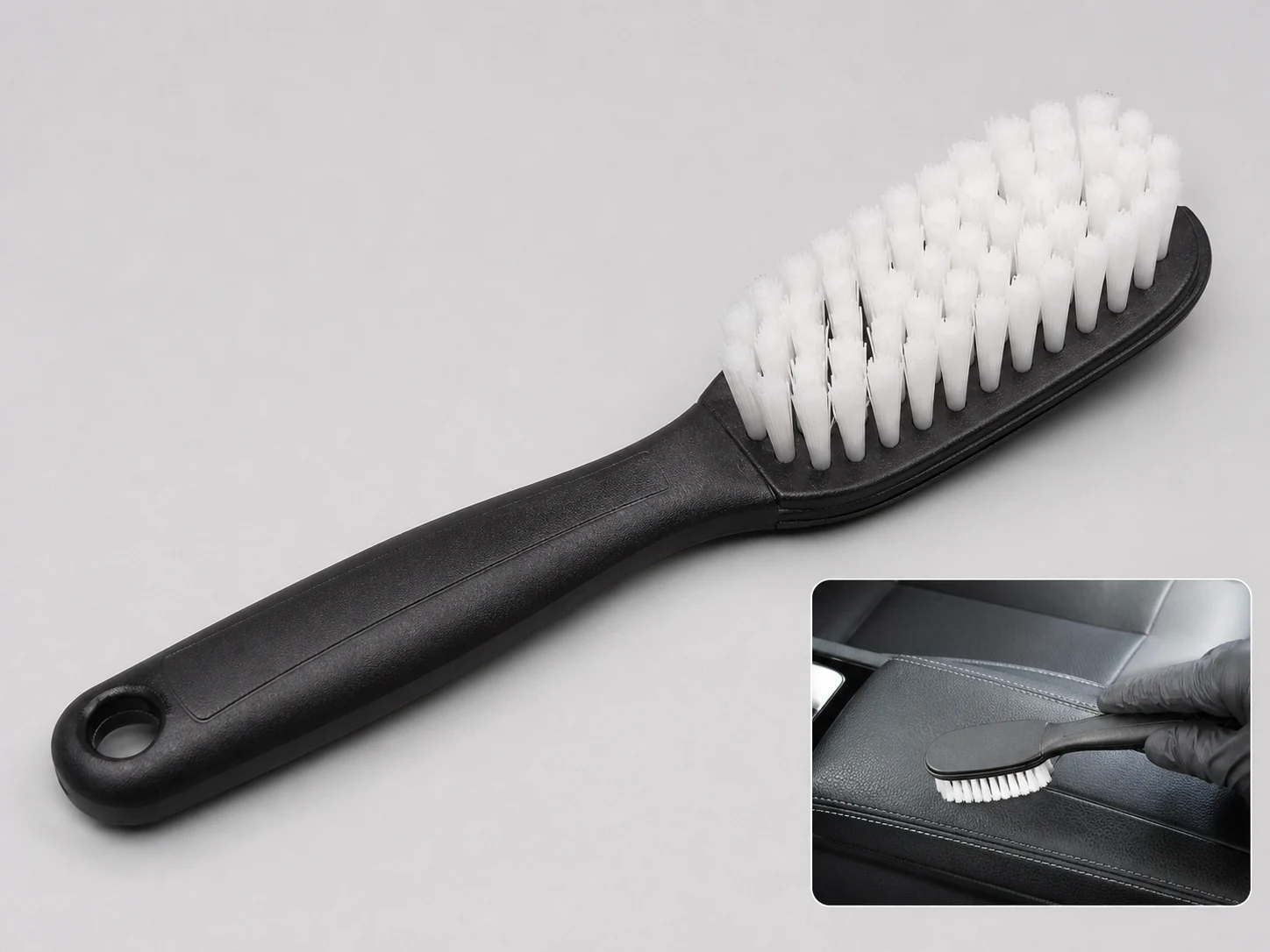
Small brush
500 pcs
Minimum order
Held in one hand: tube, bottle, detail and swab brushes — including long-handled ones with a small head.
Production lead time, once the specification is confirmed
- Up to 500 pcsWithin 7 days
- 501–50,000 pcsWithin 14 days
- Over 50,000 pcsWithin 21 days
Peak season can extend these times; the shipping date is confirmed in writing with your quotation. Sampling and shipping are quoted separately.
A nylon PA-bristle hand brush for finish-safe cleaning of leather grain, seams, welts and stitched detail areas on footwear, bags, upholstery and flexible leather components. Sized for detail work before conditioning, polishing, coating or inspection, it lifts dust, wax, polish and fiber residue without scratching or burnishing the surface.
What can this brush do for you?
Lifts Dust and Dried Residue Without Marking the Grain
The round or flagged nylon PA tips dislodge dust, lint, dried polish and light soil from pebbled or embossed grain. Because the filaments flex and recover instead of cutting, the brush cleans the surface without leaving the scratch lines or gloss burnish that stiffer natural or wire fills can produce.
Reaches Seams, Welts and Stitch Lines
A 20 to 50 mm head with a slanted or tapered trim puts bristle tips into the narrow grooves where uppers meet soles, along stitch rows and under boot collars. Operators can clear the residue that hides in those transitions and would otherwise contaminate the next finishing step.
Prepares the Surface for Polish, Conditioner or Inspection
Dry brushing or working with a small amount of leather cleaner lifts old wax and polish film so the next conditioner, dye or topcoat bonds evenly. A clean surface improves finish consistency and prevents lint and dust from being pressed back into the grain.
Keeps Its Stiffness Through Wet and Cleaner-Assisted Use
Nylon PA retains its flex and shape when wet and tolerates the pH-neutral cleaners and diluted solvent systems common in leather prep. Unlike natural fiber, it does not absorb and hold water, so the brush dries quickly and does not soften or swell over repeated shifts.
Conforms to Curved Toe Caps, Heels and Panel Profiles
The selected trim length and tuft density allow the bristle face to follow curved leather surfaces without skipping. Medium trim and a flexible bristle pack contact the full panel instead of only the high points, which reduces rework and uneven cleaning.
What is a Leather Cleaning Brush?
A Leather Cleaning Brush is a hand-guided brush built with synthetic nylon PA filaments set in a rigid block or handle, used to prepare or clean finished leather surfaces during manufacturing, repair, care or finishing. It is not a generic utility scrub brush; the head width, trim length and filament tip treatment are selected so the contact is aggressive enough to release debris but soft enough to leave the grain and finish intact.
During use, the operator works the bristle tips across the grain, into stitch grooves, around eyelets and along welt edges. The motion can be a short back-and-forth stroke following the surface or a circular action around high-wear zones. The brush can be used dry for loose dust and buffing dust, or lightly damp with a leather cleaner for dried polish, film or embedded soil. The loosened residue is then wiped away before conditioning, dyeing or coating.
What it is not: a tool for stripping finish, sanding scratches, removing cured adhesive or cutting through heavy scale. Those jobs need abrasive, wire or solvent methods. Configurations with shorter, stiffer trim can also be used on sole edges and welts, while the standard setup is aimed at uppers and panels.
Technical Specifications
Base dimensions and material ranges are shown below. Values are adjusted to match the leather finish, target contact area and cleaning method for your line.
| Parameter | Standard / Options | What to check |
|---|---|---|
| Fill material | Nylon PA6 or PA6.6 | PA6.6 for higher stiffness and heat resistance; PA6 for general use |
| Filament diameter | 0.10 to 0.25 mm | Thinner diameter for smooth corrected grain; thicker for soles, welts and boot edges |
| Trim length | 10 to 25 mm | Shorter for control and edge work; longer for conforming to panel curvature |
| Head width | 20 to 50 mm | Narrow heads for seam and stitch detail; wider heads for large panels |
| Overall length | 120 to 200 mm | Matched to operator reach, stroke direction and grip preference |
| Trim profile | Flat, slanted, chevron or contoured | Slanted or chevron profiles improve access to stitch lines and welt grooves |
| Tip treatment | Square cut, flagged or feathered | Flagged or feathered tips create softer contact; square cut delivers firmer action |
| Fill layout | Straight or staggered rows with optional beveled edges | Layout changes tuft contact, density and seam access |
| Handle / block | PP, hardwood or overmolded TPE; hanging hole optional | Material chosen for grip, cleaner exposure and brand marking |
| Color / marking | Natural, black, white or custom-matched | Color coding for line positions, products or private-label requirements |
| Brush type | Custom Handheld Detail Brushes | |
| How it is driven | Hand-guided | |
| Cleaning target | footwear and boot finishing line, leather goods production and assembly, and repair, resoling and care station cleaning | |
| Surface or part | edges, seams, soles, panels, profiles, leather grain, grooves, belts, and epoxy | |
| Residue or debris | dust, fiber, polish, adhesive, wax, lint, light residue, loose fibers, and cream | |
| Mounting / connection | Fixed |
Where does this brush work best?
Footwear and Boot Finishing Lines
Cleaning uppers, soles and welt edges before waxing, polishing, antiquing or topcoat application. It removes sanding dust, buffing dust and dried compound from the surface that would otherwise contaminate the finish.
Repair and Resoling Operations
Clearing dust, lint and loose adhesive particles from stitch lines, sole edges and uppers before gluing, edge finishing or final dressing. The narrow trim options reach into the crease where the sole meets the upper.
Leather Goods Assembly
Removing cut fibers, edge dust and light residue from bags, wallets, belts, watch straps and small leather components. Detail profiles clean seams and fold lines without bending or marking flexible panels.
Furniture and Automotive Leather Care
Preparing grained or embossed leather panels, perforated seat surfaces and stitched seams before conditioning, re-dyeing or protective coating. The brush lifts dust from the grain and opens seam areas for cleaner application.
Inspection and Quality Control Stations
Pre-cleaning the contact zone before visual finish acceptance so loose fibers and dust do not look like surface defects. A consistent brushing step helps operators judge the actual leather condition.
How do I choose the right one?
Select the configuration by matching filament stiffness and tip treatment to the leather finish and residue, then fit the head and trim to the contact geometry.
Match Filament Stiffness and Diameter to the Finish
For smooth corrected or aniline-finished leather, use a finer filament, around 0.10 to 0.15 mm, with round or flagged tips. Pebbled, embossed and printed grain can handle a slightly firmer fill because the texture hides light contact marks. Work boots, welts and sole edges benefit from 0.20 to 0.25 mm nylon that applies more scrubbing force without resorting to wire.
Choose Trim Length and Head Shape for the Contact Path
A shorter trim of 10 to 15 mm gives the operator more control on edges, stitch lines and small parts. A longer trim of 20 to 25 mm conforms around curved toe caps and side panels. Use a narrow, tapered or chevron head where the brush needs to enter a seam or welt groove; use a wider flat head for open panels and tabletops.
Consider the Cleaning Method and Environment
If the line uses water-based foam or a pH-neutral cleaner, nylon PA will hold its stiffness well. With stronger solvent systems, select a handle and block material that will not soften, crack or absorb the fluid. For humid or wash-down areas, a PP or overmolded TPE handle usually lasts longer than unfinished hardwood.
Use a Different Tool When the Job Goes Beyond Cleaning
For suede or nubuck, a brass or crepe brush is normally the correct tool because it raises and resets the nap; nylon can press the nap flat. For hardened adhesive, deep scratches or color stripping, use a solvent prep, abrasive or sanding process before returning to the brush. For large moving surfaces such as conveyor-fed leather hides, a roller brush or machine-mounted unit will cover area more efficiently than a hand tool.
Condition-Based Starting Point
| Condition | Suggested Fill and Tip | Trim and Head |
|---|---|---|
| Finished smooth or corrected grain | 0.10 to 0.15 mm flagged or round-tipped nylon | 15 to 20 mm, flat or slightly slanted head |
| Pebbled or embossed grain | 0.15 mm flagged nylon | 20 to 25 mm, flexible trim |
| Seam, stitch and welt detail | 0.12 to 0.18 mm square cut or flagged tips | 10 to 15 mm, tapered or chevron profile on a 20 to 30 mm head |
| Boot soles and rough sole edges | 0.20 to 0.25 mm square cut or stiffer flagged nylon | 10 to 12 mm, narrow head |
| Dried wax and polish film | 0.15 to 0.20 mm flagged or feathered tips | 15 to 20 mm, used with cleaner |
Can I customize this brush?
We build the brush around the leather surface, contact area and cleaning step, not the other way around. Providing the leather type, finish, residue description, cleaning fluid and preferred grip form helps us lock the configuration.
- Bristle material and stiffness: PA6 or PA6.6, filament diameter, flex modulus, tip treatment and filament color
- Head and trim geometry: width, overall length, flat, slanted, chevron or contoured trim, rounded corners for pocket access
- Fill pattern and density: row spacing, holes per row and beveled or tapered edge treatment
- Handle and block: PP, hardwood, overmolded TPE, ergonomic contour, hanging hole or logo recess
- Marking and identification: molded logo, pad print, laser marking or color coding
- Packaging: bulk, polybag, shelf box, kitted with accessories or project-specific packing
For project-specific documentation, material declarations, inspection support or third-party testing, share the requirement during customization and we will incorporate it into the project plan.
Which filament survives the cleaning chemicals a leather cleaning brush meets?
Can I use this brush on suede or nubuck?
Suede and nubuck usually need a brass or crepe brush to raise and reset the nap. Nylon PA can press the nap flat or polish the surface, so keep this brush on finished, corrected or embossed grain unless a specific testing program confirms otherwise.
How do I know whether the bristles are too aggressive for the leather?
Run the brush over an inconspicuous test area, such as under a collar or inside a gusset, for 10 to 15 strokes. Then inspect under angled light. If the grain shows scratch lines, a brightness change or crushed texture, reduce the filament diameter or switch to flagged or feathered tips.
Should I use this brush dry or with a cleaner?
Start dry for loose dust, buffing dust and light film. For dried wax, polish or embedded soil, apply a small amount of pH-neutral leather cleaner or water-based foam and work lightly. Keep the leather damp, not soaked, and wipe away loosened residue before it dries back into the surface.
How do I clean and store the brush between shifts?
Rinse the bristles in warm water with a mild soap after solvent or cream use. Remove fibers and lint with a comb or compressed air. Store the brush with bristles down or hanging so moisture drains away from the block. Keep wooden-handled versions away from standing water.
Will the brush remove the leather finish or spread color between parts?
A properly selected nylon fill will not remove a sound, bonded finish, but loose dye or weakly fixed surface color can transfer to the bristles. Use separate brushes for different colors, or clean the fill between color changes to avoid cross-contamination on light leather.
When should a brush be retired?
Replace the brush when filaments curl, flatten or break at the base, when tufts loosen, or when residue collects around the block and no longer rinses clean. A brush that no longer springs back is applying uneven contact and will leave inconsistent cleaning.
Guides that go deeper on this
We have not written a guide specific to this one yet. The material that covers selection, filament, dimensions, maintenance and sourcing is collected in the technical resources library.
Custom Manufacturing RFQ
Describe Your Application
To quote this brush accurately, send the size, material, cleaning target, residue, quantity, and any available drawing or sample photo.
Drawing or photo optional — it speeds things up, it does not gate the enquiry.
Custom Brush RFQ
Send Your Brush Project
Upload a drawing, product photo, or sample photo and provide the core dimensions and cleaning conditions.
“We need a brush to remove wet residue from a stainless steel conveyor, about 800mm wide. The current brush wears quickly. We can send photos.”
“We sell drinkware and need a cleaning brush to include with the product. Quantity around 5,000 pieces.”