
Custom Cleaning Brush
Boar Bristle Cleaning Brush Leather
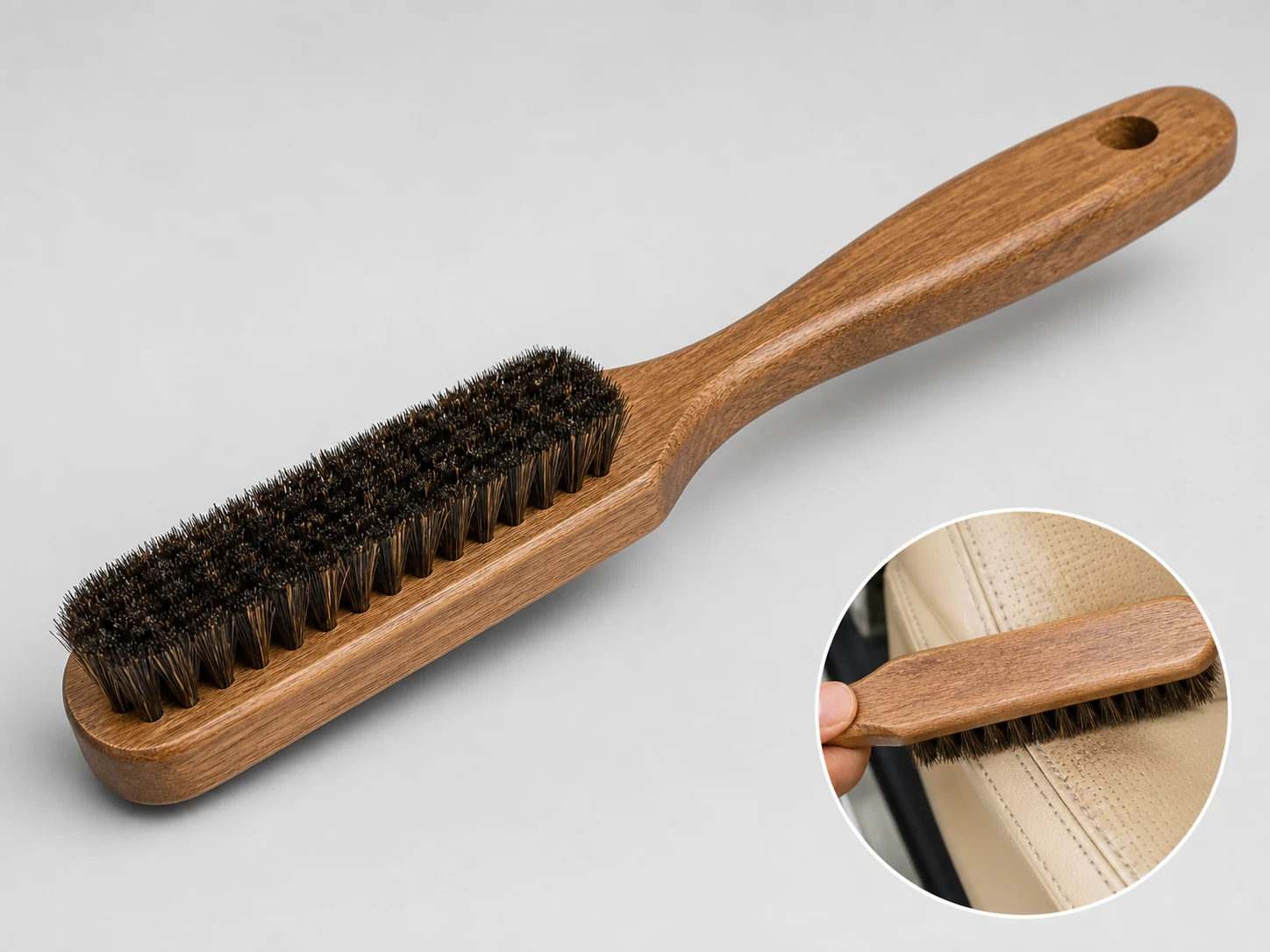
Custom boar bristle brush for cleaning leather uppers, edges, and finishes. Removes dust and polishing residue without scratching.
Small brush
500 pcs
Minimum order
Held in one hand: tube, bottle, detail and swab brushes — including long-handled ones with a small head.
Production lead time, once the specification is confirmed
- Up to 500 pcsWithin 7 days
- 501–50,000 pcsWithin 14 days
- Over 50,000 pcsWithin 21 days
Peak season can extend these times; the shipping date is confirmed in writing with your quotation. Sampling and shipping are quoted separately.
A natural boar bristle hand brush for cleaning and finishing leather surfaces, including footwear uppers, edges, and assembled goods. It removes dust, loose fibers, and residual polishing compound without scratching or flattening the leather grain.
What can this brush do for you?
Lifts Dust and Finishing Residue Off the Surface
Boar bristle has naturally split, flagged tips that trap fine particles as the brush passes over the leather. The medium stiffness dislodges dust, buffing compound, and light adhesive residue without digging into the surface, leaving the grain clear for inspection or the next finishing step.
Cleans Seams, Stitches, and Edge Creases
The head can be shaped narrow or angled to reach into stitch lines, welts, and edge creases where loose fiber and compound collect. Operators can clean these detail areas with the brush instead of using fingertips, reducing the risk of transferring oils or contaminating the leather.
Safe for Finished and Unfinished Leathers
Boar bristle is softer and more flexible than most synthetic abrasives. It moves debris off the surface without scratching corrected grain, pull-up, or painted finishes. The brush is suitable for use between finishing coats and on final goods before packing.
Supports Polishing and Buffing Workflows
After edge burnishing or wax polishing, this brush removes residual compound and restores a clean, even appearance. It also prepares the surface before applying conditioners, dyes, or topcoats by clearing away loose particles that could cause uneven absorption.
Durable Fill with Low Shedding
Well-anchored boar bristle stays in the ferrule during repeated dry brushing. The natural fiber resists breaking under normal hand pressure, so the brush maintains its cleaning performance through high-volume production shifts.
What is a Boar Bristle Cleaning Brush Leather?
A Boar Bristle Cleaning Brush Leather is a hand-guided tool that uses natural boar bristle set into a handle to clean leather surfaces, particularly in footwear and leather goods production. It is designed for dry cleaning operations: removing dust before adhesive application, cleaning off buffing compound after polishing, and clearing loose fibers before final inspection.
The bristle is selected from boar hair because its split ends grab fine particles without scratching the leather surface. The handle and head geometry are matched to the working area, whether that is a large upper panel, a narrow edge, or a stitched seam. During use, the operator moves the brush in short, directional strokes to lift debris away from the grain.
This is a light-duty cleaning brush, not a scrubbing tool for heavy soil or embedded grime. It works best on dry, finished or semi-finished leather where surface preservation matters more than aggressive material removal.
Technical Specifications
| Parameter | Value / Options |
|---|---|
| Head width | 30–50 mm, adjusted to the target area or sample |
| Trim length | 15–25 mm; shorter for stiffer scrubbing, longer for gentle dusting |
| Overall length | 130–200 mm, matched to hand size and reach |
| Fill material | 100% natural boar bristle; grades available for softness and density |
| Bristle density | Medium to high density, specified for dust pickup vs. surface pressure |
| Handle material | Wood, PP, or metal; ergonomic and non-slip options available |
| Ferrule | Nickel-plated steel, stainless steel, or molded plastic |
| Head shape | Rectangular, oval, angled, or custom profile |
| Operating environment | Dry, room temperature; wet or chemical cleaning requires special configuration |
| Brush type | Custom Handheld Detail Brushes |
| How it is driven | Hand-guided |
| Cleaning target | shoe manufacturing line, edge finishing station, and polishing and buffing area cleaning |
| Surface or part | edges, footwear uppers, leather grain, seams, leather uppers, small components, panels, and belts |
| Residue or debris | fiber, dust, loose fibers, polishing compound, adhesive, fine particles, wax, and hair |
| Mounting / connection | Fixed |
All dimensions and materials can be adjusted to fit your leather part or production line. We recommend sending a sample or drawing so the brush can be built to the exact contact area and stroke direction.
Where does this brush work best?
- Shoe manufacturing lines: Dusting leather uppers before adhesive application, stitching, or finishing spray.
- Edge finishing stations: Cleaning leather edges after trimming and burnishing to remove compound residue.
- Polishing and buffing areas: Brushing off residual wax or polishing compound after machine buffing.
- Leather goods assembly: Clearing loose fibers and dust from bags, belts, wallets, and small components before final assembly.
- Repair and restoration workshops: Preparing old leather for conditioning, dyeing, or refinishing by removing surface debris.
- Quality control stations: Final dust-off before inspection, photography, or packaging.
How do I choose the right one?
Start with the leather surface itself. Boar bristle works well on smooth, corrected, and semi-aniline leathers. For very soft or suede/nubuck leathers, a softer natural fiber like goat hair or a specialized suede brush may be more appropriate. If the surface has a delicate finish, test on a hidden area first.
Match the trim length to the cleaning action you need. A shorter trim (around 15 mm) gives more scrubbing pressure for stubborn dust and compound; a longer trim (up to 25 mm) is gentler and better for light dusting on finished goods. For detail work around seams and edges, a narrower head or angled profile improves access.
Consider the handle for operator comfort. Wood handles are traditional and warm, plastic handles are lighter and easier to sanitize, and overmolded grips reduce slip during long shifts. If the brush will be used with gloves, a larger handle diameter may be easier to control.
The brush is designed for dry cleaning. If your process involves water, solvent, or chemical cleaning, specify that upfront so we can select a bristle treatment or blend that holds up under those conditions. A pure boar bristle brush may soften or absorb moisture, reducing its effectiveness.
When to choose a different brush: For heavy caked dirt, grease, or embedded grime, use a stiffer nylon, tampico, or brass brush. For wet scrubbing of leather, a synthetic filament brush is often more durable. For removing silicone or heavy adhesive residue, a solvent wipe may be needed before brushing. Boar bristle is ideal for fine particle removal and surface-safe finishing, not for aggressive cleaning.
Can I customize this brush?
Every leather cleaning job is different, so we build this brush to your specific requirements. We will need the leather type, surface area to clean, residue being removed, stroke direction, operator hand size, and any environmental conditions. A sample leather part or a simple drawing helps us match the brush exactly.
We can adjust:
- Head geometry: width, length, shape, and angle to fit the panel or detail area.
- Bristle fill: trim length, density, stiffness, and natural fiber blend (boar, horsehair, tampico, or synthetic).
- Handle: length, material, ergonomic form, hanging hole, or molded grip.
- Ferrule: material, finish, or integration into a molded plastic head.
- Color and branding: natural or dyed bristle, custom handle color, stamping, laser marking, or pad printing.
- Packaging: bulk cartons, individual bags, retail-ready sleeves, or private-label kits.
If your project requires material documentation, inspection support, or third-party testing for export compliance, we can assist during the customization process.
Which filament survives the cleaning and still lasts on a boar bristle cleaning brush leather?
How do I clean and store the boar bristle brush after use?
Knock out loose dust by tapping the brush against a hard surface or brushing it against a clean cloth. For occasional deeper cleaning, use a mild soap and lukewarm water, rinse quickly, and air-dry with the bristles facing down so water does not enter the ferrule. Store the brush in a dry area away from direct heat or sunlight.
Can this brush be used on suede or nubuck leather?
It can be used for light dusting on suede or nubuck, but it will not raise the nap or remove scuff marks. For those tasks, use a brass or crepe brush specifically designed for suede. If you need a single brush for multiple leather types, we can recommend a softer bristle blend.
Does the boar bristle shed during use?
Initial shedding of a few loose bristles is normal in the first uses. After that, shedding should be minimal if the brush is well constructed and used with appropriate pressure. Excessive shedding usually indicates poor anchoring or overly aggressive scrubbing. Let us know if you experience high fiber loss, and we can adjust the setting method or bristle length.
How can I verify that the brush is not scratching my leather?
Test on a scrap piece of the same leather or a hidden area of the product. Use normal brushing pressure and inspect under good light for any change in gloss or texture. If scratches appear, reduce pressure, use a longer trim, or switch to a softer natural fiber blend.
When should I replace the brush?
Replace the brush when the bristles become permanently bent, flattened, or lose their flagged tips, or when cleaning no longer removes fine dust effectively. A brush that feels limp or leaves streaks of residue is no longer doing its job. In high-volume production, inspect brushes at the start of each shift and rotate as needed.
Guides that go deeper on this
We have not written a guide specific to this one yet. The material that covers selection, filament, dimensions, maintenance and sourcing is collected in the technical resources library.
Custom Manufacturing RFQ
Describe Your Application
For a custom quote, we need the key dimensions, surface or part, residue, material preference, quantity, and reference image or drawing.
Drawing or photo optional — it speeds things up, it does not gate the enquiry.
Custom Brush RFQ
Send Your Brush Project
Upload a drawing, product photo, or sample photo and provide the core dimensions and cleaning conditions.
“We need a brush to remove wet residue from a stainless steel conveyor, about 800mm wide. The current brush wears quickly. We can send photos.”
“We sell drinkware and need a cleaning brush to include with the product. Quantity around 5,000 pieces.”