
Custom Cleaning Brush
Natural Bristle Brush
Natural boar, horsehair, or Tampico fiber brushes in hand, strip, or roller form for gentle dusting and polishing of machine surfaces and panels.
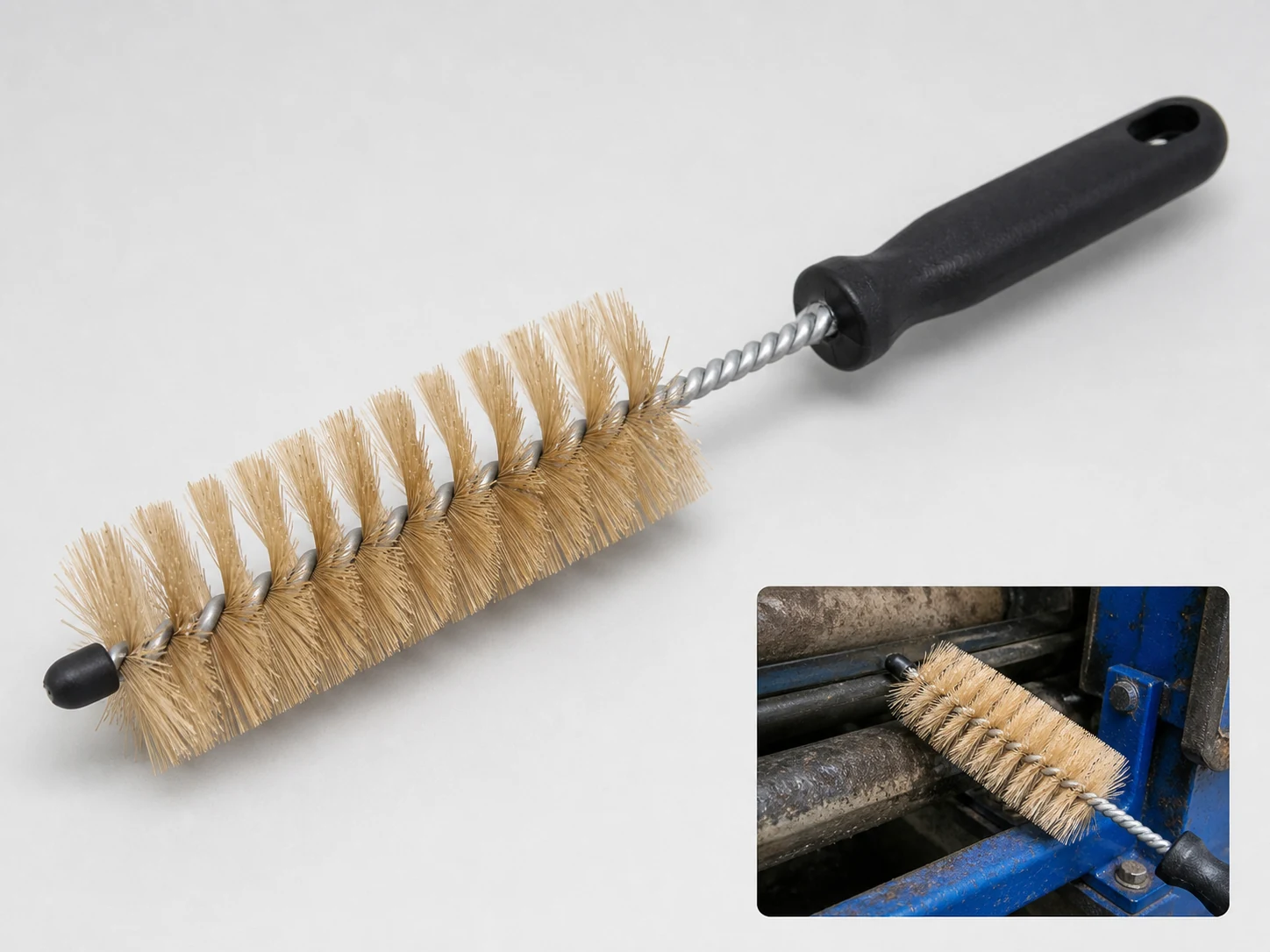
Medium brush
100 pcs
Minimum order
Worked with two hands or on a pole: chimney, gutter and pond-filter brushes, discs, cups and tank brushes.
Production lead time, once the specification is confirmed
- Up to 100 pcsWithin 7 days
- 101–5,000 pcsWithin 14 days
- 5,001–50,000 pcsWithin 21 days
- Over 50,000 pcsConfirmed with your quotation
Peak season can extend these times; the shipping date is confirmed in writing with your quotation. Sampling and shipping are quoted separately.
A gentle-contact natural-fiber brush for dusting, light wiping, and polishing machine surfaces, control panels, and finish-sensitive parts. Available as a hand brush, strip brush, or roller brush with boar bristle, horsehair, or Tampico fiber selected for the contact the job requires.
What can this brush do for you?
Flagged Natural Tips Lift and Hold Fine Dust
Boar bristle and some horsehair trims split naturally at the tips into multiple fine flags. That increases the working surface and lets the fiber lift fine particles off a panel instead of sliding over them. On CNC enclosures, instrument panels, and pre-coating lines, the result is dust removal rather than dust relocation.
Soft Contact Keeps the Finish You Are Trying to Protect
Boar and horsehair fibers are softer and more flexible than many synthetic monofilaments. On painted, lacquered, polished, or anodized surfaces they remove lint and light residue without the fine marring that harder filaments can leave when operator pressure changes. That protection matters most on visible machine panels, covered displays, and polished trim.
Flexible Fill Reaches Seams and Shallow Contours
Horsehair and finer boar trims bend under normal hand pressure, so the working tips enter shallow seams, nameplate edges, fasteners, and contoured housing surfaces. One brush can cover the flat area and the details around it instead of requiring a second tool.
Natural Fiber Absorbs and Releases Light Media Evenly
Boar bristle carries a small amount of natural oil, which helps it hold fine dust until the brush is cleaned, while Tampico fiber absorbs water and keeps much of its stiffness in damp conditions. The brush can therefore remove light polishing compound, damp wiping solution, or fine process debris without dripping or pooling onto the surface.
Strip and Roller Versions Put the Same Contact into the Machine
The selected fill can be set into a strip channel for linear wiping and dust-seal jobs, or wound into a cylindrical roller for rotating web and panel cleaning. That lets automated lines use the same non-scratch natural contact as a hand operator, matched to the stroke or rotation the equipment already provides.
What is a Natural Bristle Brush?
A Natural Bristle Brush is a cleaning brush whose working fill is plant or animal fiber — typically boar bristle, horsehair, or Tampico fiber — instead of synthetic monofilament. It is selected when the primary job is removing dust, lint, or light process residue from surfaces that must not be scratched or hazed. The fill is cut to a trim, set into a wood, plastic, or metal backing or roller core, and used with hand strokes, linear wipes, or rotation.
Animal-hair fibers have irregular surfaces and naturally split tips; those fine ends trap particles mechanically, while the natural oil in boar bristle helps hold fine dust until the brush is cleaned. Tampico is a plant fiber that absorbs moisture and retains much of its stiffness in damp use, so it suits light wet wiping where animal hair would mat or collapse.
In machine cleaning, the brush typically contacts enclosures, guide covers, panels, windows, coated parts, or product surfaces before critical operations such as coating, laminating, inspection, or assembly. Natural fiber is an operating choice, not a universal replacement for synthetic or wire brushes: it suits low-abrasion, low-chemical, low-temperature cleaning. It is not intended for baked-on deposits, heavy oxidation, hot contact, or strong acids and alkalis, which degrade the fiber and can cause shedding or discoloration.
Technical Specifications
The values below describe the standard natural-fill product range. Fill material, trim length, backing, and interface are adjusted for each application, so read them as selection ranges rather than fixed SKU values.
| Parameter | Value / Options |
|---|---|
| Fill material | Boar bristle, horsehair, Tampico fiber, or a specified blend |
| Fill behavior | Boar: stiff flagged tips, good dust pickup and fine polishing. Horsehair: soft and flexible for delicate surfaces and contours. Tampico: plant fiber with wet stiffness for damp wiping and light residue. |
| Brush form | Hand brush, strip brush, or roller brush selected by the contact motion |
| Trim length | 10–75 mm; shorter for firm flat wiping, longer for dusting into seams and contours |
| Overall length / strip length | Hand brushes 100–400 mm; strip brushes 100–3000 mm; roller face width set by shaft and panel or web width |
| Backing / core | Wood, polypropylene, aluminum, or stainless steel selected for environment and weight |
| Mounting / interface | Handle, channel or retainer for strip brushes, shaft and bore for roller brushes |
| Max continuous operating temperature | 60–100°C, material dependent; animal-hair fill at the lower end, Tampico at the upper end |
| Chemical exposure | Preferred in neutral pH; limited mild detergent exposure; avoid strong acids, alkalis, and aggressive solvents |
| Typical use condition | Dry dusting, light wiping, fine polishing; not rated for abrasive scrubbing or heavy residue removal |
| Brush type | Custom Handheld Detail Brushes |
| How it is driven | Hand-guided |
| Cleaning target | machine tool and cnc enclosure, pre-coating and finishing line, and optical and instrument surface cleaning |
| Surface or part | panels, roller, metal, irregular surfaces, webs, plastic, sheets, and finish-sensitive parts |
| Residue or debris | fiber, dust, lint, particles, polishing compound, fine dust, oil, and hair |
| Mounting / connection | Handle, channel or retainer for strip brushes, shaft and bore for roller brushes |
Where does this brush work best?
- Machine tool and CNC enclosures: wipe fine metal or plastic dust from guide covers, control consoles, windows, and enameled panels between cycles with a hand brush that will not haze the visible surfaces.
- Pre-coating and finishing lines: dust panels, cabinets, and body components before paint or lacquer so loose lint and particles do not sit under the finish.
- Printing and converting lines: strip or roller brushes remove paper dust, sheet lint, and loose coating particles from webs and panels before print, lamination, or inspection.
- Optical and instrument surfaces: clean display covers, gage lenses, and polished trim with low-pressure horsehair or soft boar contact.
- Woodworking and furniture production: remove sanding dust from profiled trim, panels, and finished edges before glue application or final inspection.
- Light polishing operations: carry and spread fine polishing compound with boar or Tampico fill on small or irregular surfaces where a felt wheel would apply too much pressure.
How do I choose the right one?
Choose the fiber by surface sensitivity and residue
Horsehair is the softest option for clear covers, polished metal, and fresh coatings. Boar bristle is stiffer and works for dry dust, fine film, and applying polishing compound. Tampico handles damp wiping and light machine residue without matting the way animal hair can. If the residue is oil-heavy, abrasive, or hardened, natural fiber will load and dull quickly; choose a synthetic fiber specified for the chemistry instead.
Choose the form by the cleaning motion
Use a hand brush when an operator controls the stroke. Use a strip brush when a surface slides against a fixed or reciprocating contact, such as a wiper or dust seal. Use a roller brush when the web, sheet, or panel passes under rotating contact. For rollers, check face width, diameter, shaft fit, rotation speed, and how much interference the material and speed can tolerate.
Set trim length by the contour and required pressure
Longer trim reaches into seams, recesses, and uneven profiles but applies lighter pressure. Shorter trim creates firmer contact on flat panels and wipes more aggressively. On contoured parts, use longer flexible fill; on flat visible surfaces, a shorter trim delivers more consistent full-surface contact.
Match backing and core to the environment
Natural fiber absorbs moisture. Animal-hair fill becomes limper when wet and can deform if stored damp, so use Tampico for damp conditions. High heat curls and degrades natural fiber, and solvents strip the natural oil from boar bristle. If the area is wet, hot, or chemically aggressive, plastisol, nylon, PBT, polyester, or stainless steel fill is usually the better choice.
Know when natural fiber is the wrong choice
Use a wire or abrasive brush when the residue is baked-on, oxidized, scaled, or requires mechanical cutting. Use a synthetic brush when the environment requires strong chemicals, repeated wash-down, or controlled shedding. Natural fiber is the right selection when surface protection, fine dust pickup, and gentle contact are higher priorities than aggressive removal.
Can I customize this brush?
Natural bristle brushes are normally built around a specific surface, machine interface, and residue. To define the right configuration, provide the contact surface material and finish sensitivity, residue type, dry or damp use, cleaning chemicals, operating temperature, cleaning motion, mounting points, required contact area, and any replacement interval. A drawing, CAD file, or sample brush shortens the definition step.
We adjust the following for each project:
- Fiber selection and blend: boar bristle, horsehair, Tampico, or mixed fill; cut length, density, stiffness, flagged or unflagged tips.
- Form and dimensions: hand brush block and handle size; strip length, back height, and channel type; roller diameter, face width, trim diameter, core, shaft, and bore.
- Trim profile: flat, angled, tapered, or contour-cut to match the part; multiple trim heights on one brush are possible.
- Backing, handle, and core: wood, polypropylene, aluminum, stainless steel, or project-suitable material; ergonomic grip, hanging hole, or machine fixture.
- Mounting: handle, channel, clips, brackets, keyed shaft, set-screw bore, or custom retainer.
- Color and marking: natural fiber color remains material-specific; backing and handle can be colored, printed, or laser marked for station identification; custom packaging labels are available.
- Packaging: bulk, individual bag, display pack, or kit quantity matched to your distribution or plant issue system.
If your project requires material declarations, inspection records, or third-party testing support for the final fiber and backing materials, we can assist with those requirements as part of the customization process.
Which filament survives the cleaning and still lasts on a natural bristle brush?
How do I know whether a natural bristle brush will scratch a coated or polished surface?
Run a short test on a non-visible area using the same stroke pressure and speed the operator will use. Horsehair causes the least marking on soft coatings and polished metal; boar bristle is typically safe on cured paint, glass, and anodized surfaces at normal hand pressure. If the test area shows fine marring under side light, reduce pressure, increase trim length, or switch to a softer horsehair fill before putting the brush into production.
Do natural fiber brushes shed, and how do I keep shedding under control?
All cut natural fibers can release a few broken or loose fibers during the first use, especially with very stiff fill or long trim. Choose flagged or tip-trimmed fill to reduce this. Run in new strip or roller brushes on scrap material before they contact product surfaces, and inspect the contact edge afterward. If the process cannot accept any fiber release, select a synthetic monofilament or foam alternative instead.
Can the brush be used damp or with a mild detergent?
Tampico fiber is the most suitable natural fill for damp wiping because it absorbs water and keeps much of its stiffness. Boar and horsehair fill soften when wet and should not be left soaked, since the fiber may deform and the backing or channel can hold water. After damp use, shake out excess liquid and dry the brush away from direct heat. Natural fill is not intended for steam or hot wash-down cleaning.
Can I use the brush with solvents or degreasers?
Not as a general rule. Strong solvents and degreasers strip the natural oil from boar bristle and can make it brittle, while aggressive chemicals degrade horsehair and Tampico. If the surface must be cleaned with solvent, strong detergent, or alkaline degreaser, use a nylon, PBT, or polyester brush specified for that chemistry instead.
How do I check whether a strip or roller brush is still performing?
Inspect the contact edge under light for crushed or permanently bent fill, missing bristles, and uneven trim wear. If the brush no longer leaves a consistent contact footprint, or if a white cloth wipe after the normal stroke count still shows residue, correct the mounting height or interference first. If the condition does not recover, replace the strip or roller before contact quality drops further.
What residues are outside the brush’s intended range?
Baked-on oils, hardened deposits, cured adhesives, heavy oxidation, rust, and scale are outside the intended range. Those residues require scraping or aggressive filament, which would break or strip natural fiber and may transfer particles to the surface. Use a wire, abrasive, or heavy-duty synthetic brush for gross removal, then follow with a natural bristle brush if final dusting or polishing is needed.
Guides that go deeper on this
Custom Manufacturing RFQ
Describe Your Application
Please include the main sizes, application, residue, preferred material, interface, quantity, and any drawing or sample available.
Drawing or photo optional — it speeds things up, it does not gate the enquiry.
Custom Brush RFQ
Send Your Brush Project
Upload a drawing, product photo, or sample photo and provide the core dimensions and cleaning conditions.
“We need a brush to remove wet residue from a stainless steel conveyor, about 800mm wide. The current brush wears quickly. We can send photos.”
“We sell drinkware and need a cleaning brush to include with the product. Quantity around 5,000 pieces.”