
Custom Cleaning Brush
Synthetic Bristle Brush
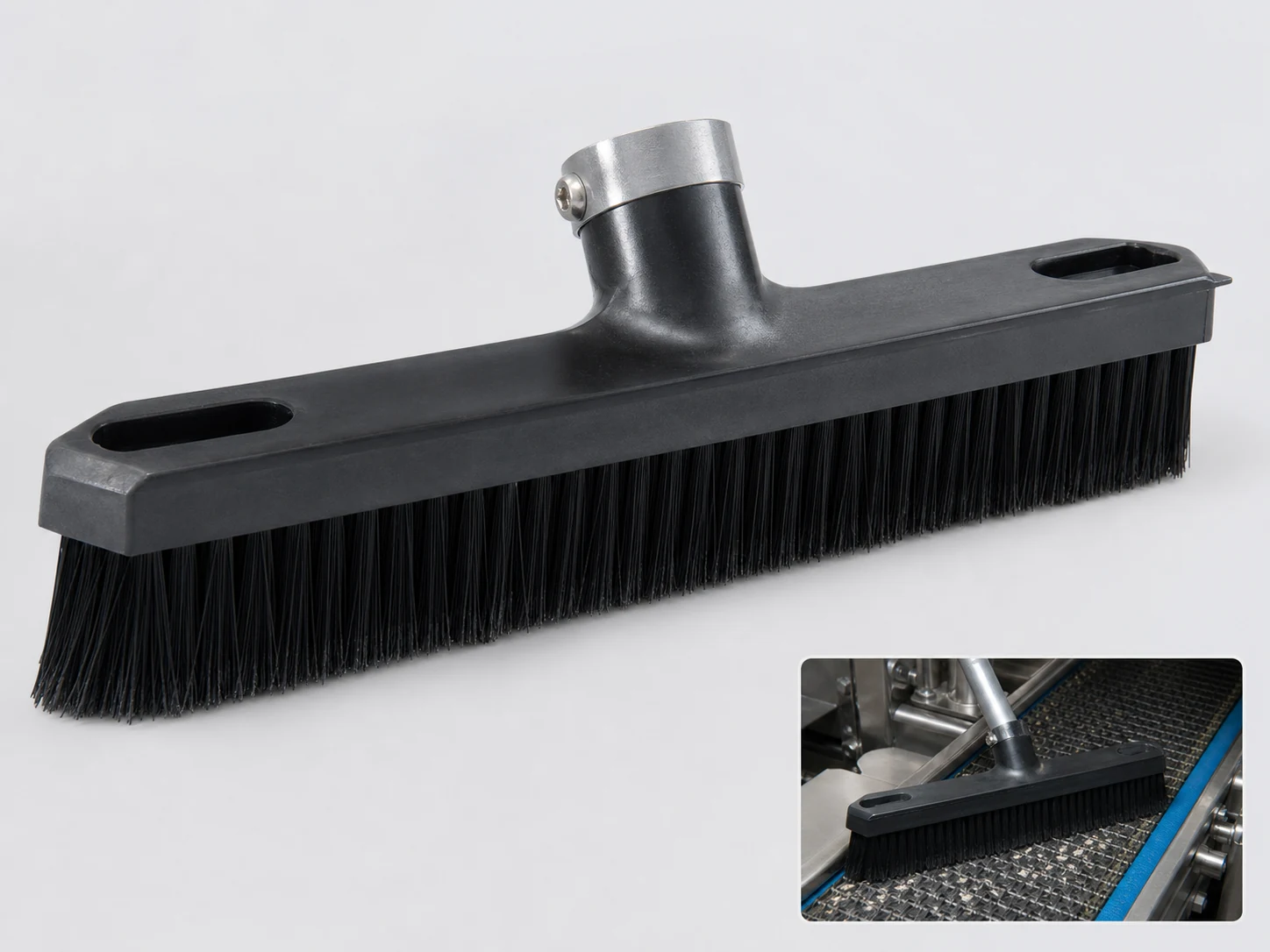
Custom synthetic bristle brushes with nylon PA and PBT filaments for wet and dry cleaning of dust, dirt, sawdust, and metal chips.
Small brush
500 pcs
Minimum order
Held in one hand: tube, bottle, detail and swab brushes — including long-handled ones with a small head.
Production lead time, once the specification is confirmed
- Up to 500 pcsWithin 7 days
- 501–50,000 pcsWithin 14 days
- Over 50,000 pcsWithin 21 days
Peak season can extend these times; the shipping date is confirmed in writing with your quotation. Sampling and shipping are quoted separately.
A configurable synthetic-filament cleaning brush for wet and dry removal of fine dust, dirt, sawdust, metal chips, and light residues from work surfaces, machine bodies, conveyors, and equipment. Nylon and PBT filament options and multiple mounting formats let the brush work as a hand tool or as a fixed strip on your production line.
What can this brush do for you?
Keep consistent stiffness in wet and dry work
Nylon PA and PBT monofilaments absorb very little water, so the bristles do not soften, mat, or collapse when used with detergents, water-based cleaners, or cutting fluids. The brush face returns to its original shape after washing down and dries quickly between shifts, without the mildew or rot problems associated with natural fibers.
Remove fine dust without abrading the surface below
Filament diameters from 0.08 mm to 1.00 mm and straight, crimped, or flagged tips let you match the contact to the surface. Soft flagged nylon sweeps fine dust off painted panels, powder-coated housings, and polished steel without leaving brush marks, while stiffer, shorter trim clears sawdust, metal chips, and packed debris from harder working surfaces.
Use the same brush design at the bench and on the machine
The same filament face and trim length can be supplied with an ergonomic manual handle, a threaded ferrule, a shank, a bracket, or a machine bar. Hand stations and fixed wiping positions can use identical filament specs, so cleaning results stay consistent across the line.
Stand up to oils, mild solvents, and frequent washdowns
Nylon resists oils, greases, and many mild cleaning chemicals; PBT extends that tolerance into hotter and more chemically aggressive environments. Standard synthetic fill does not rust, and the backing and mounting hardware can be selected in stainless steel, aluminum, or plastic to match the operating environment.
Reach into edges, slots, and housing gaps
Trim lengths from 10 mm to 100 mm and working face lengths up to 300 mm let the brush reach into recessed areas, along rail flanges, under conveyor edges, and between machine components where cloths and flat pad tools cannot load the bristle tips properly.
What is a Synthetic Bristle Brush?
A synthetic bristle brush is a cleaning tool whose working face is made from extruded monofilament filaments, typically nylon PA or PBT, rather than natural hair, animal fiber, or metal wire. The filaments are set in tufts into a backing made of wood, plastic, aluminum, or stainless steel, then secured by a ferrule, block, channel, or bar. During use, the filament tips contact the surface and lift or dislodge fine debris; the chosen diameter, trim length, and tip finish determine whether the brush is used for light dusting or vigorous scrubbing.
For manual cleaning, the brush is commonly supplied with a straight, contoured, or loop handle matched to the operator’s grip and the reach needed. For fixed or automated installations, the same bristle area can be mounted on a shank, bracket, or extruded aluminum or steel bar so the brush becomes part of a piece of equipment, a conveyor, or a cleaning station. This makes the synthetic bristle brush a flexible product family rather than one fixed design.
Operating limits are set mainly by the filament material. Nylon PA grades generally retain their shape in continuous service up to about 80–100 °C, while PBT is typically suited to about 120 °C. Strong acids, concentrated alkalis, or aggressive solvents should always be checked against the filament grade, because chemical attack often shows up first as embrittlement, softening, or tuft loss, not as an immediate failure. The brush removes loose and lightly attached residue; it should not be expected to grind away heavy scale, rust, weld spatter, or baked-on carbon.
Technical Specifications
All dimensions are adjusted to your cleaning task; the values below show the standard configuration range.
| Parameter | Value / Options |
|---|---|
| Filament material | Nylon PA6, PA6.6, PA610, or PBT (blends available) |
| Filament diameter | 0.08–1.00 mm, selected for soft, medium, or firm contact |
| Trim length (bristle projection) | 10–100 mm |
| Working face length | 20–300 mm |
| Face width | 20–100 mm |
| Overall length (manual brushes) | 150–400 mm |
| Mounting / interface | Ergonomic handle, threaded ferrule, shank, U-channel bracket, extruded aluminum or steel machine bar |
| Backing / block material | Beechwood, PP, aluminum, stainless steel, or project-suitable polymer |
| Tip treatment | Straight, flagged, crimped, or split tips; beveled or straight face |
| Stiffness options | Soft, medium, firm — controlled by filament diameter, trim length, crimp, and tuft density |
| Operating temperature | Nylon PA: approximately up to 80–100 °C continuous; PBT: approximately up to 120 °C continuous |
| Chemical exposure | Suitable for water, mild detergents, oils, and common mild solvents; verify concentrated chemicals against filament grade |
| Brush type | Custom Handheld Detail Brushes |
| How it is driven | Hand-guided |
| Cleaning target | inspection counter, machine body, and conveyor frame cleaning |
| Surface or part | conveyors, metal, aluminum, bars, frames, rails, edges, and housings |
| Residue or debris | dust, chips, fine dust, sawdust, fiber, metal chips, oil, and rust |
| Mounting / connection | Ergonomic handle, threaded ferrule, shank, U-channel bracket, extruded aluminum or steel machine bar |
Where does this brush work best?
- Workbenches, assembly tables, and inspection counters where fine dust, cloth fibers, sawdust, and small chips need to be cleared without scratching painted or laminated surfaces.
- Machine bodies, housings, guide rails, and control-panel frames that collect dry dust and light oil film during production; the brush removes it in wet or dry cleanup.
- Conveyor frames, roller edges, and belt guards where debris accumulates in tight gaps and needs a slim brush face or angled trim to reach.
- Parts-cleaning stations where machined parts need loose chips and dried coolant brushed away before gauging, assembly, or packaging.
- Pre-coating or pre-painting wipe-down where the priority is removing loose dust without adding fibers or scratching the substrate.
- Food, packaging, and clean-area perimeter wipe-downs when the process specifies a non-metallic, easy-to-rinse brush; validate material compliance for direct food contact separately.
How do I choose the right one?
Use filament diameter and trim length to match the mess. Fine dust requires soft flagged tips (0.08–0.30 mm, longer trim 40–100 mm) that sweep rather than dig. General dirt and sawdust respond to medium straight or crimped filament (0.30–0.60 mm, trim 20–50 mm). Metal shavings and packed debris need firmer filament (0.50–1.00 mm) with shorter trim (10–30 mm) so the bristle row holds enough pressure to move the chips without folding over.
Then check the surface. Painted, powder-coated, anodized, or polished parts need softer, flagged tips. Machined steel, cast aluminum, or structural frames can accept medium or firm filament. If the surface already shows brush marks from the current tool, move one grade softer or switch to flagged tips and verify on a scrap piece.
Decide wet or dry. Nylon keeps its stiffness in wet conditions, but constant detergent or elevated wash temperature pushes you toward PBT or PA610 to prevent gradual softening or tuft set. The backing and mounting hardware must also survive the same moisture: stainless steel, aluminum, or plastic backings prevent rust staining around the base of the brush.
Match the interface to how the brush will be used. Manual cleaning needs a handle that fits the operator’s grip and the required reach; machine mounting needs a shank, bracket, or bar with dimensions that match your existing receiver or rail. Sending a drawing or sample of the mounting point and the surface to be cleaned removes most sizing errors.
| Your condition | Choose | Reason |
|---|---|---|
| Fine dust on painted or coated panels | Soft flagged nylon, 0.10–0.30 mm, longer trim | Tip flexibility sweeps without scratching |
| General dirt, sawdust, mixed debris | Medium straight or crimped nylon, 0.30–0.60 mm | Balanced sweep and scrubbing ability |
| Metal chips, packed residue | Firm nylon/PBT, 0.50–1.00 mm, short trim | Short projection prevents buckling under load |
| Wet washdown, heat, oils | PBT or PA610 with stainless/aluminum backing | Better moisture and chemical stability plus corrosion resistance |
This brush is not a replacement for a wire brush. If the surface carries rust, weld spatter, heavy mineral scale, or strongly bonded deposits, a steel or brass wire brush, abrasive-filled nylon, or a mechanical surface-treatment method will be more effective. For static-sensitive electronics or explosive-dust environments, specify antistatic or conductive filament and grounding-compatible mountings, and verify the material against the site’s safety requirements.
Can I customize this brush?
We configure the brush around the surface, residue, and mounting point you actually have. To define the build, we need the cleaning target material, the type and amount of residue, wet or dry operation, contact area dimensions, the mounting interface (or a drawing/sample), operating temperature, chemicals, and any handle or reach preference.
- Filament material and grade — nylon PA6, PA6.6, PA610, PBT, blends, antistatic/conductive compounds for static-controlled areas.
- Filament diameter, trim length, crimp, flagging, tip finish, and color.
- Brush face geometry — straight, beveled, double-row, center-groove, or shaped profile to follow a specific contour.
- Backing and block — beechwood, PP, nylon block, anodized aluminum, stainless steel, or other process-compatible material.
- Mounting and interface — manual handles (straight, D-handle, loop, molded grip), threaded ferrule, round shank, bracket, or machine bar with your hole pattern and length.
- Marking and identification — custom color, pad print, laser marking, or molded-in branding.
- Packaging — bulk, individual bag, retail sleeve, kit, or project-specific packing with your part number.
If the project requires material documentation, inspection reports, third-party testing, or support for industry-specific compliance requirements, we can assist during the customization process.
Which filament lasts longest on a synthetic bristle brush?
How do I know whether synthetic bristles are the right choice instead of natural bristles or wire?
Choose synthetic when the brush will see water, detergent, oils, or repeated wet-dry cycling, because natural bristles absorb moisture and lose shape. Choose wire only when the deposit is rust, scale, or baked material that needs aggressive mechanical removal. Synthetic bristles are the right middle ground for dust, dirt, chips, and light residue on surfaces you do not want to scratch.
What temperature will damage the brush?
The first sign of heat damage is usually permanent bending or set in the tufts after the brush cools. Nylon PA grades generally tolerate continuous service up to about 80–100 °C, while PBT can typically work to about 120 °C. If the brush is used on hot machine surfaces or in heated wash tanks, tell us the actual operating temperature so the filament grade and backing materials are chosen for those conditions.
How can I inspect a batch before putting it into service?
Check that the tufts are evenly spaced and none are missing or loose, that the backing is securely attached to the handle or mounting hardware, and that the filament tips are free of splits or sharp fractures where flagged finish was not specified. Bend a few tufts by hand; they should spring back. If a tuft stays bent or brittle strands break away, reject the batch.
Do the cut filament tips need to be broken in before use?
Straight-cut nylon or PBT tips can initially feel slightly sharp at the very end, especially in firmer diameters. A few strokes on a scrap surface of the same material usually rounds them off. If the brush will contact painted or polished surfaces from the first use, ask for flagged tips or a pre-rounded tip treatment instead of leaving cut ends exposed.
Can the brush be used in food or pharmaceutical areas?
Only if the project specifies that requirement up front. The filament, backing, adhesive or staple, and handle materials must all be selected for the intended contact and cleaning regime. Standard synthetic cleaning brush grades are not automatically food-contact compliant. When you need validation, we can support the material selection and provide documentation or third-party testing aligned to your project requirements.
How often should the brush be replaced?
Replace when the working face is visibly shorter or rounded in the highest-wear zone, when tufts no longer recover after bending, when bristles become brittle and snap during use, or when the backing shows cracks, corrosion, or loose mounting. For continuous-use machine brushes, periodic visual checks against a new brush are the simplest way to decide replacement timing.
Guides that go deeper on this
Custom Manufacturing RFQ
Describe Your Application
Please share the brush dimensions, working area, residue type, material direction, quantity, and a drawing or photo for quotation.
Drawing or photo optional — it speeds things up, it does not gate the enquiry.
Custom Brush RFQ
Send Your Brush Project
Upload a drawing, product photo, or sample photo and provide the core dimensions and cleaning conditions.
“We need a brush to remove wet residue from a stainless steel conveyor, about 800mm wide. The current brush wears quickly. We can send photos.”
“We sell drinkware and need a cleaning brush to include with the product. Quantity around 5,000 pieces.”