
Custom Cleaning Brush
Boar Bristle Brush
Natural boar bristle brushes for smooth application of oil-based paints, varnishes, stains, and solvent-borne coatings.
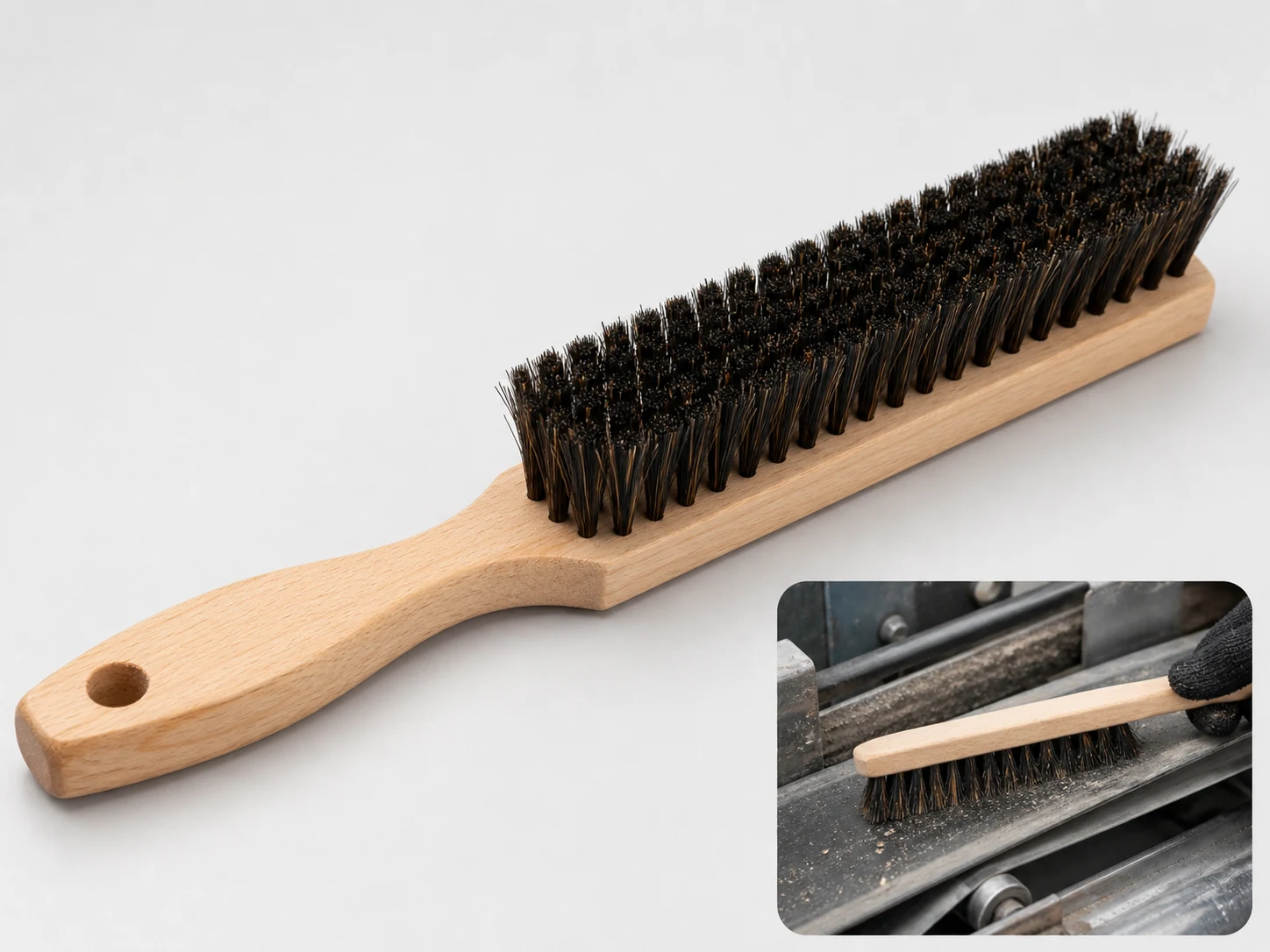
Small brush
500 pcs
Minimum order
Held in one hand: tube, bottle, detail and swab brushes — including long-handled ones with a small head.
Production lead time, once the specification is confirmed
- Up to 500 pcsWithin 7 days
- 501–50,000 pcsWithin 14 days
- Over 50,000 pcsWithin 21 days
Peak season can extend these times; the shipping date is confirmed in writing with your quotation. Sampling and shipping are quoted separately.
A natural boar-bristle finishing brush designed for smooth, even application of oil-based paints, varnishes, stains, and solvent-borne coatings on wood, trim, furniture, and detailed surfaces. Flagged boar tips hold more finish and lay it down with fewer brush marks than ordinary synthetic filaments.
What can this brush do for you?
Carries more finish with every dip
The split, naturally flagged tips and tapered shafts of boar bristle create small reservoirs along each filament, so the brush loads more coating and releases it gradually instead of dumping it at the start of a stroke. Finishers and production painters get longer passes, fewer re-dips, and a wetter edge on large panels and runs.
Lays down solvent-borne coatings with fewer brush marks
Boar hair is soft at the tip and splits into fine flags when prepared correctly. Those split ends break up surface tension in varnish, alkyd enamel, tung oil, and oil-based stain, leaving a smoother wet film with less channeling and fewer visible brush strokes than a stiff synthetic filament.
Keeps its shape in oil and solvent systems
Natural boar bristle stays resilient in mineral spirits, linseed oil, alkyd, and terpene solvents, where many synthetic fibers soften or lose recovery. This brush is built for the chemistry of traditional finishes rather than waterborne latex.
Follows moldings, grain, and edge profiles without digging in
The softened tips work into rosettes, panel grooves, bead, coves, and open-grain wood without scratching or tearing the coating film. For trim packages, raised-panel doors, and furniture details, the brush loads the profile evenly instead of skipping across high points.
Returns to service after proper cleanup
Boar bristle is abrasion-resistant and reshapes well when cleaned with the correct solvent, brush soap, and drying routine. A maintained brush holds its flagged tip pattern through repeated jobs, so replacement cost stays low on finishing lines where the same tool is used daily.
What is a Boar Bristle Brush?
A Boar Bristle Brush is a finishing tool whose working contact is made from natural boar, or hog, hair instead of synthetic nylon or polyester. For paint and coating application, the most common form is a hand brush with a ferrule-mounted bristle bundle and a wood or polymer handle. The same bristle material can be set into strips, wheels, plates, stems, or shafts for bench and inline coating operations.
The working behavior comes from the natural structure of the hair. Each boar filament tapers from root to tip and can be mechanically split, or flagged, at the tip. The tapered shaft controls how much coating the brush holds, while the flagged tip breaks up the coating film and evens out the deposition. Two to five split ends per hair are common in a finishing-grade bundle. During use, the loaded brush is pressed gently against the surface and pulled or pushed in long, even strokes, with the wet edge maintained by the flagged tip pattern.
This is a film-forming and coating-application tool, not a scrubbing or cleaning brush. It is selected for oil-based enamels, clear finishes, stains, and solvent systems. Natural bristle does not perform well in waterborne latex or acrylic coatings because the hair absorbs water, swells, and loses its flagged structure. That does not mean the brush is weak; it means the chemistry has to match the hair.
Technical Specifications
Standard values below describe hand-held finishing brushes; wider, machine-mounted, or inline configurations are available for project orders.
| Parameter | Standard / Options |
|---|---|
| Head width | 25-100 mm for hand finishing; 10-400 mm on request |
| Bristle exposure (trim length) | 40-70 mm typical; 5-100 mm available |
| Overall length | 190-250 mm hand brush; up to 800 mm for special formats |
| Filament diameter | 0.08-0.35 mm for finishing grades; 0.05-1.20 mm range |
| Fill density | 60-120 tufts per 100 cm2 for finishing; 20-200 by format |
| Bristle material | Natural boar bristle, black, grey, bleached, or blended grades; flagged tip finish |
| Ferrule | Brass, copper, nickel-plated, or stainless steel; crimped or riveted |
| Handle | Seasoned hardwood (beech, birch, ash) or polymer; flat, beaver-tail, round, or contoured |
| Set compound | Solvent-resistant epoxy selected for oil and solvent-borne coatings |
| Mounting | Hand ferrule and handle standard; strip, wheel, plate, stem, or shaft for machine application |
| Suitable coatings | Oil-based paints, alkyd enamels, varnishes, polyurethanes, stains, shellac, tung oil, and linseed oil |
| Not recommended | Water-based latex and acrylic coatings, abrasive cleaning, high-pH solutions, or heavy scrubbing |
| Brush type | Custom Handheld Detail Brushes |
| How it is driven | Hand-guided |
| Cleaning target | furniture finishing, cabinetry and built-in millwork, and architectural trim and door cleaning |
| Surface or part | wood, edges, profiles, panels, frames, plates, stairs, and pads |
| Residue or debris | paint, oil, hair, release agent, and glaze |
| Mounting / connection | Hand ferrule and handle standard; strip, wheel, plate, stem, or shaft for machine application |
Where does this brush work best?
Boar bristle brushes serve finishing operations where the coating is solvent-borne and a smooth, uniform film matters more than speed of coverage alone. Common use points include:
- Furniture finishing: varnish, wiping varnish, and oil finishes on table tops, chair spindles, drawer fronts, and open-grain woods where soft tips reduce brush lines.
- Cabinetry and built-in millwork: alkyd enamel or conversion varnish on raised-panel doors, frames, and end panels, with edges kept crisp around routed profiles.
- Architectural trim and doors: oil-based paints and clear topcoats on baseboards, casings, crown molding, paneled doors, and stair parts.
- Marine brightwork: spar varnish and teak oil on handrails, trim, and brightwork where coating defects show under high gloss.
- Fine art, restoration, and antique work: shellac, oil glazes, stains, and gesso on frames, period millwork, and restored surfaces that require gentle mechanical contact.
- Bench and inline operation: boar bristle set into strips, wheels, plates, or shafts can apply oils, coatings, and release agents in tooled production lines.
How do I choose the right one?
Start with the coating chemistry before evaluating any other parameter. Boar bristle is the correct choice for oil, solvent, and traditional resin finishes. If the specification calls for waterborne latex or acrylic, switch to a synthetic-filament brush or a synthetic-boar blend. Natural hair absorbs water and the brush will fight you from the first stroke.
Size the head to the narrowest band you will coat
The brush should not be wider than the narrowest section it must cover. A 25-40 mm angled sash brush controls baseboard, casing, and muntin work; a 50-75 mm flat brush fits door stiles, cabinet frames, and medium panels; 75-100 mm widths suit large flat surfaces. A brush that is too wide bridges the profile and leaves uneven film at the edges.
Match bristle length and density to the coating body
Longer trim and denser fill hold more coating, which helps heavy-bodied enamels but can overload thin sealers. Shorter trim and lighter fill give better control with low-viscosity varnishes and stains. Use the table below as a starting point and adjust after a test panel.
| Coating type | Typical bristle selection | Why this pairing works |
|---|---|---|
| Oil-based enamel and primer | 50-75 mm exposure, medium-firm black or blended boar, dense fill | Enough body to move heavy paint and hold a straight cut line |
| Varnish and clear topcoats | 40-65 mm exposure, fine bleached or blended boar, medium density | Fine flagged tips reduce bubbles, sags, and brush marks in clear film |
| Stains, oils, and shellac | 40-60 mm exposure, softer flexible boar, moderate fill | Soft tips wipe into grain and corners without pulling the coating too thin |
| Water-based latex or acrylic | Use synthetic filament or synthetic-boar blend instead | Boar hair absorbs water, swells, and loses stiffness and flagging |
Check ferrule and set compound for the solvent environment
Mineral spirits, naphtha, turpentine, and ester-based brush cleaners attack inferior adhesives and plated steel. Choose a solvent-resistant epoxy set and a brass, stainless, or properly plated ferrule if the brush will spend shifts in solvent or be cleaned in a brush washer. For water-free environments, polymer and non-sparking ferrules can also be specified.
Step back from boar when the job is not a finishing stroke
Do not select boar bristle for abrasive cleaning, stripping, rust removal, heavy scrubbing, or high-pH washing. Those tasks require wire, nylon-abrasive, or pad tools. Boar hair is a coating-transfer and leveling tool; mechanical aggression destroys its flagged tip pattern and adds cost without adding cleaning performance.
Can I customize this brush?
Boar bristle brushes are configurable because every finishing line and surface profile is different. To define a custom brush, provide the coating chemistry and solvent base, the surface material and profile, the application method (hand or machine), the target film build, and any handle or mounting requirement. A drawing, sample brush, or surface photo shortens the development loop.
We can adjust all of the following:
- Head geometry: flat, angled sash, round, oval, chisel, or custom width from 10 to 400 mm; edge shape and thickness set to the profile.
- Bristle packet: boar grade and color, synthetic blend ratio, trim length from 5 to 100 mm, fill density, flagging pattern, and tip preparation.
- Mounting and interface: hand ferrule in brass, copper, nickel-plated, or stainless steel; non-sparking or polymer ferrule; strip, wheel, plate, stem, or shaft for machine and inline application.
- Handle: hardwood species, length, contour, hanging hole, ergonomic grip, moisture-resistant seal, or custom molded polymer form.
- Marking: pad print, laser mark, brand label, or color-coded ferrule for SKU or application identification.
- Packaging: bulk polybag, individual hanger card, branded sleeve, kit pack, or export crate for volume programs.
If your project also requires material declarations, inspection support, or third-party testing to support a customer specification, include those requirements during the RFQ stage so the brush is built and documented against the right standard from the start.
Which filament survives the cleaning chemicals a boar bristle brush meets?
How do I prepare a new boar bristle brush before first use?
Comb or flex the dry bristles to release loose hair and packing dust. For oil-based coatings, rinse the bristles in a small quantity of the same solvent used in the finish, then work the solvent out on a clean rag or brush comb. Do not wet the brush with water before oil-based work. This prepares the flags and reduces first-coat shedding.
How can I check incoming brush quality before it reaches the finishing bench?
Flex the bristle bundle in both directions and run a brush comb through it. Expect only a few loose hairs. Inspect the ferrule edge for even compression and no visible adhesive squeeze-out, and sight down the head to verify the trim is level without gaps at the ferrule. If the tips are not visibly flagged or the bundle splays wider than the ferrule by more than a few millimeters, reject the lot.
Can I shorten the bristle tips myself to fit a smaller surface?
No. Cutting removes the flagged tips and leaves blunt filament ends that increase brush marks and hold less coating. If the head is too long or too wide for the profile, order the correct trim length and width from the supplier instead of modifying the tips on the line.
What is the correct cleanup sequence after oil-based coating?
Wipe excess coating from the ferrule side toward the tip, then work the brush in the appropriate solvent for the coating, usually mineral spirits or a manufactured brush cleaner. Repeat with clean solvent until no color shows. Finish with brush soap or conditioner, reshape the tips by hand or with a brush comb, and store the brush flat or hanging by the handle so the bristles stay aligned. Solvent-soaked rags should be handled and disposed of according to facility safety rules.
When should a production boar brush be retired instead of cleaned again?
Retire the brush when the tips stay curled or fused after combing, the bundle has lost a visible flagged pattern, the ferrule is loose or leaking coating, or the face no longer returns to its original width after cleaning. A brush that takes two or three times longer to lay down a pass, or leaves visible streaks on a test panel, has already cost more in labor than a replacement.
Guides that go deeper on this
Custom Manufacturing RFQ
Describe Your Application
For a custom quote, we need the key dimensions, surface or part, residue, material preference, quantity, and reference image or drawing.
Drawing or photo optional — it speeds things up, it does not gate the enquiry.
Custom Brush RFQ
Send Your Brush Project
Upload a drawing, product photo, or sample photo and provide the core dimensions and cleaning conditions.
“We need a brush to remove wet residue from a stainless steel conveyor, about 800mm wide. The current brush wears quickly. We can send photos.”
“We sell drinkware and need a cleaning brush to include with the product. Quantity around 5,000 pieces.”