
Material
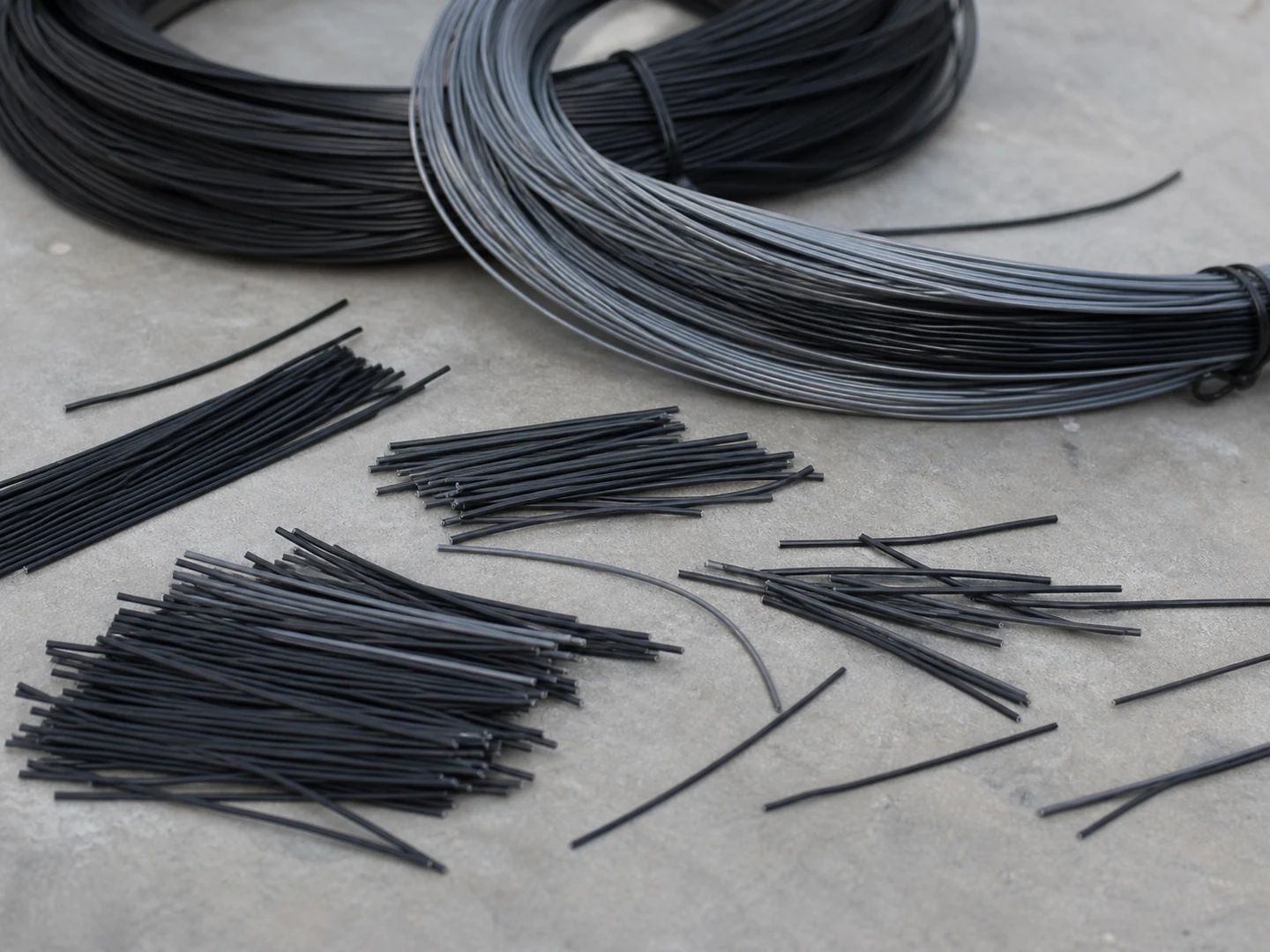
UV-resistant Anti-aging Filament
Weather-stabilized synthetic filament
Choose UV-resistant Anti-aging Filament based on its stiffness, recovery, wear, wet-service, chemical, and temperature behavior. Material name alone is not enough to set stiffness; we also need filament diameter, free trim, density, grade, and working conditions.
Datasheet values
- Carrier polymer
- PP, PA, PBT or other brush filament polymer
- UV package
- Stabilizer and pigment package is supplier- and grade-specific
- Weathering validation
- Use supplier weathering data or an appropriate accelerated-weathering method for the selected grade
- Filament diameter
- Set by the brush geometry and required contact force
- Color retention
- Grade, pigment, stabilizer package and exposure dependent
UV-resistant anti-aging filament is synthetic monofilament formulated with stabilizers and often pigments to reduce sunlight-driven cracking, chalking, color change and loss of mechanical properties.
What is UV-resistant Anti-aging Filament, and what makes it different from other brush filaments?
UV-resistant Anti-aging Filament is PP, PA or PBT monofilament carrying a weathering stabiliser, usually pigmented for outdoor service. It is specified by the exposure hours it has to survive, because the base polymer alone tells you nothing about that.
UV-resistant Anti-aging Filament is used in custom cleaning brushes for solar-panel, outdoor sealing, road-sweeping and exterior machine brushes exposed to repeated sunlight and weather.
Where a project stalls on material choice, the comparison is normally against PBT, and it turns on moisture uptake.
Compare UV-resistant Anti-aging Filament with Standard PP, standard nylon, carbon-black-stabilized grade, PBT. Change material when wet stiffness, temperature, chemical resistance, conductivity, particle shedding, or surface marking becomes the limiting factor.
What stiffness and contact pressure can I expect from UV-resistant Anti-aging Filament?
UV-resistant Anti-aging Filament is defined by the carrier polymer, diameter and weathering condition. Use finer filament and longer trim for conformable contact; use coarser filament, shorter trim, or higher density for stronger displacement or cutting.
The published filament ranges, set against the grades it competes with. The finished brush is rated from the whole assembly: fill, anchoring and adhesive each have their own limit.
| Property | UV-resistant Anti-aging Filament | PBT |
|---|---|---|
| Shore hardness | Defined by the carrier polymer, diameter and weathering condition. | Shore D 80–90 |
| Continuous temperature (°C) | 140 | 120–140 |
| Peak temperature (°C) | 170 | 160–180 |
| Water absorption, 24 h | 0.1–1.0% (24 h; industry reference range) | 0.05–0.20% (24h, ISO 62/ASTM D570) |
| Filament diameter (mm) | 0.15–2.00 | 0.03–2.00 |
| Flexibility | Medium to High Flexibility | Medium to High Flexibility |
The part people get wrong: the number that decides scrubbing pressure is diameter over trim length, not the grade name. Two brushes in this material can behave nothing alike.
How does water affect UV-resistant Anti-aging Filament performance?
UV-resistant Anti-aging Filament takes up 0.1–1.0% (24 h; industry reference range).
Water resistance follows the carrier polymer, while the stabilizer package protects filament strength and color during outdoor exposure.
What this means for your application: moisture uptake is low enough to ignore in service, which is why this grade holds its stiffness through washdown.
A practical check: run one wet cycle and compare tip contact against the dry state. If the wet brush leaves residue behind or no longer reaches the bottom of the bore, change the material rather than the geometry.
What temperature limits apply to UV-resistant Anti-aging Filament?
Temperature capability follows the carrier polymer and UV-stabilizer package; UV resistance does not by itself set a service-temperature limit.
The filament tables quote 140°C continuous and 170°C peak. The tighter number above is the one to build to, because a brush is loaded while it is hot.
Where it stops working: A permanent bend under load means the answer is a higher-temperature filament family, not a heavier trim.
Diameter, trim length and applied load all shift the real limit, so a thin filament touching lightly survives conditions that would flatten a thick one under pressure.
What chemicals attack UV-resistant Anti-aging Filament?
Defined by carrier polymer and additives; Test combined chemical and weathering exposure.
Compatibility is a function of concentration, temperature and contact time together. A short rinse in a dilute solution is a different exposure from an overnight soak in a concentrated one, even with the same chemical on the label.
Before you commit to a quantity: Specify the exact UV-resistant Anti-aging Filament grade or alloy, filament or profile size, color, straight or crimped form, working temperature, wet or dry use, chemical exposure, surface finish, and any required material documentation.
What is the practical lower limit for filament diameter?
The floor is roughly 0.15 mm; finer than that and the filament snaps rather than flexes. In practice you are choosing inside 0.15–2.00 mm.
Free trim runs 3–300 mm, and the two interact: a finer filament needs a shorter trim to keep useful stiffness, while a thicker one carries a longer trim and still lands pressure on the tip.
Split the range by duty: roughly 0.15–0.61 mm for light wiping, dusting and surfaces that mark easily, and 0.61–2.00 mm where residue is packed on and point pressure matters more than surface risk.
Tip treatments available on this filament: end rounding, tapered-tip grinding, silicone-oil coating, anti-static coating and antibacterial coating.
In practical brush terms: reaching deep into a bore or crevice is a diameter problem before it is a length problem. A thicker filament on a moderate trim pushes further in before the tips fold over.
What applications typically use UV-resistant Anti-aging Filament?
Solar-panel, outdoor sealing, road-sweeping and exterior machine brushes exposed to repeated sunlight and weather.
The cleaning work it is specified for most often:
- Industrial Machine Cleaning
- Dust Removal
- Brick, Tile & Building Material Machine Brush Use
- Mold Cavity Cleaning
Brush types built with this fill:
- Custom Handheld Detail Brushes
The trade-off: No generic ‘anti-aging’ service life exists; accelerated weathering does not automatically equal a fixed number of outdoor years.
How do I specify UV-resistant Anti-aging Filament for a custom brush?
Send the brush type, filament diameter, free trim length, density, contact setting, wet or dry duty, working temperature and the actual cleaning chemistry together. Any one of them on its own leaves the stiffness undefined.
What usually goes wrong at this step:
- Selecting UV-resistant Anti-aging Filament from the material name alone without setting filament diameter, trim length, and density
- Using dry stiffness to predict wet behavior without checking moisture absorption or liquid exposure
- Ignoring trapped abrasive particles, chemical concentration, temperature, or contact motion when assessing surface risk
Reference standards behind the figures on this page: ISO 527-1:2019; ASTM D638; ISO 62:2008; ASTM D570-22; ISO 868:2003; ASTM D2240-15(2021); ISO 4892-3:2024; ASTM G154-23; UL 94.
Source: BASF — Light stabilisers for plastics. UV stabilisation slows chalking and embrittlement; it does not stop them. Expected outdoor life follows the stabiliser package and the exposure, so ask for the accelerated-weathering result rather than the word “UV-stable”.
What else does the datasheet specify for UV-resistant Anti-aging Filament?
| Filament cross-section | Round/Triangular/Cross-Shaped/Hollow/Star-Shaped/Rectangular |
|---|---|
| Electrical behaviour | Insulating |
Questions this page is asked
How should an accelerated-weathering protocol be chosen for outdoor filament?
Select xenon-arc or fluorescent-UV exposure, spectrum, irradiance, black-panel or chamber temperature, wetting or condensation, cycle and specimen mounting to represent the intended failure mechanism and climate. Define response metrics such as tensile or bend retention, cracks, chalking, colour and cleaning output at stated intervals, and report exposure hours only under that protocol rather than converting them to universal outdoor years.
Which combined test should release UV-stabilized filament for an outdoor brush?
Age representative finished brushes with the selected light and moisture cycle while also including the actual cleaner, pollutant or salt exposure, operating temperature, bending, abrasion and storage orientation. Compare retained stiffness, recovery, trim profile, fibre loss, colour, cracking, attachment and cleaning result against an unaged control and set replacement limits from function rather than appearance alone.
Where these figures come from
| Property | Published value | Source |
|---|---|---|
| Chemical resistance | Defined by carrier polymer and additives; Test combined chemical and weathering exposure. | Perlon Retrieved 2026-07-20 |
| Published datasheet figures |
|
BASF Retrieved 2026-07-20 |
| Hardness and stiffness | Defined by the carrier polymer, diameter and weathering condition. | Perlon Retrieved 2026-07-20 |
| Limitations | No generic 'anti-aging' service life exists; accelerated weathering does not automatically equal a fixed number of outdoor years. | Perlon Retrieved 2026-07-20 |
| Temperature resistance | 79–140°C across PP, nylon and PBT carrier grades. | BASF Retrieved 2026-07-20 |
| Water resistance | Water resistance follows the carrier polymer, while the stabilizer package protects filament strength and color during outdoor exposure. | BASF Retrieved 2026-07-20 |
Guides that go deeper on this
We have not written a guide specific to this one yet. The material that covers selection, filament, dimensions, maintenance and sourcing is collected in the technical resources library.
No catalogue item for this yet
Every brush here is made to order, and this one has no catalogue entry so far. Send the working surface, the residue, the access opening and the quantity, and it is quoted through the same specification route as the rest of the range.
Custom Manufacturing RFQ
Discuss This Material
Share the working surface, residue, dimensions, material direction, interface, quantity and drawing or sample photo.
Custom Brush RFQ
Request a Custom Cleaning Brush Quote
Upload a drawing, product photo, or sample photo and provide the core dimensions and cleaning conditions.
“We need a brush to remove wet residue from a stainless steel conveyor, about 800mm wide. The current brush wears quickly. We can send photos.”
“We sell drinkware and need a cleaning brush to include with the product. Quantity around 5,000 pieces.”