
Custom Cleaning Brush
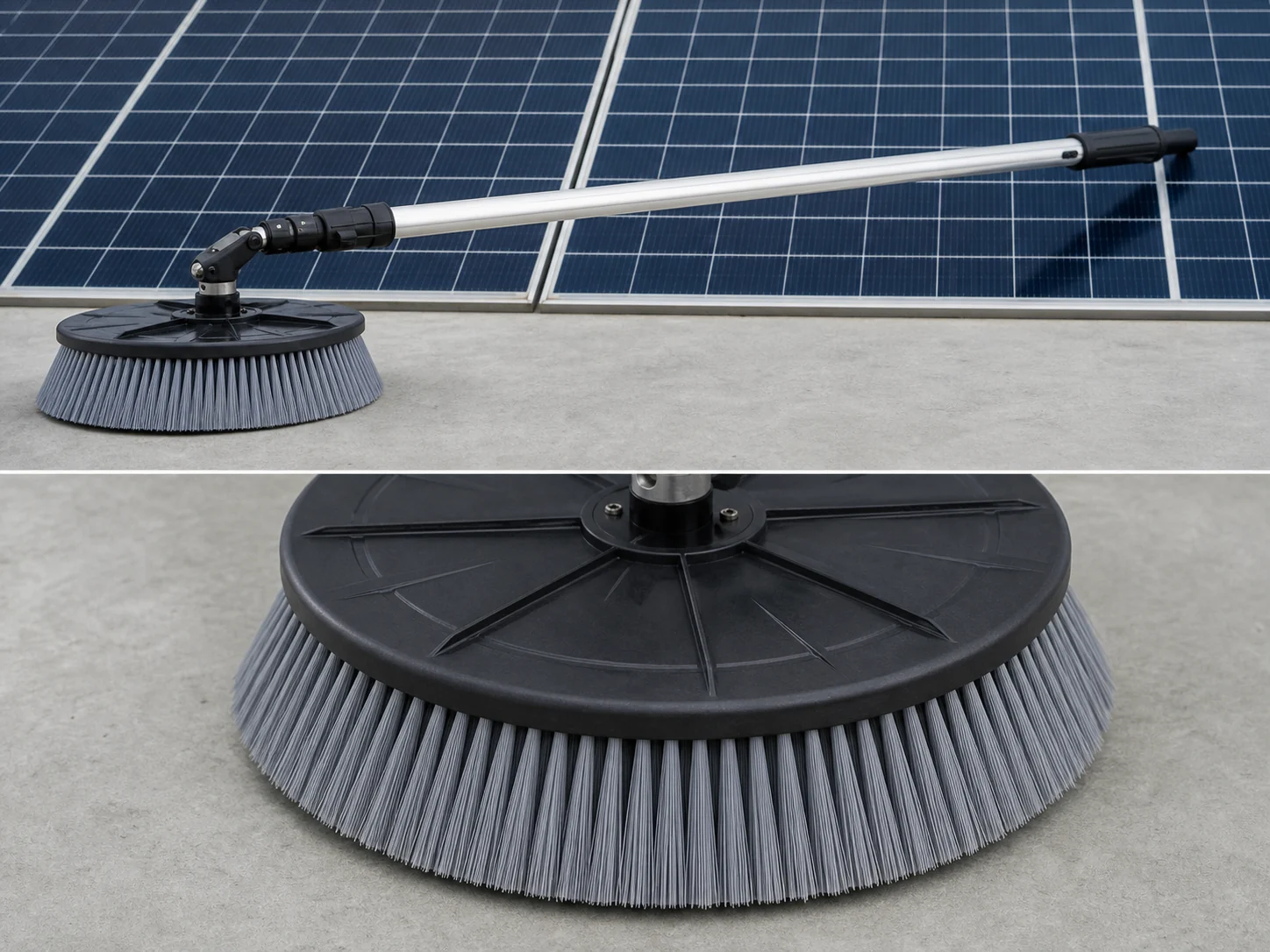
700mm PBT Solar Panel Disc Brush
Machine-driven 700mm PBT disc brush for solar panel glass, frames, and seams. Custom filament diameter, trim, tuft pattern, and quick-change hub.
Large-format brush
100 pcs
Minimum order
Built one at a time on a core or channel: full-width rollers, sweeper brooms and long strip.
Production lead time, once the specification is confirmed
- Up to 100 pcsWithin 20 days
- 101–1,000 pcsWithin 30 days
- Over 1,000 pcsConfirmed with your quotation
Peak season can extend these times; the shipping date is confirmed in writing with your quotation. Sampling and shipping are quoted separately.
A 700 mm rotary disc brush head with water-stable PBT filaments for machine-driven cleaning of solar panel glass, coated module faces, frames, and seams. The wide diameter shortens long array passes, while the quick-change 6061 aluminum hub keeps the cleaning fleet moving.
What can this brush do for you?
Cleans a Full 700 mm Pass in One Sweep
The circular face spans 700 mm, so a ride-on or robotic panel cleaner covers more module width with each pass than smaller disc or cup brushes. Long utility-scale rows and commercial rooftop runs finish faster with fewer track movements and less edge overlap.
PBT Filaments Hold Their Shape When Wet
PBT absorbs far less water than standard nylon, so the tufts keep their stiffness through long wet-cleaning shifts. The brush does not go limp after constant water, detergent, and panel-temperature contact — one of the main reasons PBT is used instead of conventional polyamide in solar panel cleaning heads.
Soft Enough for Tempered Glass and Coated Module Faces
Straight PBT filament tips contact the surface without wire, abrasives, or hard plastic scrapers. With the right filament diameter and trim length, the brush lifts dust, pollen, bird residue, salt film, and light atmospheric deposit while avoiding the hard contact that can mark anti-reflective and hydrophobic module coatings.
Quick-Change Coupling Keeps Machine Uptime High
The 6061 aluminum backing plate integrates a quick-change coupling on the drive side. A worn head pulls off and a replacement drops on without re-threading bolts on the wet deck. Maintenance crews can swap brushes between cleaning windows instead of losing daylight to hardware changes.
Aluminum Plate Resists the Water Cycle
The 6061 aluminum base is lighter than steel and does not add iron corrosion to the cleaning system. Water, detergent, and rinsed film drain past the plate, and the material keeps the rotating assembly stiff without making the disc unnecessarily heavy for the machine lift mechanism.
What is a 700mm PBT Solar Panel Disc Brush?
A 700mm PBT Solar Panel Disc Brush is a machine-driven rotary cleaning head built for solar panel arrays. It is not a hand brush: the 700 mm circular face mounts to a powered rotary deck, robotic cleaner, or motorized panel-cleaning carriage through a quick-change coupling, and the machine spins the disc while moving along the row.
The cleaning side is a circular mat of PBT filaments set into a 6061 aluminum base plate. Tuft rows and trim lengths can be arranged flat, wavy, or edged to match the panel surface, and the 50 mm head height keeps the assembly compact under the machine deck. During operation, the bristle tips sweep the tempered glass, coated module face, frame edges, and seam gaps while water or cleaning solution carries the loosened material away.
PBT is the load-carrying filament because it stays stable in wet outdoor service. Panel surfaces reach 60–90°C in direct sun, and the brush is used with continuous or intermittent water. PBT retains its stiffness and shape in that range better than many common polyamides, and it does not absorb enough water to sag or pack down. The result is a brush that runs through a shift without the deck needing re-trim or extra pressure to restore contact.
This is a surface-cleaning head for light-to-moderate soiling, not an abrasive stripper, paint remover, or heavy scale cutter. Use it with the water and detergent rates, machine speed, and contact pressure the panel manufacturer and machine builder specify for coated modules.
Technical Specifications
| Parameter | Value / Options |
|---|---|
| Overall disc diameter | 700 mm |
| Head shape | Round, flat face; optional edge relief or beveled rim |
| Overall head thickness | 50 mm |
| Bristle material | PBT; UV-stabilized PBT option for prolonged outdoor exposure |
| Filament diameter | 0.20–0.50 mm, selected for coating sensitivity and soil type |
| Trim length | 20–35 mm, adjusted by residue and machine clearance |
| Tuft pattern | Concentric rings, segmented rows, or full-face layout per project |
| Base / hub material | 6061 aluminum alloy |
| Connection | Quick-change coupling matched to machine drive hub |
| Recommended operating speed | 200–400 rpm on standard tempered glass; reduce for coated surfaces |
| Operating temperature | -20°C to 90°C for PBT filament service |
| Cleaning environment | Wet or dry sweeping; best residue release with water or neutral detergent |
| Brush type | Custom Disc Brushes |
| How it is driven | Machine-driven, mounted in the equipment |
| Cleaning target | utility-scale ground-mount and single-axis tracker array, commercial rooftop and carport system, and dust-dominant region cleaning |
| Surface or part | panels, aluminum, glass, frames, coated module faces, seams, hubs, and tempered glass |
| Residue or debris | dust, pollen, salt, bird droppings, scale, bird residue, and paint |
| Mounting / connection | Quick-change coupling matched to machine drive hub |
The diameter and coupling are the first fit points. If your machine has a different hub pattern, provide the drive drawing — we can build the same 700 mm face around your existing quick-change interface. Filament diameter, trim height, and tuft density can be re-specified for panel coating, water quality, and soil load.
Where does this brush work best?
- Utility-scale ground-mount and single-axis tracker arrays where cleaning machines move along long rows and need a wide, consistent pass.
- Commercial rooftop and carport systems with low-slope panels, module gaps, and aluminum frames that collect dust, pollen, and bird droppings.
- Dust-dominant regions, coastal sites with salt film, agricultural areas with pollen or dust crust, and desert environments where panels go days between mechanical cleanings.
- Machine-mounted cleaning systems — ride-on scrubbers, push rotary decks, and automated or semi-automated solar panel cleaning robots that accept a disc-style consumable.
- Light-to-moderate soiling on tempered glass and coated module faces, especially when the cleaning program uses water or neutral detergent.
How do I choose the right one?
Start with the machine interface
Confirm the quick-change coupling matches the drive hub or bolt pattern on your cleaning deck. The 700 mm diameter must also clear the machine body, splash guards, and row spacing. A disc that overlaps the module edge by 50–100 mm can clean seams but may drag on the frame; check the down-pressure path before ordering.
Choose filament diameter for the soil and surface
0.20–0.30 mm filaments are appropriate for light dust and pollen on newer or coated panels where surface mark risk must stay low. 0.35–0.50 mm filaments apply more tip pressure for dried bird residue, salt crust, and accumulated film, but they should only be used if the module coating and frame finish tolerate the higher scrub. When in doubt, start with the finer filament and test one panel section before fleet rollout.
Set trim length by machine clearance and panel flatness
A 20–25 mm trim gives firmer contact and faster soil release but follows less variation. A 30–35 mm trim rides over small height differences at module seams, mounting hardware, and tracker joints. Longer trim also reduces the chance that the aluminum base gets close to the glass when the deck moves over an uneven row.
Decide wet or dry, and match the PBT grade
The brush can run dry for light dust and pollen, but bird droppings, salt film, and atmospheric film need water or a neutral cleaner to release from the glass. If the machine runs continuous water, standard PBT is usually sufficient. For extended dry sweeping and high-UV desert sites, specify UV-stabilized PBT to delay filament embrittlement and breakage.
Know what this brush is not for
Do not use it as a substitute for cutting heavy mineral scale, dried construction residue, adhesive, or thick bird layer that has baked across the panel. Pre-treat or pre-wash heavily fouled panels first. If the surface has cracked glass or lifted laminate, repair before brushing. For ice or packed snow, use a soft squeegee or de-icing process — not the rotating disc.
| Site condition | Recommended configuration |
|---|---|
| Dust or pollen, coated glass | 0.20–0.30 mm PBT, 30 mm trim, wet pass |
| Bird droppings or salt film | 0.35–0.50 mm PBT, 20–25 mm trim, detergent pre-spray |
| Dry desert dust, no water cart | UV-stabilized PBT, 25–30 mm trim, dry sweep only |
| Tracker joints or uneven rows | 30–35 mm trim, finer filament, reduced speed |
Can I customize this brush?
The 700 mm disc is a standard diameter, but most order-level variables can be adjusted to fit the machine and the site. To define a custom configuration, provide the drive hub drawing or machine model, panel width and coating type, current filament diameter and trim length, cleaning chemistry, water flow and pressure, and expected daily cleaning area.
- Filament — PBT or UV-stabilized PBT, diameter 0.20–0.50 mm, trim length, and tip treatment
- Face layout — concentric rings, segmented sectors, full-face tufting, center open area for drain, edge bevel, or scalloped rim for seam access
- Base and hub — 6061 aluminum thickness, center bore, drive slot, pin pattern, quick-change lock style, or custom flange to mate with the existing machine deck
- Dimensions — 700 mm standard diameter, with the face re-trimmed within machine clearance; overall head height adjustable by hub design
- Marking and color — brand-color bristles, laser-marked or pad-printed base plate, part number for fleet identification
- Packaging — bulk pallet, individual perforated bags, boxed kits, or project-specific labels
If your project needs material declarations, inspection records, or third-party test support, those can be arranged as part of the customized order. Specify the requirement at RFQ so the brush is built and documented to your site acceptance plan.
Which filament lasts longest on a 700mm PBT solar panel disc brush?
Can I run this brush on a manual rotary machine?
Yes, as long as the machine drive hub and guard clear a 700 mm disc and the operator can maintain consistent overlap. The brush is driven by the machine, not by hand. Manual push decks, ride-on scrubbers, and automated panel cleaners can all use it when the quick-change coupling and deck clearance match.
What should I inspect before mounting a new 700 mm disc?
Check the base plate for flatness and dents, confirm the coupling engages fully and locks, and run a hand over the filament tips for embedded grit or debris. Raise the deck and spin the brush briefly without panel contact. If you hear wobble or see uneven trim, do not lower it onto glass.
How do I know when it is time to replace the brush?
Watch for uneven trim wear, flattened or mushroomed filament ends, reduced cleaning width, and tufts that no longer spring back. Another signal is a panel section that now needs extra passes to look clean. Replace the disc before bristles wear down to the backing plate.
Can this brush be used with deionized or reverse-osmosis water systems?
Yes. PBT is compatible with soft, deionized, and reverse-osmosis water. The brush provides mechanical release of soil before final rinse; use the site water chemistry to avoid mineral streaking. Hard water can leave scale if it is not followed by deionized final rinse.
Will the PBT filaments damage anti-reflective or hydrophobic coatings?
No brush is zero-risk. PBT is used for solar panel cleaning because its wet filament tips are less aggressive than wire, abrasive grit, or hard plastic scrapers. Protect coatings by starting with 0.20–0.30 mm filament, moderate speed, water or neutral detergent, and a one-panel test area. If coating wear or haze appears, stop and adjust.
What should I do if the disc chatters or bounces on module seams?
Reduce deck speed and down-pressure first. If bounce continues, switch to a longer trim configuration, 30–35 mm, or add an edge bevel. Bouncing concentrates contact on frame edges and leaves the glass face short; it is usually a trim-length or speed problem rather than a defective brush.
Guides that go deeper on this
Custom Manufacturing RFQ
Describe Your Application
An accurate custom quote starts with the dimensions, working surface, residue, material choice, connection, quantity, and reference files.
Drawing or photo optional — it speeds things up, it does not gate the enquiry.
Custom Brush RFQ
Send Your Brush Project
Upload a drawing, product photo, or sample photo and provide the core dimensions and cleaning conditions.
“We need a brush to remove wet residue from a stainless steel conveyor, about 800mm wide. The current brush wears quickly. We can send photos.”
“We sell drinkware and need a cleaning brush to include with the product. Quantity around 5,000 pieces.”