
Custom Cleaning Brush
430mm PBT Floor Scrubber Disc Brush
430mm PBT floor scrubber disc brush for rotary scrubbers. Wet-chemistry-resistant PBT, snap-fit base, wide coverage on concrete, tile and coated floors.
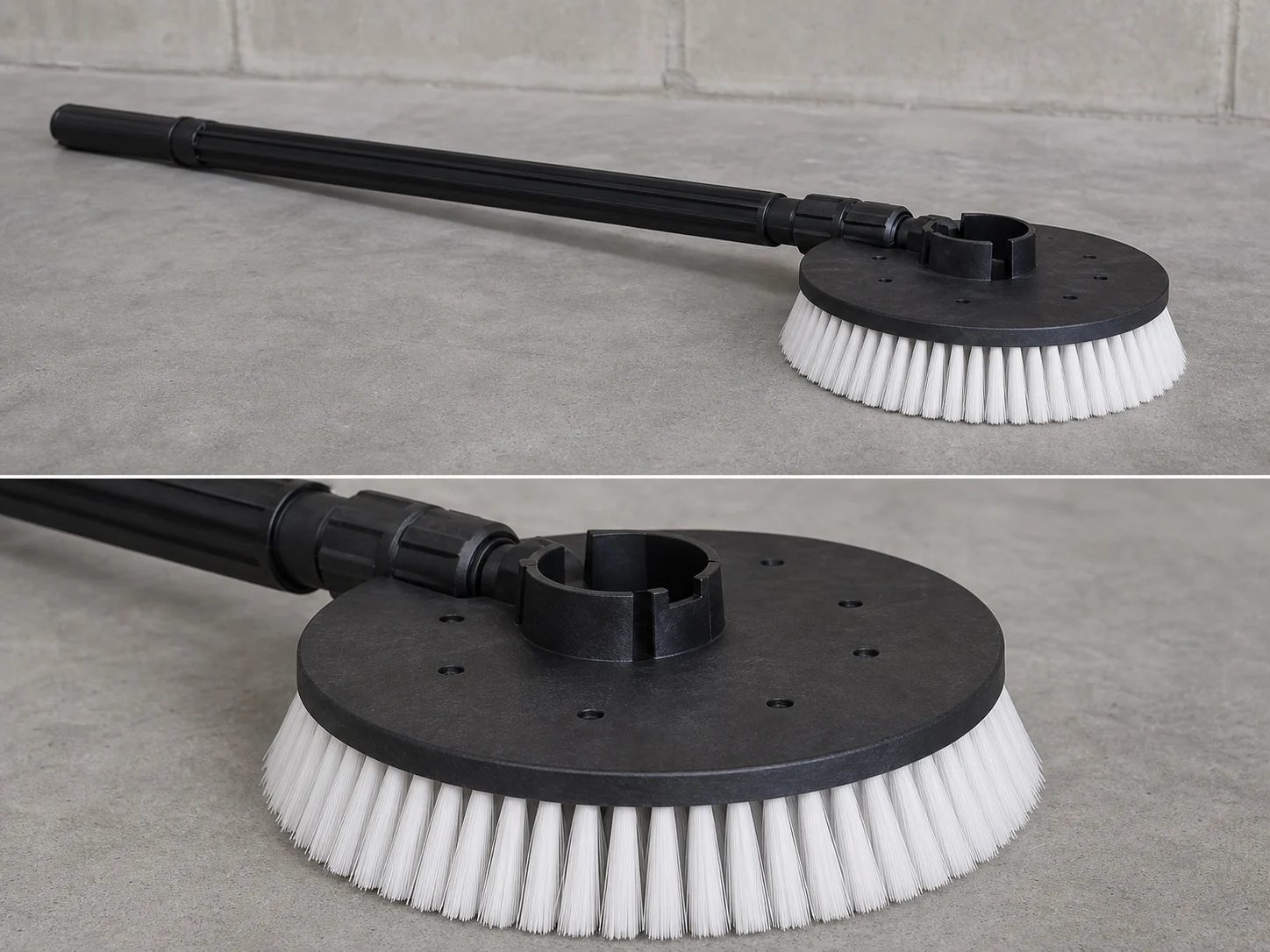
Medium brush
100 pcs
Minimum order
Worked with two hands or on a pole: chimney, gutter and pond-filter brushes, discs, cups and tank brushes.
Production lead time, once the specification is confirmed
- Up to 100 pcsWithin 7 days
- 101–5,000 pcsWithin 14 days
- 5,001–50,000 pcsWithin 21 days
- Over 50,000 pcsConfirmed with your quotation
Peak season can extend these times; the shipping date is confirmed in writing with your quotation. Sampling and shipping are quoted separately.
A 430 mm diameter PBT floor scrubber disc brush for rotary floor scrubbers. It combines a wide cleaning path, wet-chemistry-resistant PBT filaments, and a tool-free snap-fit base to handle daily soil, traffic film, and embedded debris on concrete, tile, and coated hard floors.
What can this brush do for you?
Covers More Floor in Each Machine Pass
The 430 mm disc extends under the scrub deck with a full-round contact area, so each rotation scrubs a wide swath. On open warehouse, lobby, or corridor floors, fewer overlapping passes are needed to cover the same square footage, and the operator keeps the machine moving instead of repeatedly backing up over missed strips.
PBT Filaments Keep Their Stiffness in Water and Detergent
PBT absorbs very little water, so the bristle tips do not soften or collapse when saturated with scrubber solution. The filaments retain enough flex to bend over floor contours but recover to maintain tip pressure for the full shift, which keeps the brush working aggressively on oily film and compacted dust instead of laying flat after the first wet pass.
Open Bristle Layout Lets Dirty Slurry Escape
The filament rows are arranged so loosened soil, sand, and dirty water move through the brush rather than packing into the base. That reduces re-deposited dirt and keeps the bristles from becoming a clogged mat, which means the brush continues to contact the floor instead of polishing a layer of its own debris.
Snap-Fit Base Shortens Brush Changeovers
The polypropylene base carries a snap-fit connection that locks onto a compatible scrubber drive plate. Operators can pull a worn brush and press in a fresh one without wrenches or mounting bolts, so swapping between floor types or replacing a spent disc takes seconds during a cleaning shift rather than minutes of parked machine time.
Reaches into Surface Texture Without Metal Contact
The stiff PBT tips work into concrete pores, tile profiles, and light texture where a flat pad only skims the surface. Because the brush is non-metallic, it removes embedded dust and tire marks from coated or painted floors without introducing metal bristle contamination or leaving rust streaks when the floor dries.
What is a 430mm PBT Floor Scrubber Disc Brush?
A 430mm PBT Floor Scrubber Disc Brush is a round machine-driven scrubbing attachment that mounts beneath the deck of a walk-behind or ride-on rotary floor scrubber. The 430 mm disc size matches a common scrubber deck footprint; the polypropylene base holds the PBT filament rows and carries the snap-fit pattern that locks the brush to the machine’s drive plate.
In operation, the scrubber applies water or detergent to the floor while the deck rotates the brush. The PBT filaments scrub the surface, mix the chemical into the soil film, and push the loosened slurry toward the machine’s squeegee. The brush is designed for wet scrubbing conditions, not for dry polishing, dust removal without water, or heavy coating removal.
The main contact concern is the type of hard surface the brush must scrub without damaging. PBT provides a controlled stiffness between soft natural fiber and aggressive wire, and the open filament layout prevents the brush from loading up with mud or sand. The brush performs best when the correct bristle gauge, trim length, and snap-fit pattern have been matched to the specific machine and floor.
Technical Specifications
The standard configuration below matches the 430 mm disc format. Bristle gauge, trim, and drive pattern are project variables we can adjust before production.
| Parameter | Specification / Options |
|---|---|
| Overall diameter | 430 mm |
| Disc shape | Round |
| Bristle material | PBT (polybutylene terephthalate) filament |
| Base material | Polypropylene (PP) |
| Connection | Snap-fit to scrubber drive plate |
| Bristle trim height | 35 mm standard; adjustable for project |
| Bristle gauge | 0.30–0.60 mm typical; matched to floor hardness and soil |
| Bristle pattern | Open row / segment layout for slurry release |
| Operating condition | Wet scrubbing with water/detergent delivery |
| Brush type | Custom Disc Brushes |
| How it is driven | Machine-driven, mounted in the equipment |
| Cleaning target | warehouse and logistics floor, epoxy and coated concrete, and parking garage deck and ramp cleaning |
| Surface or part | floors, concrete, tile, pads, edges, epoxy, stairs, and metal |
| Residue or debris | sand, dust, cured coating, embedded debris, light oil, road film, glaze, and slurry |
| Mounting / connection | Snap-fit to scrubber drive plate |
Drive plate compatibility is confirmed against the machine model before ordering. Send the scrubber make, model, deck diameter, and existing brush photo when available.
Where does this brush work best?
The 430 mm PBT disc brush is most effective in commercial and industrial spaces where a rotary scrubber already runs and floors carry daily soil that a mop or pad cannot fully lift.
- Warehouse and logistics floors — removes dust, sand, tire film, and light oil from sealed or bare concrete without leaving pad residue.
- Tile and grout floors — PBT tips reach into grout lines and tile edges where smooth pads skip, so restrooms, kitchen floors, and entryways come clean in the texture as well as on the tile face.
- Epoxy and coated concrete — scrubs coated surfaces without metallic bristle contact; bristle gauge can be specified soft enough to avoid glaze damage on correctly cured coatings.
- Parking garage decks and ramps — handles fine grit, road film, and water stains on a hard surface where high coverage per pass reduces labor.
- Production and food/beverage rooms — non-metallic PBT and a water-tolerant base make it usable around washdown chemistry where metal contamination is not acceptable.
This disc size is intended for open floor areas. Very narrow aisles, stair treads, and tight corner pockets are better handled with a smaller-diameter brush or a dedicated edge tool.
How do I choose the right one?
Confirm the drive plate before anything else. The 430 mm disc must match the snap-fit lug count, lug shape, and center opening of the scrubber’s drive plate. A brush that does not lock fully will wobble, wear unevenly, or throw itself off the deck during rotation.
Match bristle stiffness to the floor. A hard textured concrete floor with embedded sand can take a thicker PBT gauge and higher fill density; a softer epoxy or sealed surface needs a thinner gauge or a softer filament option. If the floor is polished, stone, or shows scratch marks easily, start with the softest acceptable PBT configuration and test on an out-of-the-way section first.
PBT tolerates most neutral and alkaline floor detergents, but the base material and the detergent concentration should still be checked together. Highly acidic stripping solutions, solvent-based cleaners, or dry operation will shorten brush life; this disc is built for wet scrubbing, not dry burnishing or chemical stripping.
Watch the bristle tips. When the crown becomes rounded, bristles flatten more than halfway, or the base develops cracks around the snap-fit lugs, the brush stops scrubbing and starts sliding. Retaining worn brushes on the deck means more passes, more water, and more chemical to reach the same result.
When this disc is not the right tool:
- Use a pad driver or a cylindrical brush if the machine requires an abrasive pad or a roller brush system.
- Use a dedicated stripping brush with more aggressive bristle or an abrasive pad when removing cured coatings, thick wax, or heavy tar.
- Use a smaller-diameter brush for stair treads, narrow aisles, or tight edge work; the 430 mm disc cannot follow step profiles.
- Use a softer natural or flag-tipped filament on extremely soft or polished floors if PBT even at low gauge leaves visible marks.
Can I customize this brush?
This brush is built to the machine and floor, so we adjust the variables that actually change cleaning performance. Send the scrubber make and model, drive plate photo or lug count, floor type, main soil, cleaning chemical, and current brush wear pattern. We can then define the right configuration.
- Drive pattern — snap-fit lug count, lug geometry, center opening, and base thickness matched to the machine deck.
- Bristle specification — PBT gauge, filament length, trim profile, fill density, and row/segment layout.
- Base design — PP grade for impact and chemical resistance, optional water-feed openings, and color coding.
- Dimensions — overall diameter or working ring diameter adjusted for non-standard decks.
- Marking and packaging — molded or printed identification, bulk packing, individual cartons, or retail-ready presentation.
If your project needs material documentation, third-party inspection, or test support for a specific detergent or operating environment, we can assist during the customization phase.
When is a 430mm PBT floor scrubber disc brush worn out rather than just dirty?
How do I confirm the 430 mm brush will fit my scrubber drive plate?
Check the number, width, and spacing of the snap-fit lugs on the machine’s drive plate, then compare them with the base pattern. If you cannot measure them reliably, send a photo of the drive plate with a ruler and the machine model. A mismatch will show as a brush that rocks, lifts at one side, or falls off during rotation.
Can this brush run dry when the scrubber’s water feed is turned off?
It is not recommended. The PBT bristles are selected for wet scrubbing; dry operation increases friction and heat at the filament tips, which can soften, flatten, or melt the bristles and accelerate base wear. Keep the water or detergent feed active while the brush is turning.
How do I know when to replace the disc brush?
Inspect the brush after each cleaning shift. Replace it when the bristle tips are rounded to less than half of the original trim length, when rows show permanent leaning, or when cracks appear around the snap-fit lugs. If the machine needs additional passes or more chemical to remove the same soil, the brush is no longer providing tip pressure.
Will this brush remove cured epoxy or old floor coatings?
No. This brush removes loose soil, traffic film, and embedded surface dirt; it is not a coating removal tool. Cured epoxy, thick wax, or hardened adhesives require a dedicated stripping brush or abrasive pad in combination with the correct chemical stripper. Running this PBT brush aggressively on a coating will only clean the coating surface.
Can I use it on a polished or sealed floor without dulling the finish?
Test first. Standard PBT has enough tip stiffness to mark some soft sealers or high-gloss finishes. Use the lowest gauge and density configuration suitable for the soil, run a test in an inconspicuous area, and check the dried floor under bright light. If hazing or fine scratches appear, switch to a softer filament or a pad system.
How should the brush be cleaned and stored between shifts?
Rinse the base and bristles with clean water to remove detergent residue and trapped sand, then let the brush dry with the bristles facing down on a flat surface or hanging by the base. Storing it bristles-up under load or stacking heavy items on the filaments can create a permanent set and reduce tip pressure on the next use.
Guides that go deeper on this
Carpet Machine Brush vs Floor Scrubber Brush: Which Fits?
Read this guideGuideFloor Scrubber Brush Selection: Disc Brush vs Roller Brush
Read this guideGuidePCB Cleaning and Deburring: Which Disc Brushes Avoid Damage?
Read this guideGuideWhich Disc Brushes Belong on Glass Processing Lines?
Read this guideCustom Manufacturing RFQ
Describe Your Application
For an accurate quotation, please provide the main dimensions, material preference, working surface, residue, quantity, and a drawing or photo.
Drawing or photo optional — it speeds things up, it does not gate the enquiry.
Custom Brush RFQ
Send Your Brush Project
Upload a drawing, product photo, or sample photo and provide the core dimensions and cleaning conditions.
“We need a brush to remove wet residue from a stainless steel conveyor, about 800mm wide. The current brush wears quickly. We can send photos.”
“We sell drinkware and need a cleaning brush to include with the product. Quantity around 5,000 pieces.”