
Custom Cleaning Brush
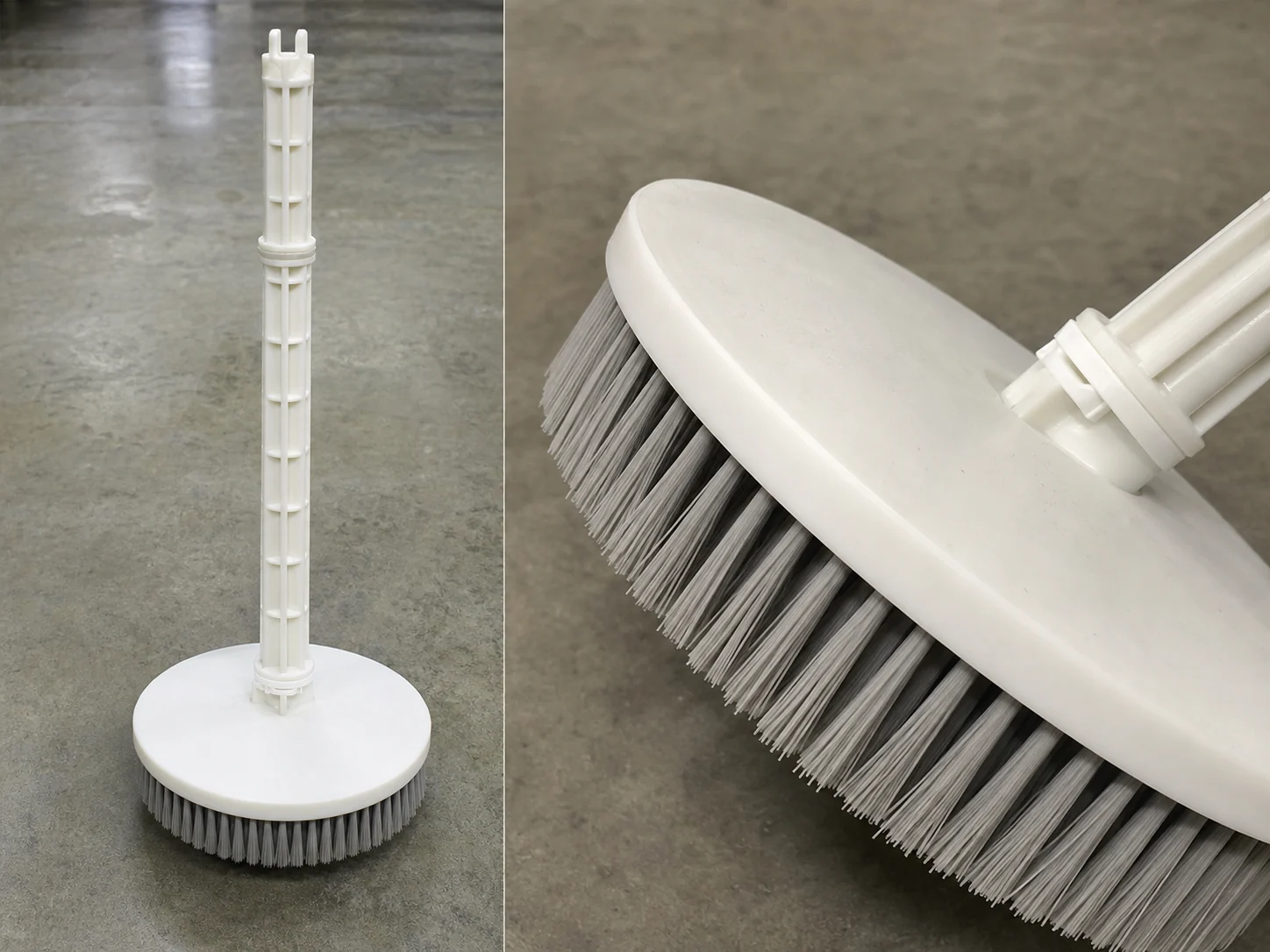
300mm PA66 Floor Scrubber Disc Brush
A snap-fit base speeds changeovers and trim from 10 to 50 mm matches the floor, lifting tire marks and oil film from hard commercial surfaces.
Medium brush
100 pcs
Minimum order
Worked with two hands or on a pole: chimney, gutter and pond-filter brushes, discs, cups and tank brushes.
Production lead time, once the specification is confirmed
- Up to 100 pcsWithin 7 days
- 101–5,000 pcsWithin 14 days
- 5,001–50,000 pcsWithin 21 days
- Over 50,000 pcsConfirmed with your quotation
Peak season can extend these times; the shipping date is confirmed in writing with your quotation. Sampling and shipping are quoted separately.
A 300 mm PA66 nylon disc brush for rotary floor scrubbers that removes compacted dirt, oil films, tire marks, and embedded debris from hard commercial floors. The snap-fit polypropylene base speeds machine changeovers, while the standard 30 mm trim length can be shortened or extended from 10 mm to 50 mm to match the floor and cleaning intensity.
What can this brush do for you?
Cleans Open Floor Areas Faster with a 300 mm Working Face
The 300 mm disc presents a wide tufted face to the floor, so each pass covers more of the aisle, dock, or entrance area than smaller-diameter brushes. The circular layout keeps the outer filament ring at the deck radius, which helps maintain even floor contact across the full pass and reduces the number of overlapping strokes an operator has to make.
PA66 Nylon Holds Its Shape on Hard, Compacted Residue
PA66 is a stiff, water-tolerant nylon that keeps its working height and spring-back during wet scrubbing. It does not collapse as quickly as many soft synthetic fills after repeated deck pressure, which gives the brush enough mechanical bite to loosen mud, sand, oily films, and tire marks from concrete and tile without frequent replacement.
Tool-Free Snap-Fit Connection Cuts Changeover Time
The molded PP base carries a snap-fit drive connection that locks onto the machine driver block without tools. Crews can swap a worn brush for a fresh one in seconds, so the scrubber returns to the floor fast and maintenance crews are not tying up machine time on hardware changes.
30 mm Standard Trim Balances Aggression and Floor Conformability
At 30 mm, the filament length is short enough to transfer deck pressure into the floor for embedded grime and black tire marks, but long enough to flex into grout joints, expansion seams, and anti-slip texture. When the application calls for more aggressive cutting or a gentler, more flexible contact, the trim length can be adjusted from 10 mm to 50 mm.
Dense Tufting Drops Into Floor Profiles Instead of Bridging Over Them
The working face is filled with dense tuft packs, not a thin radial row, so active bristle tips are spread across the whole 300 mm circle. On textured safety strips, broom-finished concrete, and patterned tile, the tips enter the low points of the profile and lift out residue that solid pads and flat brushes ride over.
What is a 300mm PA66 Floor Scrubber Disc Brush?
A 300mm PA66 Floor Scrubber Disc Brush is a rotary-cleaning brush that attaches to the driver deck of a walk-behind or ride-on floor scrubber. It contains a circular polypropylene loading plate with the drive geometry molded into the back side and PA66 nylon filament tufts set into the working face.
During operation, the scrubber rotates the brush while the deck applies downward pressure and the machine delivers water or cleaning solution to the floor. The filament tips scrub the surface, loosen the residue into solution, and leave it for the vacuum or squeegee system to collect. The brush itself is a consumable contact part that is replaced when the filament length or drive connection no longer produces an acceptable clean.
The 300 mm diameter is common on compact and mid-size floor machines used in retail, warehouse, food-processing, and property-maintenance operations. The brush is selected for hard, textured, or coated floors where a solid pad would glaze over the profile and where residue requires more mechanical action than a soft clean or light scrub. It is not a corner tool; tight edges and stair nosings still need a detail or hand brush.
Technical Specifications
The standard configuration below can be adjusted for the floor machine and application. Confirm the drive pattern with the machine model or supply a drawing of the current brush before ordering.
| Parameter | Specification / Options |
|---|---|
| Overall diameter | 300 mm |
| Brush form | Round disc with tufted working face |
| Bristle material | PA66 nylon |
| Bristle trim length | 30 mm standard; 10–50 mm project-definable |
| Filament diameter | 0.6 mm standard; 0.5–1.0 mm available |
| Base material | Polypropylene (PP) with molded drive interface |
| Drive connection | Snap-fit to machine driver block; lug pattern matched to floor machine model |
| Tuft density | Standard; high or low density options available |
| Service environment | Wet or damp scrubbing with common neutral-to-alkaline floor detergents; confirm detergent type and temperature |
| Rotation direction | Configured for clockwise or counterclockwise deck; specify on order |
| Brush type | Custom Disc Brushes |
| How it is driven | Machine-driven, mounted in the equipment |
| Cleaning target | concrete warehouse floor, tile and grout surface, and anti-slip and textured safety flooring cleaning |
| Surface or part | floors, pads, concrete, profiles, tile, joints, corners, and edges |
| Residue or debris | tire marks, oil film, compacted dirt, embedded debris, mud, sand, and glaze |
| Mounting / connection | Snap-fit to machine driver block; lug pattern matched to floor machine model; Configured for clockwise or counterclockwise deck; specify on order |
The trim length is the exposed filament length from the face of the base. Shorter trims act stiffer and cut harder; longer trims flex more and produce gentler contact on sensitive surfaces.
Where does this brush work best?
- Concrete warehouse floors, loading docks, and covered parking decks where sand, grit, mud, and tire marks need regular removal under machine pressure.
- Tile and grout surfaces in commercial kitchens, restrooms, and building entrances, where solid pads ride over joints and leave dark residue in the recesses.
- Epoxy-coated industrial floors that receive oily films, scuff marks, and light tire rubber; perform a small-area gloss test before specifying short trim on high-gloss systems.
- Anti-slip and textured safety flooring where the bristle tips must work into the raised profile rather than skate across the peaks.
- Exterior concrete aprons and asphalt walkways cleaned with ride-on or walk-behind scrubbers that have a 300 mm deck and solution delivery.
- Walk-behind auto scrubbers and floor machines that currently use worn pads or thin brushes on the same deck size and need a longer-life mechanical contact part.
How do I choose the right one?
Confirm the machine interface first. Measure the existing driver block or supply the floor machine make, model, and deck size. A 300 mm disc must seat flat and lock securely without rocking; a mismatched snap-fit or lug pattern can cause wobble, uneven floor contact, or disengagement under load.
Match the filament action to the floor surface. PA66 is the right baseline for concrete, quarry tile, brick, epoxy, and most textured hard floors where mechanical removal matters more than preserving a high-gloss finish. If the floor is polished, highly decorative, or the coating owner requires gloss retention, move to a longer trim of 40–50 mm, reduce deck pressure, or switch to a softer polypropylene fill.
Set trim length and filament diameter for the residue.
- Heavy embedded grit, oil films, or black tire rubber: 10–20 mm trim with 0.8–1.0 mm filament for maximum stiffness and cut.
- General commercial maintenance: 30 mm trim with 0.6 mm filament balances aggression and brush life.
- Light cleaning or sensitive texture: 40–50 mm trim with 0.5 mm filament for softer, more conforming contact.
Check the cleaning chemical and water temperature. PA66 and PP work well with neutral-to-alkaline detergents used in most floor machines. Aggressive solvent degreasers, strong acids, or hot-water/steam systems above normal scrubber temperatures may affect the base or filament; provide the detergent SDS and operating temperature so the material choice can be validated.
When to choose a different tool:
- Use an edge or detail brush for corners, wall lines, stair nosings, and other areas a 300 mm disc cannot reach.
- Use a grit-impregnated abrasive brush or stripping pad for floor finish removal or coating work; PA66 without abrasives is for scrub cleaning, not heavy stripping.
- Use a white or soft polypropylene pad or brush on polished, high-gloss, or decorative surfaces where scratch appearance is a failure mode.
Can I customize this brush?
Floor machines, drive decks, chemicals, and floor conditions vary, so this brush is built to project rather than sold as a fixed shelf item. At minimum, provide the floor machine make and model, drive pattern or sample brush, floor material, residue type, detergent information, daily operating hours, and desired service life. A photo of the current brush and floor surface helps us confirm the configuration faster.
We can adjust:
- Diameter: 300 mm standard; other diameters can be produced for the same scrubber family.
- Filament material: PA66 standard; PP, PBT, or abrasive-filled nylon available where chemical resistance or surface sensitivity differs.
- Working face: trim length from 10 mm to 50 mm, filament diameter from 0.5 mm to 1.0 mm, tuft density, and tuft pattern.
- Base and drive interface: polypropylene base with snap-fit, lug, center-hole, or other interface matched from a drawing or sample.
- Color and marking: base color, bristle color coding for departments or areas, pad-print or laser marking on the base.
- Packaging: bulk carton, individual bag, retail sleeve, or project-specific packing.
If your project requires material documentation, chemical compatibility review, inspection, or third-party testing, we can assist with those requirements during the customization phase.
Which filament lasts longest on a 300mm PA66 floor scrubber disc brush?
What should I check before installing the brush on the floor machine?
Clean any old pad residue or adhesive from the driver deck, check the base for cracks or deformation, and confirm the lug pattern matches the deck. After snapping the brush into place, rotate it by hand to verify clearance with the skirt and then run a short low-pressure pass to let the bristle tips settle into their working position.
How can I tell if the snap-fit connection is worn and needs replacement?
Inspect the lugs or receiving pockets for rounding, cracking, or chipped edges. When the brush is seated on a clean driver block, there should be no lateral rocking or movement. If the brush can lift off easily or the drive connection needs tape, shims, or another filler to stay engaged, replace the brush; a forced fit can let the disc separate while the deck is rotating.
Does this brush replace a scrubbing pad or a stripping pad?
It replaces a standard scrubbing pad for routine hard-floor scrubbing and typically lasts longer on concrete, tile, and textured floors. It does not replace a stripping pad. If the job calls for removing floor finish, coatings, or heavy adhering layers, use a grit-impregnated stripping brush or a chemical stripping system instead.
Will PA66 bristles dull a glossy or polished floor?
PA66 is a stiff nylon and can reduce gloss on polished stone, high-gloss tile, or highly decorative coated floors, especially with a short trim and heavy deck pressure. Run a small-area test first. If gloss retention is critical, use a longer trim and lower pressure, or consider a softer polypropylene fill.
How do I know the brush is still cutting effectively?
Run the scrubber over a small contaminated test section and inspect before the vacuum pass dries the floor. If you see residue streaks, a water film that is not lifting dirt, or areas where the brush face appears to ride over the texture, the brush may be worn unevenly. Compare the tuft length against a new brush; when the wear becomes uneven enough to rock the base or leave untreated streaks, replace the brush.
Can this brush be used with hot water or steam systems?
PA66 and PP handle the warm solution temperatures common in floor scrubbers, but steam injection or abnormally hot decks can soften the polypropylene base and shorten brush life. Provide the actual water temperature and any steam exposure so the correct materials can be confirmed for the machine.
Guides that go deeper on this
Carpet Machine Brush vs Floor Scrubber Brush: Which Fits?
Read this guideGuideFloor Scrubber Brush Selection: Disc Brush vs Roller Brush
Read this guideGuidePCB Cleaning and Deburring: Which Disc Brushes Avoid Damage?
Read this guideGuideWhich Disc Brushes Belong on Glass Processing Lines?
Read this guideCustom Manufacturing RFQ
Describe Your Application
Send the key measurements, cleaning requirement, residue, material direction, mounting method, quantity, and drawing or photo.
Drawing or photo optional — it speeds things up, it does not gate the enquiry.
Custom Brush RFQ
Send Your Brush Project
Upload a drawing, product photo, or sample photo and provide the core dimensions and cleaning conditions.
“We need a brush to remove wet residue from a stainless steel conveyor, about 800mm wide. The current brush wears quickly. We can send photos.”
“We sell drinkware and need a cleaning brush to include with the product. Quantity around 5,000 pieces.”