
Custom Cleaning Brush
Musical Instrument Cleaning Brush
Flexible snake and handheld cleaning brushes for instrument tubes, mouthpieces, leadpipes, and valve slides.
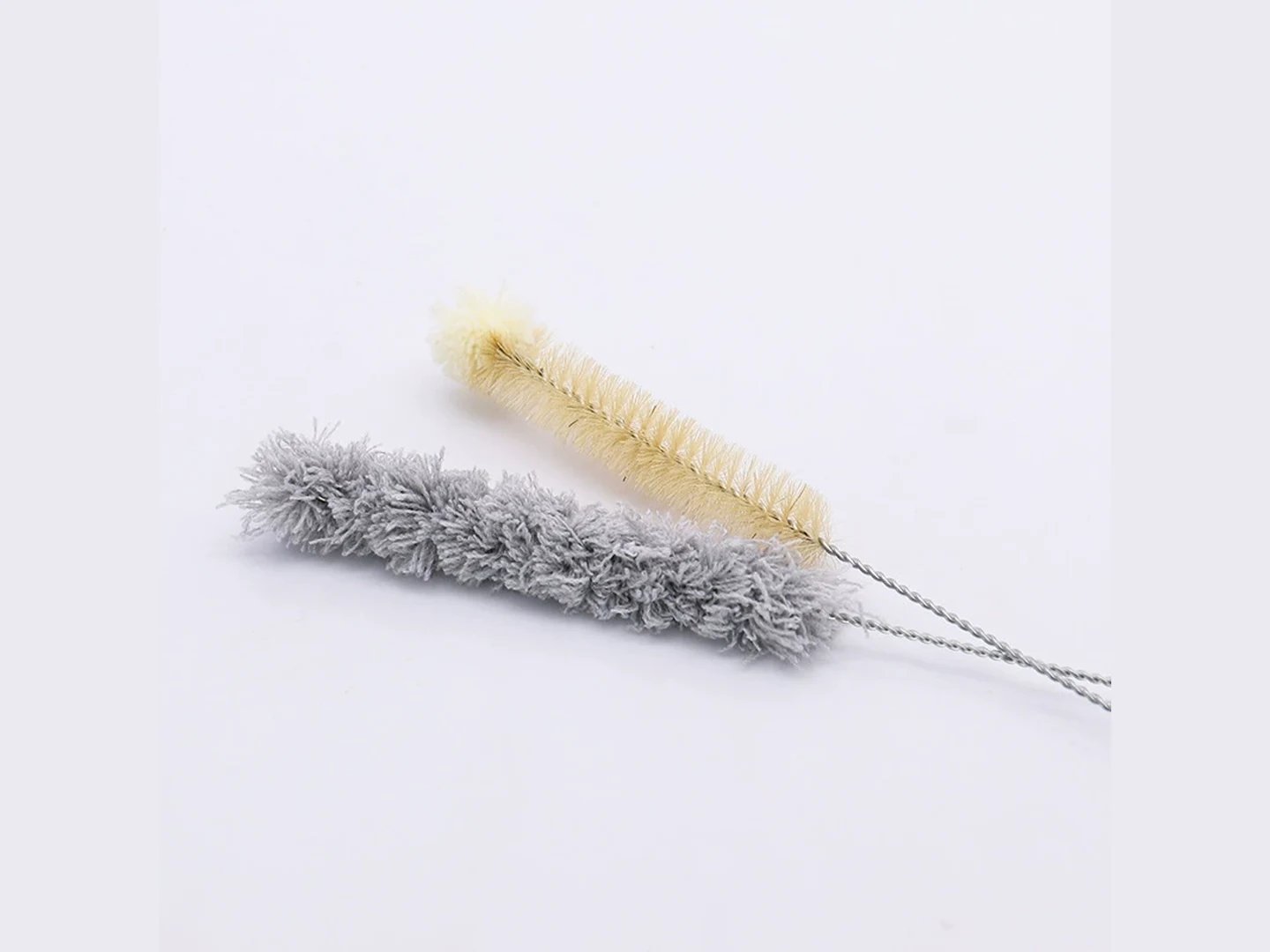
Small brush
500 pcs
Minimum order
Held in one hand: tube, bottle, detail and swab brushes — including long-handled ones with a small head.
Production lead time, once the specification is confirmed
- Up to 500 pcsWithin 7 days
- 501–50,000 pcsWithin 14 days
- Over 50,000 pcsWithin 21 days
Peak season can extend these times; the shipping date is confirmed in writing with your quotation. Sampling and shipping are quoted separately.
This custom cleaning brush removes moisture, saliva residue, dust, and loose internal deposits from instrument tubing, mouthpieces, leadpipes, and valve-slide passages. It is built with soft nylon, cotton, or microfiber contact that cleans the bore without scratching plating, lacquer, or woodwind bores.
What can this brush do for you?
Follows Curved Bore Passages Without Jamming
The flexible snake configuration uses a stainless-steel core that bends through tuning slides, leadpipes, and return bends, so the operator can pull the brush through the entire passage path rather than stopping at the first curve. Brush diameters from 5 to 50 mm allow selection to match the bore for even contact around the full circumference.
Removes Moisture and Residue Without Abrading the Surface
Nylon PA, cotton yarn, or microfiber fill is selected to lift condensed moisture, saliva film, and loose dust from the bore. Because the filaments are flexible and the tip is covered, the contact does not scratch silver plate, nickel plate, raw brass, or wooden bore surfaces during normal pull-through use.
One Tool Covers Mouthpiece and Body Passages
Handheld sections clean accessible areas such as mouthpiece cups, shanks, and backbores, while the longer snake section reaches the full body tube. When the geometry allows, a tapered or dual-head construction lets the same brush handle both the mouthpiece and the leadpipe without changing tools.
Absorbs What It Removes
Cotton yarn and microfiber fills hold moisture and fine residue inside the brush section rather than pushing it further up the tube. A quick rinse and air dry returns the brush to service, and the fill retains its shape when the diameter is matched to the bore.
Built Around the Operating Length the Player or Technician Actually Needs
Handheld versions run from 100 to 450 mm for short slides, mouthpieces, and valve passages. Snake versions extend up to 1200 mm for long body tubes, trombone handslides, and saxophone or clarinet joints. The handle and core are selected for the pull force and control the job requires.
What is a Musical Instrument Cleaning Brush?
A Musical Instrument Cleaning Brush is a hand-guided cleaning tool that carries a narrow fill section into the internal passages of brass and woodwind instruments. It is pushed or pulled through bores, slides, mouthpiece shanks, and leadpipes to remove the moisture and residue that collect during playing. The two common forms are the handheld brush for short, straight passages and surface dusting, and the snake brush for long, curved tubing.
During use, the fill diameter compresses slightly against the bore wall as the tool is drawn through. The fill lifts condensation, saliva films, dust, and loose deposits; absorbent cotton or microfiber sections then capture that material so it can be rinsed out of the brush. A covered tip or end cap prevents the core from striking the bottom of a blind tube or the crook of a slide.
This is a regular-maintenance cleaning tool, not a heavy-metal reconditioning device. It will not remove hardened mineral crust, solder debris, stuck valve deposits, or heavy corrosion. Those conditions require chemical clean, ultrasonic cleaning, or bench work. The brush is chosen to keep instrument passages clean and dry between those deeper services.
Technical Specifications
The table below lists the standard working ranges for this product. We match bore diameter, section length, fill material, and core construction to the instrument and passage geometry.
| Parameter | Standard Range / Options |
|---|---|
| Configuration | Handheld for short passages and mouthpieces; snake type for long curved tubing |
| Brush section diameter | 5–50 mm, selected to the smallest internal passage |
| Brush section length | 50.8–101.6 mm per section; multiple sections can be combined on snake lengths |
| Overall length | 100–450 mm (handheld); up to 1200 mm (snake type) |
| Fill material | Nylon PA filament, cotton yarn, microfiber, or project-specified combination |
| Filament diameter | 0.203–0.406 mm for nylon PA; cotton and microfiber selected by absorbency and bore fit |
| Core / handle | Stainless steel flexible or rigid core; plastic-coated or bare; handle options include stainless steel, molded plastic, or wood |
| Tip / end treatment | Covered blunt tip or end cap to prevent bore and slide damage |
| Working environment | Wet or dry internal cleaning with mild detergent or plain water; materials chosen for continuous moisture contact and air drying |
| Brush type | Custom Handheld Detail Brushes |
| How it is driven | Hand-guided |
| Cleaning target | brass instrument leadpipe and tuning slide, mouthpiece cup, and valve casing and valve slide port cleaning |
| Surface or part | instruments, passages, mouthpieces, bores, valves, tubes, joints, and necks |
| Residue or debris | dust, loose deposits, fine dust, and corrosion |
| Mounting / connection | Threaded Removable / Fixed |
All dimensions in this table are adjustable by project. Supply the instrument model, minimum bore ID, passage length, and cleaning chemical; we will confirm the final specification before production.
Where does this brush work best?
- Brass instrument leadpipes and tuning slides — trumpets, cornets, trombones, french horns, and tubas; removes condensed moisture and saliva film after playing.
- Mouthpiece cup, shank, and backbore — handheld sections clean the mouthpiece surfaces that a body brush cannot reach.
- Valve casings and valve slide ports — short-handle brushes remove loose deposits from accessible ports before valve re-installation.
- Woodwind body joints and neck/tenon passages — saxophone neck and body, clarinet joints, and flute headjoints; cotton or microfiber fill lifts moisture and fine dust.
- Instrument repair benches and rental maintenance programs — quick daily or between-use swabbing before instruments go into storage or back to students.
- Music retail service counters — standardized brushes for mouthpiece and slide cleaning as part of check-in maintenance.
How do I choose the right one?
Start with the narrowest internal bore. Measure the minimum inside diameter of the passage the brush must pass through, usually the mouthpiece shank, leadpipe, slide inner tube, or body tenon. The brush section should fit snugly but move through the bore with moderate hand pull force. A diameter that is too large will jam or fold the fill back; a diameter that is too small will leave wet film and residue behind.
Then select the fill material around what you are removing and the surface you are protecting. Nylon PA gives durable, springy contact for daily moisture removal and light film in brass tubes. Cotton yarn absorbs more liquid and creates a softer swab contact for woodwind bores or fine plating. Microfiber lifts fine dust and light oils with very little lint. For instruments with raw brass exposed bores, avoid wire or abrasive fill entirely.
Match the configuration to the passage shape. Choose a handheld brush when the passage is short and straight enough to reach from the opening, such as a mouthpiece throat, valve slide knuckle, or short leadpipe stub. Choose a snake brush when the tube bends, changes direction, or extends beyond an arm’s reach. Long tuning slides and full-length instrument bodies almost always call for the snake type.
Consider the core and handle materials for the operator and the instrument. Stainless steel gives the pulling strength for long snake runs; a plastic-coated core protects plating from incidental contact. Molded plastic handles provide a comfortable daily-use grip; stainless or wooden handles are useful where the tool will be stored wet, sterilized, or displayed in a retail case.
Use a different cleaning approach when the passage contains hardened mineral scale, solder residue, or stuck deposits. A chemical clean or ultrasonic bath is the right first step for those conditions. Use a pull-through swab or cloth when the instrument should not receive any mechanical fill contact. Use a brush only when the bore is open, continuous, and accessible from at least one end.
| If the job is… | Choose… |
|---|---|
| Mouthpiece or short slide | Handheld, 100–450 mm |
| Leadpipe or tuning slide | Snake, up to 1200 mm |
| Daily moisture removal | Nylon PA or cotton yarn |
| Woodwind bore or fine plating | Cotton or microfiber |
| Heavy mineral crust | Chemical or ultrasonic cleaning first, not this brush |
Can I customize this brush?
This is a custom cleaning brush. We build the diameter, fill, core, and handle around your instrument line or maintenance program. To define a custom configuration, share the instrument model or target passages, the minimum bore ID, the full passage length, the surface material, the residue you are removing, and any cleaning chemical or detergent used. A sample instrument, mouthpiece, or CAD drawing speeds up confirmation.
We can adjust:
- Brush section geometry — diameter, section length, taper, dual-diameter, or multi-section spacing for snake brushes.
- Fill and filament — nylon PA filament diameter and stiffness, cotton yarn weight and absorbency, microfiber density, or mixed scrubbing/swabbing sections.
- Core — flexible or rigid stainless steel, plastic-coated core, polymer core, single-end or double-end construction.
- Handle — molded plastic, stainless steel, wood, loop end, knurled grip, length, or hang hole.
- Tip treatment — covered blunt tip, end cap, or extended swab tip for blind passages.
- Color, marking, and packaging — custom handle or filament color, pad-printed or laser-marked logo, bulk box, individual bag, retail card, or blister.
If your project needs material documentation, inspection records, or third-party testing for retail or institutional supply, we can assist with that support during the customization process.
When is a musical instrument cleaning brush worn out rather than just dirty?
How do I verify that a brush diameter is correct for my instrument?
Insert the brush section into the narrowest passage and draw it through with a steady hand. It should move with light to moderate resistance and wipe the bore evenly without binding. If the fill folds backward and the core drags, the diameter is too large. If the brush passes through with no contact and leaves a visible wet film, the diameter is too small.
Can one brush clean both the mouthpiece and the instrument body?
Sometimes. A dual-head or tapered brush can cover the mouthpiece cup and the leadpipe when the two diameters are close enough. If the mouthpiece throat is much narrower than the body bore, separate brushes are usually the better choice so each area gets the correct fill density.
What should I check before using the brush on a plated or lacquered instrument?
Check that the core is fully enclosed within the fill section and that no bare wire extends beyond the tip. Also confirm the fill is clean and free of abrasive particles from previous use. On raw brass or lightly lacquered surfaces, start with cotton or microfiber instead of firmer nylon filament.
How do I clean and store the brush between uses?
Rinse the fill section in warm water, pinch out excess moisture, and let it air dry fully before storing with the rest of the kit. Store snake brushes straight or in a gentle coil, not sharply folded. If the fill begins to hold odor or discoloration, replace the brush section or head according to your maintenance schedule.
Does daily brushing replace chemical cleaning or ultrasonic service?
No. Brushing removes moisture, loose deposits, and soft film, but it cannot remove mineral scale, solder debris, or hardened buildup inside tight crooks. Regular brushing reduces the frequency of deep cleaning, but periodic chemical or ultrasonic service is still part of proper instrument maintenance.
When should I use a pull-through swab instead of this brush?
Use a pull-through cloth or swab when the instrument has a very narrow continuous bore, when you need to dry the bore completely without any scuffing contact, or when a cleaning brush cannot be inserted from an open end. A brush is the better choice when residue needs mechanical lift or when the passage is short enough for direct hand control.
Guides that go deeper on this
Custom Manufacturing RFQ
Describe Your Application
For a custom quote, we need the key dimensions, surface or part, residue, material preference, quantity, and reference image or drawing.
Drawing or photo optional — it speeds things up, it does not gate the enquiry.
Custom Brush RFQ
Send Your Brush Project
Upload a drawing, product photo, or sample photo and provide the core dimensions and cleaning conditions.
“We need a brush to remove wet residue from a stainless steel conveyor, about 800mm wide. The current brush wears quickly. We can send photos.”
“We sell drinkware and need a cleaning brush to include with the product. Quantity around 5,000 pieces.”