
Custom Cleaning Brush
Ultra-Thin Crevice Cleaning Brush
Ultra-thin crevice cleaning brush with 2–5 mm head for window tracks, grout lines, and appliance seams. PET/PBT/PP filaments, 210–360 mm reach.
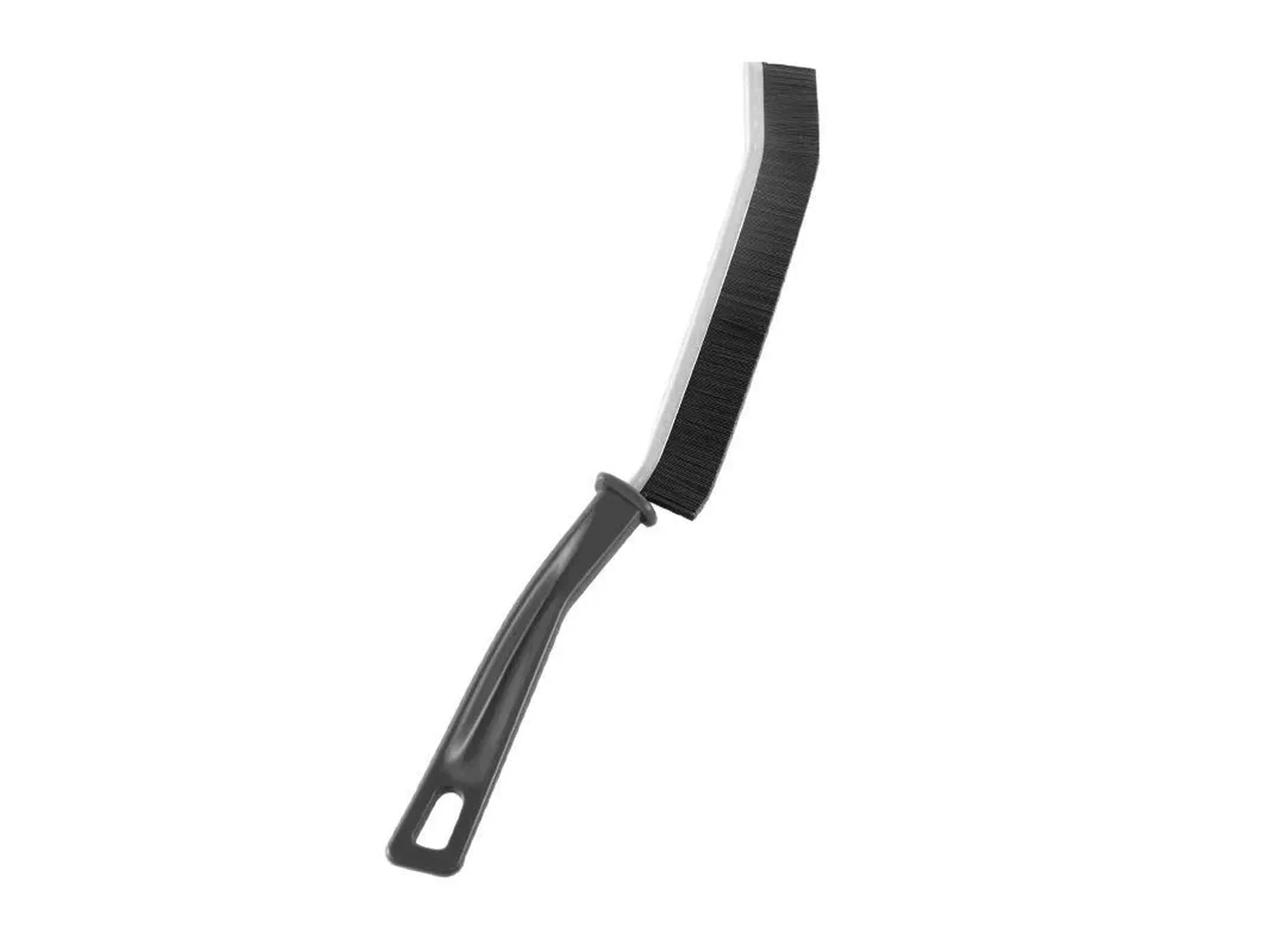
Small brush
500 pcs
Minimum order
Held in one hand: tube, bottle, detail and swab brushes — including long-handled ones with a small head.
Production lead time, once the specification is confirmed
- Up to 500 pcsWithin 7 days
- 501–50,000 pcsWithin 14 days
- Over 50,000 pcsWithin 21 days
Peak season can extend these times; the shipping date is confirmed in writing with your quotation. Sampling and shipping are quoted separately.
An ultra-thin crevice cleaning brush is a narrow-profile hand brush engineered to enter and clear the gaps conventional brush heads cannot reach — window tracks, sliding-door channels, grout lines, appliance seams, and fixture edges. The 2–5 mm working head, extended 210–360 mm reach, and PET/PBT/PP filament options deliver stiff but non-marring contact for loosening packed dirt without scratching track finishes.
What can this brush do for you?
Enters gaps that stop standard brush heads
The brush head is built as a 2–5 mm filament strip rather than a wide bristle block. In a typical window track, that means the filament reaches the bottom and the fillet where the vertical wall meets the channel floor — the two places where a full-size brush only skims the top edges. Buyers adding this to a cleaning line get a tool that actually follows the channel instead of riding over it.
Stiff filament row breaks compacted grit loose
PET and PBT filaments hold their shape under direct pressure, so the tip can dig into the line of compressed dust and sand that builds in a sliding track. Instead of sliding over a packed layer, the brush cuts through it and leaves a loose residue that a wipe or vacuum can remove.
Non-marring contact for finished surfaces
The PET, PBT, and PP contact materials are firm enough to scrub but do not carry the metal barbs or abrasive particles of a wire brush. On anodized aluminum window frames, painted door tracks, coated appliance seams, and plastic channels, the filaments remove debris without leaving scratch marks or exposing the substrate.
Long reach keeps the hand clear of the work
With overall reach from 210–360 mm and a grip/body diameter between 10–30 mm, the operator can clean a full track length and into corners without forcing fingers into the gap. For repetitive window-track work, that reach also reduces awkward wrist angles and helps maintain a consistent brushing stroke.
Stands up to damp and detergent-assisted cleaning
PET, PBT, and PP are moisture-tolerant synthetic materials that do not absorb water, lose stiffness, or rust. The brush can be used with a wet track, cleaning solution, or disinfectant wipe routine, then rinsed and left to dry without filament degradation.
What is an Ultra-Thin Crevice Cleaning Brush?
It is a hand-guided cleaning tool with a very narrow working head — typically 2–5 mm wide — and an extended handle profile. Unlike a standard flat brush, which spreads filaments over a wide face, the crevice brush concentrates contact into a single thin line. That line can enter the bottom of a window track, a shower-door rail, a grout joint, or the seam between an appliance panel and its frame.
In use, the operator works the brush with short push-pull strokes along the gap, occasionally using the tip to clear the corners where two tracks meet. The job of this brush is not to polish a wide surface; it is to reach into the space where a cloth, sponge, or wide brush cannot fit and to loosen whatever has settled there.
The standard configuration is a slim head bonded or molded into a lightweight polypropylene handle. The contact row can be made from PET polyester, PBT, or PP, with the choice driven by stiffness, chemical exposure, and surface sensitivity. Because the head is so narrow, filament spacing and trim length have a large influence on how much debris the brush can carry out of the gap, so the configuration should match the actual track profile.
Technical Specifications
The table below shows the standard parameter ranges for this ultra-thin crevice cleaning brush. Dimensions and materials are normally set to the target gap width, track depth, and expected residue rather than held as fixed values.
| Parameter | Standard range / options |
|---|---|
| Head width | 2–5 mm, selected to enter the narrowest point of the target gap without jamming |
| Working head length | 60–130 mm, the active filament section contacting the gap |
| Overall reach | 210–360 mm from grip front to filament tip |
| Grip/body diameter | 10–30 mm, matched to hand size and grip preference |
| Filament materials | PET polyester, PBT, or polypropylene PP |
| Filament diameter | 0.10–0.30 mm typical; adjusted for residue and surface sensitivity |
| Filament trim | Straight, angled, or tapered tip for corner access |
| Handle material | Polypropylene PP; optional TPE overmold or ergonomic shaping |
| Mounting method | Molded, stapled, or fused filament set into the handle or head base |
| Operating environment | Damp or dry use with common household cleaning solutions; material grade selected for detergent type and wash temperature |
| Brush type | Custom Handheld Detail Brushes |
| How it is driven | Hand-guided |
| Cleaning target | window and sliding-door track, appliance seam and vent slot, and grout line and tile joint cleaning |
| Surface or part | tracks, gaps, channel, seams, window tracks, edges, fixtures, and fixture edges |
| Residue or debris | dust, rust, sand, and polish |
| Mounting / connection | Molded, stapled, or fused filament set into the handle or head base |
Where does this brush work best?
This brush is specified where the cleaning problem is a narrow linear gap that collects debris over time. The primary application is window track cleaning, but the same thin-profile design works across a range of residential and light-commercial crevice tasks.
- Window and sliding-door tracks — the bottom channel of aluminum, vinyl, or coated window sashes; sliding glass door rails; shower door bottom tracks where packed grit blocks smooth movement.
- Appliance seams and vent slots — door edges, control-panel seams, refrigerator gasket channels, dishwasher tub edges, and dryer lint-trap housings with narrow openings.
- Grout lines and tile joints — thin grout grooves too narrow for a standard grout brush, especially in kitchens and bathrooms where film and dirt accumulate.
- Fixture edges and sink rims — behind faucet bases, along countertop backsplash seams, and around fixture escutcheons where a cloth cannot enter.
- Framing and threshold channels — bottom tracks of storm doors, bi-fold doors, and sliding screens in residential and light-commercial settings.
How do I choose the right one?
Start with the narrowest part of the gap the brush must enter, then work through the debris, finish, and reach conditions below.
Match the head width to the gap, not the track width
Measure the smallest opening along the full path. A head width of 2–5 mm should enter with slight clearance. Too wide and it jams; too narrow and the filament row flexes away from the sidewall without enough contact. For gaps under 2 mm or clover-shaped channels, a blade-style scraper or vacuum crevice tool may handle what a filament brush cannot.
Choose filament stiffness by debris and surface
PBT and PET filaments are the firmer options for compacted grit, sand, and dry soil in tracks. PP is softer and better for delicate finishes, plastic channels, or high-frequency use where minimal marking is the priority. Filament diameter also changes feel: thinner filaments are more flexible and conform to irregular surfaces; thicker filaments apply more concentrated tip pressure.
Set reach to the working depth
Overall reach of 210–360 mm covers most window tracks and appliance seams. Choose the shorter end when the operator is working close to the surface and wants maximum control; choose longer reach for deep channels, floor-level tracks, or to keep the hand away from dirty water. Very long slivers of reach reduce stroke control, so deep channels may need a redesigned neck rather than just extending the handle.
Confirm chemical and moisture compatibility
If the brush will be used with a detergent, degreaser, or disinfectant, confirm the selected filament and handle grade with us. PBT offers good resistance to many cleaning agents, PET is stable in damp conditions, and PP performs well with many household chemicals but may soften under some solvent exposure. Specify the intended cleaning solution during sourcing.
When a different tool is the better choice
This brush is not for removing heavy rust scale, hardened mineral deposits, or baked-on residue. Use a wire or brass brush for corrosion or aggressive mechanical work, a scraper for paint or adhesive buildup, or a vacuum crevice tool for loose dust that does not need contacting. Choose the crevice brush when a narrow gap requires controlled, non-scratching mechanical contact.
Can I customize this brush?
Yes. Ultra-thin crevice brushes are typically specified to a specific track profile, so most orders start with a few key measurements rather than an off-the-shelf dimension. Provide the narrowest gap width, channel depth, track material and finish, residue type, cleaning chemical, and preferred handle form; a profile drawing, sample track, or photo speeds up the configuration.
Common adjustable elements include:
- Head geometry — width from 2–5 mm, active filament length, angled or tapered tip, and profile shaped to the channel bottom.
- Filament configuration — PET, PBT, or PP material; diameter; trim length; density; and straight or angled cut.
- Handle and grip — overall length, grip diameter, ergonomic shaping, hanging hole, or overmolded soft-touch section.
- Mounting and core — molded-in filament, stapled construction, or a corrosion-resistant metal or plastic backing for longer heads.
- Color and marking — brand color, pad print, laser marking, or molded identification so the tool reads as part of a product line.
- Packaging — bulk packing, individual polybag, retail sleeve, header card, or kit assembly with other window-care tools.
We can also support project-specific documentation, material declarations, inspection, or third-party testing requirements as part of the customization process.
When is an ultra-thin crevice cleaning brush worn out rather than just dirty?
How do I confirm the head is thin enough for my window track?
Measure the narrowest point of the track channel with a feeler gauge or caliper. The brush head should be at least 0.5 mm narrower than that opening so it slides without jamming but still contacts both walls. If the head bends sideways or folds when entering, the gap requires a narrower profile or a different tool.
What should I remove from the track before using the brush?
Clear loose leaves, pebbles, screws, or large debris first. A quick vacuum or dry wipe removes loose material so the brush works on the compacted layer instead of pushing larger items along the channel and potentially scratching the finish.
Does brushing alone finish the window track cleaning job?
No. The brush loosens and moves packed debris, but the loosened material still needs to be removed from the channel. Follow with a vacuum, damp cloth, or rinse, depending on the residue. Brushing is the mechanical step in the sequence, not the complete sequence.
How can the operator check that the crevice is fully clean?
Run a fingertip or a white cloth along the bottom fillet after brushing. If the cloth comes away with a visible gray or dark line, compacted soil remains and may require a firmer filament, a longer active head, or a second pass with a cleaning solution.
When should the brush be replaced?
Replace the brush when the filament row splays outward, loses its original trim line, or no longer reaches the bottom of the track with light pressure. A worn brush will leave a residue streak in the channel even after repeated strokes, which is the clearest field signal that the contact section has degraded.
Can the same brush handle both window tracks and tile grout?
It can, but the configuration may need to differ. Grout joints are often shallower and wider than a window track floor, so a head that is ideal for a 2 mm track may be too narrow for a 6 mm grout groove. We can build a multi-width head or supply two head versions if a single brush must cover both tasks.
Guides that go deeper on this
We have not written a guide specific to this one yet. The material that covers selection, filament, dimensions, maintenance and sourcing is collected in the technical resources library.
Custom Manufacturing RFQ
Describe Your Application
An accurate custom quote starts with the dimensions, working surface, residue, material choice, connection, quantity, and reference files.
Drawing or photo optional — it speeds things up, it does not gate the enquiry.
Custom Brush RFQ
Send Your Brush Project
Upload a drawing, product photo, or sample photo and provide the core dimensions and cleaning conditions.
“We need a brush to remove wet residue from a stainless steel conveyor, about 800mm wide. The current brush wears quickly. We can send photos.”
“We sell drinkware and need a cleaning brush to include with the product. Quantity around 5,000 pieces.”