
Application
Pipe Robot Brush Attachment Use
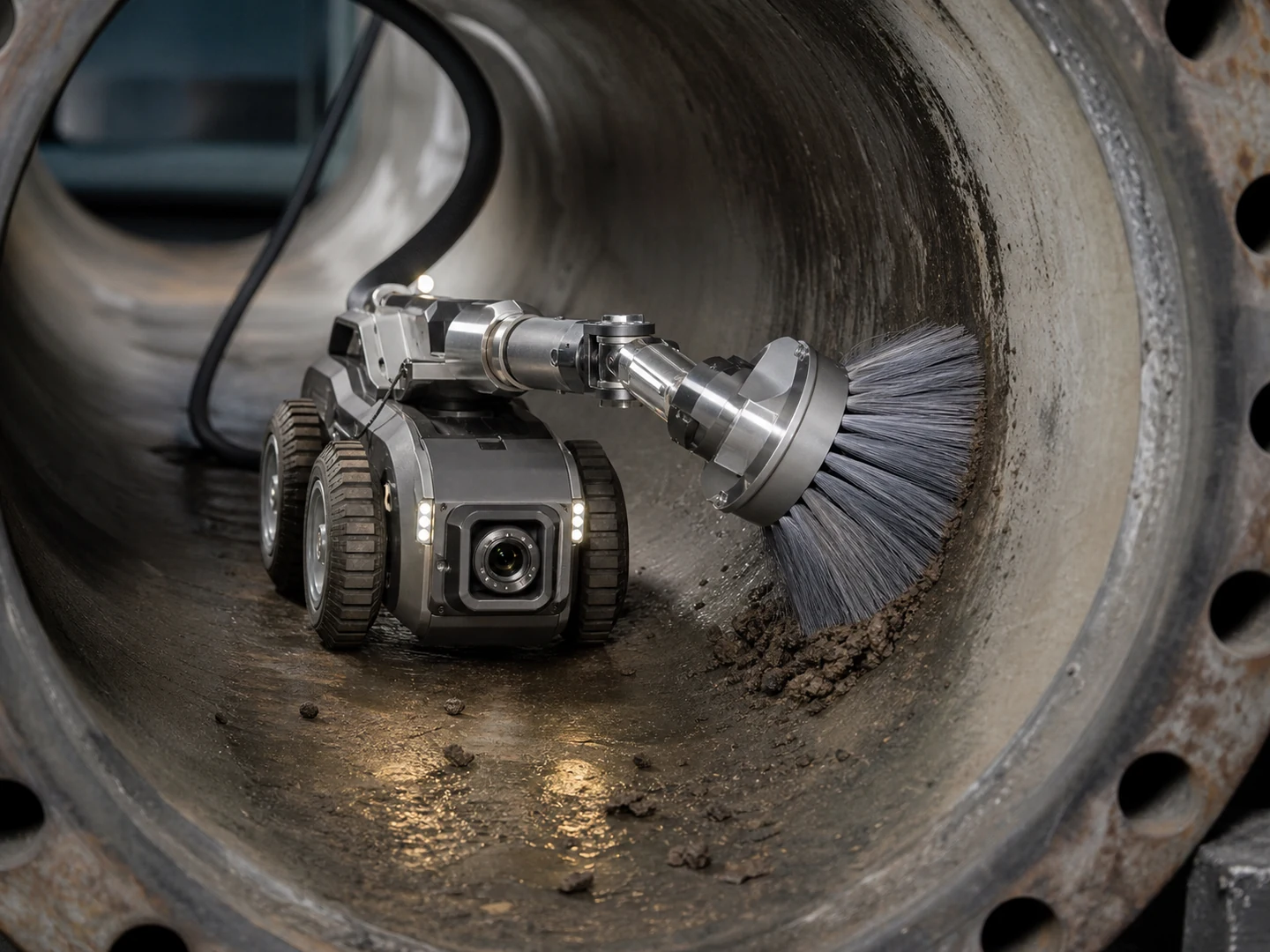
For Pipe Robot Brush Attachment Use, the brush must reach the working area, disturb or collect sludge/rust scale/mineral scale/root intrusion/deposits, and release it without creating unacceptable surface damage or process interference. The available access and required motion should be reviewed together with the cleaning method.
At a glance
- Cleaning target
- Sludge/Rust Scale/Mineral Scale/Root Intrusion/Deposits
- Working environment
- Inside Piping / Underwater / Wet Confined Space
- Cleaning method
- Dry Brushing / Wet Brushing
- Requirements to check
- Robot Interface-Dimension and Rated-motion Requirements; IP Ingress Protection; Media Compatibility
A pipe robot’s brush is a mounted attachment with a torque and diameter budget, so it is specified from the robot and the pipe together — never from the deposit alone.
What makes Pipe Robot Brush Attachment Use different from other industrial and manufacturing cleaning?
The main difficulty is removing oil, carbon, scale, biofilm, process residue, and particles from bores, channels, tubes, hoses, ports, and internal passages without damaging the surface, loading the brush, or carrying contamination back into the process.
The work happens in inside piping, underwater and wet confined space against sludge, rust scale, mineral scale, root intrusion and deposits.
The part people get wrong: the residue tells you the filament, but the access opening tells you the construction. Get them in that order and the shortlist is short.
What are the most common cleaning targets in Pipe Robot Brush Attachment Use?
5 targets, each with its own opening, residue and contact requirement.
| Part or area | Residue type | Cleaning requirement |
|---|---|---|
| CCTV Crawler Pre-Cleaning | Sludge, Rust Scale, Mineral Scale, Root Intrusion, Deposits | The head must reach the working face and apply even contact without marking the surface. |
| Pipe Descaling Attachment | The brush must pass the full length of the passage and hold contact with the wall without folding over at the far end. | |
| Root and Deposit Removal | Root intrusion, sludge, hard deposits, scale build-up | The head must reach the working face and apply even contact without marking the surface. |
| Coating-Preparation Brushing | Cured coating, resin and adhesive residue | |
| Inspection-Lens and Sensor | Water film, silt, biofilm haze on the lens window |
What the equipment leaves you to work inside:
| Parameter | Typical range |
|---|---|
| brush diameter | 3.2–50.8 mm |
| Brush section | 25–127 mm |
| Overall length | 152–406 mm |
| Filament diameter | 0.08–0.25 mm |
| Internal diameter | 1–300 mm |
| Passage length | 20–10,000 mm |
Which brush types work for each cleaning target?
Radial brush ring, cylindrical brush, front cleaning head, side brush, or replaceable segment mounted to the robot.
| Cleaning target | Recommended brush type | Why it fits |
|---|---|---|
| CCTV Crawler Pre-Cleaning | Tube & Pipe Bore Brushes | The camera cannot grade a pipe it cannot see, so a brush head on the crawler clears the wall film ahead of the lens before the survey starts. |
| Pipe Descaling Attachment | A descaling head works from inside against the wall, so the brush is sized to the pipe and driven so its tips stay loaded through the whole run. | |
| Root and Deposit Removal | Roots and hard deposits sit at the joints, so the brush attachment is worked back and forth at that point instead of driven straight past it. | |
| Coating-Preparation Brushing | A lining will not bond to a dirty wall, so the brush leaves a uniformly prepared surface right round the bore before the liner goes in. | |
| Inspection-Lens and Sensor | The crawler’s own lens and sensors film over first, so a small brush on the unit keeps them clear without recovering the machine. |
How the brush is usually carried on the machine:
- Driven brush — use when oil, carbon, scale, biofilm, process residue, and particles needs repeatable scrubbing or controlled relative movement
- Passive or free-running brush — use for loose contamination and lower process complexity on bores, channels, tubes, hoses, ports, and internal passages
- Localized hand, strip, or tube brush — use where only an edge, gap, port, or maintenance point needs contact
In practical brush terms: match the construction to the access before anything else. A geometry that cannot reach the target will not be rescued by a better filament.
What filament materials work best for Pipe Robot Brush Attachment Use?
Choose nylon, PBT, abrasive nylon, brass, stainless wire, or elastomer contact based on pipe material, deposit, wet chemistry, and required cut.
| If the condition is… | Filament to start with | Why |
|---|---|---|
| Sensitive or coated surface | Nylon PA | balanced flex life and abrasion resistance |
| Wet, washdown, or detergent service | PBT | stable wet stiffness and low moisture uptake |
| Bonded residue or aggressive cleaning | Stainless Steel Wire | corrosion-resistant aggressive cleaning |
What the duty rules out before you start comparing grades:
| Constraint | Value for this application |
|---|---|
| Filament hardness | Medium–Hard |
| Maximum service temperature | 120°C |
| Chemical exposure | Water; Acidic / Alkaline Media pH 2–13; Oil and Grease |
| Cleaning method | Dry Brushing, Wet Brushing |
How do I choose the right brush for my pipe robot brush attachment use equipment?
The robot fixes the mount and the torque budget, the pipe bore fixes the diameter, and the deposit only picks the fill within those limits.
Work through it in this order:
- Identify the target part and measure the access opening or clearance
- Describe the residue: what it is, how thick it sits, and how strongly it holds
- Choose the construction that can physically reach that target
- Set the filament from surface risk, working temperature and cleaning chemistry
- Fix filament diameter, free trim length and density for the contact pressure you need
- Run one cycle and check the result before committing to a production quantity
Before you commit to a quantity, send the robot’s mounting interface and torque limit, the pipe bore, and the deposit type.
When is a pipe robot brush attachment the wrong tool?
High-pressure jetting removes roots, grease and heavy sludge well beyond what a robot-mounted brush can torque through. Cutting attachments handle intrusions, and the brush is for the finishing pass ahead of inspection or lining.
What common mistakes should I avoid in Pipe Robot Brush Attachment Use?
- Specifying the pipe without the robot’s torque limit and mounting interface
- Changing brush material while leaving excessive engagement, poor alignment, or no discharge path unchanged
- Copying a worn brush without recording motion, direction, mounting, and the original working diameter
If the brush is already in service and the result is wrong, work from the symptom:
| Symptom | What to change |
|---|---|
| Residue remains | Increase relative motion or discharge, then change filament diameter or density; do not add pressure before checking loading by oil, carbon, scale, biofilm, process residue, and particles. |
| Surface marks or scratches | Reduce engagement, use finer or softer fill, and remove trapped abrasive particles from contact with bores, channels, tubes, hoses, ports, and internal passages. |
| Rapid wear or uneven cleaning | Check alignment, runout, support, motion, temperature, chemical attack, and whether the brush covers the complete working path. |
| Brush loads or redeposits residue | Open the fill pattern or add wash, vacuum, air, scraping, or a collection path so removed oil, carbon, scale, biofilm, process residue, and particles leaves the contact zone. |
Questions this page is asked
How should a robotic pipe brush be qualified before a full run?
Use a representative spool or the shortest controlled pipe section containing the limiting diameter and bend, and monitor drive current or load, traction, brush contact, debris movement and tether behavior in both directions. Stop for sustained overload, loss of steering or view, wound debris, coating damage or inability to reverse and retrieve the complete attachment.
What closes a pipe-robot brush run after retrieval?
Account for the complete brush, fasteners and any sacrificial elements, then inspect for lost tufts, bent carrier, cracked coupling, wrapped roots or wire and chemical attack. Clean or decontaminate the attachment for the encountered media, document the run and observed pipe condition, and quarantine any damaged tool before another insertion.
Guides that go deeper on this
Continue Exploring
Recommended Reading & Related Brush Resources
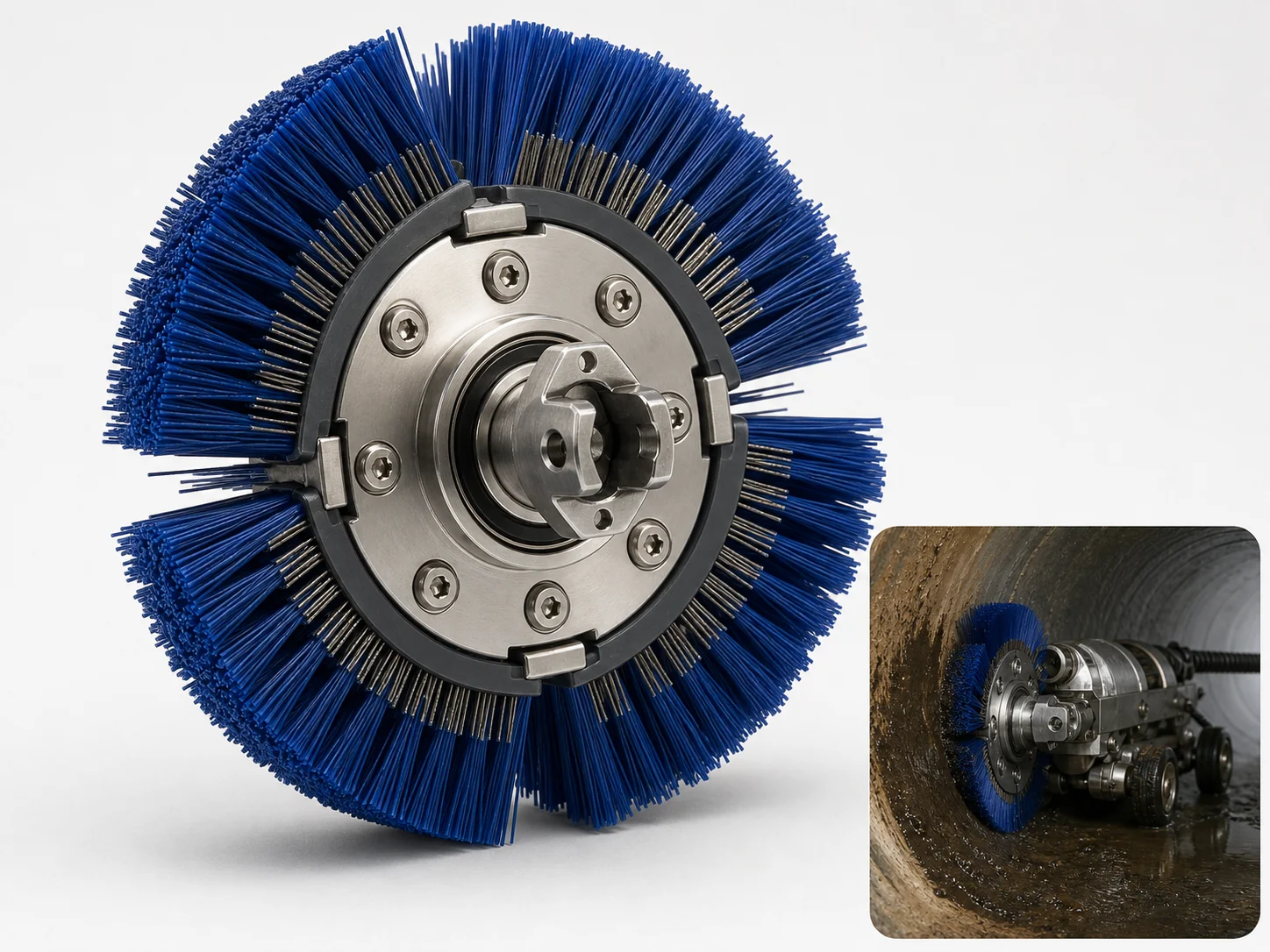
Pipe Robot Brush Attachment
Custom pipe robot brush attachments built to your robot's drive interface and pipe geometry.
See the specification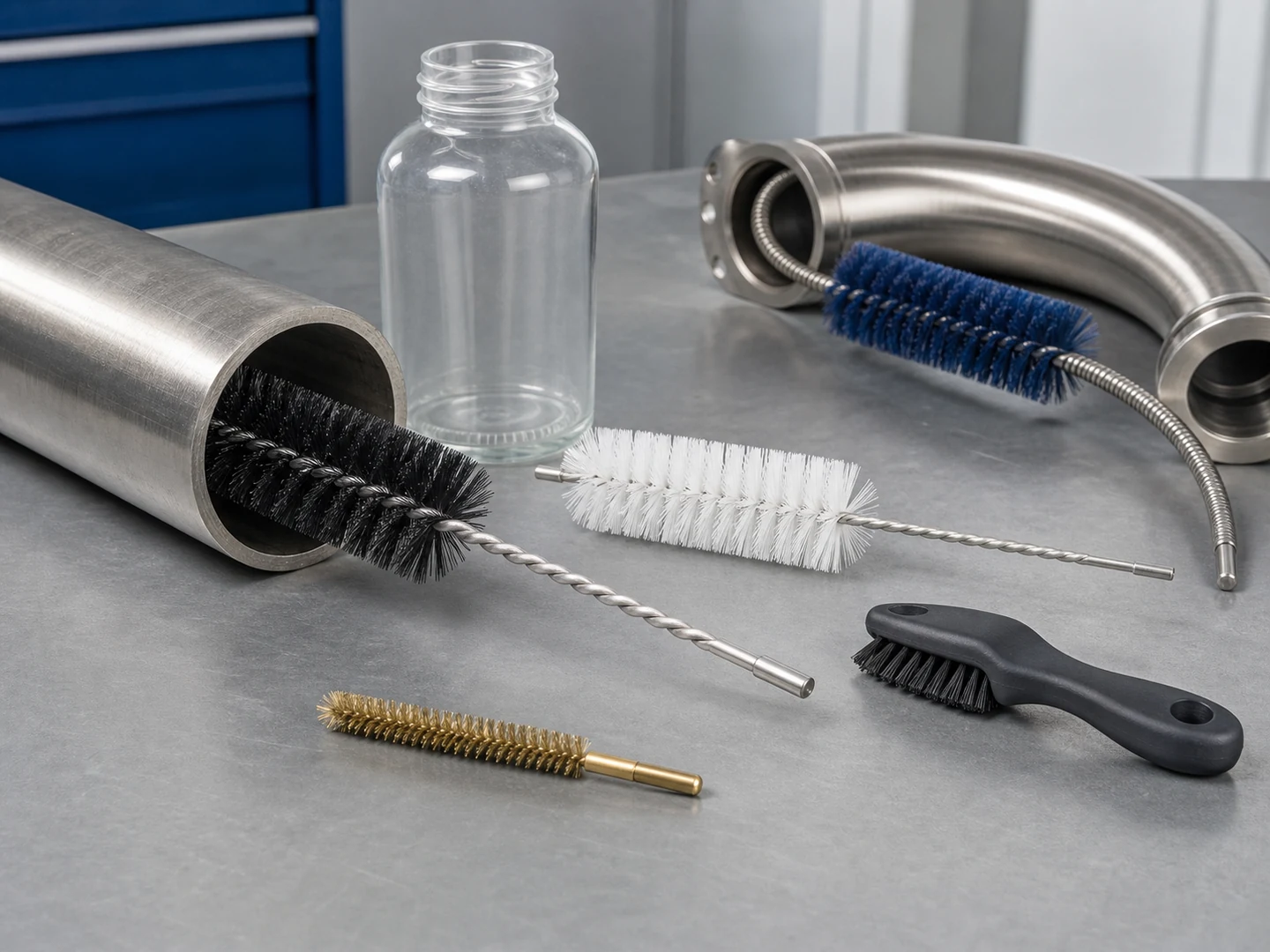
Custom Tube & Pipe Bore Brushes
Choose a tube, pipe, or bore brush when the working surface is inside a…
See how this type is built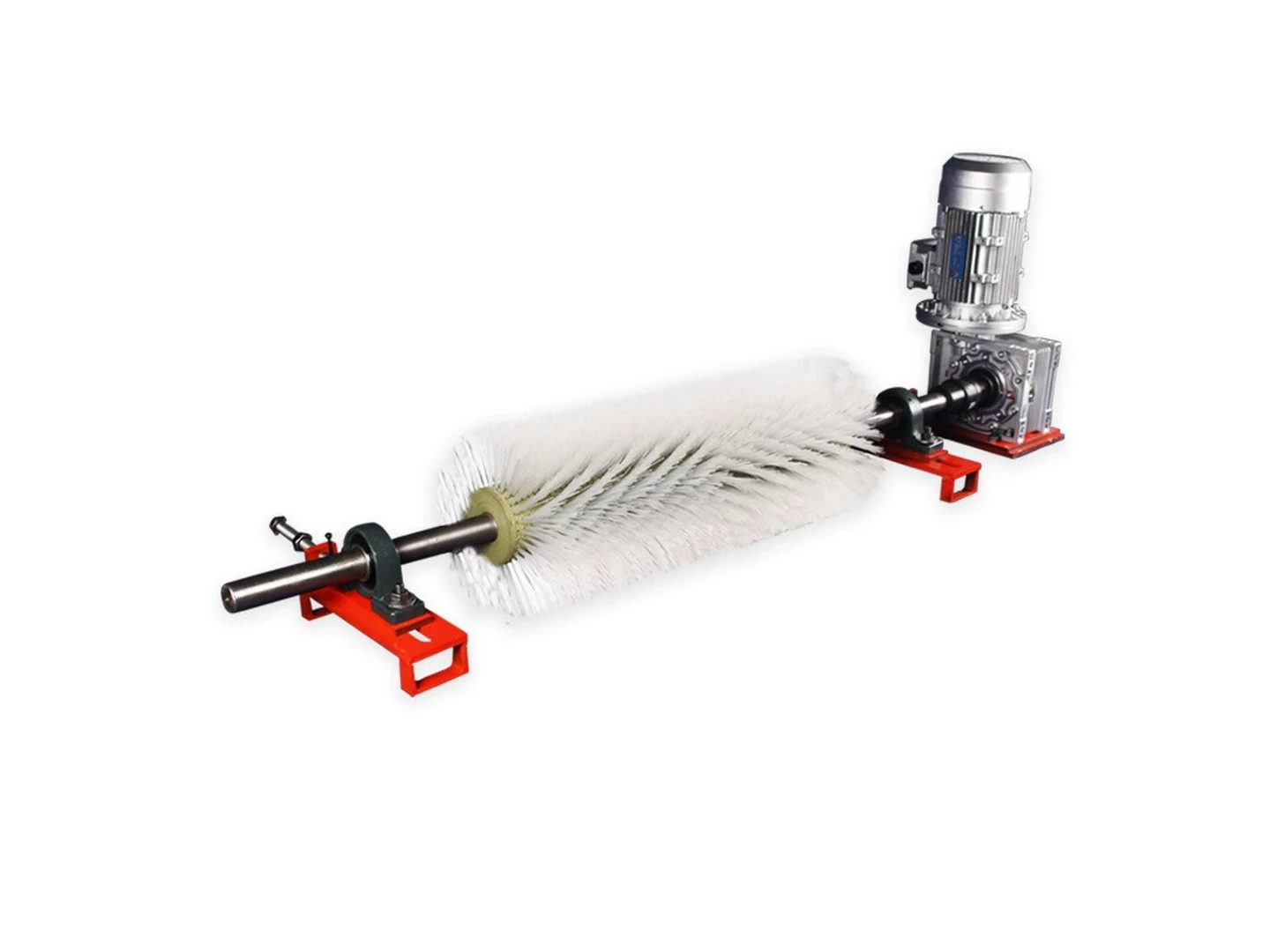
Custom Roller and Conveyor Brushes
Choose a roller or conveyor brush when a cylindrical brush must clean, wipe, guide,…
See how this type is built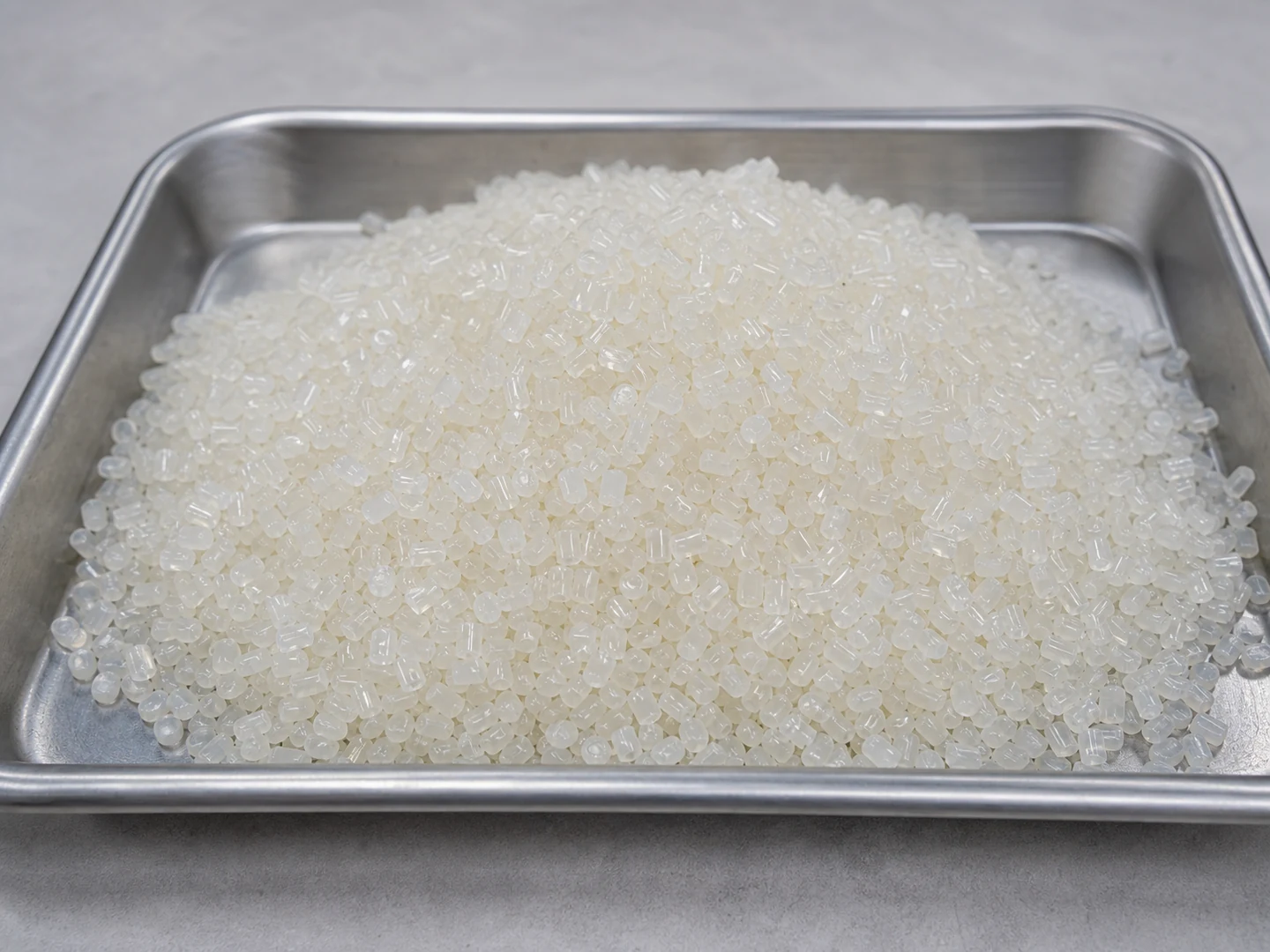
Nylon PA
Choose Nylon PA based on its stiffness, recovery, wear, wet-service, chemical, and temperature behavior.
Compare this materialCustom Manufacturing RFQ
Discuss This Application
Share the working surface, residue, dimensions, material direction, interface, quantity and drawing or sample photo.
Custom Brush RFQ
Request a Custom Cleaning Brush Quote
Upload a drawing, product photo, or sample photo and provide the core dimensions and cleaning conditions.
“We need a brush to remove wet residue from a stainless steel conveyor, about 800mm wide. The current brush wears quickly. We can send photos.”
“We sell drinkware and need a cleaning brush to include with the product. Quantity around 5,000 pieces.”