
Custom Cleaning Brush
Cleaning Brush Battery
Dual-ended battery terminal cleaning brush with brass or 304 stainless steel bristles and optional scraper.
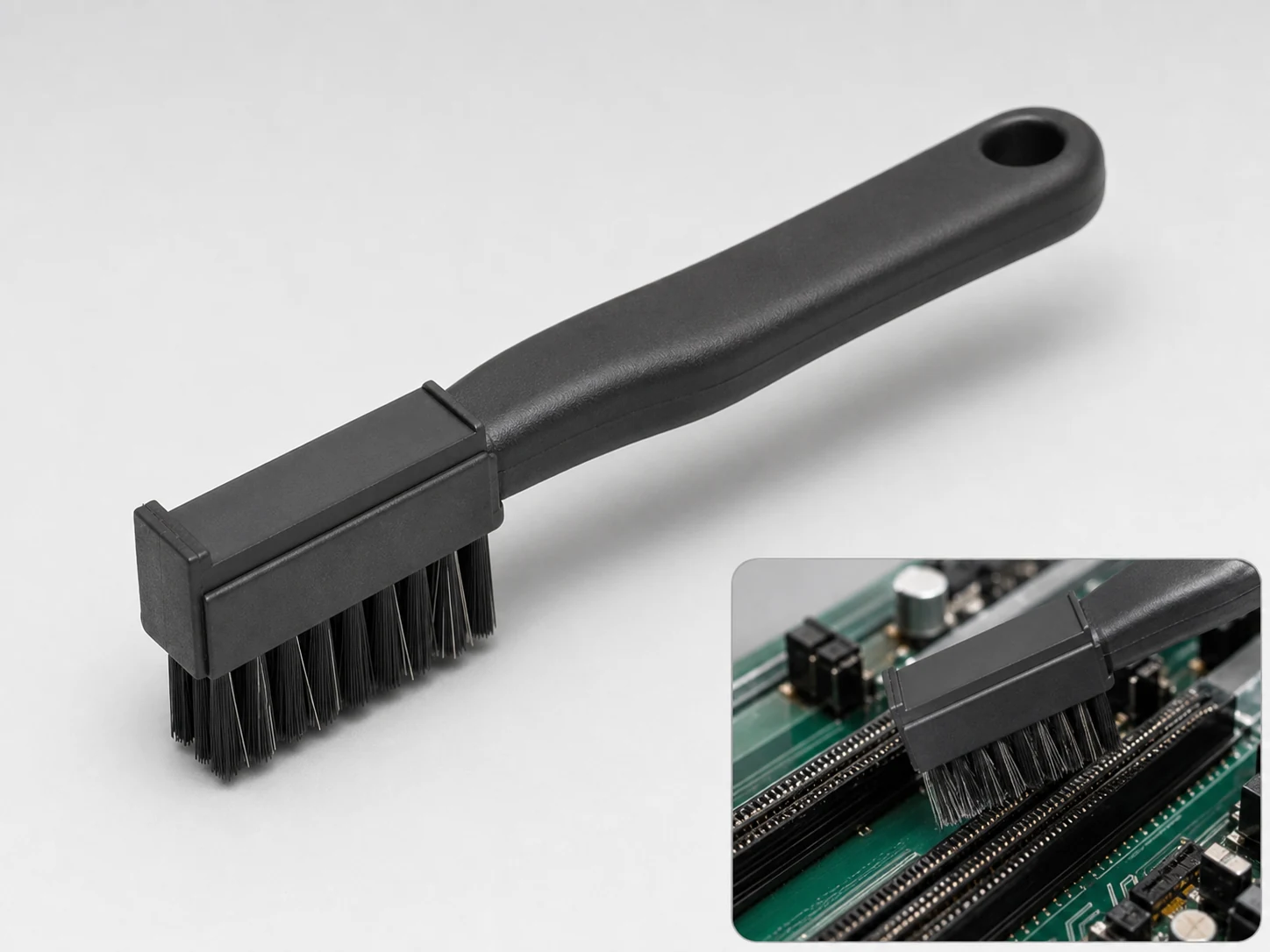
Small brush
500 pcs
Minimum order
Held in one hand: tube, bottle, detail and swab brushes — including long-handled ones with a small head.
Production lead time, once the specification is confirmed
- Up to 500 pcsWithin 7 days
- 501–50,000 pcsWithin 14 days
- Over 50,000 pcsWithin 21 days
Peak season can extend these times; the shipping date is confirmed in writing with your quotation. Sampling and shipping are quoted separately.
A dual-ended wire brush built for cleaning battery posts and the inside of cable clamps on automotive, marine, and industrial batteries. Available with brass or 304 stainless steel bristles plus an optional scraper, it removes corrosion, acid deposits, and oxidation that cause poor connections, voltage drops, and starting problems.
What can this brush do for you?
Two Working Ends Match the Two Contact Surfaces
The brush carries a cup-shaped or twisted-in-wire end sized to wrap around the tapered battery post, and a second end shaped to enter and clean the inside bore of the cable clamp. Each end has its bristle direction set for the surface it contacts, so you clean both halves of the electrical connection without switching tools or working at an awkward angle.
Brass Bristles Remove Corrosion Without Excessive Post Wear
Brass wire is harder than the white or green corrosion that forms on battery terminals but closer in hardness to the lead alloy post than stainless steel. It scrapes away soft deposits while limiting deep scoring of the post. For regular maintenance on conventional lead terminals, brass gives clean metal without over-aggressive abrasion.
304 Stainless Steel Option for Harder Deposits
When terminals carry hardened sulfation, dried battery acid, or rust from steel clamps, stainless 304 wire provides more stiffness and cut. It removes heavier crust faster and resists bending under pressure. Because stainless is harder than lead, it will leave more visible scratching on the post; choose it when deposit removal matters more than surface appearance.
Integrated Scraper Clears Heavy Crust Before Brushing
Thick corrosion can form a crust that prevents bristles from reaching the base metal. An optional scraper blade on the handle or the opposite end removes that bulk layer first, then the wire ends finish the surface. This two-step action saves time and keeps the bristles from being ground down by the heaviest buildup.
Compact Size for Tight Battery Boxes
Overall length of 150–200 mm with a slim profile lets the brush work between hold-down brackets, cable harnesses, and battery box walls. The handle is shaped for a firm grip even with gloves on, and the short, stiff bristle section puts cleaning force exactly where it is needed instead of flexing away.
What is a Cleaning Brush Battery?
A Cleaning Brush Battery is a hand-operated maintenance brush designed specifically for the two mating surfaces of a lead-acid battery connection: the post or terminal on the battery and the inside surface of the cable clamp or connector that bolts to it. The brush is usually double-ended, with an external brush for the post and an internal brush for the clamp bore, and it is used dry or after a terminal cleaning spray.
In use, the operator slides the external brush end over the battery post and rotates it back and forth to strip corrosion and oxidation. The internal brush end is inserted into the open cable clamp and twisted to clean the contact surface inside. For heavy buildup, a scraper blade is used first to remove the thickest deposits so the wire ends can reach the metal underneath.
This is a mechanical cleaning tool, not a chemical treatment and not a powered brush. It is for battery terminals, cable lugs, and grounding connections. It is not intended for cleaning the battery case, electronics, or other vehicle components, and it does not replace terminal protectant or grease after cleaning.
Technical Specifications
| Parameter | Standard / Options |
|---|---|
| Overall length | 150–200 mm (approx. 6–8 in), adjustable |
| Handle material | PP, ABS, nylon, or wood; ergonomic overmold available |
| Wire material | Brass (C2700 or equivalent) or 304 stainless steel; other alloys on request |
| Wire diameter | Brass: 0.15–0.30 mm; 304 SS: 0.10–0.25 mm; thicker wire for heavy deposits |
| Bristle trim length | 12–20 mm on working ends |
| Post brush end | Twisted-in-wire cup or radial brush to fit tapered top posts with base diameter 15–20 mm; custom diameters available |
| Clamp brush end | Internal cylindrical or tapered brush for clamp bores 12–18 mm ID; custom IDs available |
| Scraper | Optional steel or brass scraper, blade length 40–60 mm, on handle or opposite end |
| Bristle retention | Twisted wire stem or ferrule crimped into handle; epoxy-set option for high pull-out resistance |
| Operating temperature | -20°C to 80°C for standard handle and adhesive materials |
| Packaging | Bulk, retail card, blister, or custom project packaging |
| Brush type | Custom Handheld Detail Brushes |
| How it is driven | Hand-guided |
| Cleaning target | automotive 12v flooded, off-grid battery bank, and industrial equipment battery cleaning |
| Surface or part | terminals, cable, connectors, metal, bores, floors, and tapers |
| Residue or debris | corrosion, grease, and rust |
| Mounting / connection | Shaft-Mounted / Flange |
The dimensions above are our standard starting points for common automotive top-post batteries. All values can be adjusted to match a specific terminal style or cable clamp size.
Where does this brush work best?
- Automotive 12V flooded, EFB, AGM, and gel batteries: cleaning top-post terminals and the inside of cable clamps before reconnection during replacement or maintenance.
- Marine, RV, and off-grid battery banks: removing white/green corrosion from interconnects and cable lugs in humid environments where oxidation accelerates.
- Forklift, floor machine, and industrial equipment batteries: maintaining high-current connectors and posts on deep-cycle and motive power batteries.
- Fleet maintenance and service shops: a low-cost hand tool for battery installation, preventive maintenance, and electrical diagnosis where a wheel-driven wire brush is too aggressive.
How do I choose the right one?
Match the wire material to the terminal and corrosion type
Lead and lead-alloy posts are soft, so brass is the usual first choice for light to moderate corrosion. It removes sulfation and oxide without deep gouging. If the deposits have hardened, or the clamp is steel with rust, stainless 304 wire cuts faster but will leave more visible marks on a lead post. For plated or specialty terminals, provide the plating material so we can select a wire that cleans without stripping the coating.
Select the end configuration for your terminal style
The standard dual-end brush targets common SAE top-post batteries, where the post is a tapered cylinder and the clamp is a round bore. If you service side-terminal batteries (threaded recess in the battery side), threaded stud terminals, or Anderson-style connectors, one or both ends need a different geometry. Send us the terminal type and dimensions, and we will configure the brush ends to match.
Consider access space and handle length
In a crowded engine bay or battery box, a longer handle can help you reach the terminal without removing surrounding brackets. However, a longer handle reduces the force you can apply precisely, so balance reach with control. Our standard 150–200 mm length works for most installations; longer versions are available for deep-set batteries.
Choose bristle stiffness for the deposit
Thinner wire (0.15 mm) flexes more and is gentler on the terminal; it suits routine cleaning of light film. Thicker wire (0.30 mm) and stainless steel are stiffer and remove heavier crust. If you are dealing with baked-on acid deposits, choose the stiffest bristle option and add a scraper. If you only need to freshen a lightly oxidized terminal, the softer brass brush is sufficient and minimizes metal removal.
When to use a different tool
If the post is deeply pitted, cracked, or deformed, brushing will not restore a reliable connection; the terminal or cable should be replaced. For heavy scale across an entire battery bank, a powered wire wheel may be faster, but it can over-remove material and throw conductive dust; use it with care. For cleaning sensitive electronic connectors or gold-plated contacts, do not use a battery brush; those require non-abrasive contact cleaners and softer applicators.
Can I customize this brush?
Battery terminal brushes are built to the terminal, not the other way around. We can adjust wire material, wire diameter, bristle trim length, brush end geometry, handle material and color, and add a scraper or change the number of working ends. Common customizations include:
- Wire material: brass, 304 stainless, 316 stainless, nickel-silver, or phosphor bronze
- Wire diameter: from 0.10 mm up to 0.35 mm depending on stiffness requirement
- Post brush end: cup, radial, or twisted-in-wire shape matched to your post base diameter and taper angle
- Clamp brush end: internal diameter, taper, and depth matched to your clamp bore or lug opening
- Handle: length, material (PP, ABS, nylon, wood, metal), ergonomic grip, hanging hole, or non-slip overmold
- Scraper: separate blade or integrated into the handle, steel or brass, straight or curved
- Color and marking: custom color, molded logo, pad print, or laser marking
- Packaging: bulk boxes, retail cards, blister packs, or kit assembly with terminal protector and grease
To define the right configuration, send us the terminal type (top post, side terminal, stud), post base diameter, clamp inner diameter, typical corrosion condition, handle length preference, and any volume requirements. A photo or drawing of the actual parts speeds up the quote. If your project requires material documentation, inspection reports, or third-party testing, we can assist with those during the customization process.
Which filament survives the cleaning and still lasts on a cleaning brush battery?
Can I use this brush on side-terminal batteries?
The standard dual-end design targets top-post SAE batteries. For GM-style side terminals with threaded recesses, we can configure one end with a thread-cleaning brush or a custom internal brush. Let us know the thread size (commonly 3/8-16) and recess depth, and we will match the geometry.
Will brass wire leave scratches on the battery post?
Light surface marks are normal because the lead alloy post is softer than brass. The goal is to expose clean, conductive metal, not a polished finish. After brushing, apply a terminal sealer or dielectric grease to protect the clean surface and slow future corrosion.
Is it safe to clean terminals while the battery is connected?
Disconnect the negative cable first and move it away, then clean the positive terminal. Even a brass-wire brush is conductive and can short a circuit if it bridges the positive post to the vehicle body or the negative terminal. Turn off all loads before disconnecting any battery cable.
How do I know when the brush needs replacement?
Check for flattened or splayed bristles that no longer spring back, broken wires that have fallen out, or corrosion build-up inside the bristle tufts. A brush that no longer removes deposits in a few passes, or bends permanently during use, should be replaced. Visual inspection after each use is cheap insurance.
Does this brush replace terminal cleaning sprays?
It works best as a mechanical step. A spray cleaner can soften and neutralize acid residue before brushing, but only the brush physically removes the deposits. For heavy buildup, spray first, wait, brush, then rinse with water and dry completely before reconnecting. Chemical spray alone will not restore metal-to-metal contact.
Guides that go deeper on this
Custom Manufacturing RFQ
Describe Your Application
An accurate custom quote starts with the dimensions, working surface, residue, material choice, connection, quantity, and reference files.
Drawing or photo optional — it speeds things up, it does not gate the enquiry.
Custom Brush RFQ
Send Your Brush Project
Upload a drawing, product photo, or sample photo and provide the core dimensions and cleaning conditions.
“We need a brush to remove wet residue from a stainless steel conveyor, about 800mm wide. The current brush wears quickly. We can send photos.”
“We sell drinkware and need a cleaning brush to include with the product. Quantity around 5,000 pieces.”