
Custom Cleaning Brush
End Brush
Shank-mounted end wire brushes for die grinders, drills and flexible shafts. Carbon steel, 316 stainless or brass wire in crimped or knot fill.
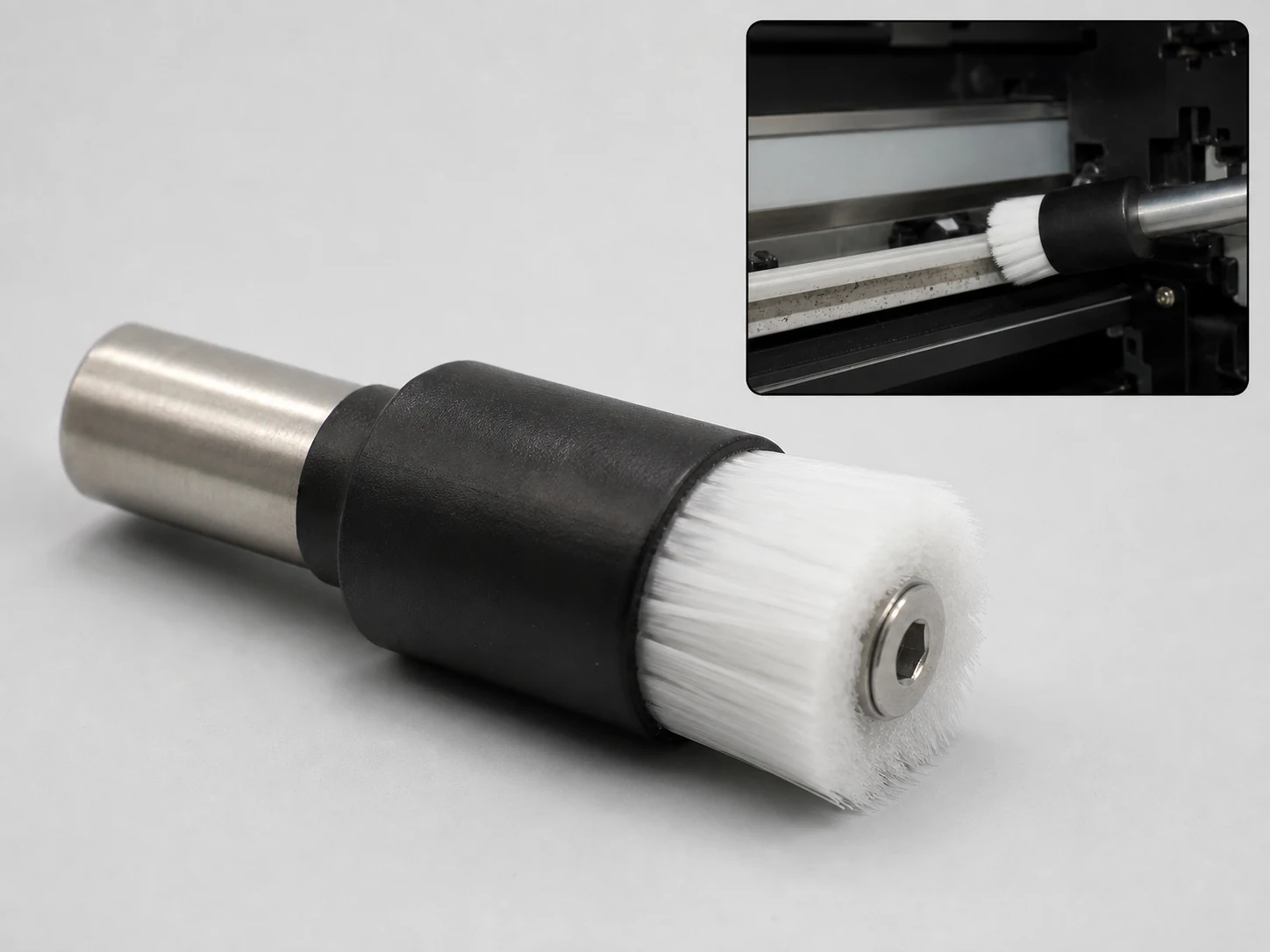
Small brush
500 pcs
Minimum order
Held in one hand: tube, bottle, detail and swab brushes — including long-handled ones with a small head.
Production lead time, once the specification is confirmed
- Up to 500 pcsWithin 7 days
- 501–50,000 pcsWithin 14 days
- Over 50,000 pcsWithin 21 days
Peak season can extend these times; the shipping date is confirmed in writing with your quotation. Sampling and shipping are quoted separately.
An end brush is a shank-mounted rotary wire brush for die grinders, straight grinders, drills, and flexible-shaft tools. It cleans localized faces, inside corners, edge details, and shallow recesses on machined parts and fabricated assemblies where wheel and cup brushes cannot reach.
What can this brush do for you?
Cleans the Areas Wheel and Cup Brushes Leave Behind
The wire fill is arranged around the end of a center shank, so the brush can press its working face into the bottom of a pocket, the root of a fillet, around a boss, or along a machined edge. That access is why machinists and fabricators keep an end brush next to a wheel or cup brush instead of trying to force a large disc into a small detail.
The Working Face Stays Where You Guide It
Because the wire is packed around the end of the brush rather than spread across a broad disc, the cleaning action stays in a small circular zone. This helps the operator remove a rust spot, oxide line, or light burr along one edge without disturbing a finished surface immediately beside it.
Wire Material Matches the Workpiece, Not Just the Dirt
Carbon steel wire cuts through rust, mill scale, and light burrs on carbon steel parts. 316 stainless steel wire avoids carbon-steel contamination and rust bloom on stainless work. Brass wire removes light oxide and residue on aluminum, copper, and bronze without leaving ferrous marking. Choosing the wire for the part leaves a clean surface without introducing a new contamination problem.
Crimped and Knot Fill Change the Cut
Crimped wire is flexible and conforms to edges, fillets, and shallow profiles for general cleaning and surface finishing. Knot or twist wire is bundled into dense, stiff sections that resist flexing for heavier scale, weld-area cleanup, and stubborn burr removal. The same end brush geometry can be produced in either fill so the cleaning action matches the job.
Built for Rotary Hand Tools
The shank is supplied in round or hex sections for a die grinder, straight grinder, drill, or flexible-shaft drive, and each brush is rated for a maximum operating speed. When the tool is run within the marked limit, the brush gives predictable contact without premature wire breakage.
What is an End Brush?
An end brush is a power-driven wire brush with bristles wound around the tip of a shank-mounted hub. The shank is clamped in a collet or chuck, and the brush spins to remove dust, burrs, oxide, oil film, light polishing compound, scale, and loose particles from flat faces, edges, recesses, profiles, machine components, and small circular work zones.
In use, the operator presents either the end face or the side of the wire fill to the work. The end face attacks the bottom of a cavity, a corner root, or a flat detail; the side fill follows an edge or a small profile. Light pressure keeps the wire tips cutting instead of folding, and the brush travels continuously so no single area overheats or sheds wire.
The brush body carries the shank, a steel or stainless hub, and the wire fill. Crimped fill is made from individual wavy wires that cushion and conform. Knot fill is made from twisted wire bundles that stay dense under load. The shank interface and the rated maximum speed determine which power tool the brush can be used with.
An end brush is a localized conditioning step, not a stock-removal process. It removes fine metal edges, superficial corrosion, and surface films. If the part has a hard weld deposit, deep gouge, or thick coating, that material should be addressed with a burr, disc, or other removal tool before the end brush reaches the surface.
Technical Specifications
These are standard production ranges for a shank-mounted end wire brush. Diameter, trim, wire material, shank, and speed rating are set to the project.
| Parameter | Value / Options |
|---|---|
| Brush form | Shank-mounted rotary end brush; crimped or knot / twist wire fill |
| Brush diameter | 10–75 mm (0.39–3.0 in), selected to the smallest opening or feature to be cleaned |
| Trim length | 15–40 mm (0.59–1.57 in), controls reach and working-face rigidity |
| Wire diameter | 0.15–0.50 mm (0.006–0.020 in) |
| Fill material | Carbon steel, 316 stainless steel, or brass wire |
| Fill pattern | Crimped wire for general light cleaning; knot / twist wire for heavy scale and weld work |
| Shank | 1/4 in (6.35 mm) round, 1/4 in hex, 6 mm round, 8 mm round, or threaded arbor; extended shank available |
| Shank length | 25–75 mm (0.98–3.0 in), longer for deep-reach configurations |
| Hub / retainer | Steel or stainless steel; wire mechanically locked into the hub |
| Maximum operating speed | Configuration-specific; typical rated range 4,500–22,000 RPM by diameter and fill type — never exceed the marked rating |
| Recommended drive | Die grinder, straight grinder, drill, flexible shaft, or low-speed rotary tool with matching collet or chuck |
| Operating environment | Dry, light oil, or solvent-assisted cleaning; material selected for corrosion and contamination requirements |
| Brush type | Custom End Brushes |
| How it is driven | Machine-driven, mounted in the equipment |
| Cleaning target | machined part and cross-drilled hole, weldment and fabricated assembly, and tooling detail cleaning |
| Surface or part | edges, corners, recesses, carbon steel, welds, circular work zones, aluminum, and profiles |
| Residue or debris | oxide, carbon, oil film, burrs, scale, paint, spatter, and corrosion |
| Mounting / connection | 1/4 in (6.35 mm) round, 1/4 in hex, 6 mm round, 8 mm round, or threaded arbor; extended shank available; Die grinder, straight grinder, drill, flexible shaft, or low-speed rotary tool with matching collet or chuck |
Where does this brush work best?
- Machined parts and cross-drilled holes. Deburr feather edges at drilled, milled, and tapped features; clean keyways, chamfers, slot ends, and small bearing seats without opening the whole surface.
- Weldments and fabricated assemblies. Clean weld toes, inside fillet roots, gusset corners, and tack-weld areas; remove light spatter and heat tint around short or irregular welds.
- Molds, dies, and tooling details. Brighten non-critical vents, waterline blocks, ejector areas, and locating pockets where hand files or large brushes cannot enter.
- Machine tables, fixtures, and locating pads. Remove compacted chips, oxide, and oil film from T-slot edges, vise jaw faces, fixture clamp areas, and other small circular work zones.
- Localized prep before coating or assembly. Clean flange faces, thread roots, mating surfaces, and repair zones so paint, sealant, or plating sees a stable base.
- Non-ferrous and contamination-sensitive parts. Brass or 316 stainless configurations serve aluminum, copper, bronze, and stainless work where carbon steel would leave undesired traces.
How do I choose the right one?
Start from the access path, not the part size. An end brush must pass through the smallest opening, reach the surface to be cleaned, and move freely while spinning. The following checks narrow the configuration quickly.
Measure the smallest opening and the working depth
The brush diameter and trim length must fit the recess, bore, or corner with enough clearance for the wire to deflect and for the removed debris to clear. If the brush fills the opening so tightly that the side wires stay folded, it loses cleaning action and the shank may rub the work.
Match wire material to the workpiece and residue
Carbon steel is the default for heavy oxide, rust, or burr work on carbon steel. 316 stainless is used for stainless parts, washdown areas, or any job where carbon wire would cause rust staining. Brass is used on softer metals and non-ferrous parts for light oxide or residue removal with minimal marking.
Choose crimped or knot fill by the work, not by habit
Crimped wire gives a more uniform, lighter finish and is the better starting point for paint edges, light oxide, oil film, and general cleaning. Knot fill is the better choice for weld spatter, stubborn scale, and heavier burrs where the operator needs the wire bundles to keep their shape under pressure.
Set wire diameter and trim to the finish and access
Thinner wire, around 0.15–0.25 mm, flexes more and leaves a finer surface. Thicker wire, around 0.30–0.50 mm, cuts harder and lasts longer on heavy work. A short trim produces a stiff face for controlled local action; a longer trim reaches deeper into a pocket but bends more readily under load.
Verify shank, collet, and rated speed before ordering
Record the tool collet or chuck, the shank diameter and form that fit it, and the maximum RPM of the drive. The brush speed rating must be equal to or above the tool speed, not the other way around. A tool that runs above the brush limit will shed wire and become unsafe quickly.
| Situation | Preferred configuration |
|---|---|
| Light rust, oxide, or paint edge on carbon steel | Carbon steel crimped end wire brush |
| Heavy scale, weld spatter, or stubborn burrs | Carbon steel knot end wire brush |
| Stainless parts or rust-staining risk | 316 stainless wire end brush |
| Aluminum, copper, bronze, or soft alloys | Brass wire end brush, crimped fill |
| Deep recess or narrow pocket | Small diameter, long trim, and extended shank |
| Local spot repair beside a finished surface | Small diameter, fine wire, short trim |
Switch to a wheel or cup brush when the surface is broad and flat; a wheel covers more area with less operator movement. Use a tube brush or stem-mounted internal brush when the bore is too narrow for an end brush to enter or when the wall must be cleaned along a long internal length. Choose an abrasive nylon or non-woven brush when the part is polished, coated, or requires a gentler contact than wire. And if the surface has hard welding scale, heavy mill scale, or a thick coating, remove that material with a burr or disc before an end brush enters the process.
Can I customize this brush?
Yes. End brush specifications change with the part, so we build the brush from the access dimensions and the process rather than holding a stock size. To define the configuration, provide the smallest opening or recess dimension, working depth, workpiece material, residue to be removed, surface finish requirement, power-tool make and model and free speed, and the shank or collet size. A dimensioned sketch, sample part, or photo of the work zone shortens the process.
- Brush diameter and face profile. Flat, domed, tapered, or custom end profile matched to the bottom of a pocket, fillet, or forming surface.
- Trim length and wire diameter. Trim from 15–40 mm and wire from 0.15–0.50 mm, adjusted for reach, flexibility, and working life.
- Fill material and pattern. Carbon steel, 316 stainless, or brass in crimped, knot / twist, or a project-specific combination.
- Shank and mount. Round, hex, or threaded arbor; reduced or extended shank length; diameter matched to the collet, chuck, or quick-change system.
- Hub and retainer. Steel or stainless hub; surface finish or corrosion protection when the brush operates in a wet or chemical environment.
- Marking and identification. Hub color band, shank marking, or laser text for size, speed rating, batch, and stock identification.
- Packaging. Bulk, individual sleeve, or set packaging grouped by material and size for point-of-use storage.
When the purchase specification calls for it, we can support material declarations, inspection documentation, or third-party testing for the project. That support is handled during customization, not as an assumed rating on a stock brush.
Which filament survives the cleaning and still lasts on an end brush?
What should I check before mounting an end brush?
Look for loose, missing, or flattened wire sections; a bent, scored, or corroded shank; and any sign that the hub has pulled away from the wire. Compare the marked RPM limit against the free speed of the power tool. If the shank is not clean and straight, the brush will run out of balance even when the tool is in good condition.
Why does a new end brush throw wires on the first job?
The usual causes are tool speed above the brush rating, a collet or chuck that grips only the end of the shank, or too much operator pressure against the part. Verify the brush limit first, clamp the shank to the full intended depth, keep the brush moving, and let the wire tips do the work. A defect from storage or shipping can also cause early shedding, so inspect before the tool starts.
Can one end brush clean both the corner and the flat face around it?
Yes, within a small area. The end face takes the corner root and pocket bottom, and the side fill follows the surrounding flat or edge. For a large flat surface, a wheel or cup brush is faster and leaves a more uniform finish; the end brush is the local-access tool, not the wide-area tool.
Will a brass end wire brush remove heavy rust or mill scale?
Not practically on a steel surface. Brass is softer than steel, wears quickly under heavy scale, and can smear instead of cut. Use brass for light oxide, surface film, and contamination-sensitive non-ferrous parts. Heavy rust, mill scale, or weld spatter on steel belongs to a carbon steel knot wire end brush.
How do I know whether the brush diameter is too large for a cavity?
Before the tool starts, enter the brush by hand with the power off. If the wire fill folds hard against the opening, the shank contacts the edge, or there is no visible clearance for debris to exit, the diameter or trim is too large. Choose a brush that leaves enough room for the wire to deflect and recover inside the cavity, and test on a rejected or sample part before production.
Does an end brush replace mechanical deburring or surface preparation?
No. An end brush removes the fine burr, feather edge, light scale, and surface film that remain after machining, and it is the finishing step before coating or assembly. Hard burrs, fused weld spatter, and deep material defects must be removed by a suitable burr, disc, or machining process first. Brushing does not replace rinsing, degreasing, or required process inspection.
Guides that go deeper on this
Custom Manufacturing RFQ
Describe Your Application
For an accurate quotation, please provide the main dimensions, material preference, working surface, residue, quantity, and a drawing or photo.
Drawing or photo optional — it speeds things up, it does not gate the enquiry.
Custom Brush RFQ
Send Your Brush Project
Upload a drawing, product photo, or sample photo and provide the core dimensions and cleaning conditions.
“We need a brush to remove wet residue from a stainless steel conveyor, about 800mm wide. The current brush wears quickly. We can send photos.”
“We sell drinkware and need a cleaning brush to include with the product. Quantity around 5,000 pieces.”