What Is a Wire Wheel Brush for an Angle Grinder?
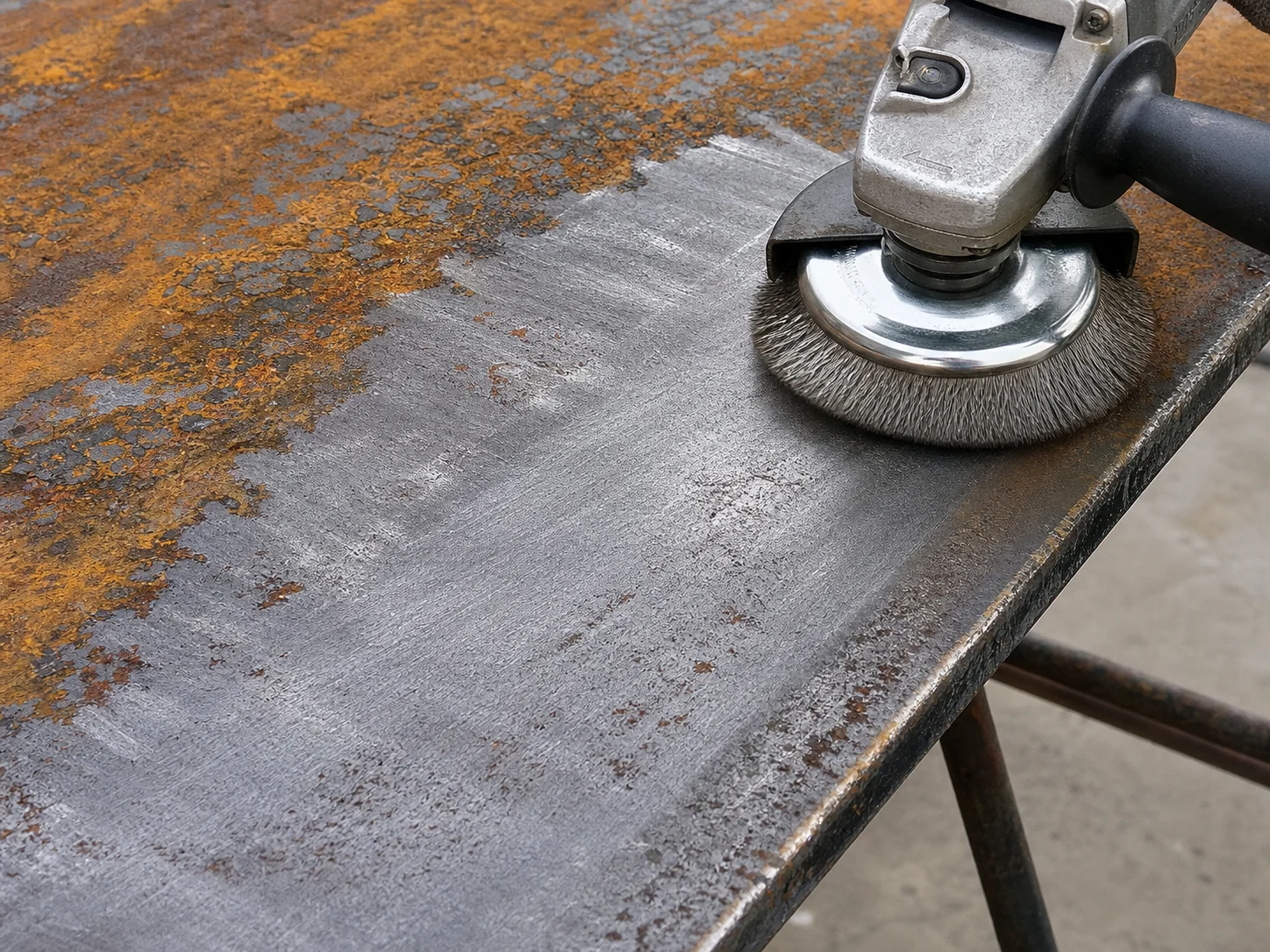
A wire wheel brush is a circular brush made of metal wire bristles that are secured around a central hub. When spun by an angle grinder or drill, the bristles strike and scrape a surface to remove rust, paint, scale, slag, or other bonded residues. The brush is designed for aggressive cleaning on metal and other hard materials, and it comes in different wire types, diameters, and stiffness levels to match the task.
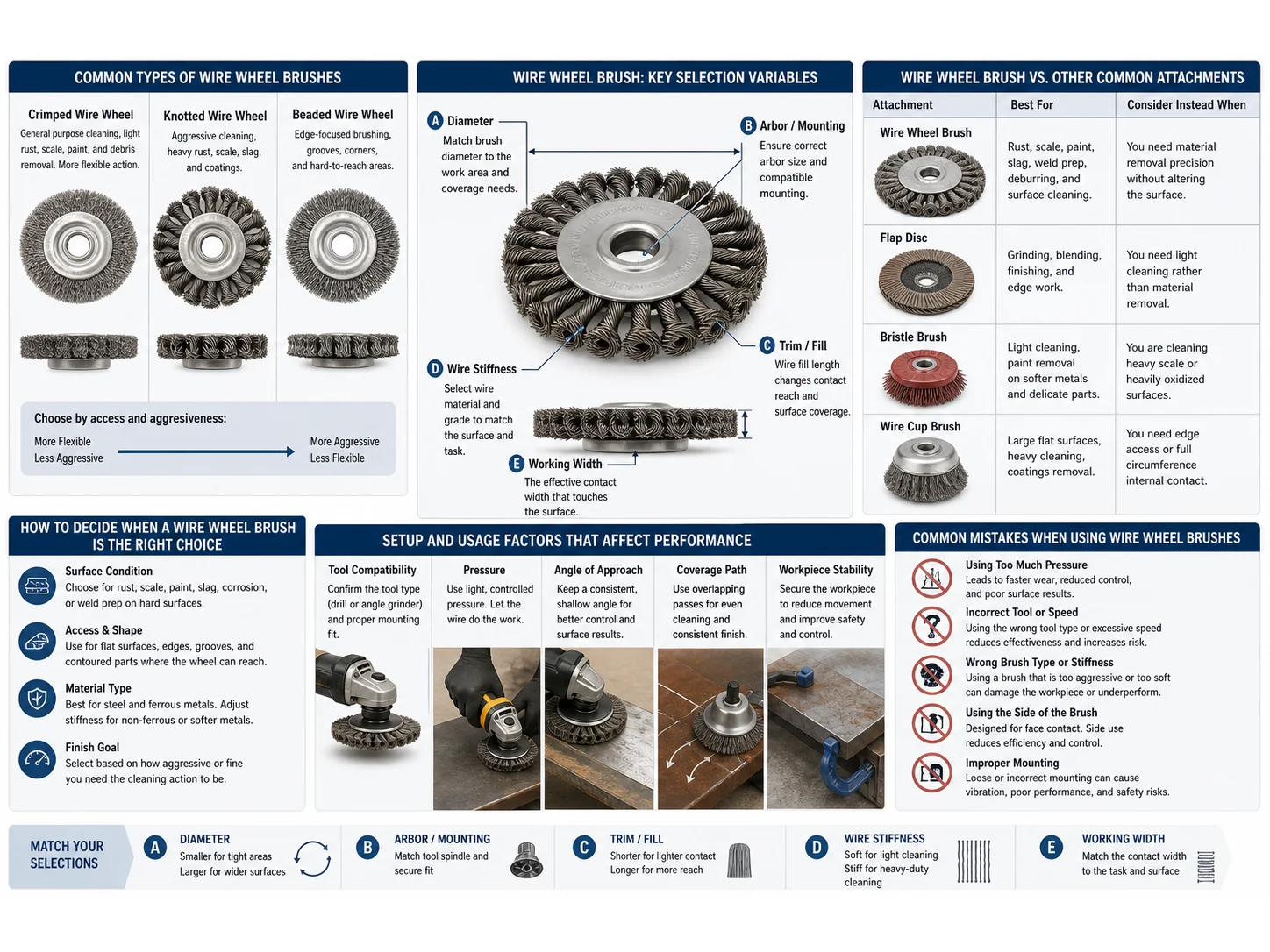
Common Types of Wire Wheel Brushes
Before deciding, it helps to understand the standard variations available for angle grinders and drills:
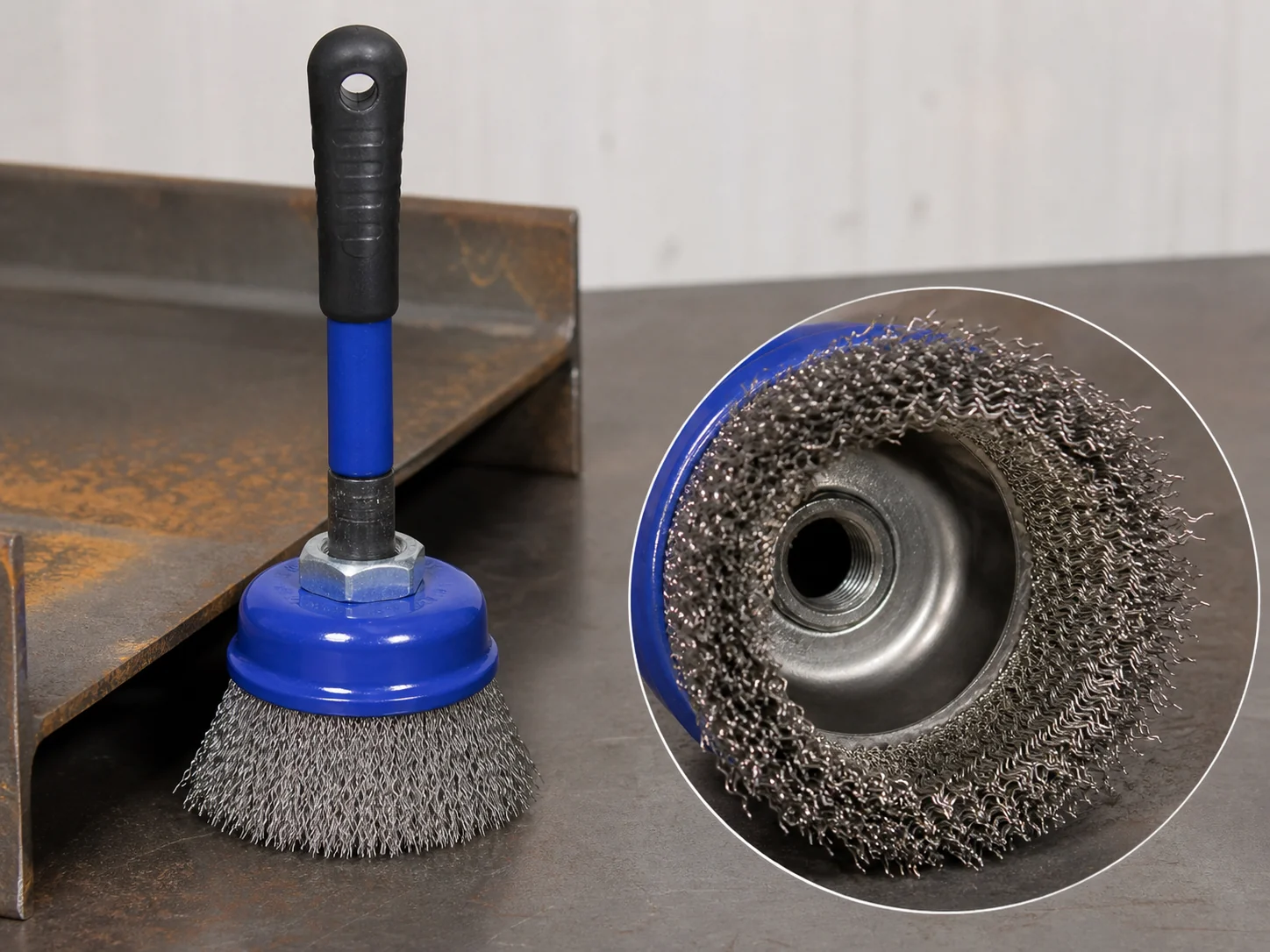
- Crimped wire wheel: Bristles are pre-formed with a wavy pattern. They are more flexible and produce a softer scrubbing action. Good for light to medium rust removal, paint stripping, and surface blending on softer metals.
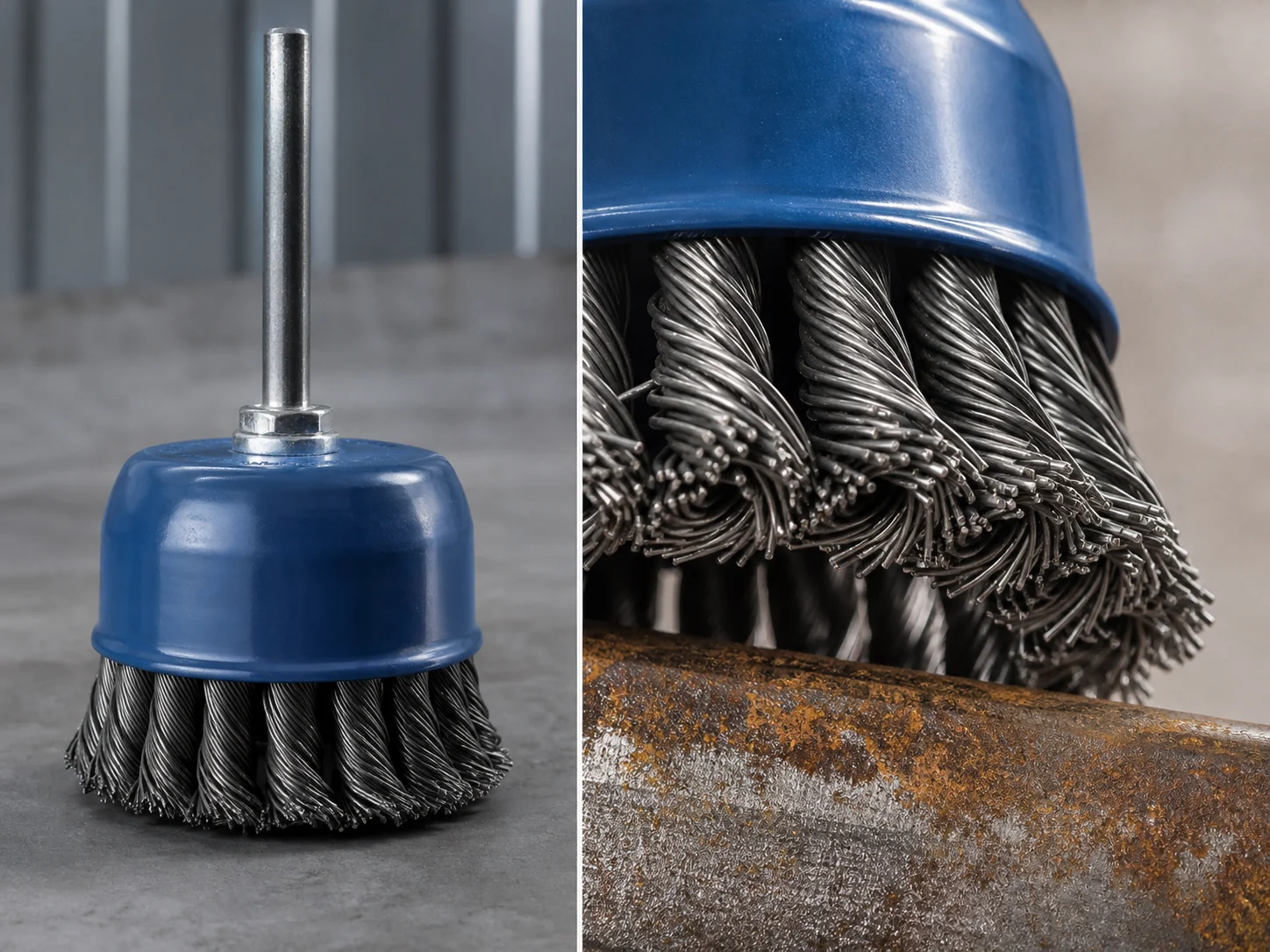
- Knotted twisted wire wheel: Straight wire strands are twisted together in small bundles to create a much stiffer, more aggressive cut. Suitable for heavy rust, thick scale, and weld spatter on steel.
- Fine wire wheel: Uses thinner gauge wire for lighter touch work. Often chosen when the part must not be scratched deeply or when cleaning delicate alloys.
- Wire cup brush: Instead of a flat wheel, the bristles are arranged in a cup shape. This design works better for larger flat surfaces, corners, and edges. Cups are available in crimped and knotted styles.
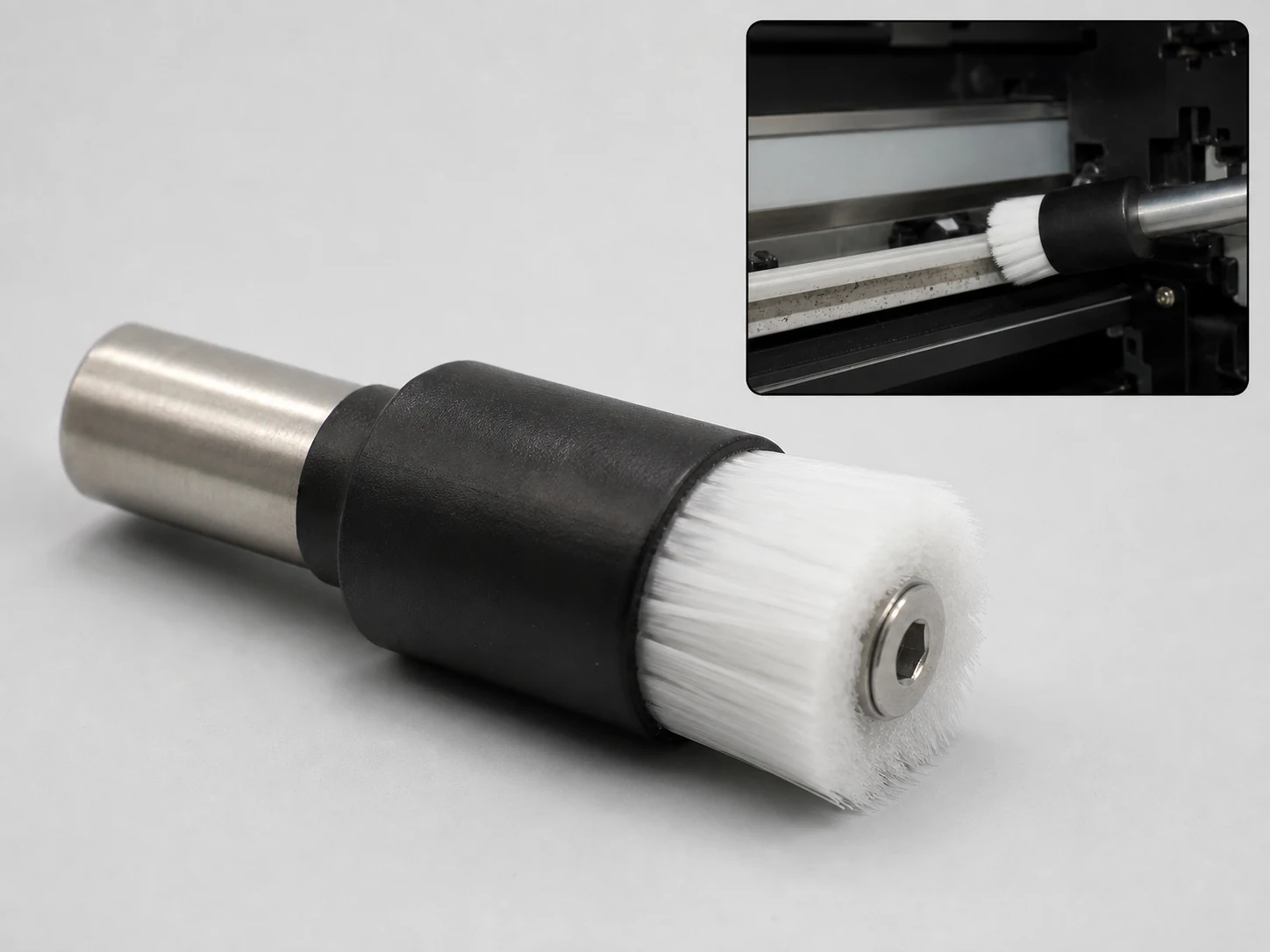
- End brush: A smaller brush that mounts like a drill bit. It reaches into bores, holes, and tight spaces where a full wheel cannot fit.
Wire Wheel Brush vs. Other Common Attachments
The table below compares a wire wheel brush for angle grinder with other popular attachments you might consider for the same tool.
| Attachment | Best for Removing | Typical Surface Compatibility | Level of Aggressiveness | Finish Left Behind |
|---|---|---|---|---|
| Wire wheel brush | Rust, paint, scale, slag | Hard metals, heavy steel | High (knotted) / Moderate (crimped) | Scratched, textured |
| Wire cup brush | Similar to wheel brush but on larger flat areas | Steel, iron, welds | High (knotted) / Moderate (crimped) | Scratched, textured |
| Nylon abrasive brush | Light rust, oxidation, thin coatings, light deburring | All metals, including aluminum and stainless | Low to moderate | Satin or brushed, no deep scratching |
| Flap disc | Stock removal, blend welds, shaping | Steel, stainless, aluminum | Depending on grit; can be very aggressive | Grained, can be refined with grit sequence |
| Chemical stripper | Paint, coatings without dust | All materials, if chemistry is compatible | No mechanical profile | Original, unchanged if used correctly |
How to Decide When a Wire Wheel Brush Is the Right Choice
Ask these questions before selecting a wire wheel brush:
- Residue type and thickness: Is the layer heavy rust, thick mill scale, or just light surface oxide? Knotted brushes handle heavy encrustations; crimped are better for medium removal. For light film or cosmetic cleaning, a nylon brush may be more appropriate.
- Base material and surface sensitivity: Hardened steel tolerates aggressive wire brushing. Aluminum, brass, stainless steel, or coated surfaces can be badly scratched or contaminated by residual steel wire particles. If you cannot tolerate a scratched finish or embedded rust potential, choose a material-specific wire (stainless, brass) or a non-metallic alternative.
- Equipment interface: Angle grinders spin faster (often 10,000–12,000 RPM) and deliver more torque than drills. A wire wheel brush designed for a drill may disintegrate at grinder speeds. Always verify the brush’s maximum safe RPM is above your tool’s no-load speed, and check arbor size (5/8″-11 threaded for many grinders, or a straight shank for drill chucks).
- Wet or chemical environment: Wire brushes can be used with water or solvents, but prolonged exposure to aggressive chemicals may degrade the brush material. Stainless wire resists corrosion better than carbon steel. In food or pharmaceutical settings, hygiene requirements may forbid exposed wire and favor nylon or encapsulated brushes.
- Hygiene expectations: In industries where wire bristle loss is a contamination risk (food processing, medical devices), a wire wheel brush is rarely the right choice. Use abrasive-impregnated nylon or non-shedding alternatives.
- Maintenance frequency and operator skill: Wire wheels wear out and can throw bristles. If the tool will be used frequently by many operators, a more forgiving, longer-lasting nylon brush may reduce maintenance and safety incidents.
- Custom size or shape requirements: Standard diameters (4, 6, or 8 inches) may not fit into recessed areas. In that case, an end brush or a custom-sized wheel might be needed. Evaluate whether the standard product range covers your working dimensions.
Setup and Usage Factors That Affect Performance
Even the best brush will perform poorly if mounted or used incorrectly:
- Direction of rotation: Many wire wheels are directional because of the twist pattern. Running them backward reduces cutting action and can damage the bristles. Match the arrow on the brush to the spindle rotation.
- Guard and safety gear: Always use the grinder’s guard. Wire bristles can fly off at high speed, causing serious injury. Full face shield, heavy gloves, and durable clothing are mandatory.
- Speed control: An angle grinder with variable speed lets you dial down RPM for finer work with crimped wheels, improving control and bristle life. Full-speed grinding with a knotted wheel is for fast heavy removal.
- Pressure and technique: Let the wire tips do the work. Excessive pressure bends bristles, generates heat, and shortens brush life. Move the brush steadily across the surface; dwelling in one spot may gouge or polish the metal unevenly.
Common Mistakes When Using Wire Wheel Brushes
- Using steel wire on aluminum or stainless steel unless it is dedicated stainless wire. Carbon steel particles can embed and later rust, ruining the workpiece.
- Mounting a brush with a lower RPM rating than the tool. Check the label: a common maximum is 12,500 RPM for 4-inch brushes, but always verify.
- Choosing by cost drivers or size alone. A low-cost brush may have uneven wire distribution, causing vibration, poor finish, and fast wear.
- Skipping the test piece. Always test on scrap material to gauge aggressiveness and finish before working on valuable parts.
- Ignoring bristle loss risks. In confined assemblies (engines, hydraulic components), loose bristles can cause catastrophic failure. Use alternative cleaning methods in such cases.
- Using a drill for a grinder-rated brush. Drills typically have lower RPM and may not provide enough surface speed for effective cutting, while the arbor may not fit securely in a chuck.
When a Wire Wheel Brush Is the Wrong Choice
A wire wheel is a powerful mechanical cleaner, but it has clear limits:
- Smooth, polished finish is required: Wire brushes scratch. If the final surface must be smooth or mirror-like, follow up with flap discs, abrasive belts, or buffing wheels.
- Thick flexible coatings: Rubbery coatings or thick underbody sealants can load up a wire wheel quickly. A heat gun or chemical stripper may work better.
- Delicate or precision components: Parts with tight tolerances, thin walls, or soft seals should not be wire-brushed. Vibratory finishing or chemical cleaning may be safer.
- Hygienic or food-contact surfaces: Any risk of bristle entrapment makes wire wheels unacceptable. Use FDA-compliant cleaning media.
- Non-standard dimensions: If your workpiece has deep holes, internal threads, or complex geometries that a standard wheel cannot reach, consider a custom brush design or a completely different method like ultrasonic cleaning.
- When a sample test or supplier drawing review is required: In high-risk applications, don’t rely on catalog specs alone. Request a sample brush and run a controlled trial. If the shape is critical, have the supplier review a drawing to confirm the brush will access all required areas.
Final Takeaway: Matching the Brush to the Task
A wire wheel brush for angle grinder is the right choice when you need fast, aggressive removal of rust, scale, or paint from hard metal surfaces and can accept a scratched, textured finish. Choose crimped wire for lighter cleaning on mixed metals, knotted wire for heavy steel work, and consider a stainless or brass wire wheel if contamination is a concern. Always check RPM compatibility, arbor fit, and safety gear. For delicate, hygienic, or tight-tolerance work, a nylon brush, chemical process, or custom cleaning solution is often the safer bet.
Frequently Asked Questions
Can I use a wire wheel brush on a drill instead of an angle grinder?
Yes, but only if the brush is designed for the lower RPM and arbor type of a drill. Many wire wheel brushes for angle grinders have a threaded arbor (5/8″-11) that will not fit a standard drill chuck. Also, a drill may not spin fast enough to achieve efficient cleaning with larger wheels. Check the brush’s recommended tool type and RPM range.
What is the difference between a wire wheel brush and a wire cup brush?
A wire wheel brush has a flat, circular shape and works best on edges, corners, and small irregular surfaces. A wire cup brush has bristles arranged in a cup configuration, making it more effective on large flat surfaces. Both come in crimped and knotted styles and serve similar cleaning functions, but the working angle and surface contact area differ.
How do I know if I need a crimped or knotted wire wheel?
Choose crimped for lighter cleaning, thinner coatings, and when you want to avoid heavy scratching. Knotted (twisted) wire brushes are much more aggressive and are intended for thick rust, mill scale, and tough weld spatter. If you are unsure, test a crimped brush first—you can always step up to knotted if it is too slow.
Will a wire wheel brush remove concrete or mortar from a metal surface?
Wire wheel brushes are designed for metal surfaces. While a knotted brush may chip off some concrete splash, it will wear rapidly and may embed steel particles into the cement residue. For concrete removal, a diamond cup wheel or chipping hammer is more appropriate.
Can I use a wire wheel brush on stainless steel without causing rust later?
Standard carbon steel wire will leave iron particles on the stainless surface, which can rust and initiate pitting corrosion. To avoid this, use a stainless steel wire brush dedicated only to stainless work. Even then, clean the surface thoroughly and passivate if required.
What size wire wheel brush should I get for a 4‑1/2 inch angle grinder?
The most common size is a 4‑inch diameter wheel, but always confirm that the brush’s maximum RPM rating is at or above your grinder’s no-load speed (typically around 11,000–12,000 RPM). Also verify arbor type: most 4‑1/2 inch grinders use a 5/8″-11 threaded spindle, but some use an M14 thread. Match the brush arbor to your tool.
How long does a wire wheel brush last?
Brush life depends on wire gauge, operating speed, applied pressure, and the hardness of the material being cleaned. A knotted brush on heavy steel may last several hours; a crimped brush used aggressively may wear out in under an hour. As bristles shorten and become uneven, replace the brush before performance drops or safety risks increase.
Technical References
- OSHA — Personal Protective Equipment
- World Stainless — Corrosion Resistance of Stainless Steels
- ASME — Y14.5 Dimensioning and Tolerancing
Which bristle material fits this job — Nylon PA, AISI 304 Stainless Steel Wire or Carbon Steel Wire?
| Material | Continuous temperature (°C) | Peak temperature (°C) | Water absorption | Hardness |
|---|---|---|---|---|
| Nylon PA | 93 | 121 | 0.3–9% by PA grade and conditioning | Medium to firm; filament diameter and trim length control bending force. |
| AISI 304 Stainless Steel Wire | 400 | 500 | 0% | Rockwell B 70–95 depending on temper and cold work |
| Carbon Steel Wire | 200–300 | 350–450 | 0% | Rockwell C 40–60 |
| Brass Wire | 150–200 | 250–300 | 0% | Rockwell B 40–90 |
| AISI 316 Stainless Steel Wire | 400 | 500 | 0% | Rockwell B 70–95 depending on temper and cold work |
Figures as published by Brushtec / DuPont; Alleima. Confirm the exact grade against the supplier datasheet before ordering.
What should replace Wheel Brushes for end brush?
- Wheel Brushes — Wheel brushes give narrow edge contact; cup brushes cover a broader open face, while end brushes concentrate contact at the end of a small stem for recesses.
- Cup Brushes — Cup brushes cover a broader face than wheel brushes; end brushes are better for small recesses or pockets where the cup body blocks access.
- End Brushes — End brushes concentrate contact at the end of a small stem; wheel brushes work along a longer edge and cup brushes cover a broader open face.
- Nylon PA — Compare Nylon PA with PP, PBT, PET. Change material when wet stiffness, temperature, chemical resistance, conductivity, particle shedding, or surface marking becomes the limiting factor.