
Custom Cleaning Brush
Espresso Group Head Cleaning Brush
Custom espresso group head cleaning brushes in 51, 54, and 58 mm sizes with nylon PA, PBT, and microfiber contact for shower screens, gaskets.
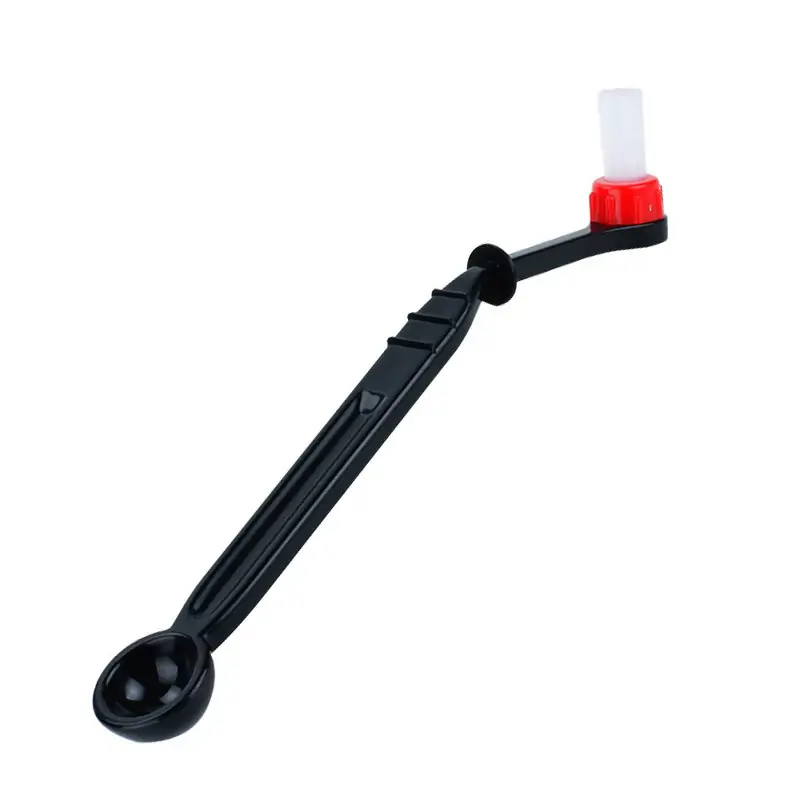
Small brush
500 pcs
Minimum order
Held in one hand: tube, bottle, detail and swab brushes — including long-handled ones with a small head.
Production lead time, once the specification is confirmed
- Up to 500 pcsWithin 7 days
- 501–50,000 pcsWithin 14 days
- Over 50,000 pcsWithin 21 days
Peak season can extend these times; the shipping date is confirmed in writing with your quotation. Sampling and shipping are quoted separately.
An espresso group head cleaning brush built for daily removal of coffee grounds, coffee oils, and compacted residue from commercial group heads, shower screens, gaskets, and portafilter locking channels. Head widths are matched to 51 mm, 54 mm, and 58 mm group head diameters so the brush cleans the full dispersion area without missing the edges where buildup causes leaks.
What can this brush do for you?
Clean the full shower screen in one or two turns
Head width is selected to match the group head portafilter diameter. The filament pattern is arranged across the face and outer edge, so rinsing under the group while rotating the brush lifts loose grounds and oily residue from the whole shower screen instead of leaving a ring of buildup at the perimeter.
Dig coffee out of the gasket channel and locking recess
Ground coffee packs into the groove behind the group gasket and into the channels where portafilter ears lock in. A short, directional perimeter bristle section reaches into these recesses without forcing the operator to remove the gasket every day. That reduces seal wear from repeated prying.
Lift coffee oil instead of spreading it
The optional microfiber wiping strip or pad follows the filament section and picks up the oily film left on the shower screen and group rim. A bristle-only brush loosens the film; the wiping surface removes it before the next shot. This matters in cafes where old coffee oils cause sour or bitter notes in the cup.
Stand up to hot rinse water and daily detergent contact
Nylon PA and PBT filaments maintain stiffness through repeated hot-water rinses and normal espresso machine detergent exposure. The handle and head materials are selected to tolerate the warm, wet environment around the group rather than absorbing water and softening during a shift.
Keep the operator hands clear of hot components
The extended handle positions the grip below the drip tray or to the side of the group while the head works against the shower screen. Short reach forces knuckles against the hot group or drip tray; the handle length options in this series move the hand into a safer work zone.
What is an Espresso Group Head Cleaning Brush?
An espresso group head cleaning brush is a hand tool used to clean the exposed lower face of an espresso machine group: the shower screen, dispersion area, group gasket, and the inner wall where the portafilter twists into place. It removes fresh and compacted coffee grounds, coffee oil residue, and detergent film left after routine cleaning.
In use, the operator holds the brush against the group head and rotates it with a light scrubbing motion while rinsing with hot water from the machine. The bristles dislodge residue; the wiping element absorbs oil. This is done during closing procedures, between deep clean cycles, or before replacing a shower screen or seal.
This brush works on the accessible group surfaces. It does not brush inside the boiler, valves, or solenoid, and it is not a substitute for backflushing the machine with approved detergent. It is selected when the job is to keep group surfaces clean enough that deeper chemical cleaning can do its work instead of being wasted on packed grounds.
Technical Specifications
Stock configurations cover common commercial group head sizes. The table shows typical values; dimensions can be adjusted to your machine geometry.
| Parameter | Value / Options |
|---|---|
| Head width / diameter | 51 mm, 54 mm, 58 mm — selected to match the group head portafilter diameter |
| Working head length | 20–55 mm, matched to gasket recess depth and shower screen clearance |
| Overall length / reach | 145–260 mm, selected by machine layout and operator preference |
| Grip / body diameter | 12–32 mm, depending on handle profile and gloved-hand use |
| Filament material | Nylon PA6/PA66, PBT, or blended filament for oil resistance and stiffness |
| Filament diameter | 0.10–0.30 mm, thinner for softer wiping, thicker for gasket-channel scrubbing |
| Wiping element | Optional microfiber strip or pad integrated into the head or handle |
| Backing / ferrule material | PBT, PP, or stainless steel, selected for hot, wet group environment |
| Handle material | PP, ABS, wood, stainless steel, or overmolded grip per project |
| Working temperature | Continuous use up to 80 °C (176 °F); brief contact with hotter rinsed surfaces |
| Brush type | Custom Handheld Detail Brushes |
| How it is driven | Hand-guided |
| Cleaning target | commercial espresso bar and cafe chain, coffee equipment service and maintenance team, and qc station cleaning |
| Surface or part | shower screens, channel, edges, trays, recesses, pads, walls, and bars |
| Residue or debris | coffee, oil, coffee oil, coffee grounds, detergent film, and scale |
| Mounting / connection | Fixed / Replaceable Head |
Head width is the first fit check: pick a width that covers the shower screen and gasket channel without wedging in the portafilter recess. Working head length must be long enough to reach into the gasket pocket but short enough to rotate freely under the group.
Where does this brush work best?
-
Commercial espresso bars and cafe chains — daily group cleaning during open and close, with repeated use across shifts on hot machines. The brush fits standard 58 mm commercial groups and reaches the drip tray area when the portafilter is removed.
-
Coffee equipment service and maintenance teams — preparing group heads before gasket replacement, cleaning behind shower screens, and removing residue that blocks water flow.
-
Roasteries, training labs, and QC stations — keeping groups neutral between different coffees so old oil does not carry over into the next shot.
-
Espresso machine manufacturers and importers — supplying a matched cleaning brush as part of the machine accessory kit or spare parts catalog.
-
Distributors and cleaning-kit suppliers — bundling the brush with backflush detergent, blind baskets, and microfiber cloths for a complete group maintenance set.
How do I choose the right one?
Match head width to the group, not just the shower screen
Commercial espresso machines commonly use a 58 mm portafilter diameter, but 54 mm and 51 mm groups appear on compact, home-style, and some older lever machines. If the head width is larger than the group locking diameter, the filament tips wedge against the inner wall and bend rather than scrub. If it is much smaller, the operator must work in multiple small circles and the perimeter gasket channel gets skipped.
Check the gasket recess depth before choosing working head length
Machines with a deep group recess need a longer working head to let filament tips get behind the gasket to the built-up coffee line. Machines with a shallow dispersion area and close shower screen need a shorter head so the brush can rotate without jamming against the dispersion screw. Select the shortest head that reaches the deepest recess you need to clean.
Choose filament stiffness by surface and residue
Softer nylon PA filaments are appropriate for chrome shower screens, coated dispersion plates, and daily oil removal. Stiffer PBT filaments give more edge pressure for hardened grounds in the gasket channel and around portafilter ears. Do not use wire or abrasive filaments on group surfaces; they can score chrome and produce scratches where coffee oils then stick even faster.
Decide whether you need a wiping element
If the brush will be used without a cloth after each shift, an integrated microfiber strip or pad saves a step. If the main problem is hard packed grounds and a separate towel is already part of the routine, an all-filament head may be easier to rinse and dry.
Select handle length for the actual workspace
A longer handle keeps the operator hand away from the hot group and drip tray, but gives less control in tight under-counter spaces. Measure from the group face to the location where the operator hand naturally sits, and choose a length that allows a wrist rotation without hitting the machine body, drip tray, or counter edge.
When another tool is the better choice
For internal cleaning of the solenoid and backflush path, use a blind filter with an approved espresso machine detergent — brushing cannot reach those passages. For steam wand tips, use a dedicated steam wand brush with a needle or narrow probe. For heavy mineral scale, you need a descaling procedure before brushing; no filament brush will remove hard scale mechanically.
Can I customize this brush?
Yes. Stock head widths are 51 mm, 54 mm, and 58 mm, but the brush can be built to your machine exact shower screen and gasket geometry. To define a custom configuration, provide the group head make and model, portafilter diameter, gasket recess depth, shower screen diameter, routine cleaning chemicals, and whether the brush will be used wet or dry. Photos or a technical drawing of the group face speed up the process.
Typical customization points include:
-
Head width and profile — custom diameter, flat, domed, or stepped face, and perimeter bristle sections to match unusual group shapes.
-
Filament configuration — PBT, PA6, PA66, blended or dual-diameter filaments, cut length, density, and trim pattern for specific scrubbing or wiping needs.
-
Wiping surface — integrated, replaceable, or position-specific microfiber pads, strips, or wipers.
-
Handle and grip — length, diameter, straight or ergonomic contour, overmold, hang hole, brand color, or laser-marked logo.
-
Construction interface — riveted, stapled, wrapped, or molded head attachment matched to your production and replacement cost targets.
-
Packaging — bulk cartons for service kits, individual hang-tag retail packs, countertop display boxes, or private-label program packaging.
If your project requires material documentation, food-safety declarations, inspection protocols, or third-party testing support, these can be addressed during the customization process.
Which filament survives the cleaning and still lasts on an espresso group head cleaning brush?
How do I confirm the brush head fits my espresso machine group?
Remove the portafilter and measure the inside diameter of the group where the portafilter ears lock. Choose the brush width that equals or is slightly less than this diameter — never larger. When the head is placed against the shower screen, it should rotate without the outer filament tips folding hard against the group wall.
Will the nylon or PBT bristles scratch my chrome-plated group head?
Nylon PA and PBT filaments are far softer than chrome and stainless steel, so normal scrubbing will not scratch the plating. Check that the brush has not picked up any hard debris or metal particles from the counter; a dirty brush can carry abrasives. Never substitute a wire brush for this tool.
How often should the brush be used in a commercial cafe?
Use it at minimum during the end-of-day group clean, and more often in high-volume or dark-roast-heavy operations where coffee oils build up within a single shift. If the shower screen loses its metallic look or the portafilter starts to bind against the gasket, the group is telling you the interval is too long.
Does brushing the group head replace backflushing with detergent?
No. Brushing cleans the accessible lower surface of the group only. It does not reach the internal dispersion path, valve area, or solenoid. Those passages still need the machine manufacturer backflushing procedure with an approved detergent.
How do I know when the brush is worn and should be replaced?
Replace it when the filament tips are permanently bent or fanned outward, when the gasket-channel section no longer holds its shape, or when the microfiber surface is saturated with old oil and no longer rinses clean. In a busy location, that is often three to six months of daily use.
Can I use the brush while the group head is still hot?
Brief contact with hot rinsed group surfaces is acceptable for the nylon and PBT filament materials, but do not let the handle sit against the boiler or steam components. Run a short water purge first to loosen surface residue, then brush. If the handle is uncomfortably hot to hold, the machine surface is too hot for operator safety.
Guides that go deeper on this
Custom Manufacturing RFQ
Describe Your Application
Send the key measurements, cleaning requirement, residue, material direction, mounting method, quantity, and drawing or photo.
Drawing or photo optional — it speeds things up, it does not gate the enquiry.
Custom Brush RFQ
Send Your Brush Project
Upload a drawing, product photo, or sample photo and provide the core dimensions and cleaning conditions.
“We need a brush to remove wet residue from a stainless steel conveyor, about 800mm wide. The current brush wears quickly. We can send photos.”
“We sell drinkware and need a cleaning brush to include with the product. Quantity around 5,000 pieces.”