
Custom Cleaning Brush
Flour Sifter Brush
Filament diameter and tip profile set against the screen aperture, so blinding fines come out of wire mesh and wedge wire without deforming the cloth.
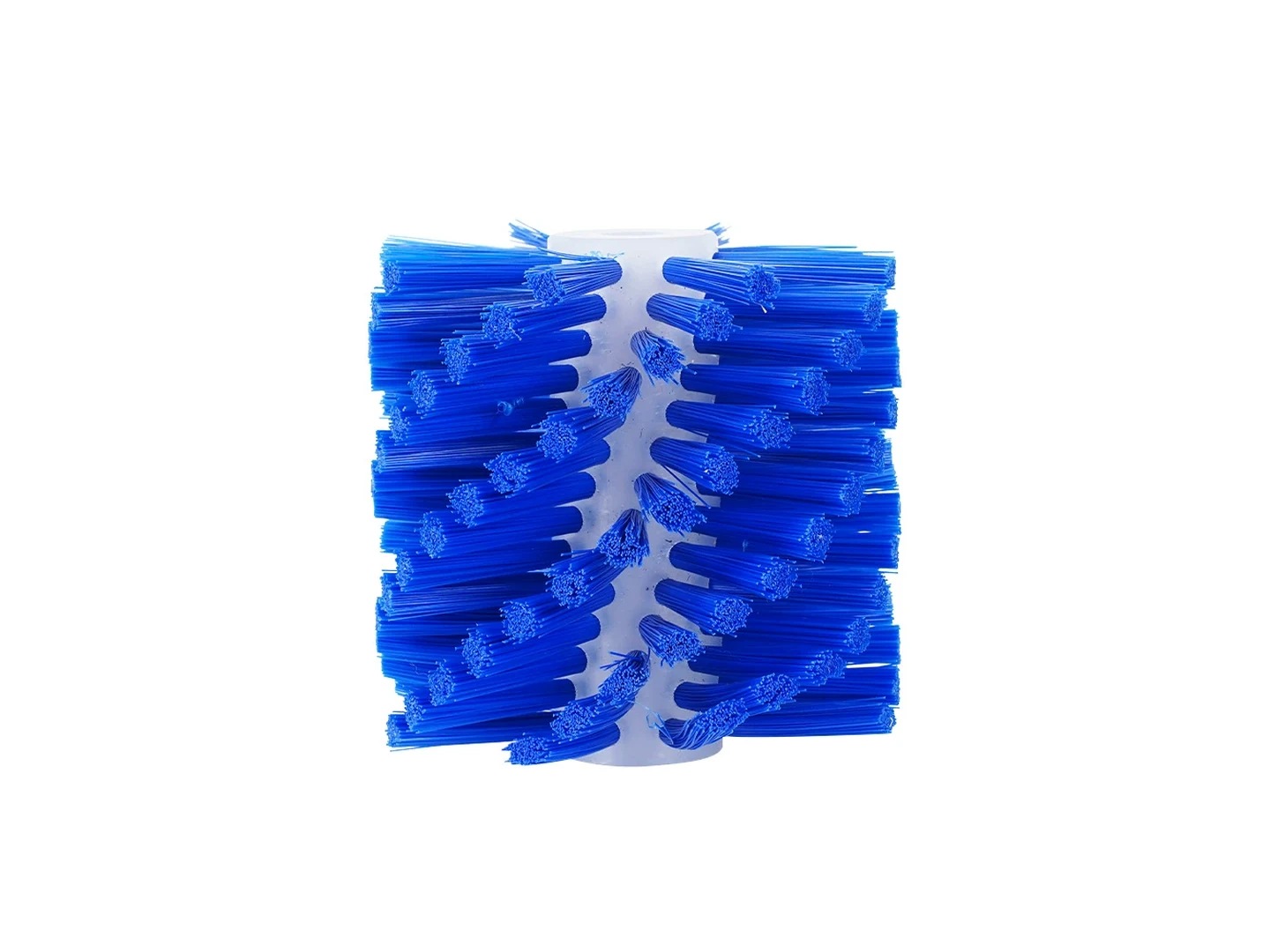
Medium brush
100 pcs
Minimum order
Worked with two hands or on a pole: chimney, gutter and pond-filter brushes, discs, cups and tank brushes.
Production lead time, once the specification is confirmed
- Up to 100 pcsWithin 7 days
- 101–5,000 pcsWithin 14 days
- 5,001–50,000 pcsWithin 21 days
- Over 50,000 pcsConfirmed with your quotation
Peak season can extend these times; the shipping date is confirmed in writing with your quotation. Sampling and shipping are quoted separately.
A filament brush built to order for clearing blind-screen fines, fibers, powder, and wet residue from wire-mesh, perforated-plate, and wedge-wire sifter screens used in flour milling and powder processing lines. It can be supplied as a hand brush, a machine-mounted strip or roller, or a shaped detail head to match the screen access point and cleaning routine.
What can this brush do for you?
Unblinds wire-mesh screens without deforming the cloth
Filament diameter, tip profile, and flex are set against the screen aperture and wire diameter. The bristle tips enter apertures and roll or push the blinding particle free instead of striking the wire at a raking angle. That keeps fine mesh open and flat rather than creating bright wear lines or bent wires that turn a cleaning tool into a screen-replacement order.
Reaches particles that sit below the cloth face
Flour dust and fibrous fines often pack into the openings, not just across the top. A cloth wipe moves the top layer, but only a correctly sized filament tip reaches into the aperture. The same fill logic works on wedge-wire slots and perforated holes, where embedded pellets or fibers need tip contact below the surface line.
Covers both planned and continuous cleaning
The brush can be supplied as a hand brush for sanitation shifts and unscheduled blinding, or as a strip, roller, or shaped element that mounts inside the sifter and cleans the screen during normal rotation or vibration. That lets mills use the same filament specification for operator tools and machine-integrated brushes instead of sourcing two disconnected products.
Holds its fill behavior in flour-mill conditions
PP is the standard where humidity and wet washdown are present, nylon PA handles dry high-wear service, and PBT can be specified for heated washdown and higher-temperature sifter environments. Filament, backing, and handle materials are matched as one system so the brush does not soften, swell, or lose stiffness after the first sanitation cycle.
What is a Flour Sifter Brush?
A Flour Sifter Brush is a filament brush engineered to clean the screening surface of a flour sifter. It may be used by hand on a removed or open screen frame, or installed as a machine-mounted strip or roller that runs against a rotating or vibrating screen. The surfaces it contacts include wire mesh, perforated plate, wedge wire, basket screens, and the frame areas around them.
Unlike a general-purpose bench or cleaning brush, every load-bearing detail is selected for the sifter: filament diameter relative to aperture, trim length, density, backing shape, and the way the brush is held or mounted. In a plansifter, the brush clears the sieve frame between runs and before inspection. On a rotary or vibratory machine, a strip or roller can ride under the screen and push blinded material back into the product flow. Hand brushes are usually worked across the screen in short strokes with the filament tips entering the openings.
This is a filament brush, not a wire brush or a scraper. It is the appropriate tool when the priority is keeping the screen open without cutting the mesh. If the equipment uses ball or ring cleaners, the brush is a separate cleaning device and must be installed in its intended position.
Technical Specifications
The values below are the specification areas we set for each order. Hand brushes, strips, rollers, and detail heads are all dimensioned to your sifter model rather than supplied from a fixed-size chart.
| Parameter | Standard / options |
|---|---|
| Brush form | Hand brush, flat strip, cylindrical roller, or shaped detail head |
| Filament material | PP (polypropylene), nylon PA, and optional PBT |
| Filament diameter | 0.15–0.60 mm for fine wire mesh; 0.50–1.00 mm for perforated plate and wedge wire |
| Trim length | 12–40 mm, set by aperture size and screen deflection |
| Fill density and pattern | High-density fill for fine mesh; spaced rows, spiral, or angled patterns for coarse screens and roller brushes |
| Backing / handle | PP, PA block, sealed wood, aluminum carrier, or stainless steel for washdown duty |
| Mounting interface | Hand grip, brush arm slot, threaded insert, or roller shaft end per sifter model |
| Overall dimensions | Made to the screen frame, roller length, or operator reach; no universal default |
| Continuous working temperature | PP up to 60 °C; nylon PA up to 80 °C; PBT up to 100–120 °C, depending on duty cycle |
| Moisture / chemistry exposure | PP preferred for humid or wet washdown; PA for dry high-wear service; PBT for heated washdown |
| Brush type | Custom Handheld Detail Brushes |
| How it is driven | Hand-guided |
| Cleaning target | rotary sifter, plansifter sieve frame and drawer screen, and hand-cleaning station cleaning |
| Surface or part | screens, sifters, roller, frames, perforated plate, baskets, wedge wire, and wire mesh |
| Residue or debris | flour, fiber, wet residue, powder, dust, fines, and pellets |
| Mounting / connection | Hand grip, brush arm slot, threaded insert, or roller shaft end per sifter model |
Where does this brush work best?
The brush is selected where sifter performance is limited by screen blinding rather than by worn or damaged cloth. Typical uses include:
- Vibratory, gyratory, and rotary sifters in flour mills where fine flour, dust, and bran fibers reduce throughput as the mesh loads.
- Plansifter sieve frames and drawer screens that need clearing during roll changes, inspection, or sanitation.
- Perforated plate and wedge-wire screens in scalpers, pre-cleaners, and graders where pellets, fibrous material, or wet residue wedge into openings.
- Basket screens and drum sifters where a curved or roller-type brush contacts the underside of the screen and lifts blinded material back into the flow.
- Hand-cleaning stations for screen frames removed from the sifter, including small-batch and test sifter cleaning in laboratory or quality-control settings.
How do I choose the right one?
Choose the brush by working from the screen, not from the sifter model alone. Four decisions usually matter most.
1. Match filament diameter to the aperture and wire
Measure mesh count, aperture width, and wire diameter. A filament tip must enter the aperture cleanly without levering against the wire. If the wire is thin or the mesh is fine, use fine PP or PA filament; if the screen is coarse perforated plate or wedge wire, use larger, stiffer filament that can move heavier material.
2. Determine whether the brush is hand-held or machine-mounted
Hand brushes solve periodic and access-limited cleaning. Machine-mounted strips and rollers keep the screen open continuously but must fit the holder geometry, sweep direction, and screen speed. Send the old brush, a holder drawing, or the sifter manual when ordering a replacement.
3. Select the filament system for moisture and wear
PP is the first choice where humidity, wet cleaning, or chemical washdown is normal. Nylon PA gives better flex fatigue resistance in dry, abrasive flour service but absorbs moisture, so it is not ideal where the brush sits wet. PBT offers higher stiffness retention and better heat resistance when hot washdown or drying cycles are involved.
4. Set density and trim to the residue behavior
Fine dry dust on fine mesh needs fine, dense, short trim so the tips enter the apertures. Wet, fibrous, or coarse residues need longer, more widely spaced filaments that release material instead of packing it between rows. If the residue is hardened, caramelized, or mineralized, the brush should be used after soaking, steam, or CIP, not as the sole removal step.
| Condition | Recommended configuration |
|---|---|
| Fine wire mesh with dry powder blinding | Fine-gauge PP or PA, 0.15–0.30 mm, short dense trim |
| Medium mesh with flour and bran | PP or PA, 0.30–0.50 mm, standard trim |
| Coarse perforated or wedge wire | PA or PBT, 0.50–1.00 mm, longer spaced trim |
| Wet or chemical washdown | PP filament with PP or stainless backing |
| Continuous high-wear machine service | Nylon PA or PBT strip/roller with indexed replacement plan |
| Manual offline cleaning | Hand brush with ergonomic grip and hanging hole |
Do not use a flour sifter brush on mesh that is already cut, baggy, or mechanically damaged; replace the screen first. If the deposit is hard scale, burned-on sugar, caramelized protein, or crystalline buildup, use the appropriate washdown or chemical method first. For ultrafine mesh, confirm with the screen supplier that mechanical brushing is acceptable before setting filament size.
Can I customize this brush?
Yes. Flour sifter brushes are configured to the screen and the sifter, and almost every dimension can be adjusted. To define the build, provide the sifter model or a drawing, mesh count or aperture, wire diameter, screen material, cleaning side, residue type, moisture and temperature conditions, and whether the brush is hand-held or machine-mounted. A used brush or a spare screen sample accelerates matching.
Filament system
- PP, nylon PA, or PBT filament; diameter, stiffness, density, trim length, and row pattern
- Trim profiles for flat, curved, or corrugated screens; angled or spiral patterns for roller brushes
Head and roller geometry
- Flat strips, shaped blocks, curved heads, cylindrical rollers, and detail tips for wedge-wire slots
- Width, length, and diameter built to the screen frame or holder rather than to a fixed size chart
Backing, handle, and mount
- PP, PA block, sealed wood, aluminum, or stainless steel backing
- Straight or ergonomic hand grips, hanging hole, color coding, or recessed branding area
- Hand grip, brush arm slot, threaded insert, or shaft end interface to match the machine
Marking and packaging
- Custom color, pad print, laser marking, or identification coding for shift and zone control
- Bulk cartons, individually wrapped brushes, or project-specific packing for storeroom and replacement kits
If your project requires material documentation, incoming inspection support, or third-party testing for a particular market or audit requirement, those items can be addressed during customization before the production run.
How is a flour sifter brush mounted, and how long does it last?
How can I tell whether the filament will damage my mesh?
Test the brush on a spare screen section or an edge area under the same pressure and stroke angle you would use in production. Inspect the wires under light or magnification. Straight, evenly spaced wires with no bright wear points indicate the filament diameter and stiffness are safe. Wavy, bright, or shifted wires mean the filament is too stiff or too large for that mesh.
Which side of the screen should a machine-mounted brush ride on?
Usually the underside of the screen, so the brush pushes blinded material back into the product stream. Hand cleaning is often done from the product side during sanitation. Follow the sifter manufacturer’s instruction; brushing from the wrong side can pack particles deeper into apertures or interfere with ball and ring cleaners.
Can a brush replace the sifter’s ball or ring cleaners?
Not automatically. Balls and rings deliver impact energy; brush strips deliver constant contact and are often better for dry fine blinding. On wet or sticky product, a brush can drag or load up. If the machine is designed for both systems, keep each device in its designed position and test throughput rather than swapping one for the other.
How do I know when to replace a machine-mounted sifter brush?
Watch for flattening fill, tips bending away from the mesh, gap rows from broken filaments, or any sign that the backing or holder is contacting the screen. If blinding returns quickly after a cleaning pass or throughput begins to fall at the same product rate, measure the remaining trim length and compare it with the commissioning dimension. Replace before the backing touches the cloth.
What should I check before hand-brushing a screen removed from service?
Lock out the sifter if it is still mounted. Remove loose debris with a vacuum or soft cloth first, then brush with short push-and-lift strokes at a low angle. Never rake hard across fine mesh. After cleaning, inspect for deformed or bright wires and re-install only after the screen and frame are dry and in correct alignment.
Does dry brushing remove allergen or gluten residue?
It removes visible powder and particles, but it does not provide allergen cleaning validation. If the target is gluten or allergen removal, combine brushing with the facility’s wet washdown, flushing, and verification sampling procedure. Brushing is a physical step inside a larger sanitation process, not a substitute for validated cleaning.
Guides that go deeper on this
Custom Manufacturing RFQ
Describe Your Application
Send the key measurements, cleaning requirement, residue, material direction, mounting method, quantity, and drawing or photo.
Drawing or photo optional — it speeds things up, it does not gate the enquiry.
Custom Brush RFQ
Send Your Brush Project
Upload a drawing, product photo, or sample photo and provide the core dimensions and cleaning conditions.
“We need a brush to remove wet residue from a stainless steel conveyor, about 800mm wide. The current brush wears quickly. We can send photos.”
“We sell drinkware and need a cleaning brush to include with the product. Quantity around 5,000 pieces.”