
Custom Cleaning Brush
Grain Polisher Brush
Replace or specify grain polisher brush rollers with nylon PA filament in 100–2500 mm widths, 60–300 mm OD, and segmented or helical construction.
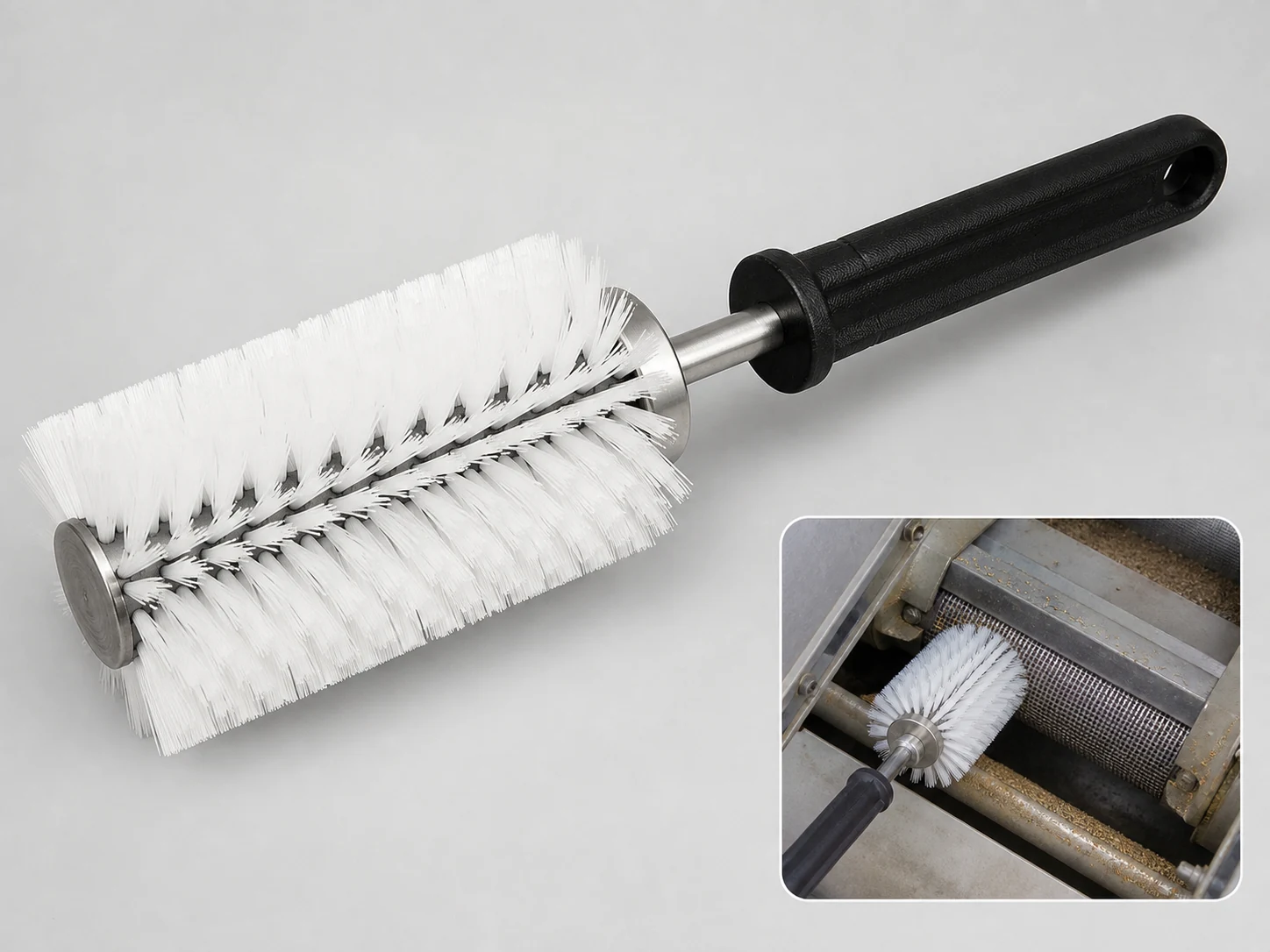
Large-format brush
100 pcs
Minimum order
Built one at a time on a core or channel: full-width rollers, sweeper brooms and long strip.
Production lead time, once the specification is confirmed
- Up to 100 pcsWithin 20 days
- 101–1,000 pcsWithin 30 days
- Over 1,000 pcsConfirmed with your quotation
Peak season can extend these times; the shipping date is confirmed in writing with your quotation. Sampling and shipping are quoted separately.
A rotary nylon brush roller for grain and rice polishing machines that sweeps bran, husk fines, and loose surface dust from kernels inside the polishing chamber while protecting head rice yield and keeping the polishing screen clear.
What can this brush do for you?
Lifts bran and fines without cutting into the kernel
The nylon PA filament tips contact the kernel surface with a sweeping action rather than a grinding one. Filament diameter, free trim length, and engagement are selected together so surface bran and powder are detached while pressure stays below the level that chips or cracks rice. That protects mill yield, especially on soft or parboiled grain.
Keeps the polishing chamber from loading up
Open filament spacing lets bran, husk fines, and loose powder pass through the brush and out of the contact zone instead of packing between the bristles. A loaded brush increases drive load, heats the grain, and blocks the screen. The open-fill layout keeps airflow and product movement steady through the full working width.
Follows a mixed-size grain stream
Each grain lot contains kernels of different length and thickness. The flexible filaments deflect independently and return, so contact pressure is distributed across the grain bed rather than concentrated on the largest kernels. The result is more uniform polishing across the entire batch.
Holds its shape in dry, dusty operation
PA nylon retains working stiffness and bend recovery in the heat and dust of a grain polisher, and it absorbs far less moisture than natural fiber fill. The filament ends stay upright and recover after deflection instead of matting down, so the brush keeps removing surface material hour after hour.
Runs full drum width without sag or whip
The core diameter, support spacing, and construction are matched to the machine width. On long polishing chambers, the brush is balanced to prevent mid-span flex and vibration that would change the brush-to-screen gap and cause uneven contact. Replaceable sections let a worn center section be changed without replacing the whole roller.
What is a Grain Polisher Brush?
A Grain Polisher Brush is a rotary cylindrical brush tool installed inside a grain or rice polishing machine. It rotates inside the polishing chamber and works with kernels moving along or around the brush, removing bran, husk fines, and surface powder after the grain has passed through whitening or friction stages. The bristles are made from nylon PA filament, and the roller is built on a steel or stainless core with a drive connection matched to the machine.
During operation, the filament tips contact the grain stream with a controlled engagement — typically 2–8 mm — and sweep the kernel surface. Removed fines fall away through the open fill pattern or are carried out with the air stream. The brush does not cut or grind the kernel the way an abrasive stone roll does; it finishes the surface by lifting loosely attached material and smoothing the visual appearance of the grain.
The exact fit depends on the polishing machine’s chamber diameter, drum length, screen gap, and drive arrangement. That is why this brush is supplied in a wide range of working widths, outside diameters, core sizes, and construction styles rather than as a one-size roller.
Technical Specifications
Working values below cover standard grain polisher brush rollers. The final configuration is matched to the machine model and grain type.
| Parameter | Value / Options |
|---|---|
| Working width | 100–2500 mm, matched to polishing drum length |
| Brush outside diameter | 60–300 mm |
| Core / shaft diameter | 25–180 mm |
| Free trim length | 15–80 mm |
| Filament diameter | 0.15–0.80 mm, selected by grain type and polishing stage |
| Filament material | Nylon PA (PA6, PA66, PA612 depending on moisture and duty) |
| Construction | One-piece core, replaceable section, helical strip, or tufted roller |
| Recommended engagement | 2–8 mm filament tip contact into the grain stream |
| Fill spacing | Open pitch for bran release, screen wash-through, and airflow |
| Core / drive | Steel, stainless steel, or aluminum; keyed, flanged, or project-specific end connection |
| Balance | Dynamically balanced for full-width operation at machine speed |
| Brush type | Custom Roller and Conveyor Brushes |
| How it is driven | Machine-driven, mounted in the equipment |
| Cleaning target | rice mill, vertical and horizontal rice polisher and grain, and other grain surface-cleaning line cleaning |
| Surface or part | roller, chambers, screens, drums, gaps, passages, and stone |
| Residue or debris | fines, dust, husk, and powder |
| Mounting / connection | Shaft-Mounted / Quick-Change Coupling |
Dimensions and materials can be adjusted to the machine. If an existing brush sample, machine drawing, or end connection detail is available, the replacement can be built to those references.
Where does this brush work best?
Grain polisher brushes are fitted in the polishing and whitening section of rice and grain processing lines. Typical installations include:
- Rice mills running a final brush-polishing passage after abrasive or friction whitening, where the brush lifts the remaining bran dust and improves kernel luster.
- Vertical and horizontal rice polishers and grain scourers that require a rotating brush roller to sweep the chamber and screen contact zone while grain passes through.
- Wheat, barley, and other grain surface-cleaning lines where the goal is light surface dust removal rather than aggressive de-branning.
- Parboiled rice polishing passages where kernel breakage must be kept low and a flexible brushing action is preferred over heavier abrasion.
- OEM and rebuild providers of rice milling equipment that need project-matched brush rollers with specified widths, diameters, and drive interfaces.
How do I choose the right one?
Start with machine fit, then match the filament to the grain and the polishing stage.
Measure the chamber, not just the old brush
Record polishing chamber internal diameter, drum length, screen position, shaft diameter, and end drive detail. The brush outside diameter must leave the correct gap to the screen. If the old brush is worn, its current diameter may be smaller than the original design, so reference the machine drawing whenever possible.
Match the filament diameter to the grain and polishing stage
- Fine filament (approx. 0.15–0.25 mm) for light finishing on white rice, parboiled rice, and soft grain where breakage is a concern.
- Medium filament (approx. 0.25–0.40 mm) for standard bran and fines removal after normal whitening.
- Heavy filament (approx. 0.40–0.80 mm) when the passage sees a thicker bran layer or the line speed is high and more aggressive sweeping is needed.
Set the free trim length for the grain bed depth
Deeper grain beds need longer trim so the tips still reach kernels near the screen side. Shorter trim gives a firmer, more controlled contact on shallow beds. Too much trim on a light polishing pass can whip or fold, and too little trim leaves the inner kernel stream untouched.
Pick the construction for the machine length and maintenance plan
One-piece core works well for shorter rollers. Segmented replaceable sections are better for long drums where the center wears first or where maintenance wants to rotate sections. Helical strip construction helps move product along the drum, while a tufted roller gives dense, even contact coverage when the polishing chamber requires it.
Confirm moisture and temperature at the polishing point
Standard PA6 and PA66 work in dry polishing. If the machine runs water-mist polishing or high moisture, nylon absorbs water and loses some stiffness; PA612 or stabilized nylon grades maintain closer performance. Report the line’s moisture and temperature range so the filament grade is selected correctly.
Know when a different tool is the right answer
A brush polisher is a finishing and surface-cleaning step. If the grain still carries hard husk, a heavy bran layer, or requires significant material removal, the passage needs an abrasive stone roller or friction-type whitener before the brush stage. For very high-temperature or continuous chemical exposure outside normal mill conditions, consider polyester/PBT or a different construction rather than forcing nylon to do the job.
Can I customize this brush?
Yes. Grain polisher brushes are normally built to the machine rather than supplied as fixed stock. Provide the machine model or drawing, chamber diameter, drum length, screen gap, shaft diameter, drive connection, grain type, feed rate, and moisture conditions. A sample or photo of the existing roller helps.
Adjustable options include:
- Working width and outside diameter, matched to the polishing chamber and screen gap.
- Core / shaft diameter, length, and end connection — keyed, flanged, hex, taper, or OEM-specific.
- Free trim length and filament diameter, selected for the grain type and polishing intensity.
- Fill material grade — PA6, PA66, PA612, or heat/moisture-stabilized nylon for the actual mill environment.
- Fill pattern and density — straight rows, spiral/helical winding, or tufted rows with open pitch for fines release.
- Construction — one-piece, segmented replaceable sections, or combination core with section replacement.
- Color, marking, and identification — custom filament color, laser-marked core, or section coding for rotation schedules.
- Packaging — bulk crate, individual protective wrap, or project-specific packing for export.
For projects that require material declarations, inspection reports, balance verification, or third-party testing support, we can assist as part of the project definition.
Which filament lasts longest on a grain polisher brush?
How can I tell when a grain polisher brush is worn enough to replace it?
Measure the brush outside diameter at several points along the drum and compare it with the original specification. When the free trim length has worn down by roughly 40–50%, or when the brush-to-screen gap has opened beyond the design value and bran is no longer being cleared, replace the brush or worn sections. Uneven diameter across the width is a sign of misalignment or shaft wear.
Does this brush replace the abrasive rollers in the polisher?
No. The brush is a surface-finishing tool that lifts loose bran, fines, and powder. It does not remove hard husk or thick bran layers. Keep the abrasive or friction whitening passage ahead of the brush stage. Using the brush for primary husk removal will wear the filaments quickly and produce poor polishing results.
Why does my current brush load up with bran?
The most common causes are overly dense filament fill, excessive engagement, or a blocked air and screen passage. When filament spacing is too tight, removed fines cannot fall away and pack between the bristles. Reduce fill density, check the engagement, and verify the screen and air extraction path are clear before blaming the brush.
What should I check before installing a replacement brush?
Confirm the core diameter and end connection, check the shaft and keyway for wear or damage, verify the brush turns true without runout, and inspect for bent or missing filament sections. Ensure the brush is installed in the correct rotation direction and that the brush-to-screen gap is even along the full drum length.
Can the same brush run in a water-mist polisher?
It can, but the filament grade needs to be specified for it. Standard PA6 and PA66 absorb water and may lose stiffness under continuous mist. PA612 or a moisture-resistant nylon grade holds working performance better, and the core and drive components should be corrosion-resistant for wet service.
Will a stiffer brush remove bran faster?
Not necessarily. Stiffer filament applies more tip pressure, but once pressure passes the kernel’s breakage threshold, you damage grain instead of removing more bran. Choose filament diameter, trim length, and engagement together to reach the grain surface without cracking kernels. Run a small batch and compare head rice yield to confirm the setup.
Guides that go deeper on this
Custom Manufacturing RFQ
Describe Your Application
Please include the main sizes, application, residue, preferred material, interface, quantity, and any drawing or sample available.
Drawing or photo optional — it speeds things up, it does not gate the enquiry.
Custom Brush RFQ
Send Your Brush Project
Upload a drawing, product photo, or sample photo and provide the core dimensions and cleaning conditions.
“We need a brush to remove wet residue from a stainless steel conveyor, about 800mm wide. The current brush wears quickly. We can send photos.”
“We sell drinkware and need a cleaning brush to include with the product. Quantity around 5,000 pieces.”