Understanding Wet Material Carryback
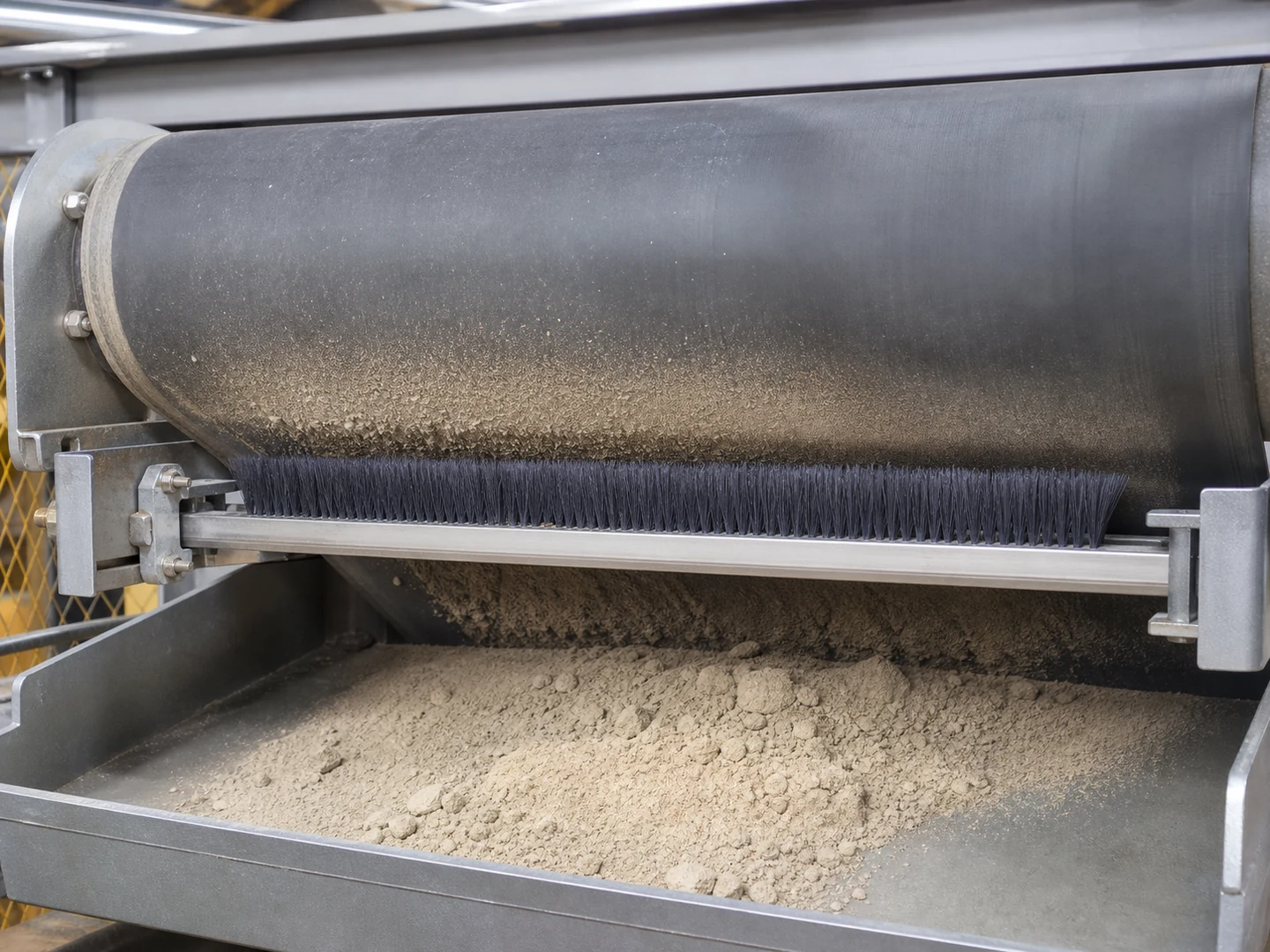
Wet material carryback occurs when soft, sticky, or high-moisture residues cling to the conveyor belt surface after product transfer. In bakeries, this includes bread dough, cake batter, icing, melted chocolate, and grease. Left unchecked, it causes belt mistracking, product contamination, allergen cross-contact, microbial growth, and increased cleaning labor. A static scraper often fails against pliable carryback because it cannot conform to belt variations or remove residue from recessed belt profiles. This is where a properly selected brush becomes critical.
Bakery Conveyor Brush vs. Standard Cleaning Brushes: Key Differences
For food-manufacturing equipment and wet food zones, eCFR — 21 CFR Part 117 Human Food CGMP and Preventive Controls is the production-side CGMP and preventive-controls reference.
For the material or regulatory boundary in this section, the supporting reference is eCFR — 21 CFR 177.1500 Nylon Resins.
For the material or regulatory boundary in this section, the supporting reference is eCFR — 21 CFR 177.1520 Olefin Polymers.
For the material or regulatory boundary in this section, the supporting reference is eCFR — 21 CFR 177.1630 Polyethylene Phthalate Polymers.
For the safety point in this section, the relevant OSHA reference is OSHA — Machine Guarding.
For the safety point in this section, the relevant OSHA reference is OSHA — Control of Hazardous Energy.
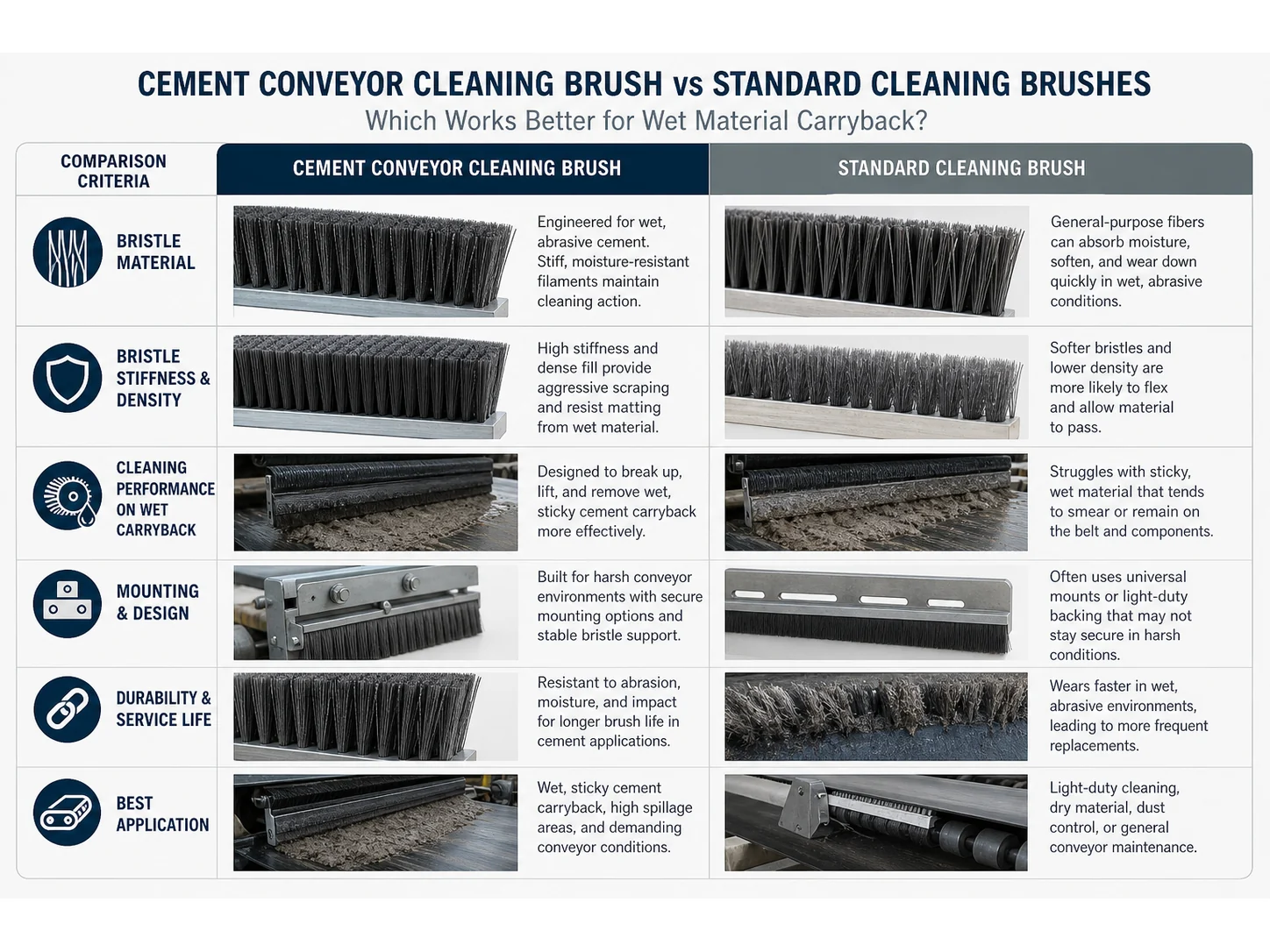
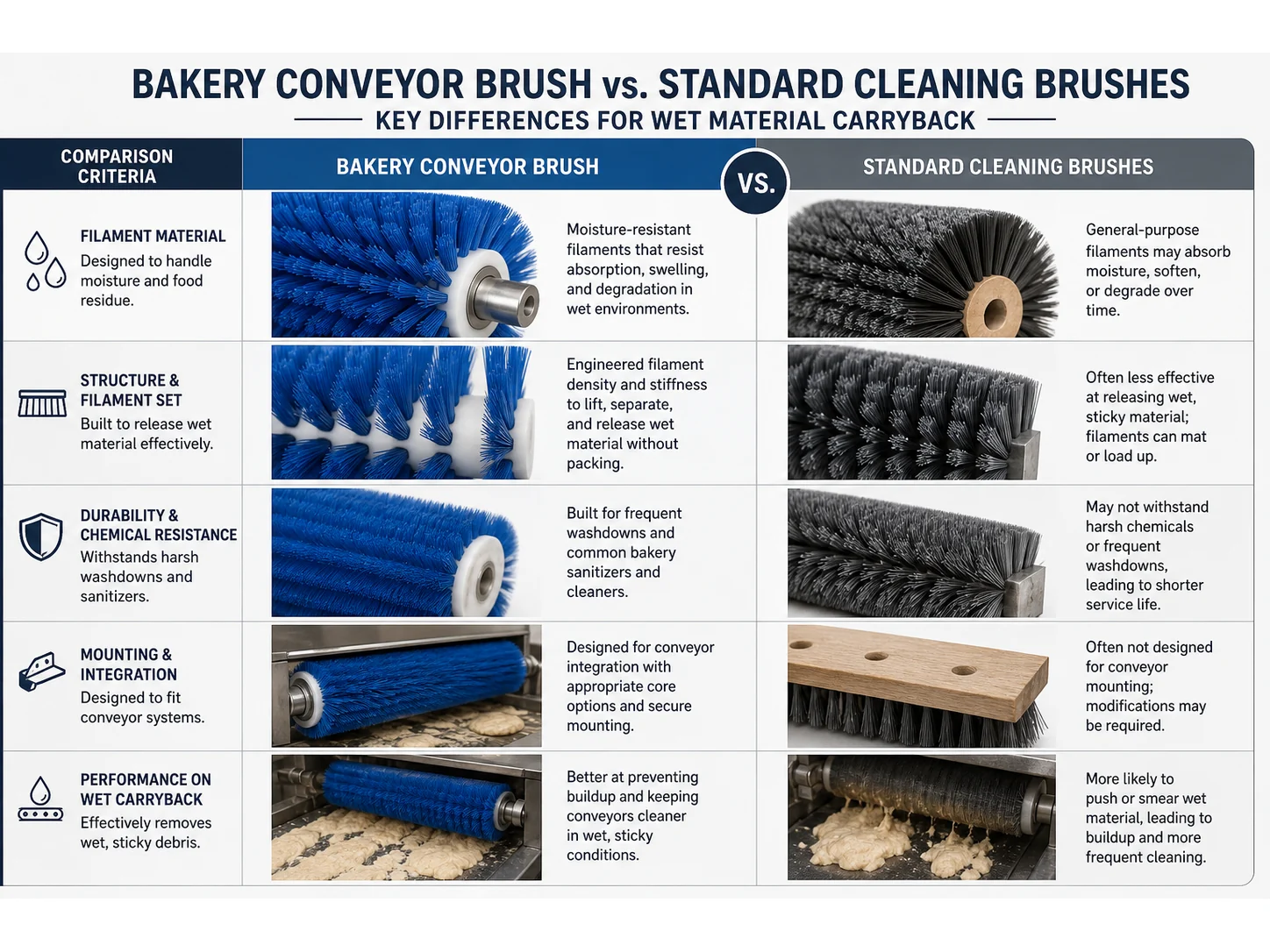
Below is a comparison of design and application factors that matter when dealing with wet bakery residues.
| Factor | Bakery Conveyor Brush | Standard Cleaning Brush |
|---|---|---|
| Filament Material | Food-grade nylon, polyester, or polypropylene; often with FDA-compliant additives | General-duty nylon, wire, Tampico, or abrasive filaments; not always rated for food contact |
| Stiffness | Medium-soft to medium; designed to flex and release sticky residue without gouging belts | Wide range; often stiffer, which can damage soft rubber or fabric belts |
| Brush Construction | Stapled, strip, or wound style; typically with stainless steel or aluminum cores; easy to clean | Often hand-held, drill-mounted, or simple shaft brushes; not optimized for conveyor mounting |
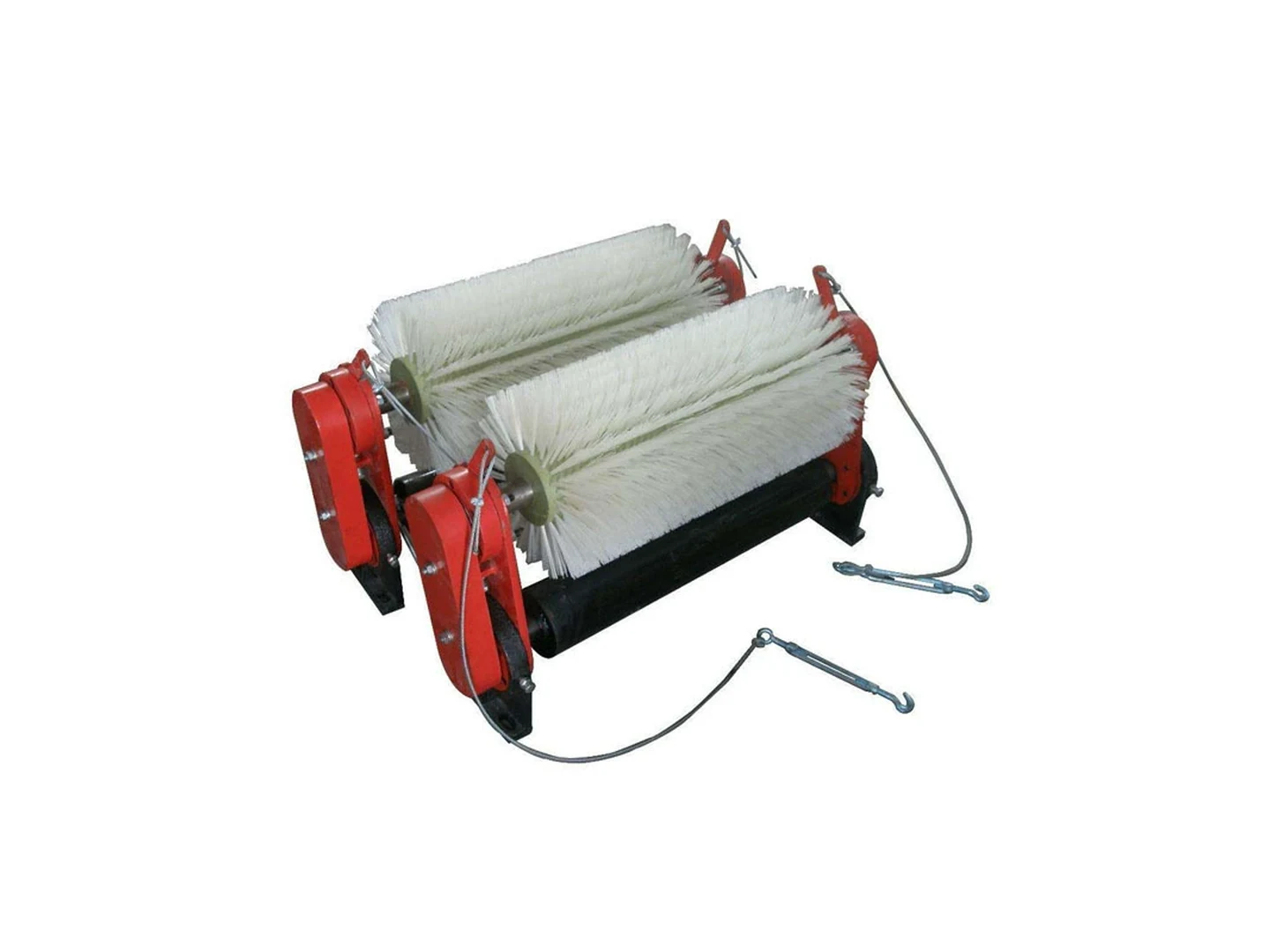
| Mounting & Drive | Direct bolt-on to conveyor frame; available in rotary (driven) or stationary (tension) configurations | Usually requires custom bracketing; rarely designed for continuous, automated use |
| Hygiene & Washdown | Smooth surfaces, drainable cores, and open spiral designs to reduce bacteria traps; suitable for washdown | May have crevices, wood cores, or non-stainless metal that corrode in wet environments |
| Size & Customization | Available in exact belt widths; can be customized for diameter, profile, and trim length | Limited to off-the-shelf sizes; customization adds lead time and cost |
A bakery conveyor brush is engineered for the continuous, sanitary removal of wet, sticky materials without tearing the belt or shedding bristles into food products. Standard brushes often lack the required food safety compliance and may be too aggressive or too soft for the application.
How to Choose the Right Brush for Wet Carryback
Use these decision points to select between a bakery conveyor brush and a standard alternative, or to specify the correct bakery brush type.
- Residue Type: For doughy, tacky deposits, choose medium-soft nylon with flagged (split) tips to increase surface contact and flicking action. For oily films, a denser, stiffer polyester filament may work better.
- Belt Surface Sensitivity: Smooth PU belts tolerate moderate stiffness; fabric belts and impression-top belts require softer, flagged bristles to prevent surface wear.
- Equipment Interface: A stationary “doctor” brush mounts at a fixed angle against the belt; a motorized rotary brush counter-rotates to fling residue off. Consider space and power availability.
- Wet or Chemical Exposure: Continuous wet conditions demand stainless steel cores and corrosion-resistant filaments. Chlorinated washdowns may require specific polymer grades (e.g., PBT).
- Hygiene Expectations: In direct food contact zones, only use brushes that meet FDA or EU food contact material regulations, with smooth, cleanable construction.
- Maintenance Frequency: Rotary brushes often self-clean; stationary brushes need manual inspection and cleaning. Plan for bristle wear monitoring.
- Custom Size Requirements: Off-the-shelf brushes may not cover full belt width or fit the mounting frame. A bakery conveyor brush supplier can provide exact lengths, diameters, and core configurations.
Common Mistakes to Avoid
- Choosing by cost drivers Alone: A low-cost standard brush that shreds or rapidly wears out costs more in downtime, product loss, and re-cleaning.
- Ignoring Filament Compatibility: Using nylon in a high-fat application can lead to filament swelling and loss of stiffness. Verify chemical resistance.
- Overly Aggressive Stiffness: A brush that is too stiff can abrade the belt surface, creating a rough texture where residue accumulates even more.
- Skipping Brush Profile Matching: A flat brush on a crowned conveyor belt will only contact the edges, leaving sticky residue in the center.
- Assuming All Stainless Steel Is Equal: Cores made from 304 stainless hold up in washdown; standard steel will rust and contaminate products.
When a Bakery Conveyor Brush Is Not Enough
While a bakery conveyor brush solves most wet carryback problems, some situations require additional measures. If the residue is extremely adhesive (e.g., high-sugar syrups that crystallize), a simple brush may load up and become ineffective. In such cases, a combination system—brush plus water spray or steam—may be needed. If the belt is deeply grooved or has intricate profiles, a custom-formulated brush with varied bristle lengths might be required, but first confirm through a sample test or supplier drawing review. Also, if the conveyor frame is not designed to accept a brush assembly, retrofitting can be complex and may require an engineered solution rather than an off-the-shelf bakery brush. Finally, if the line operates at very high speeds (over 200 fpm), brush flutter and bristle breakage become risks; a supplier can recommend specialized high-speed configurations, but a simple stationary brush will not suffice.
Final Takeaway
The choice between a bakery conveyor brush and a standard cleaning brush comes down to three essentials: continuous operation capability, food-safe materials, and customization for the specific belt and residue. If your main concern is wet dough or batter carryback in a bakery, a dedicated bakery conveyor brush is the safe and effective choice. If you only need occasional manual spot cleaning, a standard brush might work temporarily, but it will not provide the consistent, automated cleaning a production line demands.
Practical Use Note
In daily use, the practical test is simple: check whether the brush reaches the full contact area, removes the target residue, and leaves the surface in the required condition. Record what changes when residue type, food-contact area, cleanability, storage, and cross-contamination risk changes, because many brush failures are caused by the working condition shifting rather than by the brush body alone.
Frequently Asked Questions
What is the best filament material for a bakery conveyor brush?
For most bakery applications, medium-soft nylon 6.12 or FDA-compliant polyester offers the right balance of flex and cleaning power without absorbing excessive moisture. Polypropylene is a good alternative for acidic or high-humidity environments.
Can I use a brush with a wire filament for dough carryback?
Wire brushes are not recommended for bakery belts because they can scratch or gouge soft rubber and fabric surfaces, and they pose a metal contamination risk if bristles break off.
How often should I inspect or replace my conveyor cleaning brush?
Inspect weekly for bristle bending, clogging, and core condition. Depending on usage and residue type, a brush may last three to twelve months. Keep a log to anticipate replacement before performance drops.
Does the brush diameter matter for carryback removal?
Yes. A larger diameter allows for longer bristles, which provide greater flex and better accommodation of belt irregularities. Typically, a 4- to 6-inch diameter works well for most bakery belts up to 48 inches wide.
Can a stationary brush be as effective as a rotary brush?
For light, non-tacky residues, a properly positioned stationary brush can work. However, with wet bakery residues, a rotary brush is more effective because the rotational motion continuously flings off the sticky buildup and reduces brush clogging.
Are bakery conveyor brushes safe for use with belt scrapers?
Yes, they are often used in tandem—a scraper first removes heavy buildup, then the brush cleans the remaining film and surface moisture. Ensure the mounting sequence does not interfere with either component.
What if my conveyor has an open belt return path and product falls beneath it?
Use a rotary brush positioned underneath the belt to clean the return side before the residue dries and cakes. This helps extend belt life and reduce floor cleaning.
Can I order a trial sample before committing to a full set of brushes?
Many industrial brush manufacturers offer sample brushes for testing. Provide your belt type, width, residue description, and mounting details to get the most accurate recommendation.