What Is a Kitchen Gap Cleaning Brush?
A kitchen gap cleaning brush is a narrow-profile brush built specifically to clean the thin gaps found between countertops and surrounding surfaces. Unlike general-purpose scrub brushes, it features a slim head—often 1/8 to 1/4 inch wide—and long, firm bristles that can dislodge debris from crevices. Bristle materials range from soft nylon for delicate surfaces to stiff polyester, brass, or even stainless steel for heavy-duty scrubbing. Handles may be straight, angled, or extendable, giving users the leverage needed to scrape along seams without bending or straining.
Standard Cleaning Brushes for Countertop Seams
For grill brush bristle-shedding risk, this article cites the CDC MMWR — Wire Bristle Grill-Brush Ingestion Injuries instead of treating wire-bristle grill cleaning as a harmless detail.
For kitchen cleaning examples, the FDA — Food Safety in Your Kitchen supports the distinction between normal cleaning, food handling, and hygiene habits.
For general foodborne-illness prevention language, the CDC — Preventing Food Poisoning is used as the public-health reference.
For the material or regulatory boundary in this section, the supporting reference is eCFR — 21 CFR 177.1500 Nylon Resins.
For the material or regulatory boundary in this section, the supporting reference is eCFR — 21 CFR 177.1630 Polyethylene Phthalate Polymers.
For brush terminology and construction language, this section references American Brush Manufacturers Association — Brush Lingo.
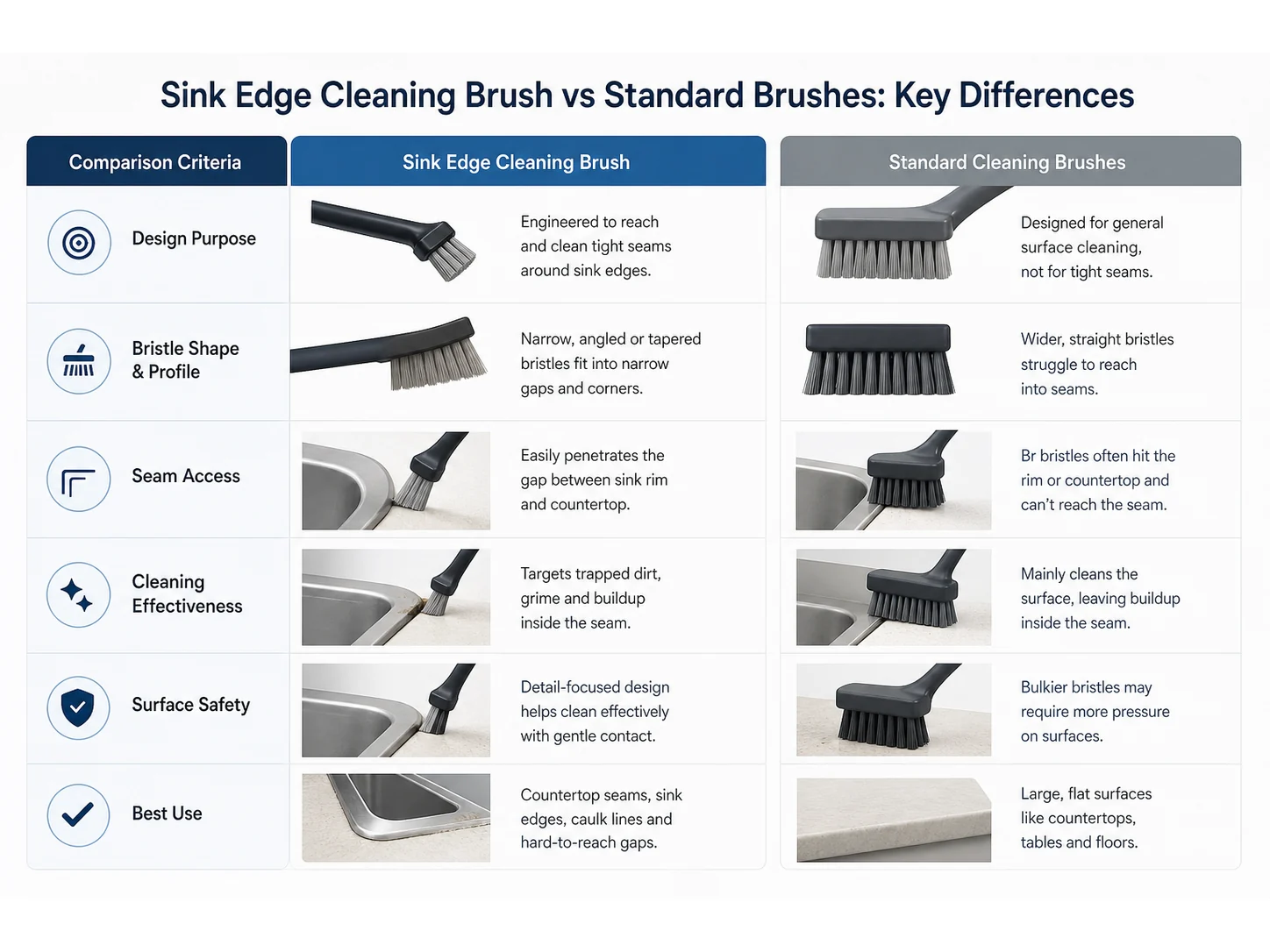
Many people reach for whatever brush is handy: a toothbrush, a general scrub brush, a bottle brush, or a grout brush. While these can work in a pinch, they are not optimized for the typical kitchen seam. Toothbrushes have short bristles and wide bases; scrub brushes are often too bulky to fit into a 1/16-inch gap; bottle brushes may lack the stiffness to scrub out dried-on food. Grout brushes are closer in design but are usually intended for wider floor grout lines and may be too abrasive for certain countertop materials.
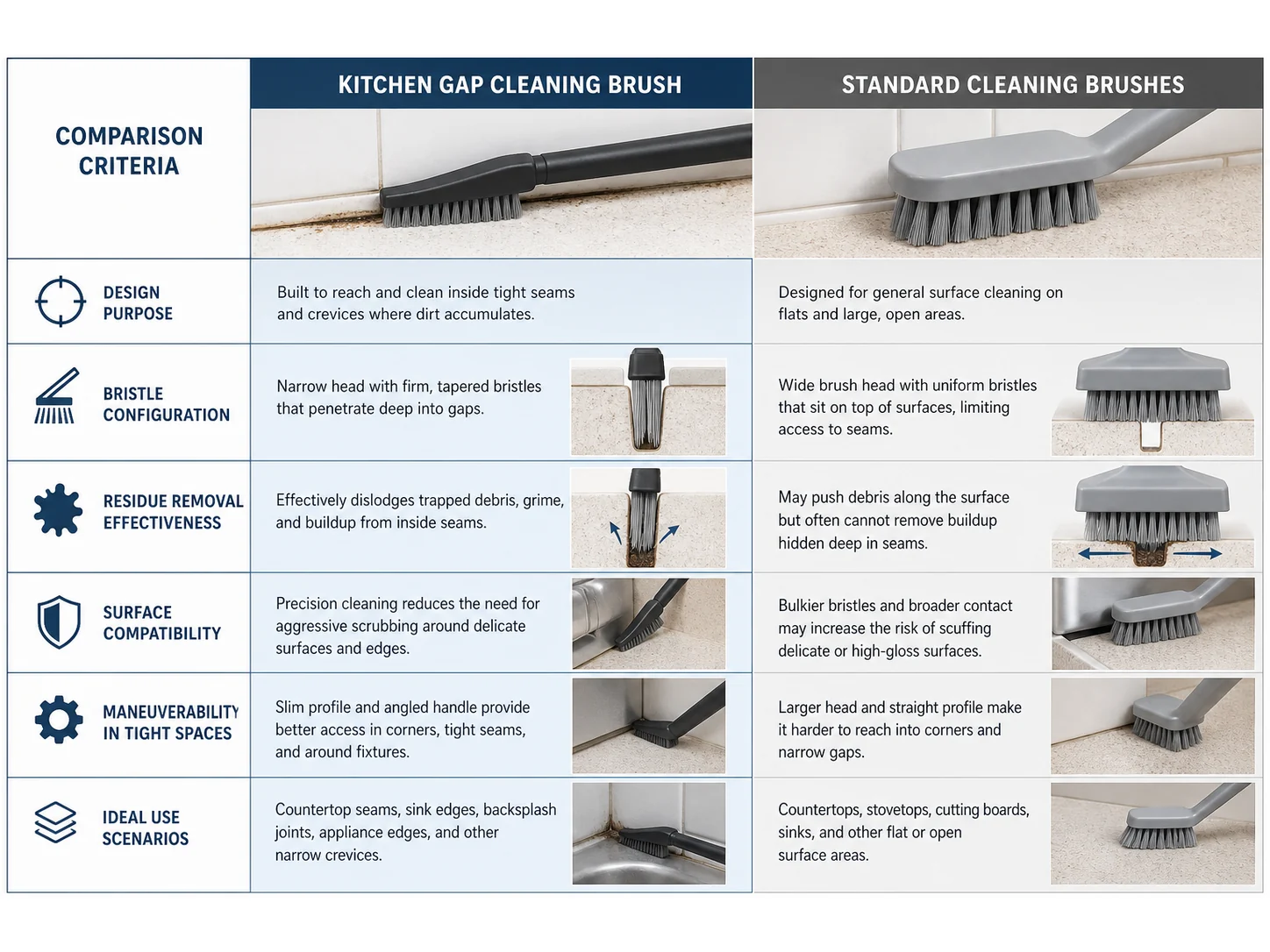
Key Differences: Kitchen Gap Brush vs Standard Brushes
| Factor | Kitchen Gap Cleaning Brush | Standard Cleaning Brush | Best For |
|---|---|---|---|
| Head Width | Narrow (1/8 to 1/4 inch) | Wide (1 inch or more) | Gaps vs open surfaces |
| Bristle Stiffness | Often firm to extra-firm for scraping debris | Varies, often medium for general use | Stubborn residues in seams |
| Bristle Material | Nylon, polyester, brass, stainless steel; often aggressive | Nylon, polyester, natural fibers; often softer | Chemical compatibility and surface sensitivity |
| Handle Design | Angled, slim, or straight with reach focus | Ergonomic grip, short to long handles | Maneuverability in corners and under cabinets |
| Durability | Bristles may wear faster on rough grout lines | Generally durable for scrubbing flat surfaces | Frequency of use and replacement cost |
| Hygiene | Harder to clean if bristles trap debris | Easier to rinse due to open design | Food residue buildup and sanitation |
| Typical Cost | Often specialized, slightly higher unit cost | Mass-produced, lower unit cost | Budget and replacement frequency |
How to Choose Based on Residue Type and Surface Sensitivity
Your choice should first consider what you’re cleaning and the countertop material:
- Dry crumbs and loose debris: A soft nylon gap brush works well and won’t scratch.
- Sticky syrup or dried sauces: A medium-stiff polyester brush can break down residue without being overly abrasive.
- Grease or oil: Use a brush that can withstand degreasers—polyester or brass bristles are good options.
- Mold or mildew in seams: Choose a brush that can handle a bleach solution (nylon or polyester; avoid natural bristles).
For surfaces like polished granite or quartz, avoid metal bristles entirely. Stick to soft- or medium-grade nylon. For textured tile or grout, a stiffer brush (polyester or mild brass) can be used carefully to avoid widening the seam.
Cleaning Method and Maintenance Factors
How often you clean and the chemicals you use will influence brush selection. In a home kitchen, a quick daily wipe with a damp cloth may keep seams clean, but a weekly deep-clean with a gap brush prevents buildup. Commercial kitchens may require more frequent use and harsher cleaners, so a chemical-resistant polyester brush with a sturdy handle is ideal. Always rinse and dry the brush after use to prevent bacterial growth; occasional sanitizing with a mild bleach solution or hydrogen peroxide can help.
Common Mistakes When Choosing a Gap Cleaning Brush
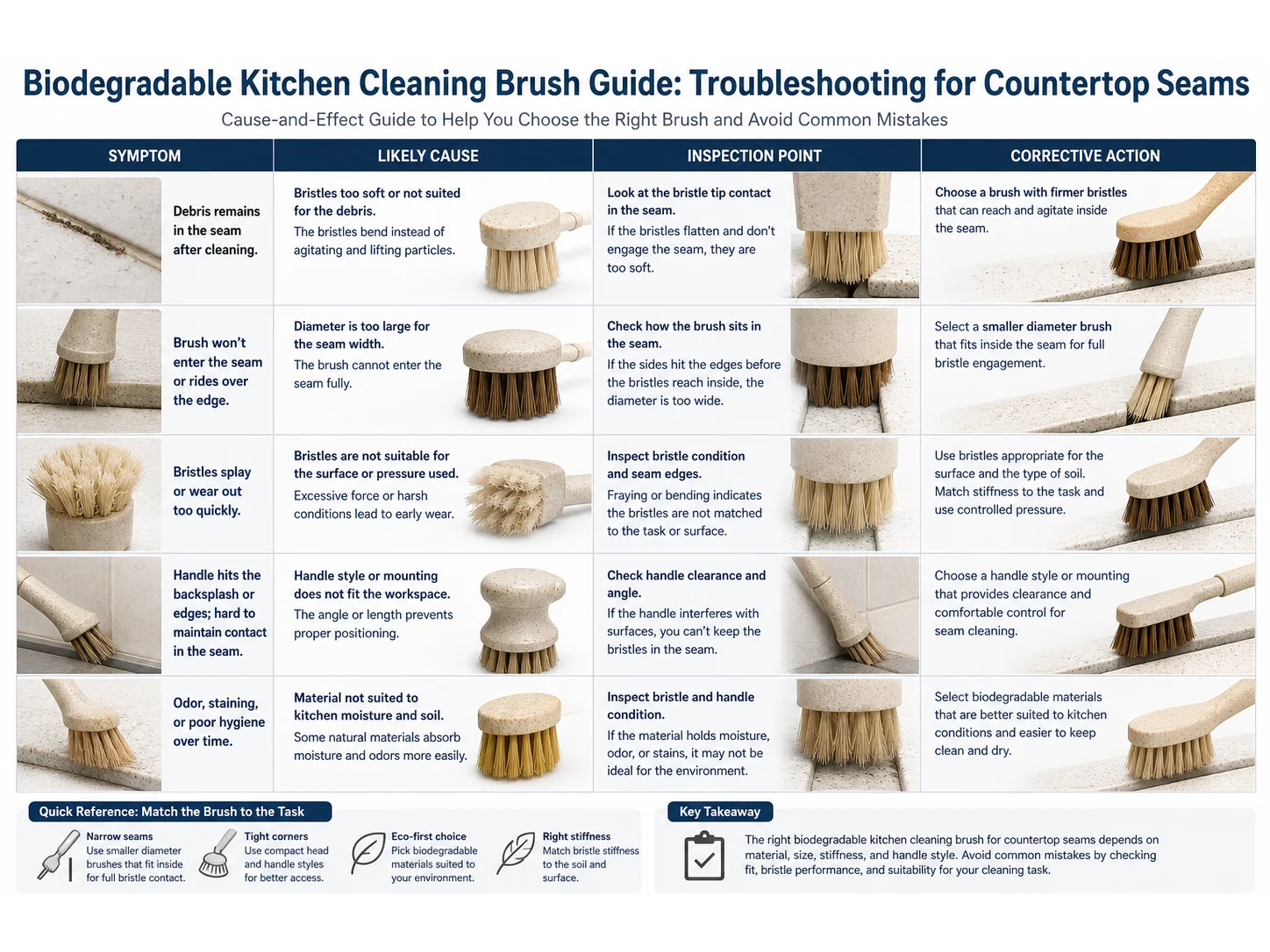
- Using metal bristles on soft stone: Stainless steel or brass can permanently scratch granite, marble, or quartz.
- Choosing a brush that’s too stiff: Overly aggressive bristles can erode grout or caulk over time.
- Ignoring handle length: A short handle may not reach the backsplash behind a deep counter, forcing awkward angles.
- Assuming one brush fits all residues: A brush that excels at dry crumbs may struggle with sticky residues without a cleaning agent.
- Neglecting brush hygiene: A dirty brush can reintroduce bacteria into the seam.
- Buying by cost drivers alone: Inexpensive brushes often have poorly anchored bristles that shed and lack long-term durability.
- Confusing a gap brush with a grout brush: Grout brushes often have wider, stiffer bristle clusters designed for floor tiles, not the narrow countertop seam.
When a Kitchen Gap Cleaning Brush Is Not Enough
For gaps wider than 1/4 inch, a standard crevice tool or even a toothbrush might suffice, making a specialized brush unnecessary. Heavy grease buildup or baked-on residue may require a steam cleaner or chemical pretreatment before brushing. In commercial kitchens, manual scrubbing with a gap brush may be too labor-intensive—powered rotary brushes or automatic cleaning systems could be more efficient. Additionally, if the seam’s caulk is deteriorating, no brush will fix it; recaulking should come first. And for deep, narrow gaps where a brush cannot fully reach, a sanitizing spray may be needed to meet hygiene standards.
Final Takeaway
A kitchen gap cleaning brush is the right tool for narrow countertop seams because its slim profile and firm bristles reach where standard brushes cannot. However, for larger gaps, delicate surfaces, or heavy-duty residue, a standard brush or alternative method may be more practical. Match the bristle material and stiffness to your specific residue and surface, keep the brush clean, and replace it when bristles bend or wear. By choosing thoughtfully, you’ll keep your countertop seams cleaner with less effort.
Practical Use Note
In daily use, the practical test is simple: check whether the brush reaches the full contact area, removes the target residue, and leaves the surface in the required condition. Record what changes when residue type, food-contact area, cleanability, storage, and cross-contamination risk changes, because many brush failures are caused by the working condition shifting rather than by the brush body alone.
Frequently Asked Questions
Can a toothbrush replace a kitchen gap cleaning brush?
A toothbrush can clean very narrow seams in a pinch, but its short bristles and wide base make it less efficient for long seams. It also lacks the reach for backsplash gaps behind deep counters. A dedicated gap brush is faster and more thorough.
What bristle material is safest for quartz countertops?
Soft to medium nylon bristles are safest for quartz. Avoid metal bristles, as they can leave dull scratches or gray marks on the polished surface.
How often should I replace a kitchen gap cleaning brush?
Replace the brush when bristles become permanently bent, frayed, or start shedding. In a home kitchen with weekly use, this might be every 6–12 months. Commercial settings may require replacement every 1–3 months.
Are metal bristle brushes safe for stainless steel seams?
Brass or stainless steel bristles can be used on stainless steel surfaces if the seam is metal-to-metal, but they may still leave micro-scratches. For brushed stainless, this might be acceptable; for polished or mirror finishes, stick to nylon or polyester to avoid visible marks.
What’s the difference between a kitchen gap brush and a grout brush?
Grout brushes typically have a wider head and stiffer, shorter bristles designed for floor or wall tile grout lines. A kitchen gap brush is narrower and usually has longer bristles to reach into the thin seam between a countertop and backsplash without abrading the material.
How should I clean and sanitize the brush itself?
After each use, rinse under hot water to remove debris. For sanitation, soak the bristles in a mild bleach solution (1 tablespoon per gallon of water) for 5 minutes, then rinse thoroughly and air-dry. Avoid soaking wooden handles.
Is a longer handle better for gap cleaning?
An angled or longer handle (8–12 inches) helps you reach the backsplash gap without leaning over the counter, reducing strain. For under-counter lip seams, a shorter handle may offer better control. Some brushes come with removable extension poles for flexibility.
Can I use a kitchen gap cleaning brush on oven door crevices?
Yes, if the bristle material and stiffness are compatible with the oven surface (e.g., nylon on glass, brass on metal). However, avoid using the same brush for kitchen seams and oven grease without thorough cleaning to prevent cross-contamination.