What Is a Silicone Bottle Brush?
A silicone bottle brush is a cleaning instrument designed to remove residue from inside bottles where traditional brushes might shed bristles, absorb chemicals, or scratch surfaces. The brush head is formed from solid or bristled silicone—a synthetic rubber prized for its flexibility, temperature stability, and broad chemical inertness. Unlike nylon or natural fiber brushes, silicone does not absorb water or cleaning agents, dries quickly, and resists many acids, bases, and solvents. This makes it a common choice in sanitary or chemically aggressive environments.
Common Types and Configurations
For kitchen cleaning examples, the FDA — Food Safety in Your Kitchen supports the distinction between normal cleaning, food handling, and hygiene habits.
For general foodborne-illness prevention language, the CDC — Preventing Food Poisoning is used as the public-health reference.
For the material or regulatory boundary in this section, the supporting reference is eCFR — 21 CFR 177.1500 Nylon Resins.
For the safety point in this section, the relevant OSHA reference is OSHA — Hazard Communication.
For the safety point in this section, the relevant OSHA reference is OSHA — Chemical Hazards and Toxic Substances.
For material-selection language, this section is supported by British Plastics Federation — Thermoplastics.
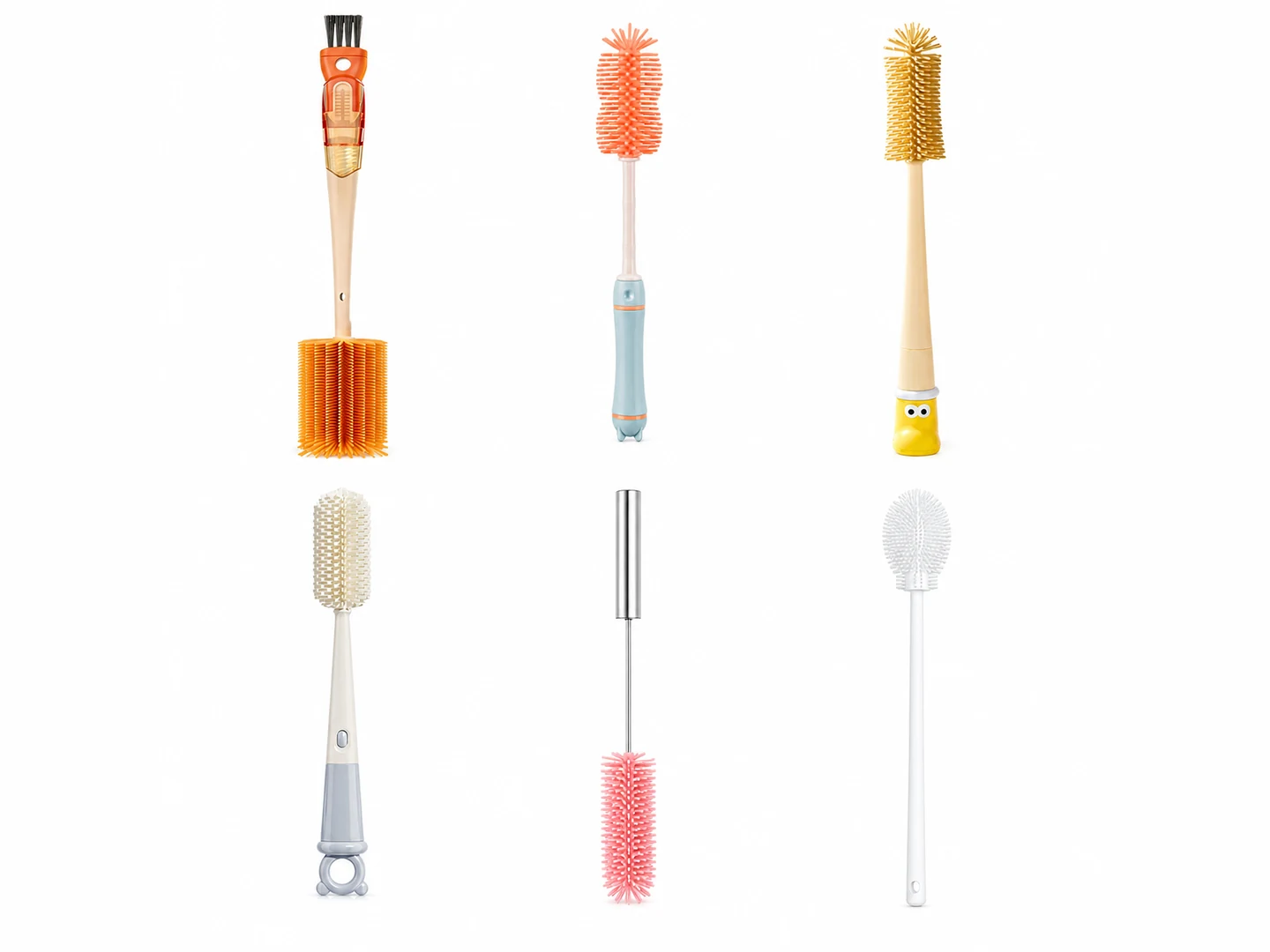
Silicone bottle brushes come in several forms to match different bottle shapes and cleaning methods:
- Solid silicone brush head: A single piece with molded nubs, ridges, or fins. Easy to clean and fully autoclavable. Best for wide-neck bottles and general scrubbing.
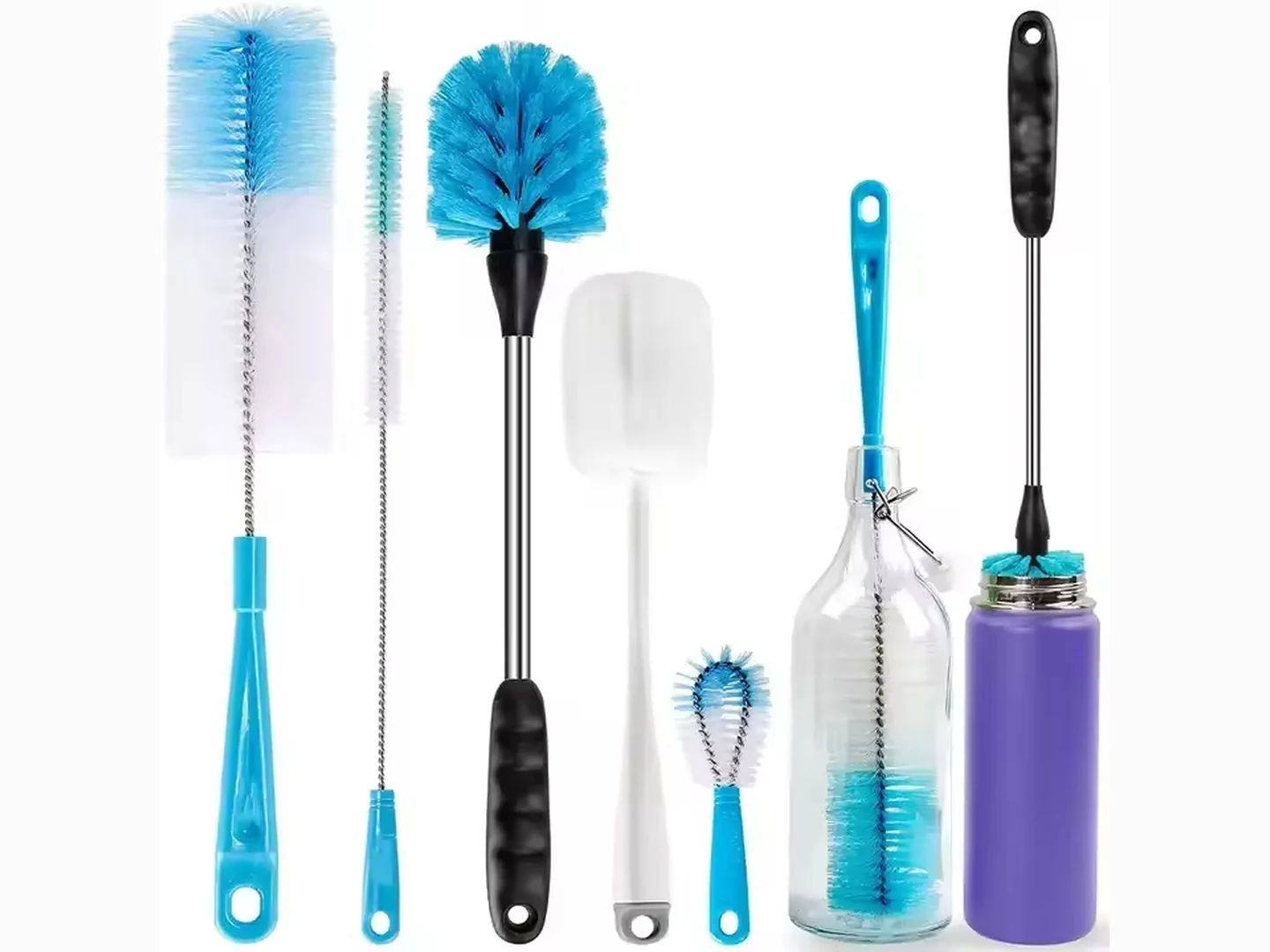
- Silicone bristle tufts: Individual silicone filaments set into a twisted wire or plastic core. Offers more flexibility to reach into narrow necks or corners.
- Spiral or coil design: The cleaning surface wraps around a central core in a spiral. Effective for scrubbing cylindrical vessels with uniform diameter.
- Interchangeable heads: Handles where the brush head can be snapped onto a shaft. Useful when different diameters or stiffness are needed for one handle.
- Power/rotary brushes: Designed to be chucked into a drill or dedicated motor. Suitable for high-throughput cleaning of multiple identical bottles.
Key Selection Factors for Chemical Exposure
Choosing a silicone bottle brush for chemical exposure means looking beyond basic brush dimensions. Evaluate these factors before requesting a sample or quotation:
- Chemical compatibility: Verify the silicone grade (platinum-cured, peroxide-cured) and its resistance to your specific chemicals at operating temperature and concentration. Silicone can swell or degrade in contact with certain oils, solvents, or strong oxidizers.
- Temperature range: Cleaning may involve hot rinse water, steam sterilization, or chemical baths at elevated temperatures. Confirm the silicone’s continuous-use temperature ceiling and whether the core material can handle the same range.
- Core and handle material: Metal wire cores (stainless steel) add strength but can corrode or scratch if not passivated or coated. Plastic cores avoid corrosion but may warp under heat. Wood cores are unsuitable for chemical immersion.
- Bristle stiffness and abrasiveness: Softer silicone is gentler on delicate surfaces (e.g., coated glass, plastic bottles), while firmer bristles improve scrubbing action on tough residues. Abrasive particles embedded in silicone can accelerate cleaning but may leave micro-scratches.
- Diameter and length: The brush must fit through the opening yet reach all interior surfaces. Oversized brushes create excess friction; undersized ones leave unclean spots. Consider straight bodies, tapered necks, and any internal contours.
- Mounting and handle interface: Manual use may require a loop or ergonomic grip. Machine use often needs a specific shaft end (round, D-shape, square). Quick-connect systems demand precise dimensions.
- Hygiene and cleanability: In food, pharma, or biotech, the brush itself must be easy to clean and sanitize. Smooth, non-porous silicone surfaces reduce microbial harborage. Autoclavability is a major plus.
Comparison: Silicone Brushes vs. Other Brush Materials for Chemical Applications
| Feature | Silicone | Nylon | Natural Fiber (Tampico/Horsehair) | PTFE (Teflon) |
|---|---|---|---|---|
| Chemical resistance | Good resistance to many acids, bases, and alcohols; poor against concentrated solvents and oils | Resists many alkalies; attacked by strong acids and some solvents | Low; degrades in most chemicals, absorbs moisture | Excellent resistance to nearly all chemicals |
| Temperature limit | -60 °F to 450 °F (varies by grade) | Up to 250 °F (softening at high end) | Low; sheds and degrades above 180 °F | Up to 500 °F |
| Water absorption | None | ~2–3 % | High; swells and rots | None |
| Surface safety | Non-scratch on glass, stainless, most polymers | May micro-scratch soft plastics if stiff | Gentle; low abrasion | Non-scratch, very soft |
| Autoclavable | Yes (platinum-cured) | Usually no | No | Yes |
| Cost (relative) | Medium | Low–Medium | Low | High |
For most chemical-exposure cleaning tasks where moderate chemical resistance, heat tolerance, and non-shedding properties are required, silicone strikes a practical balance between performance and cost. PTFE brushes are a premium alternative when absolute chemical inertness is needed.
How to Match a Silicone Bottle Brush to Your Process
Follow this decision sequence to narrow down options without guessing:
- Map your chemical profile: List every cleaning agent, solvent, disinfectant, or process fluid the brush will contact. Note concentrations and typical contact times. Cross-check against a chemical resistance chart for the specific silicone compound you are considering.
- Define the surface sensitivity: If you are cleaning optical glass, PTFE-coated vessels, or polished metal, a softer, non-abrasive silicone is essential. For heavy residue on durable surfaces, a firmer or textured brush may be acceptable.
- Measure the bottle or vessel: Record neck inner diameter, body diameter, depth, and any internal obstructions. A brush must be slim enough to enter without jamming, yet wide enough to apply effective pressure. Overmolded silicone brushes often have larger minimum insertion diameters than twisted-wire types.
- Decide handling method: Manual, semi-automated (drill-driven), or fully automated (mounted on a linear actuator). Handle length, shaft diameter, and connection type must fit your jig or operator hand.
- Check cleaning and maintenance protocols: If the brush must be autoclaved between batches, choose platinum-cured silicone with a heat-resistant core (e.g., 304 or 316 stainless steel). If chemical disinfection is used instead, verify that the disinfectant does not attack the core or adhesive bonding.
Common Mistakes When Selecting Silicone Bottle Brushes
- Assuming all silicone is equally chemical-resistant: Peroxide-cured grades may contain residual byproducts that can leach in aggressive environments. Always request material certification and chemical resistance data.
- Overlooking the core material: A silicone head on a carbon-steel wire core will rust rapidly in acidic or humid conditions, contaminating the wash. Specify stainless steel or a fully encapsulated plastic core.
- Selecting by diameter alone: Bristle length, stiffness, and overall brush profile determine cleaning effectiveness. A 2-inch diameter brush with short stiff bristles cleans differently than one with long flexible ones.
- Skipping a trial or sample test: Small differences in bore tolerance, chemical interaction, or bristle geometry can cause binding, poor cleaning, or accelerated wear. A sample test on actual vessels is far more reliable than a catalog selection.
- Ignoring the life cycle cost: A low-cost silicone brush that swells, tears, or sheds after a few cycles creates more downtime and rework than a higher-quality brush designed for chemical duty.
When a Silicone Bottle Brush Is Not Enough
Silicone brushes have limits. In the following situations, explore alternative cleaning methods or request a supplier drawing review to see if a custom design is feasible:
- Highly aggressive solvents or oxidizers: Ketones, chlorinated hydrocarbons, and fuming acids can rapidly degrade silicone. PTFE or metal brushes may be required.
- Residue that requires abrasive action: Hardened scale, baked-on carbon, or tenacious adhesives may call for stainless steel wool, wire brushes, or ultrasonic cleaning in addition to or instead of a silicone brush.
- Extremely narrow, bent, or complex geometries: A standard silicone bottle brush cannot navigate a serpentine tube or clean behind internal baffles. Pipe cleaners, flexible foam swabs, or specialized pull-through plugs may be needed.
- Cleanroom or high-purity semiconductor applications: Even silicone can shed particles or off-gas. In such cases, only certified, pre-cleaned materials with declared particle counts and outgassing specs are acceptable.
- When the brush itself must be continuously sterilized in-place (SIP): Not all silicone brush assemblies withstand repeated high-pressure steam cycles without delamination or core corrosion.
Final Takeaway
Selecting a silicone bottle brush for chemical exposure is a matter of matching material compatibility, mechanical dimensions, and operational demands. The right brush withstands your cleaners, fits your vessel, protects your surface finish, and holds up under your sterilization or maintenance cycle. Before shortlisting, define your chemical list, temperature range, insertion path, and cleaning frequency. Then work with a supplier who can provide material certifications and a sample for on-site testing. This approach turns a commodity consumable into a reliable, process-specific tool.
Frequently Asked Questions
Can silicone bottle brushes handle acetone?
Silicone generally has poor resistance to acetone and other ketones; it can swell and lose mechanical integrity. If your cleaning process must use acetone, a PTFE (Teflon) brush is a safer alternative. Always check the chemical compatibility chart for the specific silicone compound with the exact chemical concentration and temperature.
How do I verify the chemical compatibility of a silicone brush?
Request a chemical resistance chart from the brush manufacturer or raw material supplier for the specific silicone grade (e.g., platinum-cured, peroxide-cured). For critical applications, perform an immersion test: submerge a brush sample in the cleaning chemical at process temperature for a representative time and measure weight change, swelling, and tarriness. A change of more than 5–10 % may indicate incompatibility.
What brush diameter should I choose for my bottle?
Measure the smallest inner diameter (usually the neck) that the brush must pass through, then select a brush with an overall diameter about 10–20 % larger than the bottle body diameter. This ensures good wall contact without excessive bending resistance. For bottles with narrow necks and wide bodies, a brush with a flexible, narrow twisted-wire core and long silicone bristles may be necessary.
Are all silicone bottle brushes food-grade?
Not necessarily. Food-grade silicone must meet regulatory requirements such as FDA 21 CFR 177.2600 and be manufactured under appropriate hygiene conditions. Always request certification if the brush contacts food-contact surfaces. Additionally, consider if the core material and any adhesives are also safe for incidental food contact.
How do I clean and maintain a silicone bottle brush after chemical exposure?
Rinse the brush thoroughly with deionized water immediately after use to remove residual chemicals. For disinfection, autoclave at 250 °F (121 °C) for 30 minutes if the brush is fully autoclavable, or soak in a compatible sanitizer. Dry the brush completely in a well-ventilated area to prevent microbial growth. Inspect bristles and core regularly for cracks, tears, or rust.
Can I use a silicone bottle brush in an ultrasonic cleaning tank?
Silicone is generally safe for ultrasonic cleaning, as the material can withstand the cavitation without rapid degradation. However, ensure the core—especially if metallic—is not susceptible to erosion or galvanic corrosion in the cleaning bath. Plastic cores may become brittle over time if subjected to prolonged ultrasonic energy at high temperatures.
What is the difference between platinum-cured and peroxide-cured silicone for brushes?
Platinum-cured silicone has very low extractables, no peroxide byproducts, and typically better temperature and chemical resistance. It is preferred for medical, pharmaceutical, and high-purity applications. Peroxide-cured silicone may be cheaper but can leave residues that are unacceptable in sensitive processes. For heavy chemical exposure, platinum-cured grades provide more predictable long-term performance.
How do I know if I need a custom silicone bottle brush instead of a standard size?
Consider a custom brush if your vessel has a non-standard shape, requires an unusually long handle, needs a specific mounting interface, or if standard brushes fail due to diameter, stiffness, or chemical resistance mismatches. A supplier drawing review with your vessel dimensions and chemical conditions is the first step to determine feasibility and cost.