What Is a Conveyor Belt Cleaning Brush?
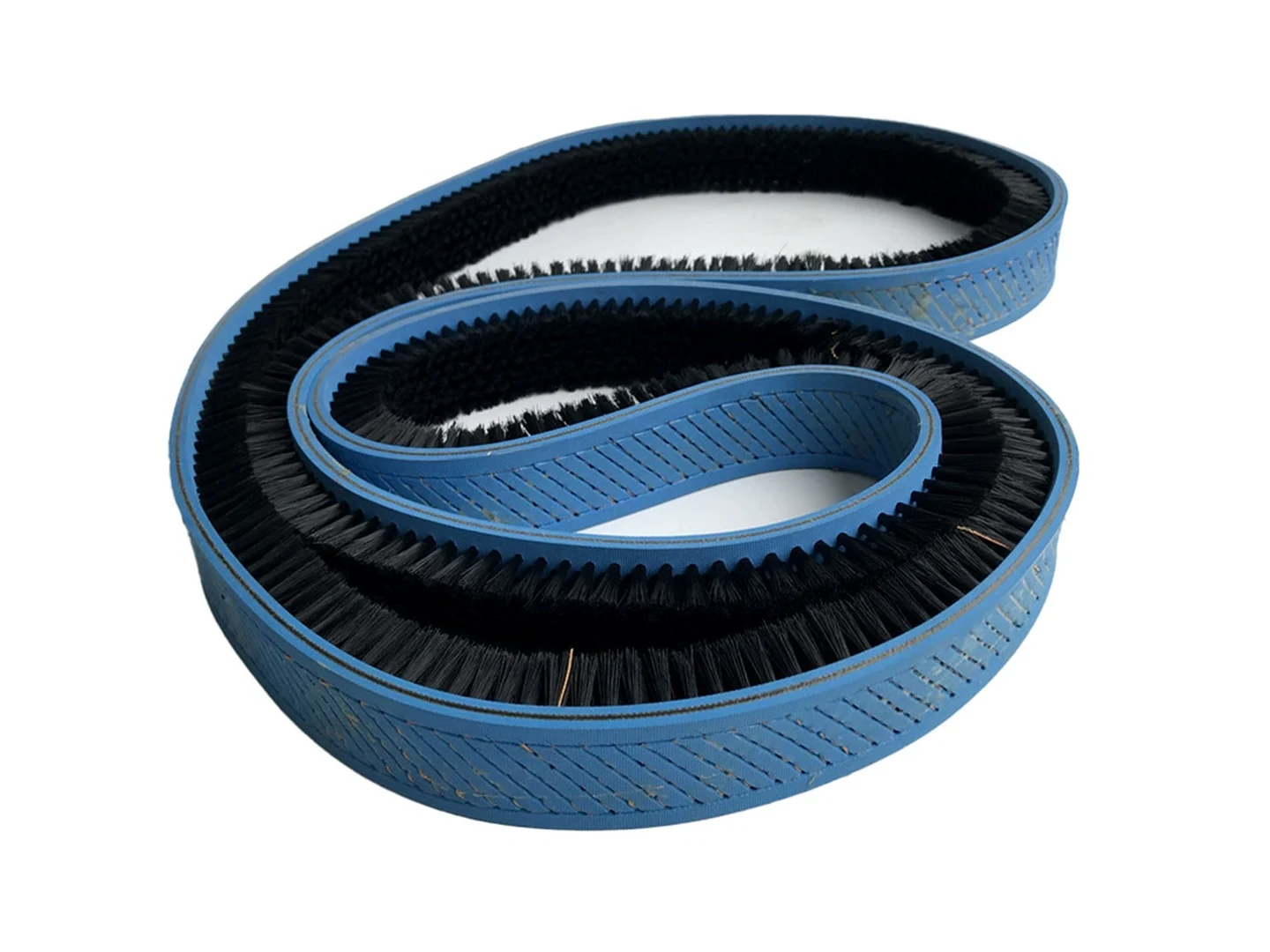
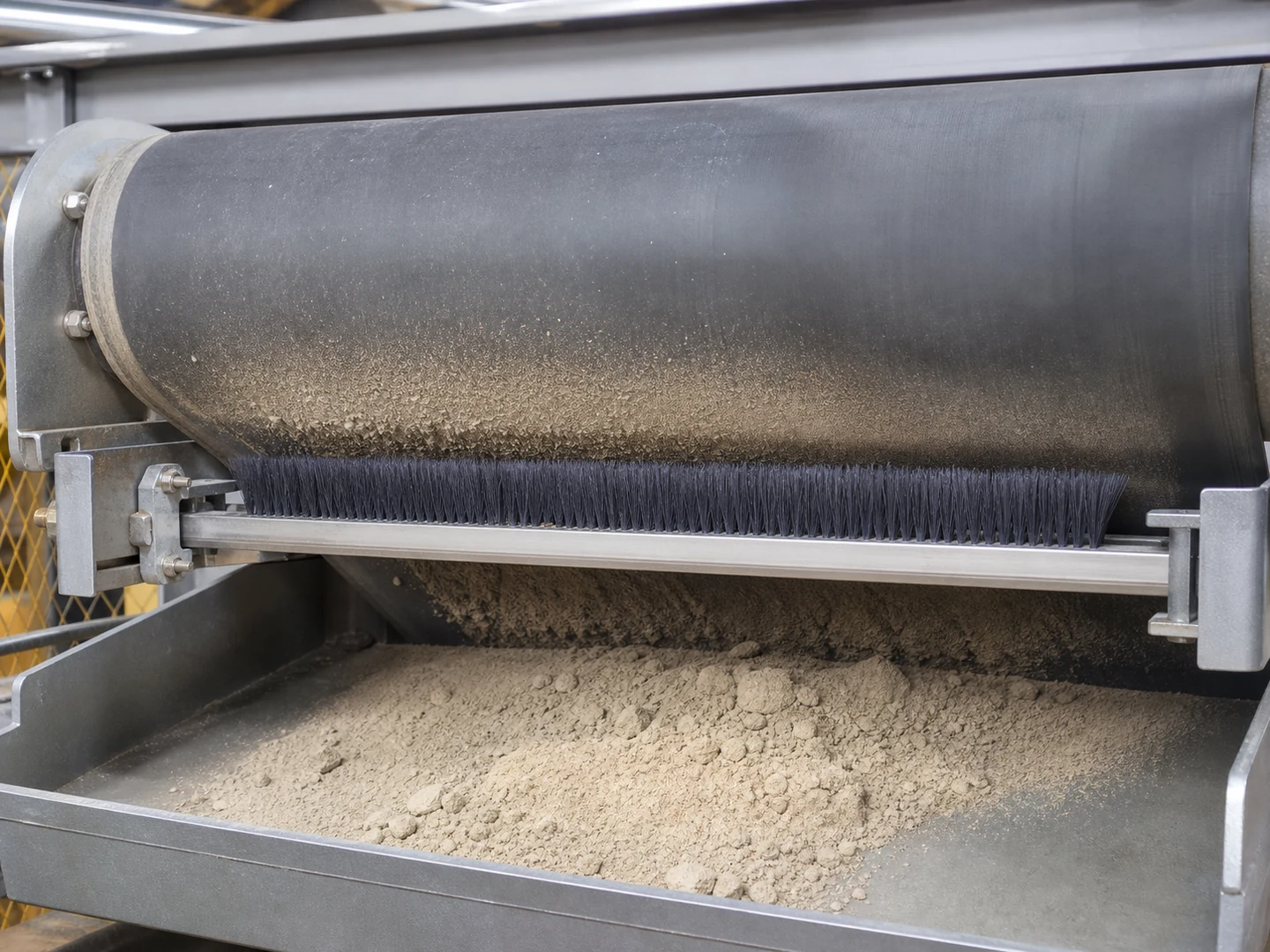
A conveyor belt cleaning brush is a continuous or segmented brush assembly mounted near the return or discharge point of a belt conveyor. Its purpose is to mechanically dislodge carryback, dust, fines, sticky residues, or product debris without damaging the belt or causing excessive friction. Unlike simple scraper blades, a brush can conform to textured belt surfaces, clean without gouging, and handle delicate belt coatings.
For the safety point in this section, the relevant OSHA reference is OSHA — Machine Guarding.
For the safety point in this section, the relevant OSHA reference is OSHA — Control of Hazardous Energy.
For the safety point in this section, the relevant OSHA reference is OSHA — Combustible Dust.
For the environmental or chemical-safety point in this section, the supporting reference is EPA — Particulate Matter Basics.
For brush terminology and construction language, this section references American Brush Manufacturers Association — Brush Lingo.
These brushes are typically custom-built to match a specific belt width, conveyor frame geometry, and residue challenge. The core element—filament material, density, trim length, and overall diameter—determines cleaning aggressiveness and service life.
Common Types of Conveyor Belt Cleaning Brushes
Although custom configurations are endless, most brushes fall into a few functional categories based on how they are mounted and driven. Understanding these helps you discuss requirements clearly with a brush manufacturer.
- Static strip brushes – A row of densely packed filaments held in a rigid holder, often used in light-duty or low-profile installations. They require no external drive and rely on belt motion for cleaning.
- Rotary powered brushes – A cylindrical brush driven by a motor or belt take-off, offering adjustable speed and aggressive cleaning for heavy carryback.
- Mount-on-shaft roller brushes – A brush element that slides onto a keyed shaft and is secured with setscrews or clamps, ideal for wider belts or multi-section assemblies.
- Segmented or modular brushes – Individual brush blocks that can be arranged in a holder to cover the full belt width, simplifying replacement and allowing mixed filament types.
Comparing Key Brush Options
The table below compares common brush configurations by the decision factors most relevant to a buyer preparing a custom RFQ. Use it as a starting point for your technical specification.
| Feature | Option A | Option B | Option C |
|---|---|---|---|
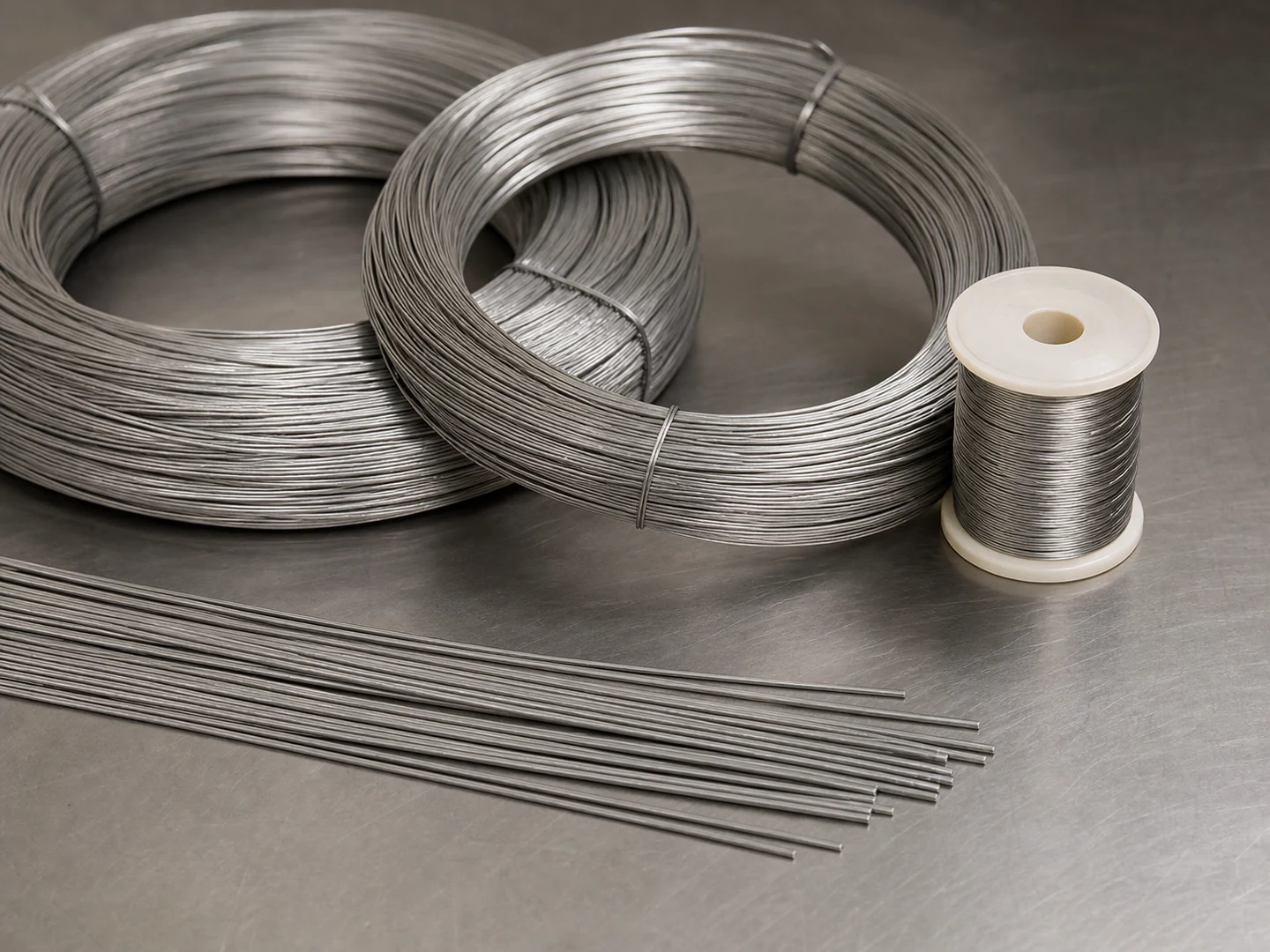
| Filament material | Nylon (solid or abrasive‑filled) | Polypropylene or polyester | Stainless steel or brass wire |
| Typical filament diameter | 0.3 mm–1.2 mm | 0.3 mm–0.8 mm | 0.1 mm–0.5 mm wire |
| Cleaning aggressiveness | Moderate; good for general use | Gentle; resists chemicals/water | Aggressive; cuts hardened residue |
| Best for residue type | Dust, fines, light oil | Wet, sticky, acidic or caustic environments | Baked-on, scale, heavy buildup |
| Belt surface sensitivity | Good for most belt types | Excellent; non‑marking | Can scratch; use only on metal or rugged belts |
| Mounting style | Strip, rotary, or roller | Strip or rotary | Rotary driven, often with a backing |
| Cost/complexity factor | Low to moderate | Low | Higher; requires drive and safety guards |
These are general starting points. A custom brush manufacturer can blend filament types, alter density, or change trim length to match your line exactly.
How to Choose the Right Custom Brush: A Buyer’s Pre‑RFQ Checklist
Before you send a request for quotation, collect the following information. The more complete your description, the less back-and-forth and the lower the risk of an expensive mismatch.
- Residue type and tenacity. Is it dry dust, oily film, sticky sugar syrup, abrasive mineral fines, or a combination? Will it harden if the line stops?
- Belt surface and texture. Smooth fabric, rough-top, chevron, or food-grade PU? Coated belts require special care to avoid peeling.
- Belt width and speed. Specify the cleanable width (not just the belt width) and the belt speed in feet per minute or meters per second.
- Mounting constraints. Show the available space around the conveyor frame, existing bracket locations, shaft diameter if the brush will be shaft‑mounted, and whether the brush must work on the head pulley or return strand.
- Cleaning direction. Does the brush need to rotate with the belt (for gentle dislodging) or against it (for aggressive removal)?
- Wet, washdown, or chemical contact. Will the brush be exposed to water, steam, sanitizers, or solvents? This dictates both filament and core material.
- Hygiene and compliance. For food or pharmaceutical lines, confirm FDA/EU material requirements, cleanroom compatibility, and whether the brush must be metal-detectable or blue-coloured.
- Maintenance access and replacement interval. How often can the brush be inspected and changed? Can the line stop for replacement, or does it need to be swapped while running?
- Desired service life. Express this in operating hours or tonnes of product handled; a good manufacturer will recommend a filament grade that balances wear and cleaning.
- Existing equipment interface. If this is a retrofit, provide drawings or photos of the current mounting point and any existing brush holders or drive take-offs.
Common Mistakes Buyers Make When Specifying a Conveyor Brush
- Choosing filament material by cost drivers alone. A low-cost nylon filament may degrade in a hot, wet environment where polypropylene would last five times longer, doubling long-term cost.
- Ignoring filament memory and set. Some filaments take a permanent bend if the brush is pressed too hard against the belt, reducing cleaning efficiency within days.
- Specifying a brush that is too wide or too narrow. Overhang beyond the belt edge wastes material and can catch on frame work; narrow coverage leaves a residue stripe.
- Ordering without a sample or test. For critical lines, a small sample brush or a field trial with two or three filament grades prevents a full-production mistake.
- Forgetting about static electricity. All-plastic filaments in dry environments can generate static that attracts dust or shocks operators; consider conductive filament additives or grounding.
- Mismatching the holder or core to the cleaning environment. A mild steel channel may rust in a washdown area; specify stainless steel or aluminum if moisture is present.
- Assuming one brush fits all belt conditions. A line that switches between dry and damp product may need two different brush types or an adjustable engagement system.
When a Conveyor Belt Cleaning Brush Is Not Enough
A brush is excellent for dislodging dry fines, light sticky deposits, and fibrous material. However, it has limits:
- Hard, baked-on scale or heavy sludge. In cement, mineral processing, or high‑temperature applications, a brush alone may not remove hardened buildup. Complement with a primary scraper or water spray upstream.
- Excessive carryback volume. If the belt carries deep piles of wet material that fall back as a thick layer, a brush may quickly clog. Consider a combination belt cleaner system with a pre‑cleaner blade before the brush.
- Very high-speed belts (above 600 fpm). At extreme speeds, dynamic effects can cause filament flutter and reduced cleaning. A powered brush with precise speed control may be necessary, or a different cleaning technology such as an air knife.
- Extremely abrasive residues. If the residue is harder than the filament, the brush will wear rapidly. Ceramic-impregnated filaments or specialized scraper inserts might be required.
- Delicate belt coatings. If the belt has a very soft, easily damaged topcoat, even a gentle brush may cause micro-abrasion. An engineered plastic scraper or an air‑only cleaning system might be safer.
When in doubt, request a supplier drawing review. Provide material samples, belt specification sheets, and photos of the residue. A reputable brush manufacturer will recommend the right technology—even if that means advising against a brush for a specific application.
Final Takeaway
A custom conveyor belt cleaning brush improves uptime, protects product quality, and extends belt life—but only when it matches the real residue, surface, and environment. Avoid specifying a brush by dimensions alone. Start with the residue and work back to the filament, core, and mounting. Use the checklist above to prepare your RFQ, and always clarify the maintenance plan before ordering. If the application sits at the edge of a brush’s capability, ask for a sample test or a combined cleaning solution.
Frequently Asked Questions
What is the difference between a static strip brush and a rotary brush for belt cleaning?
A static strip brush is fixed in place and uses the belt’s motion to perform cleaning, making it simpler and cheaper. A rotary brush is driven by a motor or belt take-off and offers adjustable speed and direction, providing more aggressive cleaning for heavy or sticky residues.
How do I know which filament diameter is right for my residue?
Thicker filaments (above 0.5 mm) provide stiffer scrubbing for stubborn, coarse residues. Thinner filaments (0.3 mm or less) are gentler and work better on smooth belts or fine dry powders. If you are unsure, ask the manufacturer for a sample with two filament diameters to test side by side on your line.
Can I use the same brush for different products on the same conveyor?
It depends on the residues. If the products leave similar residues (e.g., both are dusty), one brush may work. If one product is oily and the other is dry, you may need to adjust brush pressure or swap to a different filament type between runs. Discuss quick-change mounting with your supplier.
How do I measure the correct brush length for an existing conveyor?
Measure the width of the residue path, not the total belt width. Add a small overhang (typically 25–50 mm per side) to ensure full coverage without interference with the conveyor frame. Provide a sketch with frame dimensions to the brush manufacturer.
Does the brush need to be removed for cleaning or can it be cleaned in place?
Some brushes can be cleaned with a hose or compressed air while in place, but for thorough cleaning or when the filaments become matted with sticky buildup, periodic removal is recommended. Make sure the mounting design allows easy removal without extensive disassembly.
How often should a conveyor belt cleaning brush be replaced?
Replacement frequency depends on filament material, residue abrasiveness, and hours of operation. With regular inspection, you can track filament length wear. A rule of thumb: when the filament has worn to about half its original trim length, cleaning efficiency drops noticeably and replacement should be planned.
Is a brush always safe for food-contact conveyor belts?
Not automatically. For food zones, specify filaments and core materials that meet FDA or EU 10/2011 requirements. The brush holder should be made of stainless steel or food-grade plastic, and you may need documentation confirming compliance. Non-food-grade brushes can shed particles that contaminate the product.
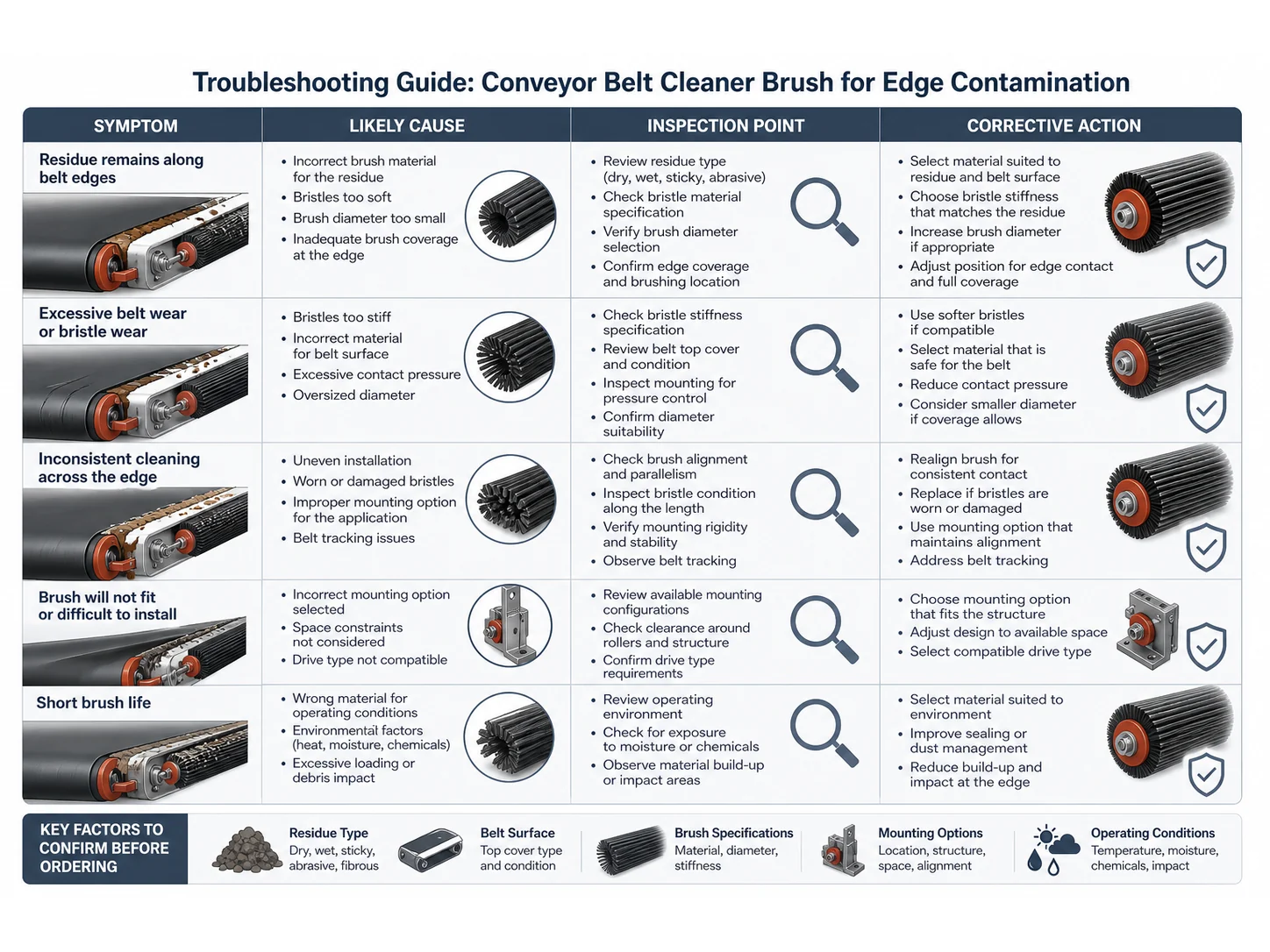
What should I do if my brush leaves streaks on the belt?
Streaks usually mean the brush does not have uniform contact across the width, or the filament is too soft for the residue. Check for bent filaments, uneven wear, or a mounting alignment issue. If alignment is correct, consider a slightly stiffer filament or an increased engagement depth.