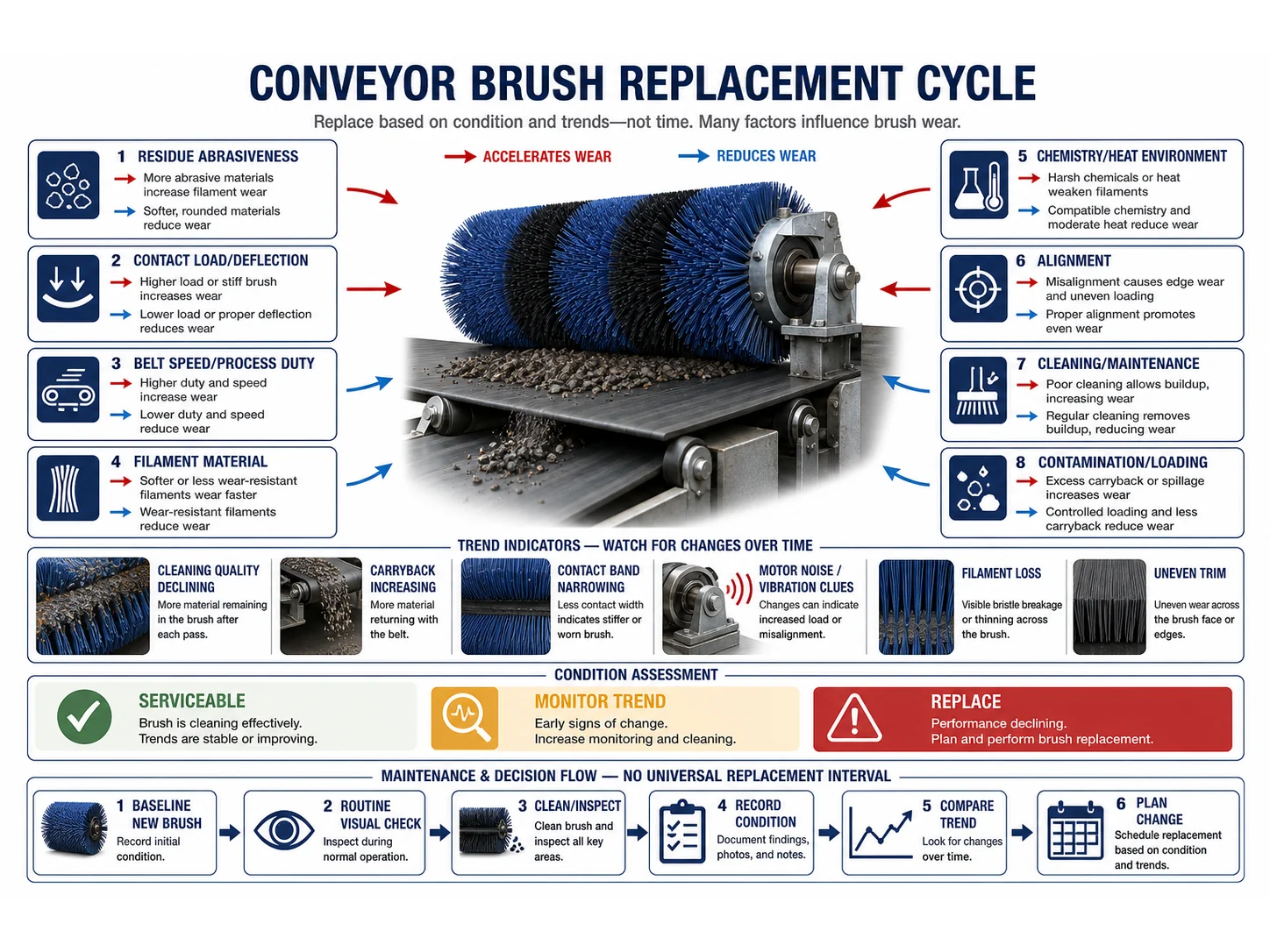
What Is a Conveyor Brush Replacement Cycle?
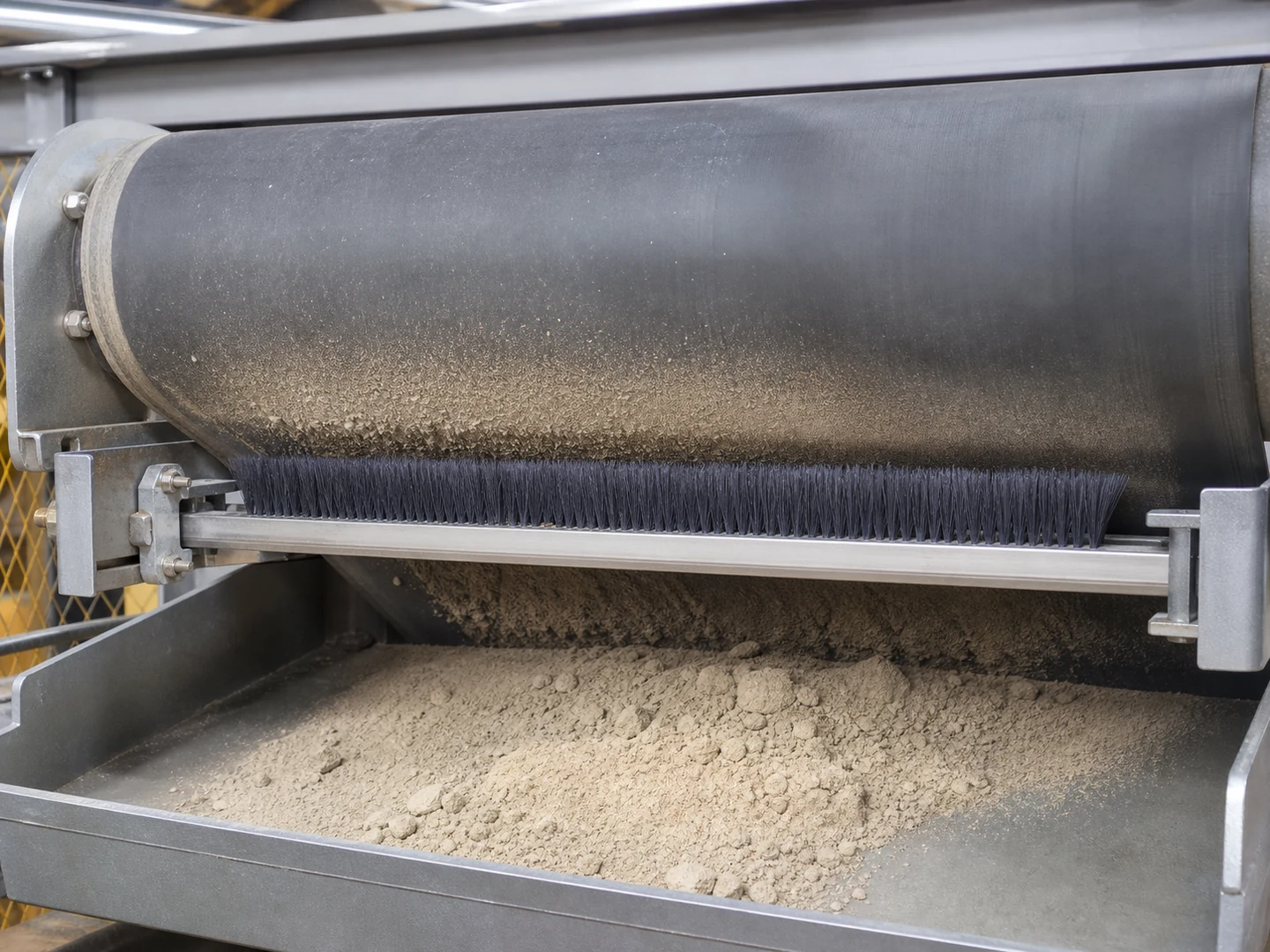
In an industrial setting, a conveyor brush replacement cycle refers to the service life window of a conveyor belt cleaning brush or roller brush before it loses effectiveness. A worn brush can leave residue on the belt, cause belt mistracking, or even damage the belt surface. Rather than relying on a fixed calendar date, the cycle should be determined by measurable wear—bristle length, missing tufts, and cleaning performance.
Common Conveyor Cleaning Brush Types and Their Impact on Replacement Frequency
For the safety point in this section, the relevant OSHA reference is OSHA — Machine Guarding.
For the safety point in this section, the relevant OSHA reference is OSHA — Control of Hazardous Energy.
For brush terminology and construction language, this section references American Brush Manufacturers Association — Brush Lingo.
Different brush styles wear at different rates. Understanding your brush type is the first step in predicting a realistic replacement cycle.
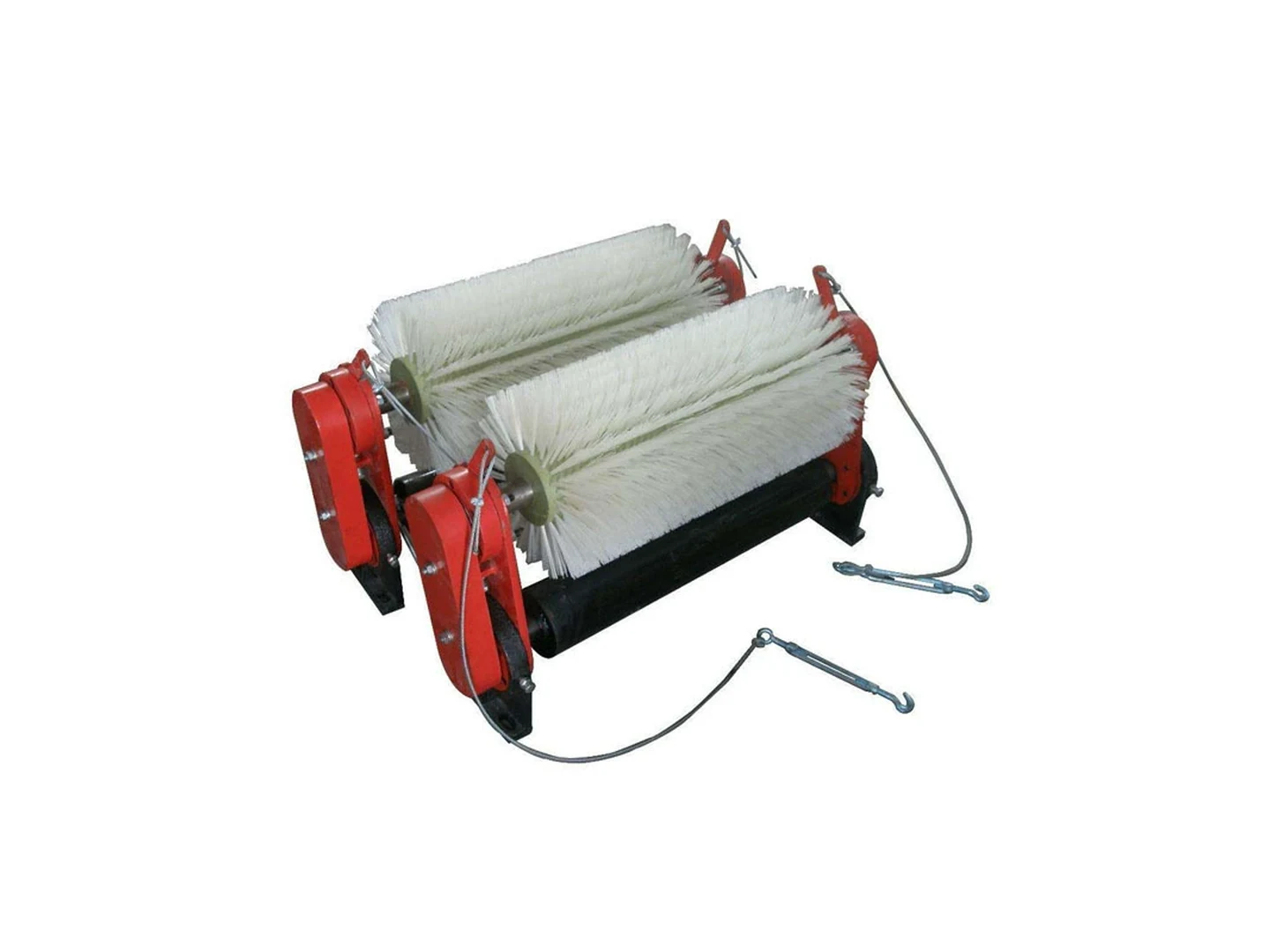
- Roller brush (cylinder brush): A rotating cylinder with bristles embedded around the core. Commonly used in conveyor belt brush cleaner applications. Wear is usually even across the face unless misalignment occurs.
- Spiral wound brush: A continuous strip of bristles wound around a core. Good for light debris, but can wear unevenly if not tensioned properly.
- Flat strip or belt brush: A linear brush strip mounted on a holder. Often used in static wiping or sweeping positions. Replacement is typically needed when the free bristle length falls below a minimum.
- Mounted wheel brush: Small cup or wheel brushes used for targeted cleaning. These have shorter lives and are replaced more often in high-speed lines.
The bristle material also matters: nylon and polypropylene suit general cleaning; abrasive nylon handles stubborn residue; natural fibers work in food-grade applications; and wire bristles are used for heavy-duty scraping. Material choice directly influences the conveyor brush replacement cycle.
Key Factors That Affect Brush Life
A data-driven replacement cycle starts with knowing what accelerates wear. The table below shows the most common factors and their effects.
| Factor | How It Affects Brush Life | What to Watch For |
|---|---|---|
| Belt speed | Higher speed increases bristle impact and friction, shortening life. | Excessive heat buildup, rapid bristle tip rounding. |
| Residue type | Sticky, abrasive, or large-particle residues wear bristles faster. | Adhesive buildup on bristles, bent or broken filaments. |
| Bristle material | Softer materials wear quickly; harder materials may damage the belt if contact pressure is too high. | Loss of stiffness, fraying, melting. |
| Contact pressure | Excessive pressure grinds bristles against the belt; too little pressure reduces cleaning effectiveness and can cause uneven wear. | Flattened bristle face, hot spots on brush core. |
| Cleaning frequency | Continuous operation versus intermittent cycles changes the thermal and mechanical fatigue profile. | Brush remains engaged during belt stops—setback control needed. |
| Chemical exposure | Acids, alkalis, or solvents can degrade bristle polymers or corrode metal components. | Brittle bristles, discoloration, swelling. |
| Heat | Elevated process or friction temperatures soften synthetic bristles and accelerate wear. | Mushrooming tips, melting, loss of tuft integrity. |
| Uneven wear patterns | Misalignment, crowned pulleys, or uneven residue distribution causes localized wear, forcing early replacement. | Wear concentrated on one edge or in a band. |
Inspection and Wear Logging Checklist
Instead of guessing, use this checklist during routine preventive maintenance to track brush condition. Record findings to build a site-specific replacement history.
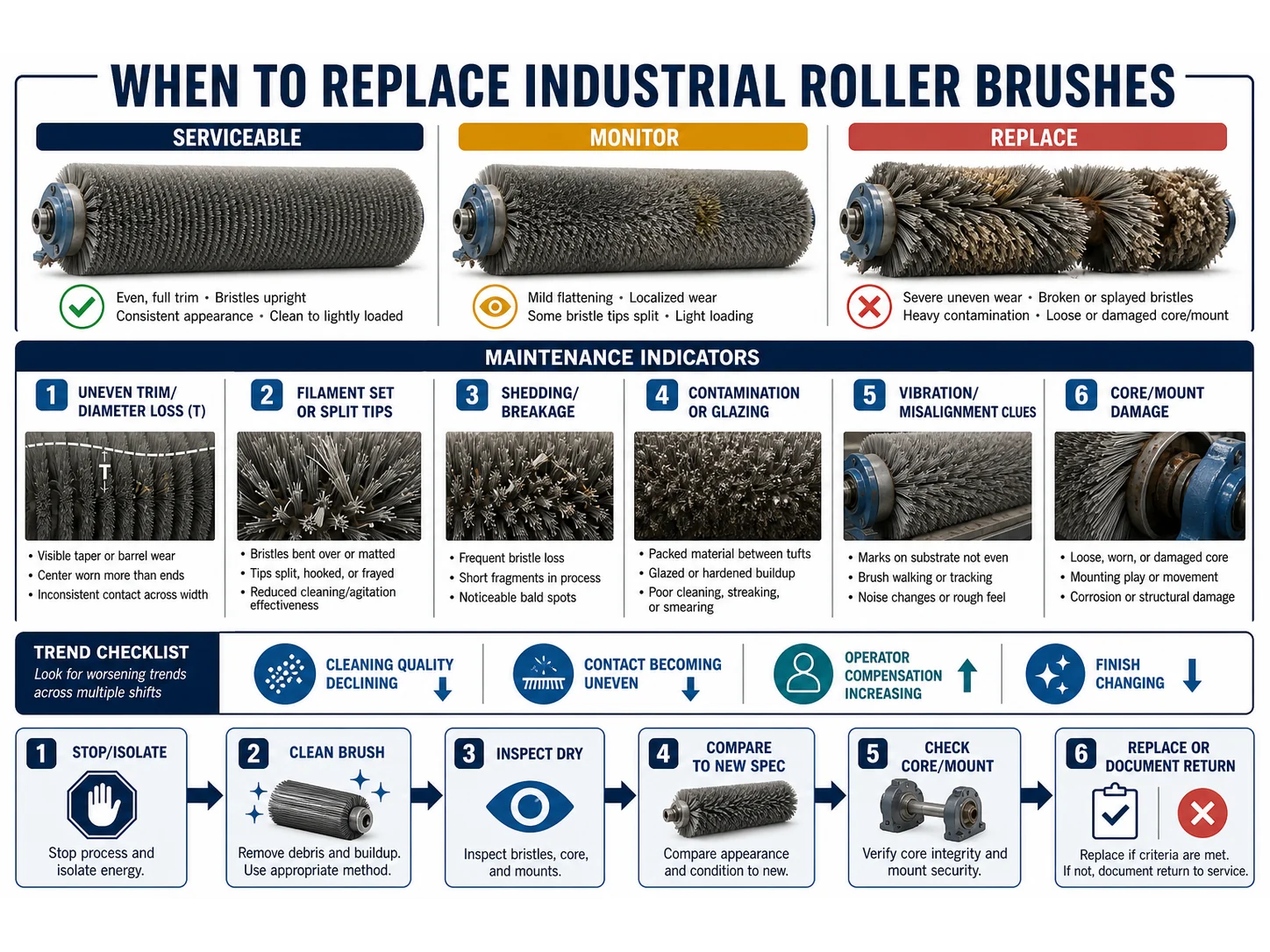
- Measure free bristle length at three points (left, center, right) and compare to the manufacturer’s minimum recommended length.
- Check for missing tufts: more than a few per square foot may signal a need for replacement.
- Inspect for uneven wear: look for stepped or tapered profiles that reduce contact area.
- Examine bristle tips for melting, mushrooming, or chemical discoloration.
- Verify shaft and bearing condition: excessive play or noise can affect brush alignment and wear.
- Log operating hours since installation or last inspection to establish a baseline for your specific line.
- Record cleaning effectiveness: are you seeing residue carryover or frequent belt readjustments? This may indicate a worn brush.
- Check contact pressure: use a pressure indicator film or simple gauge to ensure it matches the original setting.
Common Mistakes When Replacing Conveyor Brushes
Avoid these pitfalls to keep your conveyor brush replacement cycle reliable and cost-effective.
- Replacing only by calendar date. A schedule based solely on time ignores actual wear and can lead to premature replacement or, worse, running a brush past its useful life.
- Running a worn brush until belt damage appears. By the time you see cuts, grooves, or residue buildup, you’ve already added cost for belt repair or replacement.
- Ignoring contact pressure after brush installation. A new brush requires pressure adjustment; if left too high, it will wear fast; if too low, cleaning suffers.
- Mixing bristle materials incorrectly. Using a harder bristle material than the original to get “longer life” can damage the belt surface or change cleaning quality.
- Overlooking chemical compatibility. A brush that works with one cleaning solution may fail quickly if the chemistry changes.
- Not cleaning the brush itself. Built-up residue on the brush can harden and act as an abrasive, speeding up bristle loss.
When a Standard Replacement Cycle Isn’t Enough
For process-critical lines—such as food-grade conveyors, pharmaceutical manufacturing, or high-speed packaging—a generic replacement cycle is risky. In these settings, a worn brush can cause contamination, damage expensive belts, or lead to unplanned downtime. Condition-based replacement supported by data logging, wear sensors, or automated cleaning monitors becomes necessary. If your operation has strict sanitation or uptime requirements, invest in a preventive maintenance system that alerts you when bristle wear approaches a threshold, rather than waiting for a calendar prompt.
Final Takeaway
Your conveyor brush replacement cycle should never be a fixed number. Start with a baseline inspection, document wear over time, and adjust the interval based on the actual condition. Simple logging and regular checks will prevent belt damage, reduce downtime, and keep your conveyor belt brush cleaning system performing as intended.
Practical Use Note
In daily use, the practical test is simple: check whether the brush reaches the full contact area, removes the target residue, and leaves the surface in the required condition. Record what changes when screen opening, belt or surface material, carryback, uptime risk, and whether the brush can clean without process damage changes, because many brush failures are caused by the working condition shifting rather than by the brush body alone.
Frequently Asked Questions
How often should I replace my conveyor belt cleaning brush?
There is no universal answer. Check free bristle length, missing tufts, and cleaning performance. Replace when the brush no longer effectively removes residue, not simply when a calendar date passes.
Can I extend brush life by reducing contact pressure?
Yes, but only to a point. Lower pressure reduces friction and wear, but if cleaning becomes inadequate, you’ll create other problems. Always match pressure to the brush and residue type.
What are the signs a brush needs immediate replacement?
Look for exposed core material, excessive bristle loss, loud operation, visible belt surface damage, or a noticeable decline in cleaning quality that causes carryover onto return rolls or product.
Should all brushes on a line follow the same replacement cycle?
No. A brush at the head pulley typically wears faster than a secondary brush because of larger residue load and belt speed. Track each position independently.
How do I choose the right bristle material for longer brush life?
Consider the residue, operating temperature, and chemical exposure. For example, nylon supports general use, while polypropylene handles acidic conditions better. Consult your brush supplier with specific site data.
Is a roller brush always better than a flat brush for conveyor cleaning?
Not necessarily. A roller brush for conveyor belt cleaning provides continuous rotary action and works well for high-speed lines, but a flat strip brush may be more suitable for edge cleaning or tight spaces. Selection depends on belt design and residue location.
What safety steps should you take when replacing a conveyor brush?
Always lock out and tag out power to the conveyor. Follow site-specific confined space or elevated work procedures if the brush is in a hard-to-reach area. Wear appropriate PPE for the residue and cleaning chemicals.
How can I track brush wear without sophisticated sensors?
Use a simple checklist logger (paper or digital) to record bristle length measurements and operating hours at each inspection. Over time, this data will reveal a reliable replacement trend unique to your line.