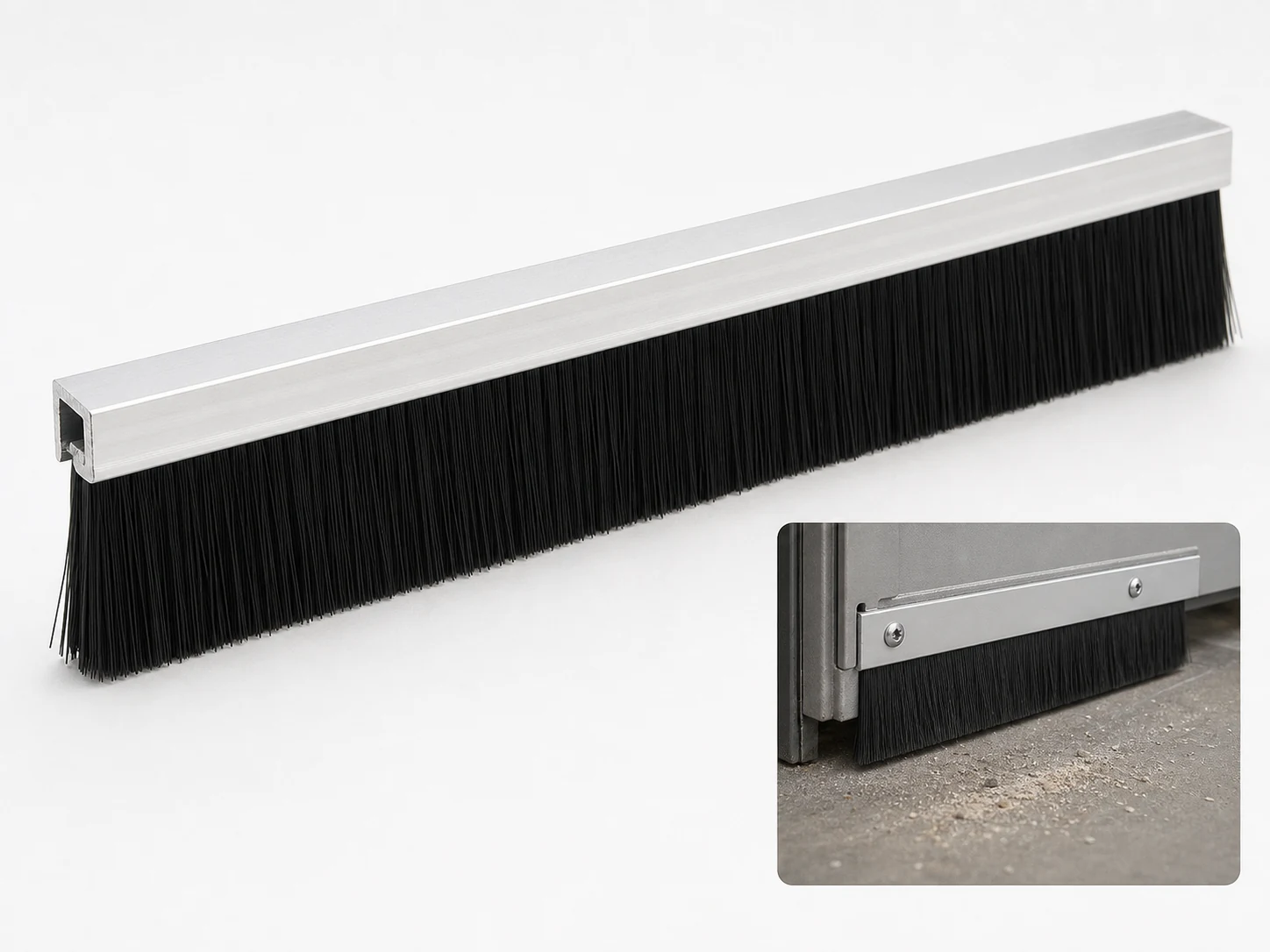
What Is Strip Brush Tension?
Strip brush tension is the controlled deflection of the bristles when the brush seal is installed against a mating surface. It is typically expressed as a percentage of the free bristle height. For example, a 25 mm free-height brush compressed to 20 mm has a 5 mm deflection—a 20% tension. This deflection creates the sealing pressure and conformability that block contaminants while allowing smooth relative movement.
Proper tension ensures the bristle tips remain in constant, gentle contact with the sealing surface. It is a balance: enough pressure to close micro-gaps, but not so much that bristles buckle, permanently deform, or generate excessive drag.
How Tension Affects Sealing Performance
The primary sealing mechanism of a strip brush is the multiple, flexible bristles that form a labyrinth of small air passages. When properly tensioned:
- Light tension (5–10% deflection) may seal against light airborne dust in static or low-speed applications but can be disrupted by air pressure differences or vibration.
- Moderate tension (15–25%) creates a more effective barrier for general dust and minor airflow, common in conveyor sealing and access panels.
- Higher tension (25–40%) is used for heavy particle settling, spray, or higher-pressure differentials, but increases wear and motor load in dynamic applications.
Beyond 40%, most synthetic bristles begin to buckle or take a permanent set, reducing life and inconsistent sealing. The correct tension range is always a compromise between sealing effectiveness and acceptable service life.
Bristle Deflection Guidelines by Application
The table below offers starting-point deflection ranges based on common industrial sealing applications. Always validate with feeler gauge measurements and visual inspection under actual operating temperatures and speeds.
| Application | Recommended Deflection Range | Notes |
|---|---|---|
| Light dust sealing (cabinet doors, cleanroom pass-throughs) | 10–15% | Lowest friction; verify with dust lamp test |
| Moderate particle sealing (conveyor sides, access covers) | 15–25% | Good general-purpose starting point |
| Heavy particle or airflow sealing (spray booths, bulk handling) | 25–35% | Requires stiffer bristle materials; monitor heat buildup |
| Washdown / food processing (frequent moisture, cleaning chemicals) | 20–30% | Use moisture-resistant bristles (polypropylene, nylon) |
| High-temperature environments (oven seals, hot air ducting) | 15–20% | Account for thermal expansion; allow for bristle softening |
Bristle stiffness varies by material. For example, stainless steel bristles require significantly less deflection (often 5–15%) than soft polypropylene to achieve similar sealing forces.
How to Measure Bristle Deflection Correctly
Accurate measurement is the first step to repeatable tension settings. Use these steps:
- Measure the free bristle height (Hfree) from the back of the brush holder to the bristle tips on a sample off the machine or in an uncompressed section.
- Install the brush at its intended working position and measure the gap between the mounting surface and the sealing surface (Hinstalled).
- Calculate deflection: Deflection (%) = [(Hfree – Hinstalled) / Hfree] × 100.
- Check at multiple points along the length, especially at joints and holder connections. Use stacked feeler gauges or a digital depth gauge for uneven surfaces.
For rotary or curved applications, measure deflection at the center of the brush contact zone where sealing demands are highest.
Adjustment Methods for Strip Brush Tension
Once measured, tension can be fine-tuned using one or more of these approaches:
- Adjust mounting bracket slots: Most aluminum or steel brush holders have slotted holes for lateral adjustment. Moving the entire assembly closer to or farther from the sealing surface changes deflection.
- Use shims behind the holder: Thin metal or plastic shims allow precise, incremental tension increases without re-drilling mounting holes.
- Change holder profile: Angle-mount holders or specialized profiles (e.g., 90-degree) can redirect bristle contact pressure without changing the base position.
- Trim bristles (last resort): If bristles are excessively long and cannot be adjusted by holder position, trimming can reduce tension. Use a hot knife for synthetic bristles to seal ends and prevent fraying. This is irreversible—document the new free height.
Common Mistakes When Adjusting Strip Brush Tension
Even experienced teams can fall into these traps. Avoid them to save rework and brush life:
- Using one deflection number for all applications – Light dust requires far less deflection than heavy particle blanking. Match tension to the real contaminant load.
- Ignoring brush holder alignment – A twisted or bowed holder creates uneven tension, hot spots, and localized wear. Check holder straightness before fine-tuning.
- Over-tightening to “be safe” – Excessive deflection increases drag, wears motors, and can cause bristles to snap or take a permanent set, reducing long-term sealing.
- Measuring without the actual operating load – Process vibration, panel flex, or shaft movement changes the effective deflection. Measure under normal equipment conditions.
- Forgetting thermal effects – Nylon and polypropylene soften and expand with heat, reducing effective tension. In high-temperature zones, set deflection slightly lower cold to account for expansion.
When Tension Adjustment Is the Wrong Choice
Proper tension can solve many sealing issues, but it has clear limits. Stop chasing tension if you observe:
- Permanently bent or splayed bristles – Once bristles have taken a set, restoring by increasing tension only accelerates failure. Replace the brush.
- Broken or missing bristle clusters – Dust and particles can pass through gaps that tension alone cannot close. Damaged brush strips need replacement.
- Worn holder or mounting track – A loose or corroded holder can vibrate, making consistent contact impossible. Repair the mounting system first.
- Changed process requirements – If airflow rates, particle size, or washdown pressures have increased beyond the brush’s original design, a different bristle material or a dual-seal configuration may be necessary.
In these cases, treat tension adjustment as a diagnostic step, not a permanent fix. Escalate to a review of brush specification and operating conditions.
Final Takeaway
Strip brush tension is a low-cost, high-impact variable that directly controls sealing effectiveness and equipment life. Measure deflection as a percentage of free height, match the range to your contaminant type, and use slotted holders or shims for fine adjustment. When bristles are worn or the process has changed, no amount of tension can compensate—step back, collect the data, and select the right brush for the job.
Frequently Asked Questions
How do I know if my strip brush tension is too high?
Look for excessive motor current, squeaking or chattering sounds, visible bristle buckling, or a rapid increase in bristle wear. Measure deflection and compare to the recommended range for your application; if it exceeds 35–40% for most synthetic brushes, it is likely too high.
Can I use the same deflection for nylon and stainless steel bristles?
No. Stainless steel bristles are much stiffer. For equal sealing force, a steel brush typically needs only 5–15% deflection, while nylon might require 20–30%. Always consult the manufacturer’s stiffness data or do a feeler gauge comparison on your specific profile.
What is the minimum bristle deflection needed for light dust sealing?
A starting point is 10–15% deflection. Below 10%, even slight installation errors or panel flex can open gaps. Verify with a dust lamp test or particle test result on the clean side.
How often should I check and adjust strip brush tension?
Include a quick visual and feeler gauge check during scheduled preventive maintenance. In high-cycle or harsh environments, check based on wear condition, operating load, and the equipment maintenance plan of operation. Whenever sealing performance drops or wear accelerates, measure deflection immediately.
Does strip brush tension affect noise levels?
Yes. Over-tensioned brushes can generate squeaking or high-frequency noise, particularly with stiffer materials and smooth metal surfaces. Lowering deflection slightly can reduce noise without sacrificing basic sealing for non-critical applications.
Can I adjust tension by trimming bristles?
Yes, but only if the brush is too long for the available adjustment range and cannot be repositioned. Trimming reduces the free height, so the same installed gap results in lower deflection. Use a hot knife or manufacturer-recommended tool to prevent frayed ends. Document the new height for future maintenance.
What is the best way to measure deflection for strip brushes in curved installations?
Use a contour gauge or take feeler gauge measurements at several points along the curve. Calculate deflection at the tightest radius and the average contact zone. Ensure the brush holder matches the curve accurately; a poorly fitted holder will create high spots that distort tension.
Is there a standard deflection I can use for all strip brushes?
No single number works for every application. A 20% deflection is a safe starting point for many general-purpose dust sealing applications, but always verify against the actual contaminant, speed, and temperature. Using a fixed percentage without considering bristle stiffness and environmental conditions leads to premature failure or leakage.
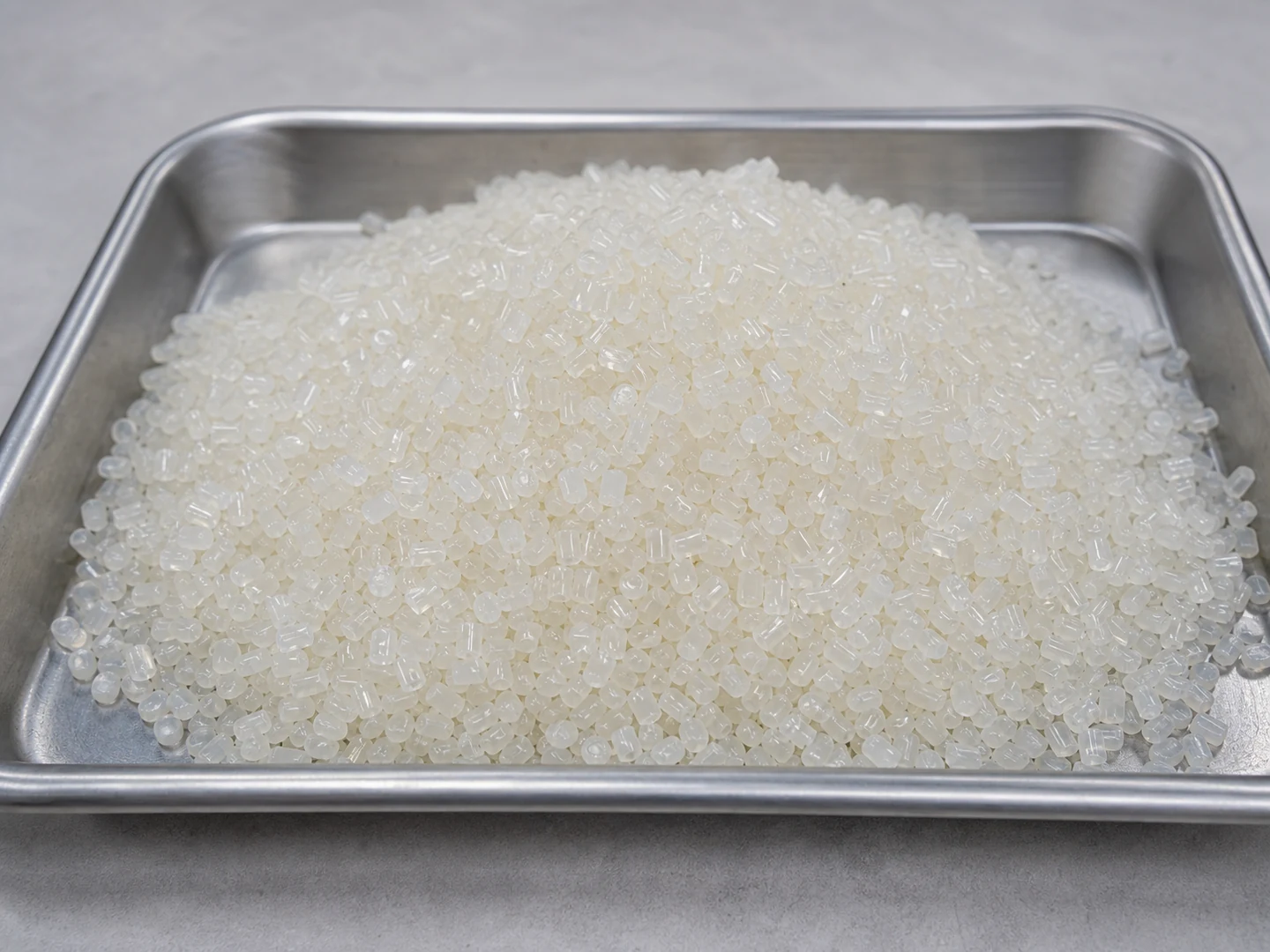
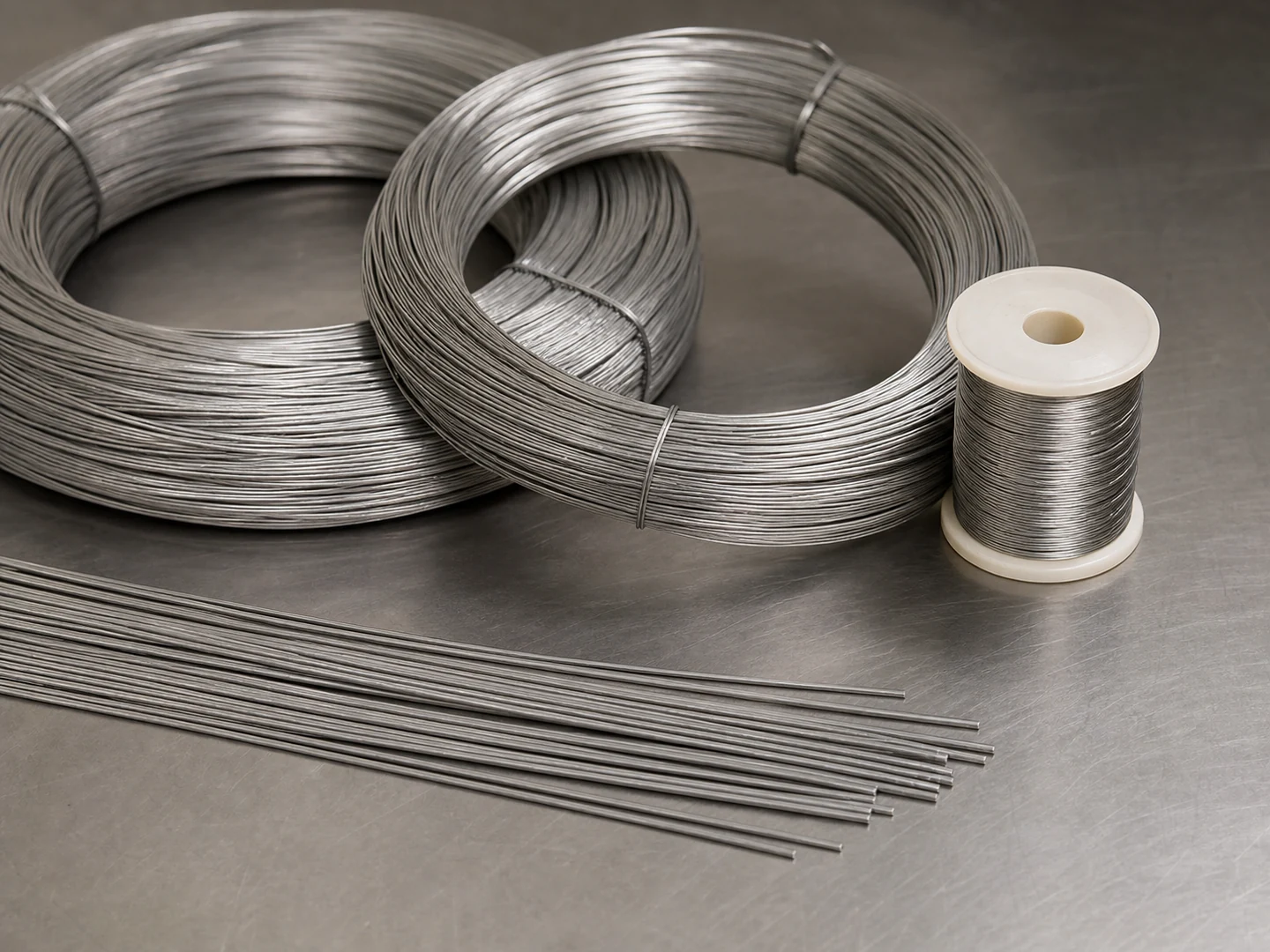
Which bristle material fits this job — Nylon PA, AISI 304 Stainless Steel Wire or AISI 316 Stainless Steel Wire?
| Material | Continuous temperature (°C) | Peak temperature (°C) | Water absorption | Hardness |
|---|---|---|---|---|
| Nylon PA | 93 | 121 | 0.3–9% by PA grade and conditioning | Medium to firm; filament diameter and trim length control bending force. |
| AISI 304 Stainless Steel Wire | 400 | 500 | 0% | Rockwell B 70–95 depending on temper and cold work |
| AISI 316 Stainless Steel Wire | 400 | 500 | 0% | Rockwell B 70–95 depending on temper and cold work |
| Horsehair | 60–80 | 100–120 | 8–15% | — |
| PBT | 120–140 | 160–180 | 0.05–0.20% | Shore D 80–90 |
Figures as published by Brushtec / DuPont; Alleima; Perlon. Confirm the exact grade against the supplier datasheet before ordering.
What should replace Strip Seal Brushes for strip brush?
- Strip Seal Brushes — Strip brushes create a linear barrier or guide; machine-table brush plates distribute load and support products over a broad area. Closest alternative: Machine Table Brush Plates.
- Nylon PA — Compare Nylon PA with PP, PBT, PET. Change material when wet stiffness, temperature, chemical resistance, conductivity, particle shedding, or surface marking becomes the limiting factor.
- AISI 304 Stainless Steel Wire — Use AISI 316 stainless steel wire for chloride, marine, dairy, beverage, chemical washdown, or higher pitting-resistance requirements. Use carbon steel for dry aggressive cutting and brass or abrasive nylon for lower marking risk.
- AISI 316 Stainless Steel Wire — Use AISI 304 for general wet service without persistent chlorides. Use duplex, 904L, or higher-alloy wire when AISI 316 is insufficient for chloride stress-corrosion, severe crevice conditions, or aggressive acids.