What Is Custom Brush Order Planning?
Custom brush order planning is the act of defining how many specialty brushes to order and when to initiate the order, while accounting for all design‑to‑delivery variables. It bridges the gap between a concept sketch and an inbound shipment, reducing the risk of stockouts, rushed tooling changes, or receiving brushes that do not fit the application. Unlike off‑the‑shelf products, custom brushes almost always require a chain of approvals, material procurements, and quality gates that make early planning essential.
Key Factors That Shape Order Quantity and production schedule
Several interconnected factors determine how many brushes you should order and how long you will wait for them. Ignoring any one can upset the entire schedule.
- Material availability: Specialty wire grades, temperature‑resistant filaments, and uncommon hub materials (such as stainless steel or engineered plastics) often have longer procurement production schedules than standard stock. A material shortage can push out production by weeks.
- Tooling: If the brush shape, trim length, or mounting requires a custom forming head, trimming fixture, or winding setup, your supplier will need time to design, machine, and qualify that tooling.
- Drawing confirmation: Before production can begin, both parties must sign off on a detailed dimensional drawing. Back‑and‑forth revisions and approval cycles add days or even weeks.
- Sample testing: When the brush is a new design or will be used in a critical process, a pre‑production sample is often necessary to validate performance. Each sample iteration requires setup, production, shipping, and evaluation.
- Production scheduling: The supplier’s shop‑floor capacity and existing order backlog directly affect your place in the queue. A full production pipeline means a longer wait, regardless of other factors.
- Packaging and labeling: Custom packaging (kitting, private‑label boxes, barcoding) adds time at the end of the line and may require ordering special packaging materials that have their own production schedules.
- Documentation: Inspection reports, certificates of conformance, material traceability documents, and First Article Inspection reports require additional processing time and can delay shipment if not planned early in the order.
Comparing Repeat, Modified, and Fully Custom Brush Orders
Not all custom brush projects start from a blank slate. Understanding where your order falls on the standard‑to‑custom spectrum helps you anticipate the planning effort required.
| Order Type | Planning Complexity | Lead-Time Drivers | Key Considerations |
|---|---|---|---|
| Standard repeat order | Low | Stock material, existing tooling, minimal paperwork | Confirm current raw material pipeline and production slot availability; may be the shortest production schedule. |
| Modified existing brush | Medium | New material or slight dimension change, drawing update, possible sample validation | Drawings must be revised and re‑approved; a sample may be needed even for small changes. |
| Fully custom brush (new design) | High | Material sourcing, tooling fabrication, multiple sample iterations, detailed documentation | Requires the longest planning horizon; pilot orders are strongly recommended before full batches. |
How to Plan Your Custom Brush Order: A Step‑by‑Step Guide
Bringing discipline to the upfront steps can cut weeks off your timeline and avoid costly rework.
- Finalize brush specifications and performance requirements. Nail down dimensions, filament type, trim length, hub style, and the environment (temperature, chemicals, speed) where the brush will operate. Incomplete specs cause drawing revisions.
- Request a supplier drawing for approval. Even if you provide a detailed sketch, the manufacturer will issue a formal drawing. Review it carefully, especially tolerances and mounting details.
- Confirm material production schedules. Ask for the current production schedule on the specific material you need. If it is unusually long, explore whether an acceptable alternative is in stock.
- Decide on sample testing needs. Based on the design’s novelty and the application’s criticality, determine if a pre‑production sample is necessary. If yes, budget at least one round of testing before final production.
- Confirm production slot availability. Get a realistic estimated ship date that accounts for the supplier’s existing backlog.
- Plan packaging and documentation early. If you need special packaging or quality documents, communicate those requirements with the order, not after production has started.
Common Mistakes in Custom Brush Order Planning
Rushing the front‑end steps to “save time” almost always backfires. Avoid these frequent pitfalls:
- Pushing for urgent production before drawings or samples are approved. You risk receiving a batch of brushes that do not meet specifications, wasting both time and material.
- Ignoring material production schedules. Assuming all materials are off‑the‑shelf can blindside a project with weeks of unexpected delay.
- Underestimating the value of a pilot sample. For a new design, skipping the sample phase can lead to a full production batch that performs poorly, causing scrap and reorder costs.
- Ordering the entire quantity before validating the first article. A phased approach—pilot then remainder—reduces financial risk and allows you to incorporate lessons from the first run.
- Not factoring in packaging and documentation delays. A finished brush sitting on the dock while custom boxes are printed or inspection reports are compiled represents a failure of planning, not production.
When Pilot Samples, Phased Ordering, or Capacity Review Are Essential
Some situations demand more than just a drawing approval and a single production order.
- New design without a proven track record: A pilot sample is almost mandatory. It validates form, fit, and function before scaling up.
- High‑value or high‑volume orders: Phased ordering reduces inventory risk. Release 10–20% first, verify performance, then authorize the balance.
- Tight‑tolerance applications: When brush dimensions must hold a few thousandths of an inch, multiple sample iterations may be needed to dial in tooling.
- Supplier capacity near its limit: Request a capacity review early. If the supplier’s line is already saturated, you may need to adjust your expected ship date or split the order across production windows.
Final Takeaway
Custom brush order planning is not about picking a number and a calendar date; it is a coordinated timeline of approvals, material checks, and quality gates. Start early, validate designs with samples when uncertainty is high, and maintain open, detailed communication with your supplier. Treat planning as a shared, front‑loaded task, and you will avoid the most common delays that turn a straightforward custom brush order into a scheduling headache.
Frequently Asked Questions
How far in advance should I start planning a custom brush order?
A good rule is to initiate the process at least twice the quoted production production schedule before you need the brushes on your floor. This cushions drawing revisions, sample iterations, and material surprises. For a fully custom design, starting four to six months ahead is not unusual.
What happens if I skip the sample testing phase?
You accept the risk that the production batch may not meet your performance requirements. In applications where a brush failure can stop a production line or damage product, the cost of rework or scrap typically exceeds the time and expense of a pilot sample.
Can I shorten production schedule by paying extra for expedited service?
Sometimes a supplier can apply a rush fee to prioritize tooling or tap an alternate material source, but expediting only compresses a few processes that are within the supplier’s control. It cannot shorten material procurement production schedules or eliminate mandatory drawing approvals.
What information does a supplier need to provide a reliable production schedule estimate?
You should supply a complete brush drawing or specification sheet, the material grade, the required quantity, any special packaging or documentation, and your target delivery location. Without this, any production schedule given is a rough guess.
How do I know if I need a pilot order or a full production run?
If the brush design is new, the application is safety‑ or quality‑critical, or the order quantity represents a significant investment, a pilot order is the safer path. For repeat orders of a proven design, a pilot is often unnecessary.
Are there any documentation requirements that can delay my order?
Yes. Certificates of conformance, material traceability reports, First Article Inspection reports, and custom test data all require time to prepare and verify. Request only what you truly need, and communicate those needs before the order is scheduled.
What if my custom brush design requires a specialty material that is hard to source?
Start material sourcing discussions early. Ask your supplier for current availability windows and whether a functionally equivalent alternative exists. In tight markets, you may need to place a material reservation or accept a longer production schedule while the supplier secures the raw stock.
Technical References
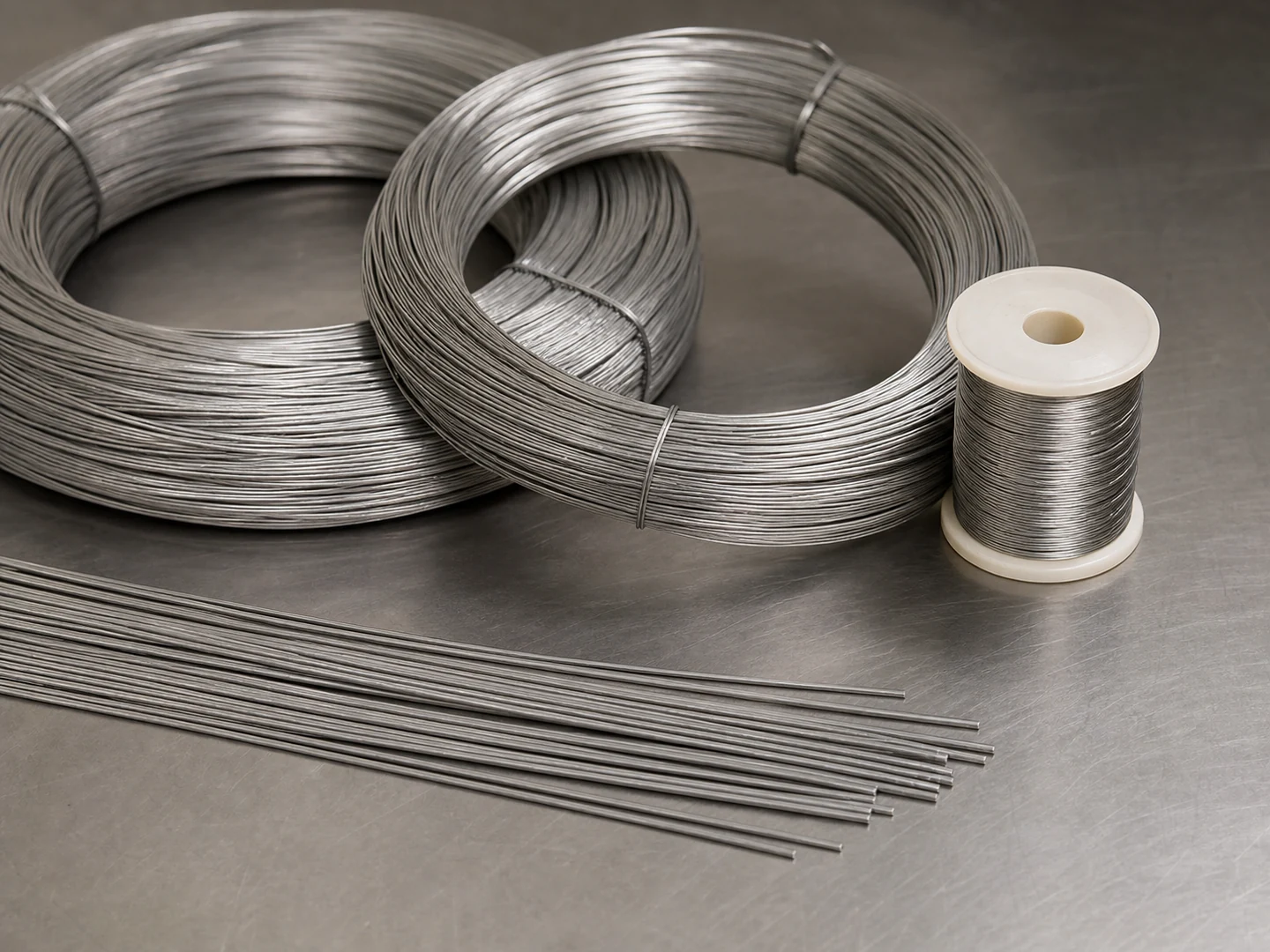
Which steel wire grade fits this job — AISI 304 Stainless Steel Wire, AISI 316 Stainless Steel Wire or Carbon Steel Wire?
| Wire grade | Continuous temperature (°C) | Peak temperature (°C) | Water absorption | Hardness |
|---|---|---|---|---|
| AISI 304 Stainless Steel Wire | 400 | 500 | 0% | Rockwell B 70–95 depending on temper and cold work |
| AISI 316 Stainless Steel Wire | 400 | 500 | 0% | Rockwell B 70–95 depending on temper and cold work |
| Carbon Steel Wire | 200–300 | 350–450 | 0% | Rockwell C 40–60 |
| Galvanized Steel Wire | 150–200 | 250–300 | 0% | Rockwell B 70–100 |
Figures as published by Alleima; Material manufacturer TDS / ISO / ASTM / industry reference. Confirm the exact grade against the supplier datasheet before ordering.
When is AISI 304 Stainless Steel Wire the wrong choice?
- AISI 304 Stainless Steel Wire — Avoid using AISI 304 as the default in marine, brine, hypochlorite, and persistent chloride environments; use AISI 316 when higher pitting and crevice-corrosion resistance is required.
What should replace AISI 304 Stainless Steel Wire when it stops working?
- AISI 304 Stainless Steel Wire — Use AISI 316 stainless steel wire for chloride, marine, dairy, beverage, chemical washdown, or higher pitting-resistance requirements. Use carbon steel for dry aggressive cutting and brass or abrasive nylon for lower marking risk.