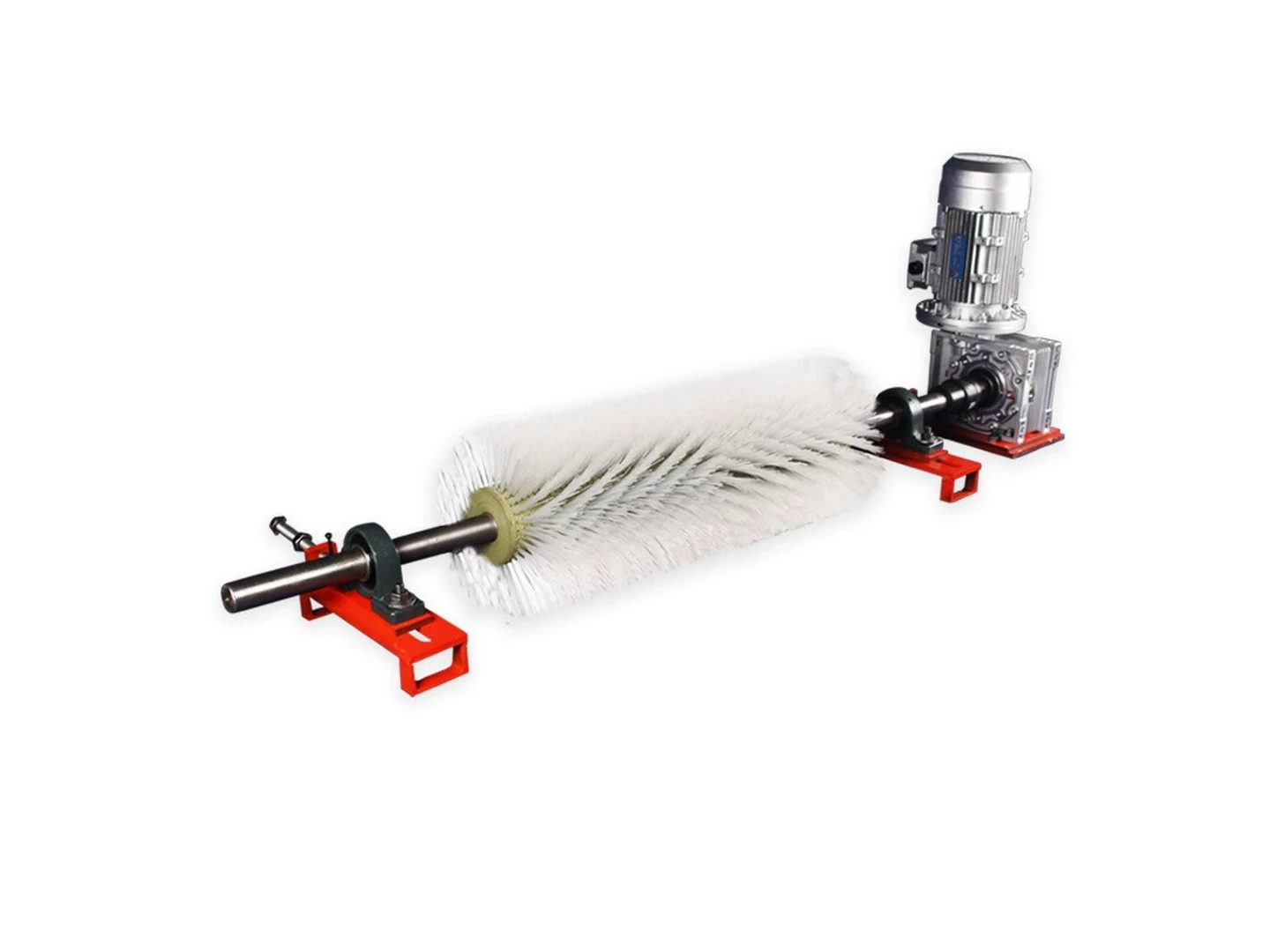
What Is Order Tracking in Custom Brush Manufacturing?
In the context of custom brushes, order tracking means more than checking a shipping status. It is a structured process of collecting and verifying production progress information at defined stages—from raw material procurement and forming/winding to trimming, inspection, and packaging. A good tracking system helps you confirm:
- That the correct materials and specifications are being used.
- That the actual production progress matches the agreed schedule.
- That any necessary in-process corrections happen before final assembly.
- That the shipment is prepared according to your packaging and labeling requirements.
This approach is especially valuable for first-time custom orders, rush orders, or orders with critical tolerances, complex geometries, or uncommon filament materials.
Core Stages of a Production Monitoring Timeline
A reliable tracking process follows the natural flow of custom brush manufacturing. Break the timeline into four stages and ask for a status update at each handoff.
- 1. Order Confirmation & Production Slotting Confirm that your purchase order is received, accepted, and scheduled. Ask for a confirmed production start date, not just a promised ship date.
- 2. Material Readiness & First Production Milestone Verify that the base materials (channel, core, filaments) are sourced and approved. For filament brushes, the first milestone might be when winding or tufting begins.
- 3. In-Process Milestones (Forming, Trimming, Inspection) Request photos or short video clips of the brushes mid-production. Focus on key characteristics: brush face length, trim length, overall dimensions, base profile, and density. For custom roller brushes, request a photo of the completed helix or pattern.
- 4. Final Inspection, Packaging & Shipping Confirm that the brushes pass the supplier’s internal quality checks and are packed according to your specifications (e.g., individual polybag, labeled boxes, moisture protection). Request the final shipping documents courier tracking numb
Comparison: Common Tracking Methods
| Tracking Method | Best For | What You Get | Limitations |
|---|---|---|---|
| Email status updates | Standard orders with a trusted supplier | Written confirmation at each stage; can include photos | Relies on supplier responsiveness; no independent verification |
| Supplier’s production portal | Repeat orders with a supplier who offers digital tracking | Online status indicators, milestone timestamps, possibly batch records | Only as good as the data entered; may not capture nuanced issues |
| Scheduled video calls or WeChat updates | Rush orders or first-time complex orders | Real-time view of work-in-progress; ability to ask questions | Language barriers; time zone differences; you must be available |
| Third-party inspection service | High-value, critical-tolerance, or safety-related brushes | Independent dimensional checks, material verification, function testing | Added cost and production schedule; requires clear specification sheets |
| On-site visit by your team | Very large orders, new supplier qualification, or failure investigation | Full transparency of the process, raw material stores, and quality system | Travel expense, time; only a snapshot of production |
What Information to Request from Your Supplier
Even a cooperative supplier will not share everything unless you ask. Build a simple checklist for each order and send it with your purchase order or shortly after.
- Confirmed order number, production scheduler name, and contact.
- Production Gantt chart or timeline showing start date, key milestones, and planned completion date.
- Material batch numbers, mill test reports (for steel channels or cores), or filament lot data if you require traceability.
- Photos or videos of the first off-the-line sample at an early production stage.
- In-process inspection reports: brush length, overall height, trim length, density (tufts per hole), face width.
- Any non-conformances or deviations found during production and how they were resolved.
- Final packing list, box labels, and shipping documents before they leave the factory.
Focus your requests on the characteristics that matter most for your application—whether that is OAL tolerance, filament retention force, or chemical resistance of the bristles.
Common Mistake: Assuming Production Is On Schedule Without Verification
One of the most frequent errors is simply waiting for an automated shipping announcement. Even when a supplier has great lead-time performance, factors such as material shortages, machine breakdowns, labor availability, or unexpected quality rework can delay production. Without intermediate checkpoints, you may discover a two-week delay only when the shipping window is missed.
How to avoid it:
- Agree on at least three milestone updates before the ship date.
- Set a calendar reminder to ask for the update if it is not received on time.
- For tight project deadlines, ask the supplier to send a short video or photo as proof that the order is in the promised production queue.
- If a milestone update is vague or repeatedly delayed, treat it as a warning sign and escalate communication (e.g., from email to a live call).
When On-Site Inspection Becomes Necessary
Not every order justifies the expense of an on-site visit, but certain situations raise the need for direct verification:
- First order with a new supplier – Validate the supplier’s production capability and quality system before scaling up.
- Critical-tolerance brushes – When the allowed deviation is very small (e.g., ±0.2 mm on overall length), in-line inspection can prevent a full batch rejection.
- High-value or safety-related brushes – Brushes used in food processing equipment, medical devices, or hazardous environments where failure risk is unacceptable.
- Complex multi-step assemblies – Brush strips with integrated holder profiles, bonded seals, or co-extruded wipers where fit and bond integrity are hard to verify remotely.
- Repeated quality issues – If a supplier has failed to meet specifications on prior orders, an on-site review helps determine if the root cause is systemic.
If an on-site visit is not practical, consider a paid third-party inspection before shipment. This costs a fraction of a full order rework and gives you an independent report with measurements and photos.
Final Takeaway: Build Your Monitoring Process Before You Place the Order
Production monitoring is not about mistrusting your supplier; it is about aligning expectations and catching issues when they are still small and fixable. For your next custom brush order, decide in advance which stages you will verify, agree on those milestones with the supplier, and request specific evidence at each step. For standard brushes with a proven supplier, a simple three-point check (material ready, first-off sample, pre-ship photo) is often sufficient. For critical orders, add weekly updates or a video call, and budget for a third-party inspection when the risk justifies it.
Frequently Asked Questions
How often should I request production updates?
Aim for updates at three to five key milestones depending on the production schedule and complexity. For a short lead-time order (a project-specific schedule), weekly updates may be enough. For longer production schedules (8+ weeks), a milestone-based schedule is better—for example, when raw materials are ready, after the first 20% of production, at the halfway point, after final inspection, and just before shipping.
What if the supplier refuses to share photos or milestone data?
Some suppliers are protective of their processes. Explain that the request is for quality assurance, not for copying proprietary methods. If a supplier consistently refuses reasonable transparency, consider this a red flag for your supply chain risk. For critical orders, build information-sharing requirements into your purchase agreement or choose a supplier who is willing to collaborate.
Can I track my order online without special portals?
Many small to medium brush manufacturers do not offer customer-facing portals. In these cases, email with attachments remains the most common method. Ask the supplier if they can use a shared cloud folder for milestone photos, or request video clips via WhatsApp or WeChat. A simple status spreadsheet shared in real time can also work.
Is a third-party inspection always necessary?
No. For low-risk, low-value, or repeat orders from a qualified supplier, internal tracking and photos are often sufficient. Third-party inspections become valuable when the cost of failure is high, the tolerances are tight, or the supplier is unproven. Weigh the inspection cost against the cost of production downtime or scrap if the brushes are out of spec.
How do I handle a late shipment when I had no intermediate updates?
First, contact the supplier immediately for a detailed status and root cause. Ask for photographic proof of the current production stage. If the delay threatens your project, request expedited production or partial shipments. Going forward, implement milestone-based tracking and consider a penalty clause for unverified delays in your purchase contract.
What specific brush dimensions should I ask to be verified during production?
Focus on the dimensions that directly affect fit and function. For a custom roller brush: overall length, core ID/OD, brush face length, and overall diameter (trimmed OD). For a brush strip: overall height, backing width, filament trim length, and mounting hole spacing. Always provide a dimensional drawing with highlighted critical-to-function features.
Can production monitoring reduce the total production schedule?
Yes, indirectly. Proactive monitoring helps identify and resolve issues early, reducing the need for rework and last-minute air freight. It also signals to the supplier that you are engaged, which often improves their prioritization. Additionally, data from tracked orders can help you forecast future production schedules more accurately.
What should I do if a milestone shows a deviation from my approved sample?
Request a formal deviation report from the supplier explaining the cause, impact, and corrective action. If the deviation affects function, ask for physical samples or additional photos showing the affected area. For critical deviations, pause production until you approve a remedy. Document all communication in writing for future accountability.
Technical References
When are Roller and Conveyor Brushes the wrong choice?
- Roller and Conveyor Brushes — Use a stationary strip brush for a fixed linear seal or wipe, or another process when rotating line contact interferes with the product or cannot discharge the residue safely.
What should replace Roller and Conveyor Brushes when they stop working?
- Roller and Conveyor Brushes — Roller and conveyor brushes hold cylindrical line contact across a working width, including helix-wound builds where the filament path is set to move loosened material toward one side; a strip brush holds the same line without rotating, so it seals or wipes but cannot carry residue along the width.