What Is a Sponge Shoe Brush Component?
A sponge shoe brush component is an integrated or replaceable cleaning element that combines a flexible foam body with attached bristles, abrasive media, or a textured surface. It typically mounts onto a brush core or holder and is designed for applications that require gentle scrubbing, liquid absorption, or the ability to conform to irregular shapes—common in bottle brushes, glassware cleaners, and laboratory cleaning tools.
In many designs, the sponge acts as both the cleaning substrate and the carrier for bristle tufts. Alternatively, the sponge may be the primary scrubbing surface, with the “shoe” referring to a molded backing that clips onto a handle or machine interface.
Standard versus Custom Sponge Shoe Components
Standard sponge shoe components offer faster availability and lower per-unit cost for predictable applications. Custom options become worth evaluating when off-the-shelf parts fail to meet fit, material, or performance requirements.
| Factor | Standard Sponge Shoe | Custom Sponge Shoe |
|---|---|---|
| production schedule | Days to weeks from stock | Weeks to months; tooling required |
| Cost per Unit | Lower at low to medium volume | Higher setup; lower unit cost at high volumes possible |
| Dimensional Fit | Fits common handles / mounts | Precision fit to your existing hardware |
| Material Choices | Limited sponge and bristle types | Wide range of foams, bristle materials, density, coatings |
| Performance Optimization | Balanced for general use | Tuned for specific fluid, temperature, abrasion, or chemical requirements |
| Sample Confirmation | Usually not needed | Prototype or pre-production sample strongly recommended |
Information to Include in a Custom Sponge Shoe RFQ
Providing the right details early helps suppliers quote accurately and deliver parts that match your application. A complete inquiry should cover:
- Brush type and intended function: Describe the overall brush and the role of the sponge shoe (e.g., wiping, scrubbing, absorbing).
- Drawing or reference sample: A dimensioned drawing (PDF or CAD) is ideal. If unavailable, supply a physical sample or detailed photos with measurements.
- Critical dimensions: Overall length, width, thickness, mounting hole diameter, and any profile tolerances.
- Bristle specifications (if applicable): Material (e.g., polyester, nylon, natural, abrasive-filled), diameter, trim length, and tuft pattern or density.
- Sponge material: Open-cell or closed-cell, desired density, color, and any requirements for flammability or chemical resistance.
- Core or holder material: If the sponge shoe includes a rigid backing or mounting insert, specify the material: plastic (ABS, polypropylene), metal (stainless steel, aluminum), or other.
- Mounting interface: How the shoe attaches to the handle or machine—threaded stud, snap-fit, adhesive, magnetic, etc.
- Quantity and estimated annual usage: Helps the supplier suggest the most cost-effective production method (molding, die-cutting, assembly).
- Operating environment: Temperature range, chemical exposure, wet/dry cycle, sanitation requirements, and any relevant certifications (e.g., supported by food-contact documentation materials for food contact).
- Packaging and documentation: Requirements for bulk packaging, individual wrapping, labeling, inspection reports, or material certifications.
How Design Choices Affect Fit, Durability, and Cost
Each specification you make influences how the sponge shoe performs and what it costs. Understanding these trade-offs helps you avoid over-engineering while still meeting functional requirements.
- Sponge density and cell structure: Higher density foams resist tearing and absorb less liquid, making them more durable for abrasive scrubbing but less conformable. Open-cell sponges hold more water or solution, ideal for wet applications.
- Bristle material and trim length: Softer bristles (e.g., natural hair, fine nylon) are gentle on delicate surfaces; stiff, abrasive-filled bristles cut through heavy soil but can scratch. Longer trim lengths may flex better but reduce scrubbing pressure.
- Core material and bonding method: A molded plastic core with mechanical tufting is durable but requires tooling investment. Adhesive-bonded sponge-to-core designs can be cheaper for small runs but may fail under heat or solvents.
- Mounting interface complexity: A simple through-hole requires minimal tooling. Custom snap features or threaded inserts add mold cost but allow tool-free replacement.
- Sample confirmation step: Always budget for a pre-production sample, especially when changing sponge or bristle materials. Testing under real conditions prevents field failures that cost far more than the sample production schedule.
Common Mistakes When Specifying Custom Sponge Shoe Brushes
- Skipping the operating environment in the RFQ: A sponge that works in water may degrade rapidly in acidic or solvent-based cleaners. Always disclose chemicals and temperature.
- Forgetting to specify mounting interface details: A 6 mm hole may seem obvious, but without a tolerance, the part may be too loose or tight. Include a fit tolerance and reference the mating part drawing if possible.
- Choosing a material by name alone: “Polyester bristle” covers many grades. Specify durometer, filament diameter, or a sample for color/appearance match.
- Ignoring sample stage costs and time: Rushing into production without a validation sample can lead to scrapped batches and delays.
- Underestimating project quantity requirement quantities driven by tooling: Custom molds may require volume commitments that are impractical for low-volume needs.
- Not considering replacement frequency: A highly durable sponge may still need periodic replacement; design a mounting that allows easy swap-out if the shoe is a consumable.
When a Standard Sponge Shoe Is Enough
Customizing isn’t always necessary. Stick with an off-the-shelf sponge shoe when:
- Your application uses a common bottle or container size with widely available brush specifications.
- Operating conditions are mild: room-temperature water, neutral pH cleaners, light scrubbing.
- Replacement frequency is low, or you can stock standard parts without major inventory cost.
- Your device’s mounting interface already matches standard designs (e.g., common threaded end or snap-on adapter).
- Regulatory requirements do not demand traceable material documentation beyond what standard products provide.
In these cases, a standard sponge shoe brush component saves design time and lets you focus on other system improvements.
Final Takeaway
Customizing a sponge shoe brush component becomes valuable when standard parts cannot meet your dimensional fit, material compatibility, or cleaning performance targets. Provide clear drawings, full operating environment details, and a plan for sample validation. This practical discipline reduces risk and helps your supplier quote accurately—ultimately delivering a brush that fits, lasts, and cleans as intended without unnecessary cost or delay.
Frequently Asked Questions
What is the difference between an open-cell and closed-cell sponge shoe?
Open-cell foam absorbs and holds liquids, making it suitable for applications involving liquid cleaners or rinsing. Closed-cell foam repels water and resists swelling; it works well for dry or damp scrubbing where absorption is undesirable.
Do I need to provide a CAD file for a custom sponge shoe quote?
While a 2D dimensioned drawing is often sufficient for an initial quotation, a 3D CAD model (STEP or IGES format) helps suppliers evaluate manufacturing feasibility and tooling cost more accurately. A physical sample can substitute for a CAD file when no drawing exists.
How do I choose the right bristle material for a sponge shoe used in bottle cleaning?
Match the bristle to the bottle material and soil type. Polyester or nylon bristles are durable and chemical-resistant. For gentle cleaning of glass or coated surfaces, softer polypropylene or natural fibers may be better. Abrasive-filled bristles suit heavy deposits but risk scratching.
What is a reasonable production schedule for custom sponge shoe development?
production schedules vary with tooling complexity and supplier backlog. For simple die-cut sponge shoes with adhesive mounting, samples can often ship within a few weeks. Molded components with custom bristle tufting may require a project-specific schedule or more. Always confirm sample and production timelines before placing an order.
Can I use a sponge shoe with a threaded mounting hole as a standard part?
Some common thread sizes (e.g., M6, ¼-20) are available on stock brushes, but if your handle requires a unique thread form, thread depth, or anti-rotation feature, a custom part is likely needed. Always check both thread specification and depth with the supplier.
What are the key dimensions to include in a sponge shoe drawing?
At minimum, provide overall length, width, and thickness; mounting hole diameter and its position relative to the shoe center; any profile shape that must match a container neck or body; and a tolerance for critical fits.
Should I request samples before authorizing mass production of a custom sponge shoe?
Yes. A pre-production sample allows you to validate fit, material compatibility, and performance under actual use. Even small changes in foam density or bristle trim can affect cleaning results. Budget time for sample review and possibly one round of adjustments.
What documentation should I expect with a custom sponge shoe order?
Depending on your requirements, you can request material certifications, dimensional inspection reports, and conformance certificates. For food-contact or medical applications, verify that the supplier can provide relevant regulatory documentation (e.g., FDA compliance letters) before ordering.
Technical References
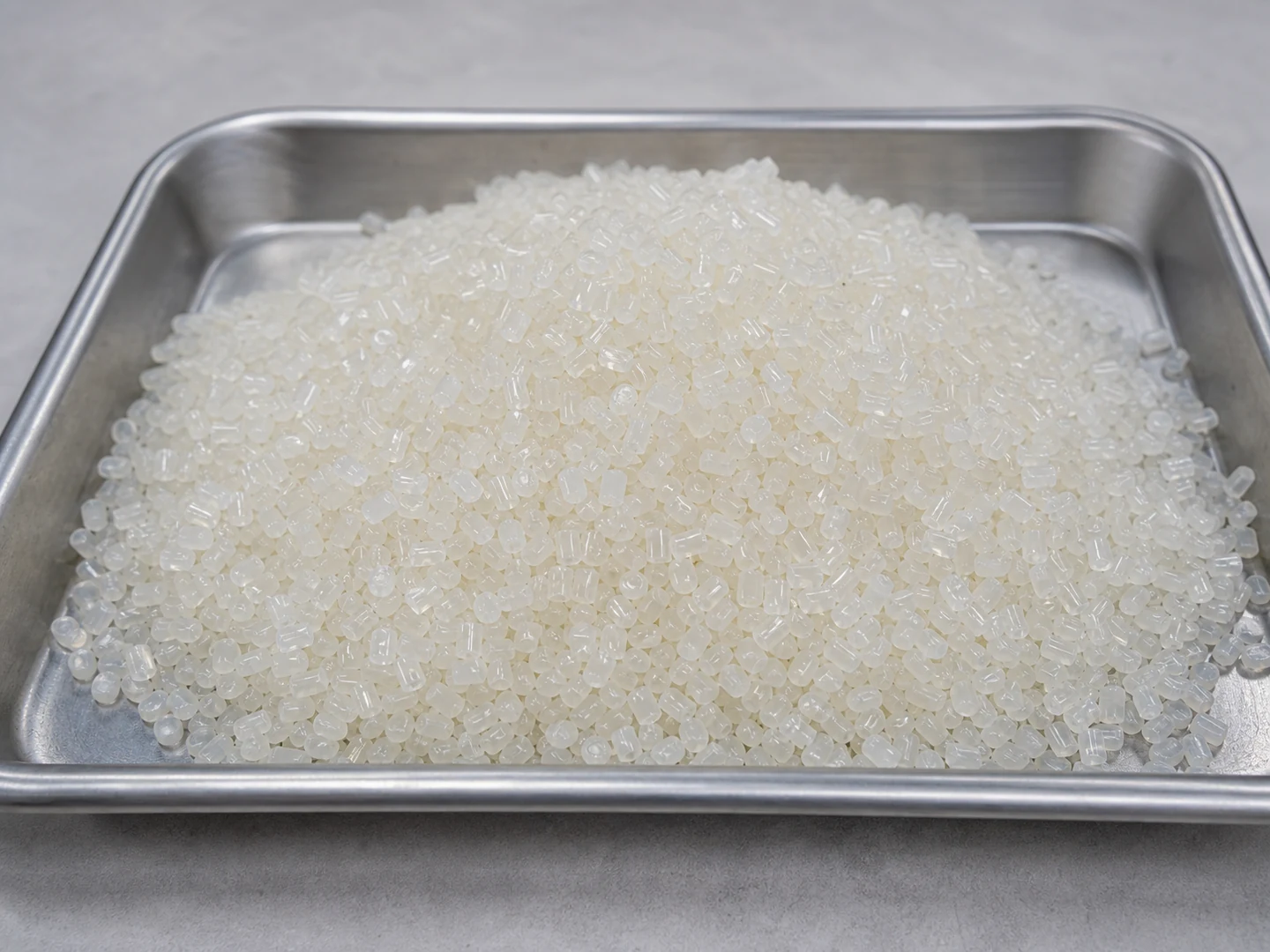
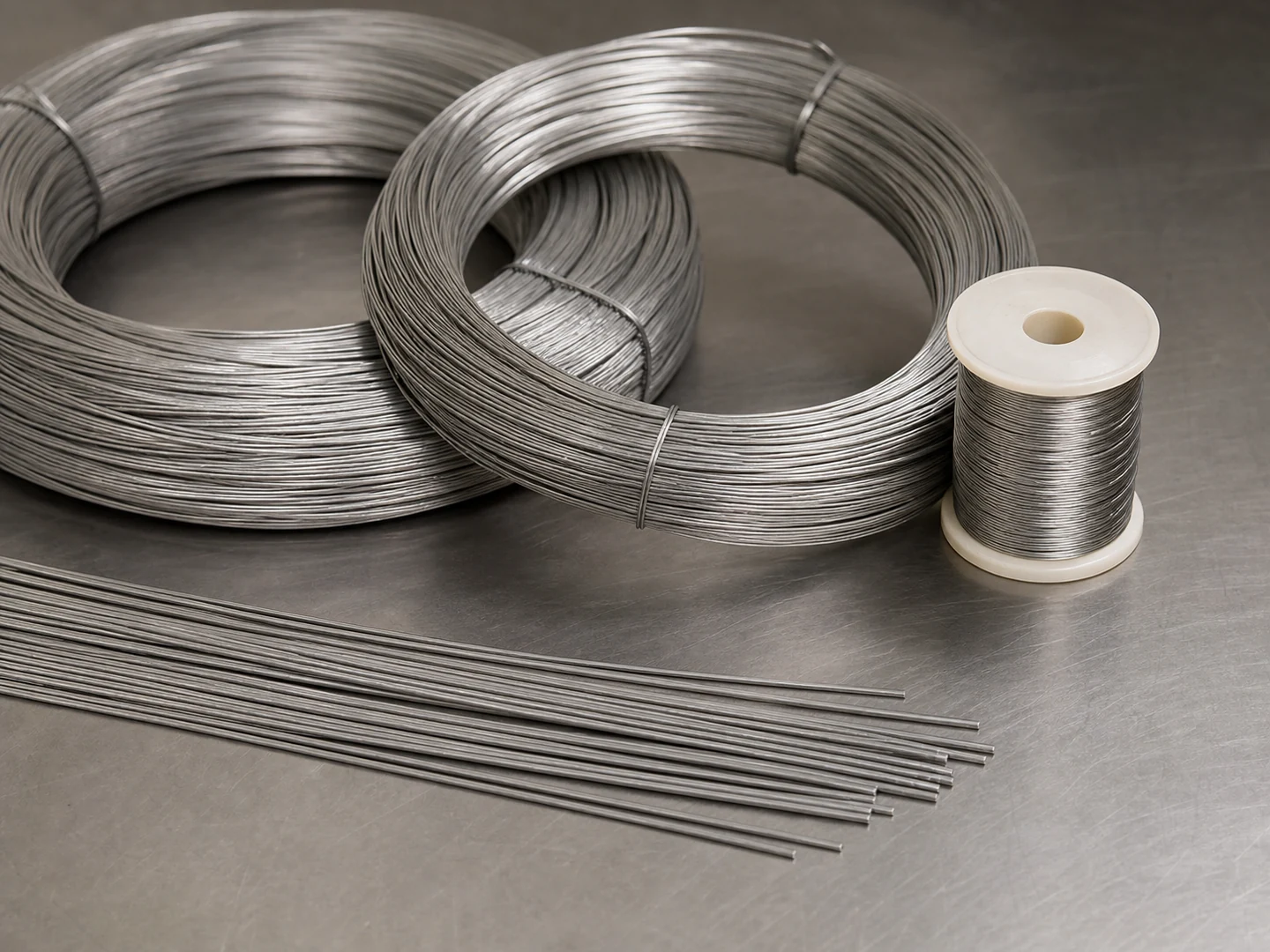
Which bristle material fits this job — Nylon PA, AISI 304 Stainless Steel Wire or PBT?
| Material | Continuous temperature (°C) | Peak temperature (°C) | Water absorption | Hardness |
|---|---|---|---|---|
| Nylon PA | 93 | 121 | 0.3–9% by PA grade and conditioning | Medium to firm; filament diameter and trim length control bending force. |
| AISI 304 Stainless Steel Wire | 400 | 500 | 0% | Rockwell B 70–95 depending on temper and cold work |
| PBT | 120–140 | 160–180 | 0.05–0.20% | Shore D 80–90 |
Figures as published by Brushtec / DuPont; Alleima; Perlon. Confirm the exact grade against the supplier datasheet before ordering.
When is Nylon PA the wrong choice for brush assemblies?
- Nylon PA — The nylon family spans several grades, so heat, moisture and chemical limits should follow the selected PA resin rather than a generic nylon value.
- AISI 304 Stainless Steel Wire — Avoid using AISI 304 as the default in marine, brine, hypochlorite, and persistent chloride environments; use AISI 316 when higher pitting and crevice-corrosion resistance is required.
- PBT — Not for heavy rust removal or high-cutting deburring.
What should replace Nylon PA for brush assemblies?
- Nylon PA — Compare Nylon PA with PP, PBT, PET. Change material when wet stiffness, temperature, chemical resistance, conductivity, particle shedding, or surface marking becomes the limiting factor.
- AISI 304 Stainless Steel Wire — Use AISI 316 stainless steel wire for chloride, marine, dairy, beverage, chemical washdown, or higher pitting-resistance requirements. Use carbon steel for dry aggressive cutting and brass or abrasive nylon for lower marking risk.
- PBT — Compare PBT with Nylon, PP, PET. Change material when wet stiffness, temperature, chemical resistance, conductivity, particle shedding, or surface marking becomes the limiting factor.