
Custom Cleaning Brush
Heat Sealing Bar Cleaning Brush
Custom heat sealing bar cleaning brushes with brass wire or heat-resistant nylon PA filaments.
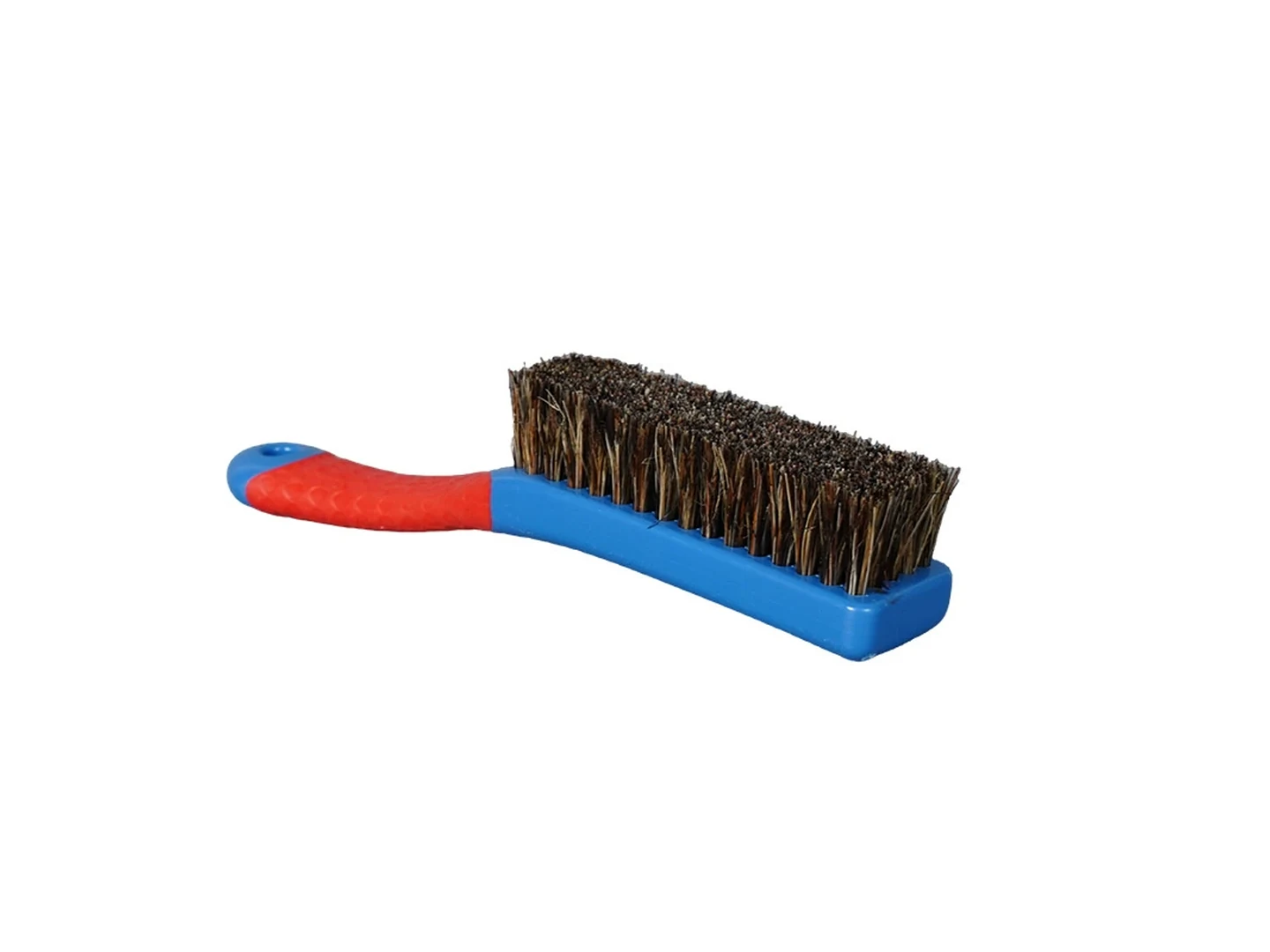
Medium brush
100 pcs
Minimum order
Worked with two hands or on a pole: chimney, gutter and pond-filter brushes, discs, cups and tank brushes.
Production lead time, once the specification is confirmed
- Up to 100 pcsWithin 7 days
- 101–5,000 pcsWithin 14 days
- 5,001–50,000 pcsWithin 21 days
- Over 50,000 pcsConfirmed with your quotation
Peak season can extend these times; the shipping date is confirmed in writing with your quotation. Sampling and shipping are quoted separately.
A precision strip or roller brush assembly for wiping melted polymer film, adhesive, and carbonized residue from heated sealing jaws and bars on packaging machines. Brass wire or heat-resistant nylon PA filaments are mounted in an aluminum channel, plate, or keyed shaft to keep seal surfaces clean between cycles, reducing seal defects and unplanned line stops.
What can this brush do for you?
Removes hot residue before it hardens
Position the brush so the filament tips contact the sealing surface during each jaw stroke or web advance. Melted film and adhesive are still soft at that moment, so light engagement strips them away. Left untouched, the same material cools into hard deposits that force the line to stop for scraping, solvent cleaning, or bar replacement.
Brass wire lifts carbonized buildup without gouging hardened seal bars
Brass wire is softer than hardened steel and most anodized aluminum sealing jaws, but hard enough to break up baked polymer, burnt film additives, and carbonized deposits. The tips lift the residue instead of leaving deep scoring like hardened steel scrapers or improvised tools can.
Heat-resistant nylon PA protects coated and knurled seal surfaces
For sealing bars with PTFE or nonstick coatings, or finely knurled and serrated profiles, heat-stabilized nylon PA filament removes soft residue while preserving the surface finish. This matters when the condition of the sealing surface directly controls seal strength and appearance.
Adjustable engagement maintains contact as filaments wear
The holder can be set with 1–5 mm of filament tip engagement against the bar. As trim length decreases with use, the bracket, plate, or shaft mount is adjusted to restore consistent wiping pressure. That extends the useful life of each brush before replacement.
Built to span the full width of the sealing bar
Working widths from 50 to 3,000 mm cover narrow sachet sealers, vertical baggers, wide tray lidding lines, and horizontal form-fill-seal machines. One brush cuts across the entire active seal area so no uncleaned strip remains along the jaw edge.
What is a Heat Sealing Bar Cleaning Brush?
A Heat Sealing Bar Cleaning Brush is a custom-configured brush assembly mounted adjacent to the heated sealing jaw or bar of a packaging machine. It uses dense metal or heat-resistant polymer filaments held in an aluminum channel, plate, bore, or keyed shaft to wipe the moving sealing surface as the machine cycles.
The brush can be built as a stationary strip that the sealing jaw passes over during each cycle, or as a driven brush roller that scrubs the bar continuously during dwell. Brass wire is the default for high-temperature sealing surfaces and carbonized residue. Heat-stabilized nylon PA is the alternative when the residue is soft, the bar is coated, or metal filament shedding must be avoided near open product.
This is not a general-purpose hand brush and not a chemical applicator. It is an in-process contact cleaning component designed for the specific residue, temperature, and motion path of a heat sealing station. Filament density, trim length, and holder geometry determine how much residue is removed per pass and how often an operator must intervene.
Technical Specifications
The values below are typical for this product family and are adjusted to your sealing machine. The parameters that matter most before ordering are working width, filament engagement, holder interface, and temperature resistance.
| Parameter | Value / Options |
|---|---|
| Working width | 50–3,000 mm, cut to the full seal bar length; wider sections on request |
| Filament material | Brass wire for carbonized or high-temperature residue; heat-stabilized nylon PA for soft residue and coated surfaces |
| Filament diameter | 0.03–0.50 mm; finer diameters for thin film smears, heavier diameters for hard or thick deposits |
| Trim height / brush diameter | 10–200 mm from the holder face; selected to produce 1–5 mm of working engagement |
| Holder / shaft | Extruded aluminum channel, aluminum base plate, bored hub, keyed shaft, or custom mounting bracket |
| Mounting interface | End brackets, slotted holes, set-screw bore, or flange pattern matched to the machine |
| Operating temperature | Brass wire: suitable for continuous contact with high-temperature sealing surfaces. Nylon PA: heat-stabilized grade specified for the actual bar temperature |
| Optional static control | Conductive or antistatic filled filament and holder to a surface resistivity of 10³–10⁹ Ω where the project requires it |
| Engagement setting | 1–5 mm filament tip contact; adjust the holder after installation based on observed residue removal |
| Brush type | Custom Roller and Conveyor Brushes |
| How it is driven | Machine-driven, mounted in the equipment |
| Cleaning target | horizontal form-fill-seal machine, tray sealer and modified-atmosphere packaging line, and blister and clamshell sealer cleaning |
| Surface or part | bars, jaws, aluminum, channel, sealing jaws, roller, grooves, and trays |
| Residue or debris | adhesive, carbonized residue, melted polymer film, carbon, dust, overspray, and carbonized deposits |
| Mounting / connection | End brackets, slotted holes, set-screw bore, or flange pattern matched to the machine |
Engagement is the single most important setting. Too little engagement leaves residue on the bar; too much bends the filaments back, loses contact, and accelerates wear.
Where does this brush work best?
- Horizontal form-fill-seal machines, where transverse seal jaws and longitudinal fin-seal bars collect PE, PP, and laminate film residue on every cycle.
- Vertical bagging machines with serrated or knurled heat-seal jaws, where film additives and product dust build up carbon inside the grooves.
- Tray sealers and modified-atmosphere packaging lines, where heated seal plates and anvils pick up lidding film residue, overspray, or adhesive transfer.
- Blister and clamshell sealers, where adhesive coatings and film coatings transfer to the heated platen over long production runs.
- Pouch sealing stations, spout insertion sealers, and stick-pack machines, where narrow sealing bars need brushes cut to exact width so the assembly does not interfere with adjacent tooling.
How do I choose the right one?
Start with what the bar leaves behind
Look at the residue before selecting filament. Soft molten film streaks or adhesive smears can be removed with heat-stabilized nylon PA or fine brass wire. Baked, blackened, or carbonized deposits usually require brass wire, often in a heavier diameter. If the residue includes adhesive or coating transfer, test on an out-of-service bar first.
Match the filament to the surface finish
Hardened steel or uncoated anodized aluminum bars accept brass wire without deep scoring. Bars with PTFE, ceramic, or other nonstick coatings should normally use heat-stabilized nylon PA or very fine brass only if testing confirms no marking. Knurled and serrated profiles need filament fine enough to enter the grooves; otherwise only the peaks are cleaned.
Set working width and holder interface
Measure the full sealing bar length that carries residue. The brush must cover the entire active area without extending into the film path or guide rails. The holder must match existing mounting points: an aluminum channel for straight bars, a keyed shaft or bore for rotary scrubber configurations, or a custom bracket where access is tight.
Decide engagement and filament length
Choose trim height so the filament tips contact the bar with 1–5 mm of engagement. Longer trim provides more wear allowance but less rigid contact. Shorter trim delivers firmer wiping and may require more frequent holder adjustment as it wears.
Consider temperature and static control
Brass wire handles continuous high-temperature contact without softening. Nylon PA requires a heat-stabilized grade and may be limited at the upper end of typical sealing temperatures. If static buildup affects the film or machine controls, specify conductive or antistatic fill at 10³–10⁹ Ω.
When another tool is the better choice: Heavy startup deposits after downtime often need a hand-held brass scraper or chemical cleaning before the brush takes over in-process maintenance. If the sealing bar never moves and no rotary drive is available, a stationary strip may clean only one side, so confirm the jaw travel path. If metal filament shedding presents a contamination risk near open food or pharmaceutical product, choose nylon PA or add debris capture around the brush.
Can I customize this brush?
Every dimension and material can be set to your sealing machine. To build the correct configuration, provide the seal bar width, bar temperature, jaw travel direction, residue type, machine speed, and existing mounting dimensions. A drawing or photo of the seal area is the fastest way to confirm fit.
- Working width — cut to 0.5 m, 1 m, 2 m, 3 m, or custom lengths; wider sections possible for long lidding lines.
- Filament material and diameter — brass wire or heat-stabilized nylon PA, 0.03–0.50 mm, in uniform or sectioned layouts.
- Trim height / brush diameter — 10–200 mm, matched to required engagement and usable wear allowance.
- Holder and mounting — aluminum channel, plate, bored hub, keyed shaft, flange, or custom bracket with precise hole pattern.
- Motion configuration — stationary strip for reciprocating jaws, driven brush roller for continuous scrubbing, or spring-loaded mount for constant engagement.
- Static control — conductive or antistatic filament and holder to 10³–10⁹ Ω for static-sensitive film applications.
- Marking and packaging — part numbers, color coding, bulk cartons, or line-side replacement kits.
If your project requires material declarations, inspection data, dimensional reports, or third-party testing support, we can assist with those requirements during the customization process.
Which filament survives the cleaning and still lasts on a heat sealing bar cleaning brush?
What engagement should I set on the brush?
Start with 1–5 mm of filament tip overlap against the sealing bar. The lowest engagement that removes residue consistently gives the longest brush life. If filaments lay flat or stay bent back, engagement is too high. If residue remains in a continuous strip, increase engagement or adjust the holder angle.
Will brass wire scratch my sealing bar?
Brass wire is softer than hardened steel and most anodized aluminum sealing bars, so it normally removes deposits without deep scoring. However, PTFE, ceramic, and other nonstick coatings can be marked by brass. Test on an out-of-service bar or choose heat-stabilized nylon PA if surface preservation is critical.
How do I know when to replace the brush?
Replace the brush when trim length has worn down to the point that the holder face approaches the seal bar, when filaments no longer recover from bending, or when residue removal visibly drops after engagement adjustment. A monthly measurement of trim height against the original specification gives a predictable replacement interval.
Does the brush replace chemical or manual cleaning of the sealing bar?
No. The brush removes residue while it is still soft or lightly attached. Heavy carbonized buildup from extended downtime, burnt product spills, or polymer degradation may still require a line stop with solvent cleaning, hand scraping, or bar replacement. The brush extends the interval between those stops; it does not eliminate them.
Can food packaging lines use brass wire near open product?
Brass wire can shed small particles as it wears, which is a contamination risk in open food or pharmaceutical packaging zones. In those areas, choose heat-stabilized nylon PA or add a debris capture or containment cover, and validate the configuration for your product-contact risk assessment.
Should I choose a stationary strip or a driven brush roller?
Use a stationary strip when the sealing jaw or bar reciprocates and passes under the brush each cycle. Use a driven brush roller when the sealing surface remains fixed or residue hardens quickly during the dwell, because the roller provides continuous scrubbing action independent of jaw travel. Your machine’s motion path determines the simpler, lower-maintenance choice.
Guides that go deeper on this
Custom Manufacturing RFQ
Describe Your Application
An accurate custom quote starts with the dimensions, working surface, residue, material choice, connection, quantity, and reference files.
Drawing or photo optional — it speeds things up, it does not gate the enquiry.
Custom Brush RFQ
Send Your Brush Project
Upload a drawing, product photo, or sample photo and provide the core dimensions and cleaning conditions.
“We need a brush to remove wet residue from a stainless steel conveyor, about 800mm wide. The current brush wears quickly. We can send photos.”
“We sell drinkware and need a cleaning brush to include with the product. Quantity around 5,000 pieces.”