
Custom Cleaning Brush
Sealing Jaw Cleaning Brush
Remove melted film, carbonized polymer and adhesive buildup from heated sealing jaws, crimp bars and knife edges.
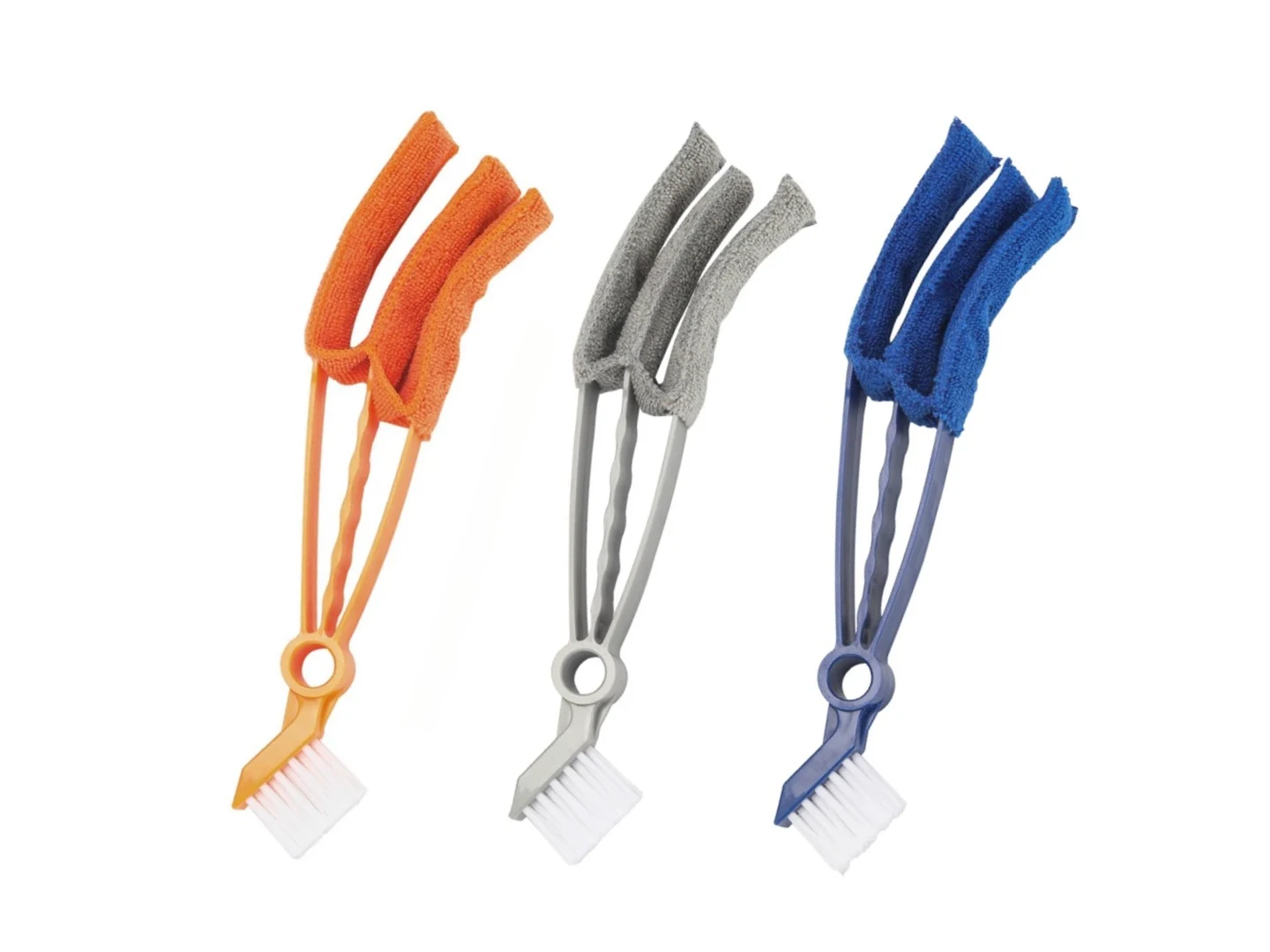
Small brush
500 pcs
Minimum order
Held in one hand: tube, bottle, detail and swab brushes — including long-handled ones with a small head.
Production lead time, once the specification is confirmed
- Up to 500 pcsWithin 7 days
- 501–50,000 pcsWithin 14 days
- Over 50,000 pcsWithin 21 days
Peak season can extend these times; the shipping date is confirmed in writing with your quotation. Sampling and shipping are quoted separately.
A heat-safe cleaning brush for removing melted film, carbonized polymer and adhesive buildup from heated sealing jaws, crimp bars and knife edges on packaging machines. Brass, copper, nylon, PBT and PPS filaments are matched to the jaw coating, cleaning temperature and residue type.
What can this brush do for you?
Cleans warm jaws instead of waiting for a full cooldown
PPS filament keeps its working stiffness up to about 200°C, and brass or copper wire is unaffected by typical jaw temperatures. That lets operators clean between production runs while the residue is still soft and releases more easily. For lower-temperature coated jaws, nylon fill is used below about 80°C.
Reaches into serrations, crimp profiles and corner pockets
The head width and trim are matched to the jaw length and groove pitch, so the filament tips enter knurls, serrated faces and embossed seal patterns instead of skating across the top. A generic flat brush leaves polymer packed into the recesses; this brush removes it where the seal actually forms.
Protects the coatings that control film release
Nylon PA, PBT and PPS fills are non-marring on chrome-plated, PTFE-coated and anodized jaw surfaces. Brass and copper wire are reserved for uncoated hardened steel, where a soft metal filament removes carbon without scoring the tool face the way a steel wire brush can.
Removes the residue that causes weak seals and film sticking
Fine filaments shear light film transfer and adhesive contamination; coarser wire breaks up carbonized deposits. Removing those deposits from the jaw face and crimp edges keeps seal pressure even and prevents char specks from being pressed into the next package.
Reaches past heater bars, guards and knife edges
Head widths from 10 mm and overall lengths up to 500 mm let the operator access the front face, back edge and corners near heater clamps without disassembling the sealing assembly. Angled or offset shank options add clearance around knife guards and sensor brackets.
Works as a hand brush or a mounted strip
The same fill can be supplied as a compact hand brush for operator cleaning between runs, or as a holder-mounted strip for a dedicated cleaning pass at a maintenance station. Strip forms allow a full jaw width to be cleaned in one stroke.
What is a Sealing Jaw Cleaning Brush?
A Sealing Jaw Cleaning Brush is a hand-guided or fixture-mounted cleaning tool built specifically for the working surfaces of heat-sealing and crimping tools on packaging machines. It differs from a general parts cleaning brush because its head width, trim profile and filament material are selected around the jaw geometry, coating and cleaning temperature.
During use, the operator works the brush along the jaw length and across the crimp pattern. The filament tips dislodge melted polyethylene, polypropylene, laminate films, adhesive traces and carbonized polymer from serrated faces, knife edges, heater bars and adjacent surfaces. Soft metal wire removes deposits with limited scoring on uncoated steel; polymer filaments carry heat resistance and a non-marring contact on coated jaws.
The brush removes attached residue. It does not replace chemical cleaning, mechanical scraping or pyrolysis when heavy carbon has fused to the surface. It is the mechanical step that keeps a jaw clean between full service intervals, and the tool that reaches the small geometries where scrapers are too wide.
Operating consideration: sealing jaws can remain hot after production. Handle length, insulation and filament temperature rating need to be chosen together so the operator can reach the jaw without placing hands in the hot zone.
Technical Specifications
The table shows typical ranges. Dimensions, fill material and trim are project-adjustable to the jaw geometry.
| Parameter | Value / Options |
|---|---|
| Brush form | Compact hand brush, strip brush, detail brush, or angled/offset shank configuration |
| Head width | 10–150 mm, matched to jaw length and heater clearance |
| Overall length | 100–500 mm, including handle or mounting section |
| Filament material | Brass wire, copper wire, nylon PA, PBT, or PPS; stainless steel wire on request for compatible uncoated metal |
| Filament diameter | 0.05–0.50 mm; finer for film and light residue, coarser for carbonized deposits |
| Trim profile | Flat, angled, pointed, contoured to crimp pitch, or feathered edge detail |
| Working temperature | PPS up to about 200°C; nylon up to about 80°C; brass/copper wire selected for hot-metal contact within jaw material limits |
| Compatible jaw surfaces | Brass/copper on uncoated hardened steel; PBT/nylon/PPS on coated, plated, or sensitive jaws |
| Handle / mounting | Heat-resistant plastic, wood, or metal handle; insulated grip; holder tabs or strip-channel mount on request |
| Fill density | Standard, dense, or open-spaced to suit deposit thickness and groove access |
| Brush type | Custom Handheld Detail Brushes |
| How it is driven | Hand-guided |
| Cleaning target | vertical and horizontal form-fill-seal machine, tray sealer and lidding system, and flow wrapper and shrink packaging line cleaning |
| Surface or part | jaws, bars, edges, sealing jaws, profiles, grooves, metal, and corners |
| Residue or debris | adhesive, carbon, char, pitch, and carbonized deposits |
| Mounting / connection | Heat-resistant plastic, wood, or metal handle; insulated grip; holder tabs or strip-channel mount on request |
Where does this brush work best?
It is built for packaging and converting machines where a heated metal jaw, bar or blade contacts polymer film and transfers residue during production.
- Vertical and horizontal form-fill-seal machines: longitudinal sealing bars, transverse sealing jaws, fin seal wheels and serrated crimp profiles carrying LDPE, polypropylene and laminate film residue.
- Tray sealers and lidding systems: heated seal plates, film pick-up grooves and corners around vacuum ports that collect lidding-film adhesive and polymer transfer.
- Flow wrappers and shrink packaging lines: end seal jaws, cutoff knife edges and heater bars where stop-start production creates carbonized film deposits.
- Blister and skin packaging machines: heated platens, cavity sealing edges and trim profiles with melted PVC, PET or ionomer residue.
- Pouch and bag converting equipment: impulse seal bars, band sealers and hot-wire cutoff surfaces with film char and adhesive contamination.
Common removed residues include PE/PP melt transfer, EVA and coating film, self-adhesive label residue, carbonized polymer specks and release-agent buildup.
How do I choose the right one?
Start with the jaw material and coating, because that sets the filament boundary. Then match temperature, geometry and residue.
- Check the jaw surface first. Uncoated hardened steel or tool steel can take brass, copper or stainless wire. Chrome-plated, PTFE-coated, anodized, nitrided or ceramic-coated jaws require nylon PA, PBT or PPS — never steel wire. If the surface history is uncertain, request a sample or a coupon test.
- Match the filament to the cleaning temperature. Clean-while-hot at 150–200°C calls for PPS or brass/copper wire. Nylon softens near 80°C. If the jaw runs above 200°C, use metal wire on uncoated steel or cool the jaw below the coating limit before brushing a coated surface.
- Measure the jaw geometry. Jaw length, serration pitch and depth, groove width, knife edge position and heater bar clearance determine head width and trim. A head that is too wide will bind on clamps; one that is too narrow will require multiple passes and miss corners. Contoured trim follows the crimp pitch instead of bridging grooves.
- Pick filament diameter and density for the residue. Light film transfer and release residues call for 0.05–0.15 mm nylon, PBT or fine brass. Adhesive and label contamination respond to medium brass or PBT. Carbonized deposits need 0.20–0.50 mm wire with open-spaced fill so the deposit can eject from the brush instead of packing between filaments.
- Choose the handle for the operator, not just the jaw. Hot-jaw cleaning needs an insulated grip and long shaft. Repetitive shift cleaning benefits from an ergonomic hand form. In-line or station-mounted cleaning is better served by a strip brush with mounting holes or a holder channel.
| Jaw situation | Recommended fill | Reason |
|---|---|---|
| Uncoated steel, cool or warm | Brass or copper wire | Removes carbon without aggressive scoring |
| Uncoated steel, heavy carbon | Brass or stainless wire, coarse diameter | More cutting action; stainless only where surface marks are acceptable |
| Chrome/PTFE/coated jaw, hot to 200°C | PPS | Non-marring and heat-resistant |
| Coated or anodized jaw, cool below 80°C | Nylon PA or PBT | Gentle film removal on sensitive finishes |
| Adhesive or label contamination | Medium brass or PBT, fine diameter | Lifts residue without scratching the base surface |
When this brush is not the right tool: Thick fused carbon or melted plastic blobs should first be removed with a brass scraper or hot scraper, then finished with the brush. Deep undercuts and very narrow knife slots may need a custom needle or groove brush. Fragile PTFE coatings carrying heavy residue are safer with a plastic scraper and soft polymer brush than with any wire. If residue must be removed continuously during production, a rotary brush in a fixed holder usually performs better than a manual hand brush.
Can I customize this brush?
Sealing jaw brushes are normally configured to the jaw, not picked from a shelf. To specify a fit, we need the jaw drawing or clear photos, jaw material and coating, overall jaw length and width, serration pitch and depth, groove or knife positions, heater and clamp clearances, cleaning temperature, residue type and whether cleaning will be done by hand or from a holder.
We can adjust:
- Form and dimensions: head width from 10 to 150 mm, overall length from 100 to 500 mm, rectangular or tapered head shape, angled or offset shank, double-ended hand form.
- Filament and fill: brass, copper, stainless, nylon PA, PBT or PPS in diameters from 0.05 to 0.50 mm; trim length, density and row pattern selected for the deposit and groove depth.
- Trim profile: contoured to the crimp pitch, feathered at the ends, pointed detail tips, or channel-clearing cutouts.
- Handle and mounting: insulated heat-resistant handle, extended shaft, hanging hole, holder tabs, strip-channel mount or machine-specific clamp interface.
- Color and marking: color-coded block by filament type or temperature rating, printed logo, laser marking or identification coding.
- Packaging: bulk packs, individual bags, maintenance-kit sets or project-specific packing.
If the project requires material declarations, inspection reports, packaging documentation or third-party testing, we can support those requirements during the customization process.
Which filament survives the cleaning and still lasts on a sealing jaw cleaning brush?
Can this brush be used while the sealing jaw is still hot?
Only if the filament and handle are rated for the actual jaw temperature. PPS and brass/copper wire can contact hot surfaces; nylon must wait until the jaw cools below about 80°C. The operator’s hand position and the handle insulation matter as much as the filament, so specify the cleaning temperature before selecting the brush.
How can I tell whether the brush is damaging a coated sealing jaw?
Run a few test strokes on a non-sealing area or a spare jaw, then wipe with a soft white cloth and inspect under strong side light. Scratches, bright streaks, or coating transfer onto the cloth mean the filament is too aggressive. Switch to nylon PA, PBT or PPS, or move to a finer, softer wire. A coating-safe brush should leave no visible marks.
How do I know when the jaw is clean enough to restart production?
Inspect the serration grooves, crimp edges, heater-bar corners and knife edges under light; no dark film islands or char specks should remain. Then run two or three test seals on scrap film and check seal integrity, peel appearance and film transfer. Lumps, skipped areas or char specks on the test package point to the jaw area that still needs recleaning.
Does the brush leave wire particles behind that could contaminate the package?
Brass and copper filaments can shed very small metal particles during aggressive brushing. After metal-wire cleaning, wipe or blow off the jaw and the area around it. On food, medical or cosmetic packaging lines where particle contamination is unacceptable, choose PPS or nylon non-metallic fills and add a wipe-down step after brushing.
How often should the brush be replaced in a production environment?
Replace it when filament tips are bent, flattened, matted or noticeably shorter, or when light pressure no longer removes residue. Polymer bristles that have been exposed to heat may show melting, hardening or loss of recovery at the tips; replace at the first sign of heat damage. Store brushes away from solvents and direct heat when not in use.
What should I do if polymer residue cannot be removed by brushing alone?
Stop and let the jaw cool or maintain controlled heat, then remove thick deposits with a brass or plastic scraper, apply a chemical cleaner compatible with the jaw coating, and finish with this brush. Do not force a wire brush against a cold, fully carbonized jaw; it will load the brush and may gouge the surface instead of clearing the deposit.
Guides that go deeper on this
Custom Manufacturing RFQ
Describe Your Application
Please include the main sizes, application, residue, preferred material, interface, quantity, and any drawing or sample available.
Drawing or photo optional — it speeds things up, it does not gate the enquiry.
Custom Brush RFQ
Send Your Brush Project
Upload a drawing, product photo, or sample photo and provide the core dimensions and cleaning conditions.
“We need a brush to remove wet residue from a stainless steel conveyor, about 800mm wide. The current brush wears quickly. We can send photos.”
“We sell drinkware and need a cleaning brush to include with the product. Quantity around 5,000 pieces.”