
Custom Cleaning Brush
Motorcycle Chain Cleaning Brush
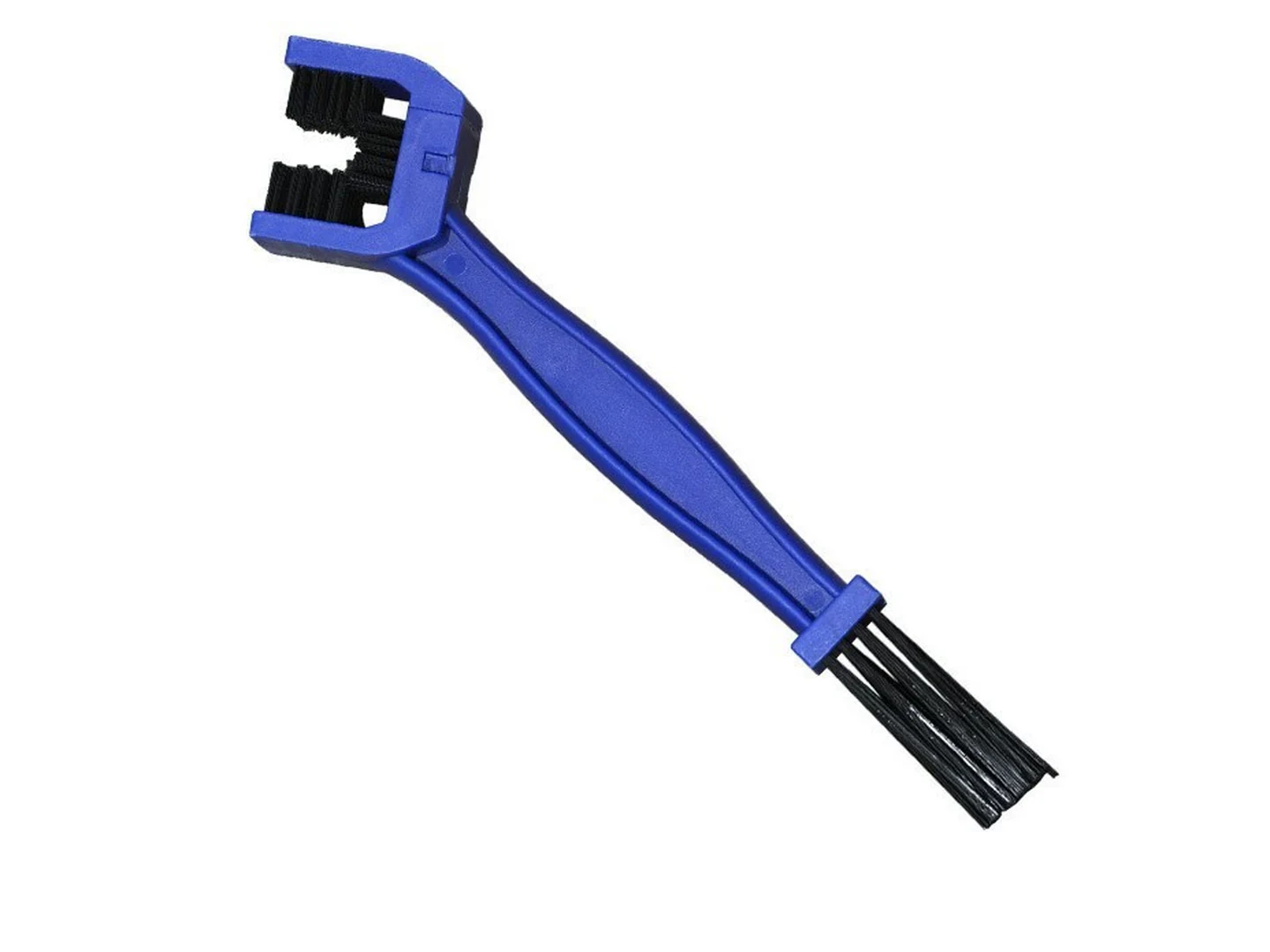
Motorcycle chain cleaning brush with U-shaped bristle channel for side plates, rollers, and link gaps.
Small brush
500 pcs
Minimum order
Held in one hand: tube, bottle, detail and swab brushes — including long-handled ones with a small head.
Production lead time, once the specification is confirmed
- Up to 500 pcsWithin 7 days
- 501–50,000 pcsWithin 14 days
- Over 50,000 pcsWithin 21 days
Peak season can extend these times; the shipping date is confirmed in writing with your quotation. Sampling and shipping are quoted separately.
A hand-held scrub brush for cleaning motorcycle drive chains while they are still mounted on the bike. The U-shaped bristle channel reaches the side plates, rollers, and link gaps in one pass, so old chain lube, grit, and road film lift off with a chain cleaner or degreaser instead of staying packed between the links.
What can this brush do for you?
Cleans all three exposed faces in a single stroke
The U-shaped head carries bristles across both side plates and the roller face at the same time. As the brush is pulled along the lower chain run, one stroke covers contact areas that would otherwise need three separate passes with a flat brush or rag. This shortens chain maintenance on long touring chains and keeps the cleaner in contact with the residue instead of drying on the surface.
Keeps hands and sleeves away from the chain and sprocket
The 180-300 mm handle length holds the operator’s hand clear of the rear sprocket and swingarm while the wheel is rotated by hand. The narrow head still fits around the countershaft area where a wide brush or rag cannot reach, so the complete chain loop can be cleaned without changing tools.
Stiff enough for packed lube, controllable around seals
Short, dense nylon or polypropylene bristles deliver scrubbing force at the roller and link faces, where grease and road grit harden into a paste. Because stiffness is set by filament diameter, fill density, and trim length, the same head design can be ordered with a medium or soft fill for O-ring and X-ring chains that need pressure kept off the rubber seals.
Bristles stay straight in degreaser and kerosene
Nylon PA6, PA6.6, and PP fills do not soften or collapse after repeated exposure to common chain cleaners, kerosene, citrus degreasers, or diluted alkaline washes. The handle and bristles remain usable through repeated workshop cycles instead of turning limp after the first solvent soak.
Detail section clears sprocket teeth and covered areas
A shorter trim or narrow detail tip can be added to reach the countershaft sprocket, guide plate, and the space behind the chain slider. That removes buildup the straight U-shaped channel cannot contact, so one brush handles both the chain and the surrounding drive parts.
What is a Motorcycle Chain Cleaning Brush?
A Motorcycle Chain Cleaning Brush is a hand-guided scrubbing tool for regular drive-chain maintenance on motorcycles, scooters, ATVs, and other chain-driven equipment. The working end is not a flat bristle pad; it is a U-shaped channel with bristles on the inner faces that guide the brush along the chain while contacting both side plates and the roller face at the same time.
During use, the motorcycle is placed on a paddock stand or the rear wheel is lifted so the chain can rotate freely. The operator sprays the lower chain run with a chain cleaner or degreaser and then works the brush back and forth along the chain. The bristles break up the grease-and-dirt paste so the solvent can carry it away. The loosened residue is then wiped or rinsed, the chain is dried, and a fresh chain lubricant is applied.
This is a surface-cleaning tool, not a substitute for the cleaning chemistry, final rinse, drying, or re-lubrication step. It is not a wire brush and not a powered chain scrubber. On sealed O-ring and X-ring chains, the brush removes external deposits without forcing bristles into the seal gaps, which keeps the rubber rings intact while the visible link faces are cleaned.
Technical Specifications
The table lists the standard configuration and the ranges available for a specific chain width, pitch, or cleaning process. Dimensions and fill settings are adjustable before production.
| Parameter | Specification |
|---|---|
| Overall length | 180-300 mm, selected for reach and hand clearance |
| Brush head length | 30-100 mm |
| Working channel width | 8-25 mm, matched to the chain’s external width |
| Channel form | U-shaped or three-sided bristle bed; optional detail tip |
| Bristle diameter | 0.25-0.60 mm |
| Fill material | Nylon PA6 / PA6.6 or polypropylene PP |
| Handle material | PP or nylon, with optional rubber overmold |
| Stiffness | Soft, medium, or firm through filament diameter, fill density, and trim length |
| Chain fit | Narrow 420/428 through 520/525/530 and wider 630 cross-sections |
| Chemical exposure | Stable in common chain degreasers, kerosene, citrus cleaners, and diluted alkaline washes |
| Brush type | Custom Handheld Detail Brushes |
| How it is driven | Hand-guided |
| Cleaning target | sealed o-ring and x-ring street chain, countershaft and rear sprocket area, and workshop and dealership service bay cleaning |
| Surface or part | chains, side plates, roller, channel, roads, gaps, seals, and streets |
| Residue or debris | road film, dried mud, lubricant, sand, and grease |
| Mounting / connection | Fixed |
Chain width is the first dimension to confirm. A 520/525/530 chain needs a wider channel than a 420/428 chain, and sealed chains are normally built with a softer fill than non-sealed competition chains. Every value can be revised against your sample or drawing without changing the brush’s basic function.
Where does this brush work best?
The brush is designed for maintenance cleaning of accessible chain surfaces, not for rebuilding a neglected or seized chain. It performs best in these situations:
- Sealed O-ring and X-ring street chains. A medium or soft nylon fill lifts chain-lube paste and road film from side plates and rollers while keeping pressure off the rubber seals.
- Adventure, dual-sport, and off-road chains. A firmer PP or nylon fill, used with a degreaser, removes dried mud, sand, and gritty lube from the exposed link faces after off-road riding.
- Countershaft and rear sprocket areas. The narrow head and optional detail tip clear packed debris from sprocket tooth flanks, the guide plate, and the space behind the front sprocket cover.
- Workshop and dealership service bays. Solvent-resistant materials and quick rinse clean make the brush suitable for repeated use across multiple motorcycles in a single day.
- Non-sealed and competition chains. A firm fill handles heavier deposits on race chains where there are no O-rings to protect and more aggressive scrubbing is acceptable.
How do I choose the right one?
Start with the chain width, not the motorcycle model. Measure the external width across the outer side plates. The working channel should sit over the chain without binding, yet stay close enough for the bristles to reach both side plates. A 420/428 chain generally uses an 8-15 mm channel, a 520/525/530 chain uses about 16-20 mm, and wider 630 or utility chains use the upper end of the 25 mm range.
Match the bristle material and stiffness to the seals and residue.
- Nylon PA6 or PA6.6 gives a firmer feel and better abrasion resistance for packed grease, dried mud, and repeated workshop use.
- Polypropylene PP is lighter, absorbs almost no water, and works well for softer street-chain films where a lower-cost fill is acceptable.
- For O-ring and X-ring chains, choose a medium or soft fill with rounded filament ends and avoid aggressive force. A stiff fill used hard can bruise or tear the rubber seals.
- For heavy paste or non-sealed chains, a firm fill with shorter trim cuts faster. A longer trim is more compliant and gentler on sensitive surfaces.
Set the handle length for access and control. A 180-200 mm handle is easier to position around the countershaft sprocket. A 240-300 mm handle provides more hand clearance around the rear sprocket, swingarm, and exhaust. The brush should let the operator see the contact area while keeping hands away from pinch points.
Confirm the solvent or cleaner. Nylon and PP both tolerate common chain cleaners, but the handle adhesive, overmold, and marking method should be selected for the actual chemical. A brush ordered for kerosene in a workshop may need different bonding than one used with a water-based cleaner in a retail kit.
When a different tool is more appropriate. If the chain shows flaking rust, seized links, or deep pitting, cleaning will not restore it; replacement is the correct action. For aggressive scale removal on a non-sealed industrial chain, a wire brush may work better. If the cleaning is automated, a rotary chain-cleaning machine or brush roller is usually more suitable than a hand brush.
Can I customize this brush?
Yes. The head, fill, and handle can be built around your chain dimensions and cleaning process. To start, provide the chain width and pitch, whether the chains are sealed or non-sealed, the degreaser or cleaner used, and the preferred handle length. A sample chain section, drawing, or photos of the access area speed up the first sample.
- Head geometry: channel width and depth, U-shaped or three-sided bristle layout, angled neck for countershaft access, open front section, or a molded detail tip.
- Bristle fill: nylon PA6 / PA6.6, PP, or another project-suitable filament; diameter from 0.25-0.60 mm; trim length, stiffness, fill density, and filament end finishing.
- Handle: length, straight or contoured shape, PP or nylon body, rubber overmold, hanging hole, or an integrated scraper or pick feature.
- Color and marking: custom color, pad-printed or laser-marked branding, molded logo, or identification coding.
- Packaging: bulk carton, individual poly bag, retail card, kit with chain cleaner or lubricant, or private-label retail packaging.
If your project requires material documentation, inspection records, third-party durability testing, or compatibility verification with a specific cleaner, we can support those requirements during the customization process.
How long does a motorcycle chain cleaning brush last, and how is it cleaned between runs?
Can I use this brush on an O-ring or X-ring chain?
Yes, when the brush is built with a medium or soft nylon fill and is used with a cleaner that is safe for rubber seals. Work along the side plates and roller faces with moderate pressure, and avoid forcing bristles between the inner and outer plates. Inspect the O-rings or X-rings for nicks or displacement before re-lubricating.
Do I need to remove the chain before cleaning?
No. The brush is meant for on-motorcycle cleaning. Place the bike on a paddock stand or lift the rear wheel, spray the cleaner on the lower chain run, and rotate the wheel by hand while scrubbing. Never let the engine drive the wheel while a brush or rag is near the chain and sprocket.
How do I know when the brush is worn out?
Lay the head over the chain and check whether the bristles still stand upright and contact all three faces. Replace the brush when bristles are permanently bent flat, clumped, or missing, or when the channel no longer follows the chain without extra pressure. A worn brush works slower and can push grit into the seals instead of lifting it out.
Will this brush remove rust from the chain?
It removes surface dirt, old lube, and light road film. It will not remove flaking rust, deep embedded scale, or corrosion inside the links. A chain with visible rust pitting or seized links should be replaced, and aggressive rust removal should be handled with a wire brush or mechanical method – never on a sealed O-ring or X-ring chain.
What should I do after brushing the chain?
Rinse or wipe away the loosened residue while it is still wet, dry the chain thoroughly, and reapply the correct chain lubricant. Brushing alone does not finish the job. If the chain is left without lubrication, or if degreaser is allowed to dry in place, wear returns quickly.
How do I keep the brush serviceable between jobs?
Rinse the bristles with the same cleaner or warm water, remove loose debris, and let the brush air-dry before storage. Keep it away from direct heat and prolonged solvent immersion when not in use. If the fill becomes brittle, discolored, or soft, retire the brush even if the handle looks fine.
Guides that go deeper on this
Custom Manufacturing RFQ
Describe Your Application
For an accurate quotation, please provide the main dimensions, material preference, working surface, residue, quantity, and a drawing or photo.
Drawing or photo optional — it speeds things up, it does not gate the enquiry.
Custom Brush RFQ
Send Your Brush Project
Upload a drawing, product photo, or sample photo and provide the core dimensions and cleaning conditions.
“We need a brush to remove wet residue from a stainless steel conveyor, about 800mm wide. The current brush wears quickly. We can send photos.”
“We sell drinkware and need a cleaning brush to include with the product. Quantity around 5,000 pieces.”