
Custom Cleaning Brush
Power Sweeping Whip Brush
Power sweeping whip brush for drill-powered chimney and flue cleaning. Nylon strands scrub the full flue circumference and navigate bends. Fits 80–500 mm.
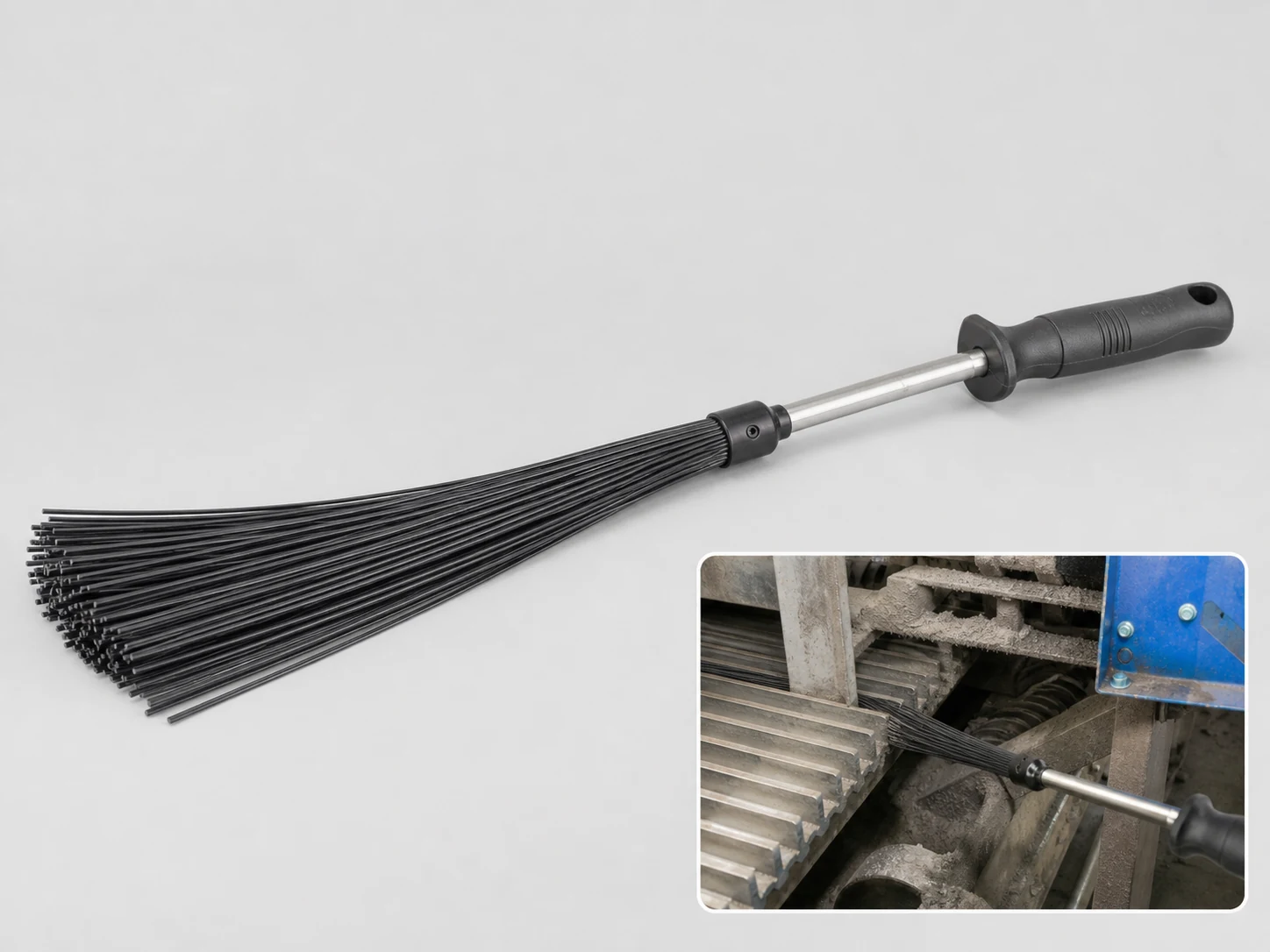
Medium brush
100 pcs
Minimum order
Worked with two hands or on a pole: chimney, gutter and pond-filter brushes, discs, cups and tank brushes.
Production lead time, once the specification is confirmed
- Up to 100 pcsWithin 7 days
- 101–5,000 pcsWithin 14 days
- 5,001–50,000 pcsWithin 21 days
- Over 50,000 pcsConfirmed with your quotation
Peak season can extend these times; the shipping date is confirmed in writing with your quotation. Sampling and shipping are quoted separately.
A drill-powered rotary whip brush head that uses flexible nylon strands to sweep soot and loose creosote from the full interior circumference of round chimney flues and liners. It attaches to standard flexible sweeping rods and follows bends without binding.
What can this brush do for you?
Full-Circle Contact Without Repositioning
When the drill spins the hub, centrifugal force throws the nylon whip strands outward against the flue wall. Each rotation scrubs the entire circumference, so one pass removes loose deposits from all sides at once. Manual chimney brushes require repeated up-and-down strokes and still leave dead spots; this head does the same work in a fraction of the time.
Navigates Bends and Offsets
The slim hub and flexible strands allow the brush to travel through elbows, tees, and offset flue sections that would jam a rigid brush. The whips conform to the liner curvature as they spin, cleaning the inside radius of bends where straight chimney brushes float over the surface and miss residue.
Replaceable Strands Keep Running Costs Low
The nylon whip strands are the wear point, not the hub. When strands fray, stiffen, or break, you replace only the strands instead of buying a new head. For crews sweeping multiple flues per day, this reduces consumable expense and keeps a spare strand kit in the truck rather than a spare complete brush.
Runs on a Standard Power Drill
The hub includes a drill adapter for a corded or cordless drill, so no dedicated sweeping machine is required. At the recommended 300 rpm, the tool produces enough centrifugal force to make effective wall contact without overspeeding the strands or damaging the liner. This makes the brush practical for one-person operations and tight job sites.
Liner-Friendly Cleaning Action
Nylon PA strands remove soot and soft creosote but are significantly softer than steel or wire. For stainless steel, aluminum, or clay tile liners, this reduces the risk of surface scoring or scratching while still achieving adequate deposit removal in routine maintenance sweeps.
What is a Power Sweeping Whip Brush?
A Power Sweeping Whip Brush is a rotating cleaning head used in powered chimney and flue sweeping systems. It consists of a central hub with multiple flexible nylon strands or cords attached radially. The hub threads onto a flexible rod system, and the rod is driven by a drill or rotary power unit. As the head spins inside the flue, centrifugal force extends the strands until they contact the interior wall, dislodging soot, creosote, and loose combustion deposits.
The tool is used in both top-down and bottom-up sweeping operations. The flexible rods allow the whip head to follow the flue path through bends and offsets, while the spinning strands continuously scrub the walls. The whip length is matched to the flue inside diameter so the strands overlay the wall with the right amount of pressure: too short and they barely touch, too long and they slap violently or tangle.
This is a maintenance tool for routine removal of powdery soot and first- or second-degree creosote. It is not designed to break away hard, glazed, third-degree creosote or heavy tar deposits. Those conditions require chemical treatments, steel or polypropylene rotary brushes with stiffer fill, or mechanical removal methods. The whip brush is chosen when the flue needs frequent, fast, non-damaging sweeping rather than aggressive deposit removal.
Technical Specifications
The table below lists the standard configuration ranges. All values can be adjusted to match a specific flue system, rod interface, or operational requirement.
| Parameter | Value / Options |
|---|---|
| Whip length | 200–600 mm, selected based on flue ID |
| Flue diameter range | 80–500 mm (3–20 in) |
| Strand material | Nylon PA (UV-stabilized or heat-stabilized options available) |
| Strand diameter | 4–8 mm, solid or braided construction |
| Strand count per hub | 8–16 strands, configurable for density |
| Hub material | Zinc-plated steel, stainless steel, or reinforced polymer |
| Drive adapter | Hex shank (1/4 in or 3/8 in), threaded rod adapter, or quick-connect |
| Recommended RPM | 250–350 rpm (typical 300 rpm) |
| Rod compatibility | 1/4 in NPT, 3/8 in NPT, or quick-connect flexible rod systems |
| Operating temperature | Up to 80°C continuous for nylon strands; hub rated higher |
| Weight | 0.5–1.5 kg depending on whip length and hub material |
| Brush type | Custom Tube & Pipe Bore Brushes |
| How it is driven | Hand-guided |
| Cleaning target | residential chimney flue, stainless steel chimney liner, and round industrial exhaust duct and ventilation pipe cleaning |
| Surface or part | flues, bends, walls, hubs, tile, elbows, chimney liners, and thread |
| Residue or debris | soot, clay, ash, pellets, and tar |
| Mounting / connection | Hex shank (1/4 in or 3/8 in), threaded rod adapter, or quick-connect |
The whip length is the primary fit parameter. It should be approximately 50–65% of the flue inside diameter to allow centrifugal extension without excessive impact. The strand count and diameter affect cleaning aggressiveness: more and thicker strands provide more contact area but require more torque from the drill.
Where does this brush work best?
- Residential chimney flues for wood stoves, fireplaces, and inserts where the flue is round and has moderate soot buildup.
- Stainless steel chimney liners, rigid or flexible, where surface preservation matters and metal brushes are undesirable.
- Clay tile and masonry flues that are in serviceable condition and need routine sweeping between more aggressive cleanings.
- Pellet stove venting and biomass boiler flues that accumulate loose ash and light soot.
- Round industrial exhaust ducts and ventilation pipes where access is through bends or vertical risers and a powered flexible rod system is already in use.
- Flues with multiple offsets or elbows, where rigid brush heads cannot follow the path and manual rods lose effective wall contact.
How do I choose the right one?
Start with the flue inside diameter
Measure the narrowest round section the brush must pass through. Select a whip length that equals roughly 50–65% of that diameter. If the flue has a variable cross-section, choose the size that fits the largest section without being so long that the strands fold over or tangle in the smallest section.
Match the strand configuration to the deposit
For light soot and routine maintenance, fewer strands of thinner diameter are adequate and reduce drill torque demand. For moderate first- or second-degree creosote, use more strands or thicker nylon to increase scrubbing contact. If the deposits are hard, shiny, or tarry, this tool is not appropriate—switch to a steel or stiff polypropylene rotary brush and pair it with chemical treatment before the mechanical sweep.
Verify the rod and drive interface
The hub must thread onto the flexible rod system already in use. Confirm the rod connection size (commonly 1/4 in NPT or 3/8 in NPT) and the drill adapter type. If you use a quick-connect system, specify that interface. Running at the correct speed is critical: below 250 rpm the strands may not fully extend; above 350 rpm they can overstrike the wall or break prematurely.
Consider liner material and condition
Nylon is safe for stainless steel, aluminum, clay tile, and pumice liners when used at proper speed. However, if the liner has sharp cracks, protruding mortar joints, or rough welds, strands may catch and fray quickly. In such cases, inspect the flue first and repair defects before power sweeping. For flexible stainless liners with internal corrugations, nylon whips conform well but may leave residue in the valleys; follow with a poly brush if needed.
When a different tool is the right choice
If the flue has hard glazed creosote, a whip brush will polish the surface without removing the deposit. Use a rotary steel or poly brush with stiff fill and apply a creosote conditioner first. For rectangular or square ducts, a whip brush cannot reach corners effectively; use a rectangular duct brush or a different cleaning method. For very narrow flues under 80 mm, a wire tube brush or flexible shaft cleaner may be more practical.
Can I customize this brush?
Power sweeping whip brushes are project-configurable because flues differ in diameter, path, rod system, and deposit type. To define your custom configuration, provide the flue inside diameter or diameter range, liner material, rod connection size, drill speed, and the type of deposits you encounter. A drawing or photo of the flue path helps confirm bend geometry.
We can adjust:
- Whip length and strand density — matched to flue ID and deposit load
- Strand material and hardness — nylon PA with heat, UV, or anti-static additives as required
- Strand construction — solid monofilament, braided, or rope-style for different flex and wear life
- Hub material and coating — zinc-plated, stainless steel, or polymer for corrosion resistance
- Drive adapter — hex shank, threaded, quick-connect, or proprietary interface
- Rod compatibility — built for NPT, metric, or manufacturer-specific flexible rod systems
- Color and marking — custom strand color, hub marking, pad printing, or laser marking for identification
- Packaging — bulk, individual polybag, or project-specific kits with spare strand sets
If your project requires documentation, material declarations, inspection reports, or third-party testing, we can support those requirements during the customization process.
What size should a power sweeping whip brush be, and when has it worn past use?
How do I know if the whip length is correct for my flue?
Insert the assembled brush head into the flue without power. The strands should gently touch the walls on all sides, not press hard or fold over. Spin the head slowly by hand; if the strands slap sharply against the wall or tangle, the whip is too long for that diameter. If they do not touch at all, the whip is too short. A good starting point is a whip length of 50–65% of the flue inside diameter.
Can this brush remove third-degree glazed creosote?
No. This brush is designed for loose soot and first- or second-degree creosote. Glazed creosote is a hard, tar-like layer that nylon strands cannot cut through. You would need a chemical creosote conditioner, followed by a steel or stiff polypropylene rotary brush. Attempting to remove glazed creosote with a whip brush will only polish the surface and may overstress the strands.
How do I attach the whip brush to my drill?
The hub has a drill adapter on the rod side or the brush side, depending on the rod system. Typically, the flexible rod connects to the hub, and the other end of the rod connects to the drill via a hex shank or threaded coupling. Check that your drill chuck can grip the adapter securely. Use a low-speed drill setting and avoid hammer mode. Run at 250–350 rpm; most cordless drills in low gear achieve this range.
How often should I replace the whip strands?
Inspect the strands after every job. Replace them if you see fraying, permanent kinks, stiffness, loss of length, or breakage. A strand that no longer extends fully under rotation reduces cleaning coverage. As a rule of thumb, nylon strands in regular residential sweeping service typically last 20–50 flue sweeps, depending on liner roughness and deposit type. Keeping a spare strand set on hand avoids downtime.
Can this brush be used in oval or rectangular flues?
The whip brush performs best in round flues because the strands extend radially and contact the wall evenly. In oval flues, it can work if the major and minor axes are not too different, but contact will be uneven in the tighter radius. In rectangular or square ducts, the corners will receive little or no cleaning. For those shapes, use a rectangular duct brush or a different cleaning method.
Does the brush work with a manual rod system without a drill?
Manual rotation does not generate enough speed to extend the whip strands effectively. The cleaning action depends on centrifugal force, which requires at least 250 rpm. A manual sweeping rod typically produces 30–60 rpm, so the strands will simply flop against the wall and provide little scrubbing. Use a power drill or a dedicated rotary sweeping machine for this brush.
Guides that go deeper on this
Custom Manufacturing RFQ
Describe Your Application
To quote this brush accurately, send the size, material, cleaning target, residue, quantity, and any available drawing or sample photo.
Drawing or photo optional — it speeds things up, it does not gate the enquiry.
Custom Brush RFQ
Send Your Brush Project
Upload a drawing, product photo, or sample photo and provide the core dimensions and cleaning conditions.
“We need a brush to remove wet residue from a stainless steel conveyor, about 800mm wide. The current brush wears quickly. We can send photos.”
“We sell drinkware and need a cleaning brush to include with the product. Quantity around 5,000 pieces.”