
Custom Cleaning Brush
Slot Cleaning Brush
Narrow nylon PA brush built to a chosen slot width from 2 mm to 30 mm, so it enters grooves, T-slots and keyways instead of riding over them.
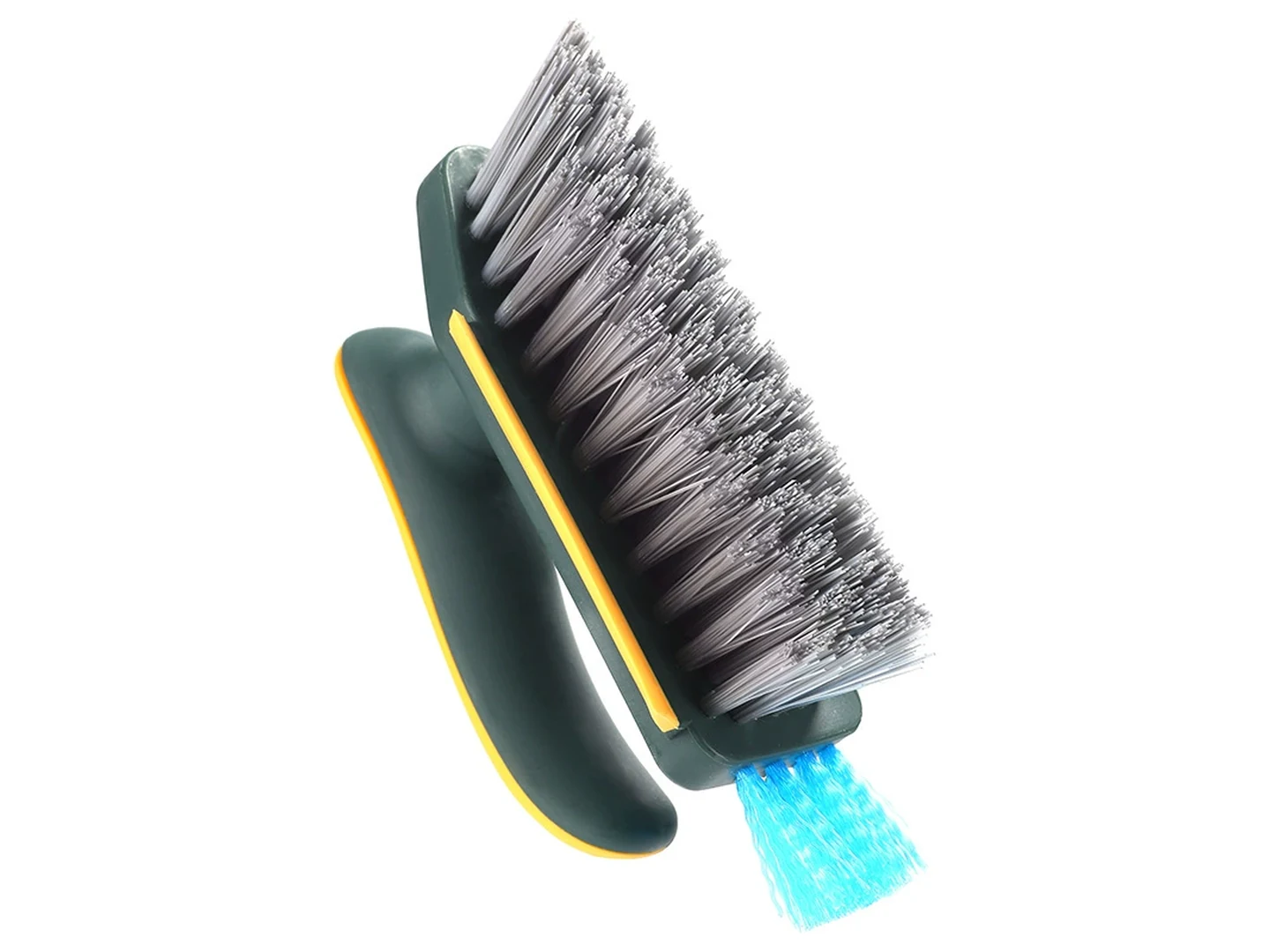
Small brush
500 pcs
Minimum order
Held in one hand: tube, bottle, detail and swab brushes — including long-handled ones with a small head.
Production lead time, once the specification is confirmed
- Up to 500 pcsWithin 7 days
- 501–50,000 pcsWithin 14 days
- Over 50,000 pcsWithin 21 days
Peak season can extend these times; the shipping date is confirmed in writing with your quotation. Sampling and shipping are quoted separately.
The Slot Cleaning Brush is a narrow-profile hand cleaning tool that enters slots, grooves, keyways, and linear tracks in the 2–30 mm width range. Its nylon PA filament face reaches recessed surfaces to remove machining chips, dust, dried coolant, grease, and light residue where larger brushes cannot fit.
What can this brush do for you?
Enters the narrow gap instead of riding over it
The brush face is built to a selected slot width from 2 mm to 30 mm. Because the filament fill is set into a slim holder and trimmed to the profile, the working face travels into the groove and contacts both side walls and the bottom in one pass. A wide general-purpose brush only sweeps the top edges of a slot; this one works inside it.
Trim length matches how deep you need to go
Exposed nylon filament can be cut from 5 mm to 30 mm. A short trim gives more stiffness and control on shallow keyways; a longer trim reaches the bottom of deep T-slots and channel recesses. The brush is specified for the groove depth, not taken from a shelf and expected to clean every opening.
Filament diameter adjusts the cleaning action
Fine 0.15–0.25 mm nylon filaments flex around small contours and lift light dust and film. Heavier 0.30–0.50 mm filaments push packed chips, swarf, and dried coolant residue out of slot corners. The same brush style can be made gentle or aggressive without changing the tool design.
Nylon PA holds its shape between passes
Nylon PA filaments are resilient and compatible with common machine oils, coolants, and mild degreasers, so the bristles recover their upright position after each stroke instead of collapsing after a few passes. The brush continues to fill the slot cross-section instead of laying flat like a worn broom.
A lightweight PP handle keeps the tool controllable
The polypropylene handle tolerates shop oils and solvents and stays light during long machine-table or linear-rail cleaning routines. It adds no unnecessary weight to the pushing motion and will not shatter when dropped next to a machine.
What is a Slot Cleaning Brush?
A Slot Cleaning Brush is a hand-guided cleaning tool whose working face consists of a narrow band of nylon filaments set into a slim holder. The filament face is sized to enter the open width of a slot, groove, track, or keyway, and the exposed trim length controls how far the bristles reach into the recess.
In use, the operator places the brush face inside the opening and moves it along the slot with push-pull or longitudinal strokes. On a T-slot, the motion follows the table slot while the filament tips contact the lower channel and the underside of the T-shape. On a keyway or linear guide groove, short strokes along the groove axis loosen chips and residue so they can be blown, vacuumed, or wiped out.
This is a detail-cleaning and maintenance tool. It removes loose or softened debris from narrow recesses; it is not intended to replace a scraper for hard deposits, a wire brush for rust or scale, or a solvent bath for heavy grease removal. The brush is specified around the actual opening size, groove depth, and residue type rather than the machine model.
Technical Specifications
| Parameter | Value / Options |
|---|---|
| Slot fit width | 2–30 mm, selected to the narrowest opening the brush must enter |
| Active brush section length | 20–150 mm, set by the length of the slot or track section |
| Overall length | 100–400 mm, matched to access depth and operator reach |
| Filament trim length | 5–30 mm, set by groove depth and stiffness requirement |
| Filament diameter | 0.15–0.50 mm, thinner for light dust and conformability, thicker for packed chips and heavier residue |
| Filament material | Nylon PA6, PA6.6, or PA612, selected for wet/dry use and chemical exposure |
| Handle material | Polypropylene (PP), optionally glass-fiber reinforced for extra rigidity |
| Working conditions | Room-temperature to moderate-heat shop use; compatible with common oils, coolants, and mild degreasers |
| Brush type | Custom Handheld Detail Brushes |
| How it is driven | Hand-guided |
| Cleaning target | cnc milling machine and machining center table, linear guide groove and bearing rail recess, and keyway and shaft groove cleaning |
| Surface or part | slots, grooves, tracks, channel, recesses, profiles, linear tracks, and fixtures |
| Residue or debris | chips, grease, dust, coolant, light residue, oil, rust, and scale |
| Mounting / connection | Fixed |
All dimensions and materials can be adjusted to the customer’s slot dimensions and operating conditions.
Where does this brush work best?
- CNC milling machine and machining center table slots: lifts out chips, fines, and dried coolant from T-slots before the next fixture setup.
- Linear guide grooves and bearing rail recesses: removes dust and light grease from the track before re-lubrication without leaving metal-brush scratches.
- Keyways and shaft grooves: cleans machined keyways before key fitting or inspection, removing chips and residual cutting oil.
- Extrusion profiles and aluminum channel sections: clears swarf, adhesive residue, and dust from narrow internal channels during finishing or rework.
- Conveyor track and guide channels: keeps sensor slots, rail grooves, and wear-strip channels clear of debris that can affect product positioning.
- Fixture and tooling plates: reaches recessed clearance slots and locating grooves where chips collect around clamping points.
How do I choose the right one?
Measure the narrowest point of the opening first. The brush face width should be close to that gap but not wider than it. A face that binds against the side walls will not reach the bottom. One that is too narrow will leave residue in the corners because the filaments do not contact both walls.
Set trim length from the groove depth. The exposed filament should be long enough to reach the bottom of the recess under light pressure. For a shallow keyway, a 5–10 mm trim is usually enough and provides more control. For a deep T-slot or channel, select a longer trim. If the groove has a dovetail or undercut, the filaments need enough length to flex around the lower corner.
Choose filament diameter by the residue, not just the width. Fine filaments below 0.25 mm handle dust and light film on precise surfaces; 0.30 mm and above handle chips, dried coolant, and grease. Nylon PA6.6 is a good default for stiffness and wear. PA612 offers lower moisture pickup in wet or humid settings. Avoid using stainless or brass wire inside precision machined grooves unless rust or scale already requires aggressive mechanical removal.
Match overall length to access. Long narrow slots benefit from longer brush sections. Short interrupted grooves are easier to control with a shorter working section. The handle should let the operator keep a straight push without leaning into the machine.
When another tool is more suitable: use a wire brush for rust, scale, or hardened deposits; use a scraper or pick for solid, bonded material; use compressed air or vacuum first when debris is loose and dry. The slot cleaning brush earns its place when access is narrow and the surface or fit tolerance should not be damaged.
Can I customize this brush?
Every slot is different, so the brush is built around the opening dimensions and the cleaning job. The most useful information to provide is: narrowest slot width, groove depth, groove profile (straight, T-shaped, dovetail), slot length, surface material, residue type, any cleaning chemical, and the preferred handle form. A sketch or photo of the slot profile helps us match the geometry faster.
Adjustable elements include:
- Slot fit width and face profile: flat, angled, or formed to follow the groove geometry
- Brush section length and overall handle length
- Filament trim length and filament diameter
- Filament material: PA6, PA6.6, PA612, or a project-specific nylon grade
- Handle shape and material: straight, T-handle, loop, extended reach; standard PP or glass-reinforced PP
- Color, molded-in branding, laser marking, or label identification
- Packaging: bulk, individual polybag, or project-specific carton layout
If your project requires material declarations, inspection records, or third-party testing support, these requirements can be included during customization so documentation matches the actual production batch.
Which filament survives the cleaning and still lasts on a slot cleaning brush?
How can I confirm the brush face is the right width for my slot?
Measure the narrowest opening the brush must enter. The face should fit without forcing. If it binds before the bristles reach the bottom, the width is too large. If there is visible side clearance and the filaments barely touch the walls, the width is too small to clean the full cross-section.
Will nylon PA filaments scratch an anodized or coated groove surface?
Nylon filaments are non-marring on most machined metal surfaces and typical anodized or painted finishes under light to moderate pressure. If the coating is soft or pressure-sensitive, test the heaviest filament diameter on a non-critical area first; aggressive pressure with thick filaments can still abrade a soft coating over time.
Can the brush be used with degreaser or machine coolant?
Nylon PA and polypropylene accept common machine oils, water-based coolants, and mild degreasers. For chlorinated solvents, strong acids, or strong alkaline cleaners, confirm chemical compatibility with the selected nylon grade before production, because some aggressive chemicals can embrittle nylon or attack the handle.
How do I clean the brush after use?
Remove loose chips by tapping the brush or using compressed air. If grease or dried coolant remains, wash the filament face with a compatible mild solvent or degreaser, rinse, and allow the bristles to dry upright. Do not leave the brush soaking in solvent or caustic cleaner overnight.
When should I replace the brush instead of cleaning it?
Replace when the bristles are permanently bent outward and do not return to their original position, when the trim length has worn to the point that it no longer reaches the groove bottom, or when the handle shows cracks or the filament fill has loosened. A brush that no longer contacts both walls and bottom cannot clean the slot completely.
Can this brush remove rust or hardened scale from a keyway?
No. Nylon PA is intended for loose chips, dust, dried coolant, and soft residue. Rust, scale, or baked-on carbon requires a wire brush, scraper, or chemical treatment first. The slot cleaning brush is the step that removes remaining debris without damaging the machined surfaces.
Guides that go deeper on this
We have not written a guide specific to this one yet. The material that covers selection, filament, dimensions, maintenance and sourcing is collected in the technical resources library.
Custom Manufacturing RFQ
Describe Your Application
For a custom quote, we need the key dimensions, surface or part, residue, material preference, quantity, and reference image or drawing.
Drawing or photo optional — it speeds things up, it does not gate the enquiry.
Custom Brush RFQ
Send Your Brush Project
Upload a drawing, product photo, or sample photo and provide the core dimensions and cleaning conditions.
“We need a brush to remove wet residue from a stainless steel conveyor, about 800mm wide. The current brush wears quickly. We can send photos.”
“We sell drinkware and need a cleaning brush to include with the product. Quantity around 5,000 pieces.”