
Custom Cleaning Brush
Window Track Cleaning Brush
Custom window track cleaning brush for sliding doors and narrow channels. Nylon, PBT or PP bristles; head widths 5–25 mm; built to OEM track specs.
Small brush
500 pcs
Minimum order
Held in one hand: tube, bottle, detail and swab brushes — including long-handled ones with a small head.
Production lead time, once the specification is confirmed
- Up to 500 pcsWithin 7 days
- 501–50,000 pcsWithin 14 days
- Over 50,000 pcsWithin 21 days
Peak season can extend these times; the shipping date is confirmed in writing with your quotation. Sampling and shipping are quoted separately.
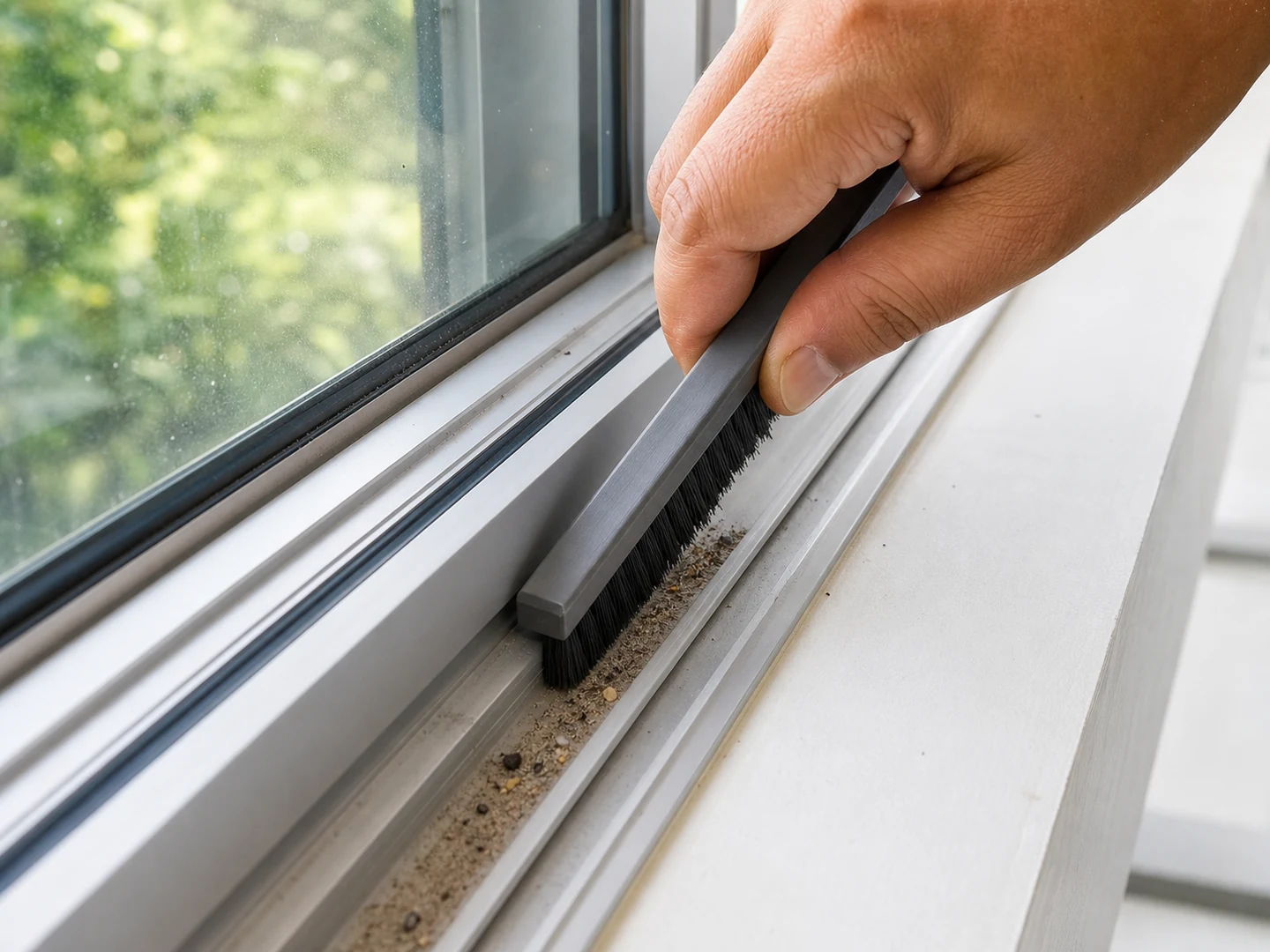
A narrow-profile hand brush built for window tracks, sliding door rails, and other 5–25 mm channels where dust, sand, hair, and compacted dirt collect. The bristle head is matched to the channel width so one stroke lifts debris from the bottom and both sidewalls without scratching the track.
What can this brush do for you?
A Head That Enters the Channel, Not Just the Gap
The bristle block can be supplied from 5 mm upward, so it seats inside the track between the inner rails instead of riding on top of them. Nylon or PBT filaments flex against both sidewalls while the tips work the bottom, allowing one pass to remove debris a cloth or standard hand brush cannot reach.
Stiff Enough for Dried Residue, Soft Enough for Painted and Anodized Surfaces
Track debris is rarely just dust. Sand, insect remains, hair, dried mud, and greasy film compact into corners. PA and PBT bristles keep their stiffness through repeated scrubbing, while rounded filament ends clear compacted material without the scraping damage of metal or coarse abrasives.
Reaches Drain Slots and Sash Corners
The head can be tapered or angled, with a shorter corner section for weep holes and the space under the sash. Instead of stopping where the track meets the frame, the tip follows the corner and clears drainage points before they clog.
Short Reach for One-Handed Control
With an overall length around 180–250 mm, the brush stays controllable when cleaning overhead windows or working in confined balconies and door frames. The 15–30 mm grip diameter resists turning in the hand, even when wet from detergent.
Quick-Rinse Bristle Block
The bristles are set into a molded polypropylene or engineered plastic body with spacing that lets sand and fiber debris shake out rather than lodging at the base. Rinsing under a tap restores the head for repeated units without progressive buildup.
What is a Window Track Cleaning Brush?
A Window Track Cleaning Brush is a short-handled cleaning tool with a narrow bristle head shaped to follow the bottom channel of a sliding window or door. The bristle block is usually straight or lightly angled, with a profile narrow enough to sit between the rails that guide the sash.
In use, the operator runs the head along the track with short back-and-forth strokes. The filaments contact the bottom, the inner sidewalls, and the corners where the track meets the frame. Loosened debris is then wiped, vacuumed, or rinsed out. The brush is normally used dry or with light detergent, and it is designed for regular maintenance rather than stripping paint, sealant, or cured deposits.
The standard construction pairs an injection-molded polypropylene body and handle with nylon PA, PBT, or PP bristles. Nylon PA and PBT are the common working choices because they hold stiffness in narrow channels; PP bristles are used for lighter-duty dust and film where the softest contact is needed. Head width, working length, trim profile, and handle dimensions are set to the specific track being maintained.
Technical Specifications
Window track brushes are configured around the channel they must enter. The table below shows the standard project ranges; final dimensions are set from your track measurements.
| Parameter | Standard Range / Options |
|---|---|
| Head width | 5–25 mm, selected to match the track’s inner channel width |
| Working head length | 30–115 mm |
| Overall length / reach | 180–250 mm |
| Grip / body diameter | 15–30 mm |
| Bristle material | Nylon PA, PBT, or polypropylene PP; filament diameter 0.15–0.25 mm |
| Body / handle material | Injection-molded PP, with optional overmold grip |
| Head geometry | Straight, angled, tapered tip, or corner notch profile |
| Operating environment | Dry, damp, or mild detergent-assisted wet cleaning; avoid solvent soaks and high-temperature exposure |
| Color and finish | Project-matched molded color; optional printed or molded marking |
| Brush type | Custom Handheld Detail Brushes |
| How it is driven | Hand-guided |
| Cleaning target | residential window track, sliding patio and screen door rail, and apartment turnover and facility maintenance cleaning |
| Surface or part | tracks, channel, rails, window tracks, frames, sidewalls, drain, and profiles |
| Residue or debris | dust, hair, sand, compacted dirt, insects, insect debris, dried film, and soap film |
| Mounting / connection | Fixed |
The most important dimension is head width. It must clear the narrowest point between the inner rails while the filament tips still contact both sidewalls and the channel bottom.
Where does this brush work best?
- Residential window tracks on aluminum, vinyl, wood, or fiberglass frames where dirt collects under the sash and along the side channels.
- Sliding patio and screen door rails that accumulate sand, pet hair, insect debris, and dried film until the door rolls roughly or sticks.
- Shower screen and interior partition tracks that trap soap film, hair, and damp dust in a narrow channel.
- Apartment turnover and facility maintenance where crews need a single compact tool to clean hundreds of similar track profiles quickly.
- Weep holes and drain slots at the base of window frames, where a tapered or notched head clears the openings that let condensation drain.
How do I choose the right one?
Measure the track’s narrowest inner width first
Use calipers at the tightest point between the inner rails. The bristle block should be slightly narrower than that measurement, with the filament length making up the side contact. Too wide and the head wedges or bends the filaments flat; too narrow and it cleans only the bottom, leaving film on the sidewalls.
Match the bristle material to the debris and cleaning method
Nylon PA gives toughness and flex for dry compacted dirt. PBT holds stiffness better when the track is cleaned wet or with detergent and resists repeated water exposure well. PP is the softest and least aggressive option for light dust and delicate or coated surfaces. Choose the material by what is in the track and how often it will be cleaned wet.
Choose head geometry for the problem area
A straight head is easiest to control along a long flat track. An angled or tapered head reaches under the sash, into corners, and into drain slots. If weep holes are routinely clogged, specify a notched or pointed tip section rather than a full-width blunt end.
Set the reach for the operator
For standard window and door tracks, 180–250 mm overall length keeps the wrist straight and the brush controllable. A longer handle is not automatically better; extra length can reduce downward pressure at the bristle tips and make corner work harder.
| Condition | Preference |
|---|---|
| Dry dust and hair, delicate surface | PP or fine nylon PA |
| Compacted sand, mud, insect debris | Stiffer PA or PBT |
| Wet or detergent cleaning | PBT |
| Corner or drain slot access | Tapered or notched head |
When this brush is not the right tool
If the track is narrower than 5 mm, a micro-channel brush or flexible blade tool is needed. If the deposit is cured sealant, paint, mortar, or hard scale, use a scraper, chemical remover, or wire brush instead — this brush is designed to clear debris, not to cut through bonded material. For very long heavy-duty rail systems or machine-guide channels, a larger industrial channel brush may last longer.
Can I customize this brush?
Window track brushes are almost always specified around a track profile. Send us the inner channel width, channel depth, frame material, the type of debris you need to clear, and whether cleaning is dry or wet. A cross-section drawing, a photo of the track, or the window/door model number helps us lock the detail quickly.
Typical variables include:
- Head width and length profile, including tapered or angled tips and notched corners for drain access
- Bristle material and stiffness, including PA, PBT, or PP, filament diameter, bristle density, and trim length
- Handle and body dimensions, grip texture, hanging hole, overmold material, and color
- Brush body angle or offset neck to reach under low sashes or into deep frame slots
- Marking and packaging: molded logo, pad print, color matching, bulk polybag, header card, or retail pack
For project-based work, we can also support material documentation, pre-shipment inspection, and third-party testing where your buying program requires them.
How do you confirm a window track cleaning brush has actually cleaned the surface?
How can I confirm the brush head will enter my track without jamming?
Measure the track at its narrowest inner point, including any small lips or returns. The bristle block width should clear that measurement while the filament tips still touch both sidewalls. Pressure against the rails should be light to moderate; if you must force the brush in, reduce the head width or trim length.
Will repeated use leave marks on anodized or painted frames?
Under normal hand pressure, nylon PA, PBT, and PP filaments do not scratch anodized aluminum, powder coating, or vinyl. Rinse the brush between jobs; sand and grit caught near the bristle base can act as an abrasive and should not be dragged across a finished surface.
Can this brush be used with cleaning solutions?
Yes, for mild detergents and general-purpose cleaners. Avoid solvent immersion and strong alkaline or acidic soaks, which can attack the molded body and filament over time. If your process uses a specific chemical, specify it during configuration so the material pair can be checked.
How do I keep the brush effective over many units?
Rinse the head after use, tap out remaining debris, and store it bristles-up or hanging by the handle. Replace the brush when the filaments become permanently flattened, bent sideways, or lose spring so the tips no longer reach the track bottom.
What does brushing not remove from window tracks?
The brush clears loose and compacted dirt, sand, hair, dust, and film. It will not remove cured silicone, paint, adhesive, cement, or corrosion. Those require a scraper, chemical treatment, wire brush, or replacement of the track section.
How do I know the track is clean enough before reassembly or lubrication?
Wipe the channel bottom and both lower corners with a clean white cloth. If the cloth stays clean and the drain slots run water freely, the track is clear. If residue remains at the corners or the weep holes are still plugged, use the tapered or notched tip to rework those areas before applying lubricant.
Guides that go deeper on this
We have not written a guide specific to this one yet. The material that covers selection, filament, dimensions, maintenance and sourcing is collected in the technical resources library.
Custom Manufacturing RFQ
Describe Your Application
An accurate custom quote starts with the dimensions, working surface, residue, material choice, connection, quantity, and reference files.
Drawing or photo optional — it speeds things up, it does not gate the enquiry.
Custom Brush RFQ
Send Your Brush Project
Upload a drawing, product photo, or sample photo and provide the core dimensions and cleaning conditions.
“We need a brush to remove wet residue from a stainless steel conveyor, about 800mm wide. The current brush wears quickly. We can send photos.”
“We sell drinkware and need a cleaning brush to include with the product. Quantity around 5,000 pieces.”