
Custom Cleaning Brush
Barbecue Grill Cleaning Brush
Barbecue grill brush in stainless steel wire, brass wire or nylon PA, 80–190 mm heads on 300–610 mm handles. Choose the fill for your grate.
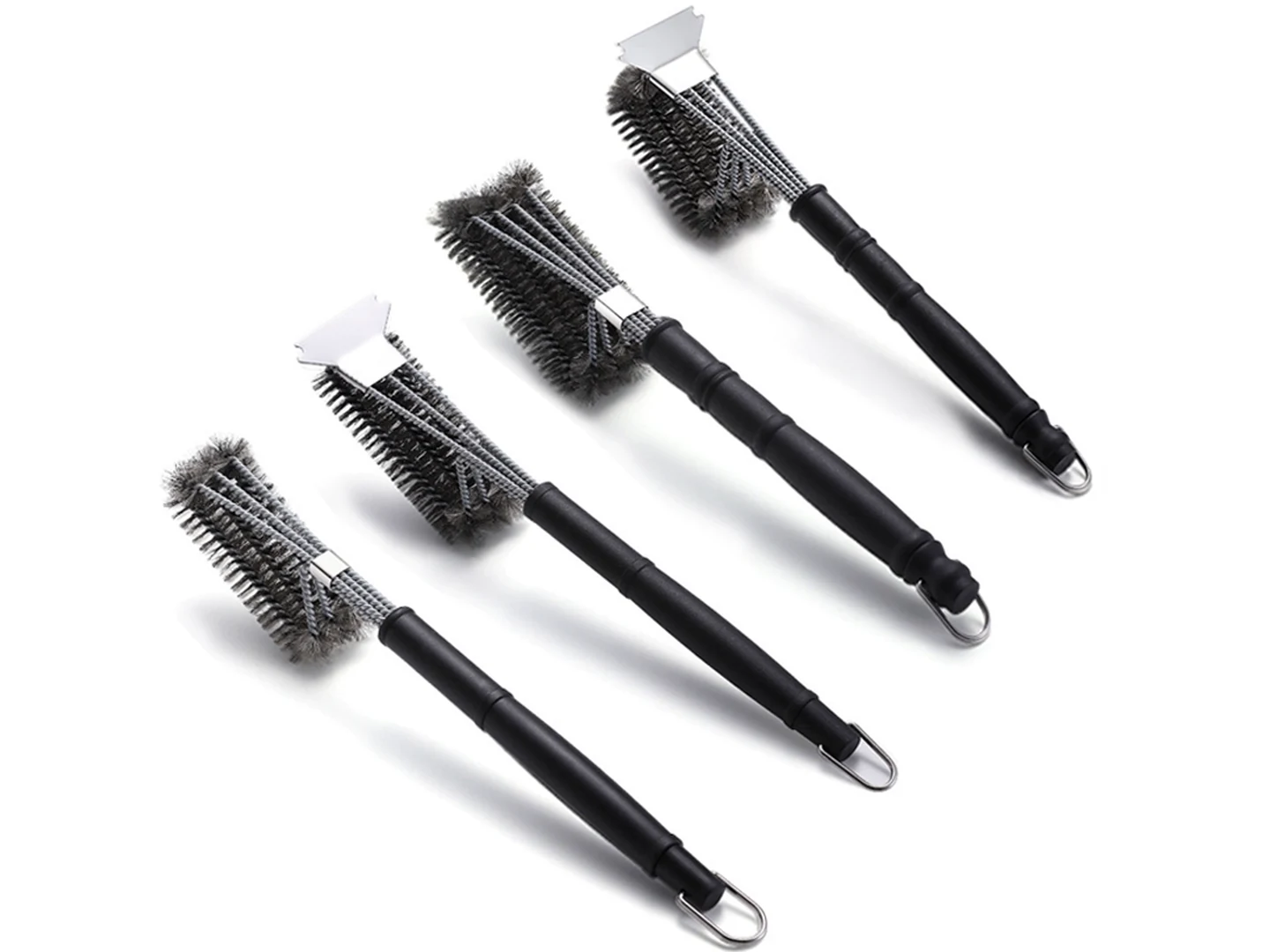
Medium brush
100 pcs
Minimum order
Worked with two hands or on a pole: chimney, gutter and pond-filter brushes, discs, cups and tank brushes.
Production lead time, once the specification is confirmed
- Up to 100 pcsWithin 7 days
- 101–5,000 pcsWithin 14 days
- 5,001–50,000 pcsWithin 21 days
- Over 50,000 pcsConfirmed with your quotation
Peak season can extend these times; the shipping date is confirmed in writing with your quotation. Sampling and shipping are quoted separately.
This barbecue grill brush removes carbonized grease, char, and cooked-on food residue from barbecue grates, charbroiler bars, and smoker racks. The long, heat-resistant handle keeps hands clear of heat, and the replaceable head supports daily commercial use.
What can this brush do for you?
Cuts Through Carbonized Grease Without Chemicals
316 stainless steel wire bristles provide stiff mechanical action that breaks through baked-on grease and char that a cloth or nylon brush cannot touch. This reduces reliance on harsh chemical cleaners and shortens the time between cooking cycles.
Scrapes Flat Surfaces and Bar Edges
An integrated stainless steel scraper runs along the leading edge of the brush head, letting one tool loosen char from flat grate tops, corners, and between the bars before the wire bristles sweep away loose debris. No need to switch between a scraper and a brush.
Keeps Hands Away from Heat and Splatter
The 300–610 mm handle sets the operator back from hot grates and grease splatter. Aramid-fiber-reinforced handle options add heat resistance for crews that brush warm grills immediately after the food comes off.
Survives Damp Kitchen and Outdoor Conditions
316 stainless steel wire resists corrosion from water, grease, and atmospheric moisture better than carbon steel or galvanized wire. The brush stays usable through repeated washdowns, outdoor storage, and high-humidity kitchen environments.
Replaceable Head Reduces Total Cost
High-volume operations can replace just the brush head instead of the entire tool when bristles flatten or wear. This cuts replacement cost per cycle and reduces waste for distributors offering consumable refills.
What is a Barbecue Grill Cleaning Brush?
A Barbecue Grill Cleaning Brush is a hand-held cleaning tool built specifically for the wire grates of barbecue grills, commercial charbroilers, and smokers. The working end holds rows of 316 stainless steel wire bristles—usually straight, crimped, or a combination—set into a rigid head. A scraper blade is often integrated at the front or rear edge. The long handle gives the operator leverage and distance from the grate.
In use, the operator runs the brush back and forth along the grate bars while the grate is still warm. Heat softens the grease and char, making it easier for the wire bristles to fracture and lift carbonized deposits. Loose debris is then scraped or swept into the drip tray or vacuumed away. The brush works best when the residue is baked-on but still removable by mechanical force.
This is not a chemical cleaner, a pressure washer, or a soft-surface brush. It is designed for uncoated carbon steel, stainless steel, and cast iron grates. Do not use steel wire on porcelain-coated, enameled, or nonstick grate surfaces, because the wire will scratch and chip the coating.
Technical Specifications
| Parameter | Value / Options |
|---|---|
| Head width | 80–190 mm (custom sizes available) |
| Head depth | 40–80 mm |
| Wire diameter | 0.20–0.50 mm (selected for grate spacing and residue load) |
| Bristle material | 316 stainless steel wire (standard); nylon PA or aramid fiber options for coated or high-heat grates |
| Bristle configuration | Straight, crimped, or combination; density and trim length project-specific |
| Scraper | Integrated stainless steel blade; straight, serrated, or angled profile; optional on some configurations |
| Handle length | 300–610 mm |
| Overall length | 400–650 mm |
| Handle material | Nylon PA (standard), TPR overmold, or aramid-fiber-reinforced for higher heat exposure |
| Head connection | Fixed, threaded replaceable head, or quick-release (configured to order) |
| Operating condition | Use on warm grates after cooking; avoid open flame, direct flame contact, or prolonged exposure above 600°F (315°C) at the wire |
| Brush type | Custom Handheld Detail Brushes |
| How it is driven | Hand-guided |
| Cleaning target | charcoal, gas and pellet grill grate, commercial charbroiler and chargrill station, and griddle plate and smoker rack cleaning |
| Surface or part | bars, racks, carbon steel, charbroiler bars, edges, corners, trays, gaps, and plates |
| Residue or debris | grease, char, carbon, food residue, carbonized grease, cooked-on food residue, oxide, loose debris, and rust |
| Mounting / connection | Fixed, threaded replaceable head, or quick-release (configured to order) |
Where does this brush work best?
- Charcoal and gas barbecue grills with carbon steel, stainless steel, or cast iron cooking grates.
- Commercial charbroilers and grill stations in restaurants, food trucks, and catering operations.
- Smoker racks, rotisserie grates, and wire cooking grids where baked-on grease accumulates.
- Outdoor kitchen equipment that needs daily removal of charred food residue and light oxide.
How do I choose the right one?
Match wire diameter to grate spacing and residue type
Start by measuring the distance between grate bars. Narrow gaps need thinner wire (0.20–0.30 mm) to reach into the spaces without bending; wide gaps and heavy carbon deposits benefit from thicker wire (0.35–0.50 mm) that holds its shape under pressure. If the residue is soft film, thinner wire is enough; if it is hard, carbonized grease, use thicker or crimped wire for more aggressive action.
Select head width from the grate surface
Choose a head width that covers two to four grate bars in one stroke. Too wide and the brush is hard to control between bars; too narrow and cleaning takes longer. For large commercial charbroilers, a 120–190 mm head often works well. For compact home grills, 80–110 mm is usually sufficient.
Decide whether you need a scraper
If the grate has flat surfaces, welded joints, or raised edges where char collects, choose a configuration with an integrated scraper. If the surface is all round or V-shaped bars, a brush-only head may be all you need, and it will be lighter.
Choose handle length and material for the work environment
Longer handles (450–610 mm) are better for deep commercial grills and for keeping hands far from heat. Shorter handles (300–450 mm) give more control for detail work and smaller grills. If operators brush warm grates immediately after cooking, specify aramid-fiber-reinforced or high-temperature nylon handle. For general cooled-grate cleaning, standard nylon PA is acceptable.
Plan for replacement
In high-volume kitchens, wire bristles eventually flatten, bend, or lose aggression. A replaceable head keeps the handle and reduces waste. Order spare heads at the same time as the initial brushes so the line does not stop when one head wears out.
When this brush is the wrong tool
Use a nylon or aramid-fiber brush for porcelain-coated, enameled, or nonstick grates, because steel wire will scratch the coating. Use a chemical grill cleaner or high-temperature detergent soak for extremely thick, solidified carbon before mechanical brushing. Use a smaller wire brush or detail brush for tight corner welds, hinges, or burner areas where the wide head cannot fit.
Can I customize this brush?
Barbecue grill brushes are project-configurable because grate styles, grill depths, and kitchen workflows vary. Before we build, we need the grate material, bar spacing, grate width, residue type, cleaning frequency, handle preference, and whether the brush will be used on warm or cold grates. A photo or drawing of the grill grate helps us match the head profile.
We can adjust:
- Head geometry — width, depth, shape, and bristle trim profile to match the grate.
- Bristle material — 316 stainless steel wire for bare metal grates, nylon PA for coated surfaces, or aramid fiber for high-temperature, metal-free cleaning.
- Wire configuration — diameter, straight vs. crimped, bristle length, and density.
- Scraper — none, straight, serrated, angled, or dual-edge, positioned front or rear.
- Handle — length, straight or ergonomic shape, nylon PA, TPR overmold, aramid-reinforced, hanging hole, or custom branding.
- Head connection — fixed, threaded replaceable, or quick-release with spare-head program.
- Color and marking — custom color, pad print, laser marking, or molded logo.
- Packaging — bulk, individual poly bag, retail card, kit, or project-specific packing.
If your project requires material documentation, inspection reports, or third-party testing for a specific market, we can assist with those requirements during the customization process.
Which filament survives the cleaning and still lasts on a barbecue grill cleaning brush?
How do I prevent stainless steel bristles from ending up in food?
Inspect the brush before every shift. Pull on the bristles lightly and brush a test patch to see if any wires come loose. Replace the brush or head as soon as bristles start pulling out, flattening excessively, or breaking. After brushing, wipe the grate with a clean, oiled cloth and visually inspect the surface before placing food on it. For operations where any metal contamination risk is unacceptable, use a bristle-free or nylon/aramid brush configuration instead.
Can I use the brush on a hot grill?
Use it on a warm grate after the food has been removed and the flame is off or set to low. The heat softens grease and makes removal easier. Do not use the brush directly over open flames or when the grate is at full cooking temperature; wire holds up well, but nylon and TPR handle components can soften, and aramid-reinforced handles are only intended for intermittent warm contact.
How do I clean and store the barbecue grill brush?
Rinse the head with hot water after use to remove loosened grease and food particles. Hang the brush by the handle hole to dry. Do not soak wooden handles, and do not leave the brush in standing water or grease. Store in a dry location away from salt air or chemical vapors. For brushes with replaceable heads, remove the head occasionally to check the connection threads.
How can I tell when it is time to replace the brush or head?
Replace when more than about half of the bristles are flattened, bent, or missing, when the scraper edge is rounded and no longer catches char, or when the head no longer makes consistent contact across the grate. A simple test: brush a section of grate and check whether you can still feel the wires catching the surface. If the brush skates over the residue, it is time for a new head or a stiffer configuration.
Will the stainless steel wire rust?
316 stainless steel wire resists corrosion from water and cooking grease much better than carbon steel, but it can develop surface tea staining in high-salt or high-chloride environments if left wet. Rinse and dry the brush after use, and avoid storing it in contact with harsh chemicals. If visible rust develops, the wire has likely been exposed to severe conditions and should be replaced.
What surfaces should never be cleaned with this brush?
Do not use steel wire on porcelain-coated, enameled, painted, or nonstick grates, because the wire will scratch and compromise the coating. Do not use on aluminum or other soft metals, which the wire will gouge. For those surfaces, use a nylon PA or aramid fiber brush head, or a soft grill stone. For very tight corners or burner tubes, use a smaller detail wire brush instead of forcing the wide head.
Guides that go deeper on this
Custom Manufacturing RFQ
Describe Your Application
An accurate custom quote starts with the dimensions, working surface, residue, material choice, connection, quantity, and reference files.
Drawing or photo optional — it speeds things up, it does not gate the enquiry.
Custom Brush RFQ
Send Your Brush Project
Upload a drawing, product photo, or sample photo and provide the core dimensions and cleaning conditions.
“We need a brush to remove wet residue from a stainless steel conveyor, about 800mm wide. The current brush wears quickly. We can send photos.”
“We sell drinkware and need a cleaning brush to include with the product. Quantity around 5,000 pieces.”