
Custom Cleaning Brush
Drain Snake Cleaning Brush
Flexible drain snake cleaning brush for sink, shower, and appliance drains. Nylon PA/PBT head, 304 stainless steel core, reach 1000–1550 mm.
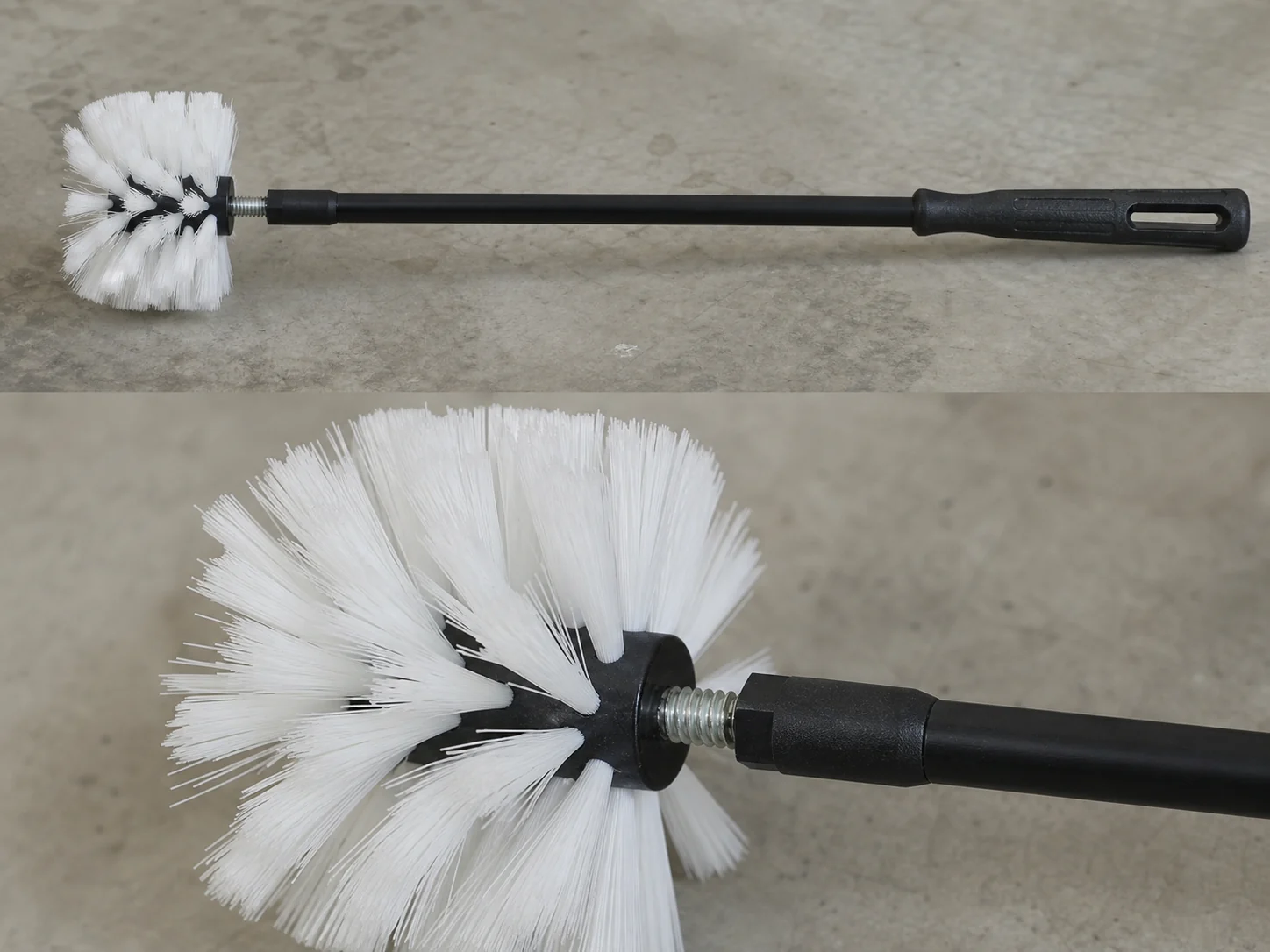
Small brush
500 pcs
Minimum order
Held in one hand: tube, bottle, detail and swab brushes — including long-handled ones with a small head.
Production lead time, once the specification is confirmed
- Up to 500 pcsWithin 7 days
- 501–50,000 pcsWithin 14 days
- Over 50,000 pcsWithin 21 days
Peak season can extend these times; the shipping date is confirmed in writing with your quotation. Sampling and shipping are quoted separately.
A flexible, reusable drain cleaning brush with a corrosion-resistant 304 stainless steel core and molded nylon PA/PBT cleaning head. It follows sink, shower, tub, floor, and appliance drain passages up to 1550 mm to hook and pull out hair, soap scum, grease, and food debris without opening the trap.
What can this brush do for you?
Follows the Drain Path Through the Trap
The 304 stainless steel wire core is flexible enough to follow the curve from the strainer opening through the P-trap and into the first section of branch line. With an overall reach of 1000–1550 mm, the brush gets to the trap and the short run beyond it, where most hair and soap clogs start but where a plunger or short drain stick cannot reach.
Grabs Hair and Fibers Instead of Pushing Them Downstream
The 15–30 mm wide nylon PA/PBT head uses radial bristle and barb contact to catch wet hair strands, paper fibers, and grease-bound particles. The 45–60 mm working head length keeps the cleaning contact focused on the actual obstruction, so debris is pulled back as a mass rather than being compacted deeper into the line.
Stays Sound in Wet Drain Conditions
The 304 stainless steel core resists rust from repeated exposure to sink and shower water, while the nylon PA/PBT head does not soften or break down under normal hot tap water and common detergents. That allows repeated use in wet environments without the rapid degradation typical of low-cost spring steel or disposable plastic strips.
Cleans Without Aggressive Scratching of Drain Surfaces
Nylon and PBT contact surfaces are non-metallic, which keeps cleaning action gentler on chrome drain bodies, plastic pop-up fittings, PVC traps, and coated interiors than wire or abrasive brushes. Hand force is usually enough; the brush is designed for film and soft mass removal, not for scaling pipe walls.
Reusable and Rinseable, With a Handle That Keeps Your Grip
The brush can be rinsed clean, dried, and put back into service instead of being thrown away after one pass. A loop, ring, or T-bar handle can be selected to give the operator a secure grip when pulling through resistance, and it provides a convenient hanging point for storage.
What is a Drain Snake Cleaning Brush?
A Drain Snake Cleaning Brush is a hand-operated drain maintenance tool that combines a slender flexible core with a short headed cleaning section. The core is built from 304 stainless steel wire for wet-service corrosion resistance, and the head is molded from nylon PA or PBT to provide bristle or barb contact inside the drain line. The operator inserts the working end through the drain opening, pushes and rotates it through the trap, and pulls it back to remove attached debris.
The tool is sized for routine clearing and preventive maintenance in accessible sink, shower, laundry, floor, and appliance drain passages. It is not a powered auger, not a pipe scale remover, and not a replacement for a drain machine on a fully blocked or root-intruded line. It works best on the leading causes of slow drains in residential and light commercial settings: hair, soap film, grease-bound food particles, lint, and paper fiber.
During use, the operator feeds the brush until the head meets the restriction, rotates or works it back and forth through the material, and withdraws it. The head should come back with visible debris. If the drain still does not flow freely after several passes, the blockage may be beyond the reach of the tool or too hard for nylon contact.
Technical Specifications
These are the standard dimensions and material parameters for the drain snake cleaning brush. All values can be adjusted for a custom order.
| Parameter | Standard values / options |
|---|---|
| Overall reach | 1000–1550 mm (custom lengths available) |
| Working head length | 45–60 mm |
| Head width / diameter | 15–30 mm |
| Core material | 304 stainless steel wire |
| Cleaning head material | Nylon PA / PBT, stiffness and barb or bristle profile selectable |
| Core flexibility | Configured to follow a standard P-trap; stiffness can be increased or reduced for the actual drain path |
| Handle style | Loop, ring, T-bar, or plain shaft end |
| Drain passage suitability | Typically 32–50 mm internal diameter lines; the widest head point must stay below the narrowest internal opening |
| Operating environment | Wet sink, shower, tub, floor, and appliance drain use; rinse and dry after service |
| Typical debris handled | Hair, soap scum, grease film, food particles, lint, paper fiber |
| Brush type | Custom Tube & Pipe Bore Brushes |
| How it is driven | Hand-guided |
| Cleaning target | bathroom sink and basin trap, shower and bathtub drain, and accessible appliance drain line cleaning |
| Surface or part | drain, traps, floors, passages, pipes, walls, baskets, and screens |
| Residue or debris | hair, fiber, particles, grease, food particles, lint, paper fibers, and food debris |
| Mounting / connection | Flexible Spring / Twisted-Wire Shaft / Removable Grip |
Choose the head width after measuring the smallest point the brush must pass through, which is usually the strainer hole, pop-up body, or trap inlet, not the full pipe diameter.
Where does this brush work best?
- Bathroom sink and basin traps: clear hair and soap sludge from pop-up and bottle traps after removing the stopper or access cover.
- Shower and bathtub drains: remove hair clogs from the drain shoe, trap, and short tailpiece run where strainer screens cannot go.
- Kitchen sink tailpieces and traps: loosen grease-bound food particles after the strainer basket is removed and before the line passes into the wall.
- Laundry and utility floor drains: pull lint and fiber from standpipes and shallow floor traps during routine maintenance.
- Accessible appliance drain lines: clean the inside of removable drain hose sections or condensate lines when the internal diameter is large enough for the head to enter.
If the drain is completely stopped, the line is under backpressure, or the obstruction is beyond 1550 mm of the access point, use a plumbing auger or powered drain machine first, then use this brush as a finishing and maintenance tool.
How do I choose the right one?
Start with the narrowest opening the brush must pass through. Measure the strainer hole, pop-up body passage, or trap inlet before the head enters the full-diameter pipe. The head width must clear that point without jamming. A 15–30 mm head is standard, but head diameter should be selected against the actual opening, not the nominal drain size.
Then match the reach to the distance from the access point to the trap and the first section beyond it. The 1000–1550 mm overall range covers most basin, shower, and tub applications, but deep floor drains or horizontal runs may need a longer core. Include enough length to hold the brush comfortably while the head is at the obstruction.
Choose the head material and shape by the type of debris and surface contact. Nylon PA is the softer, more flexible choice for everyday hair and film on delicate fittings. PBT is stiffer and gives firmer contact for compacted grease, paper fiber, or repeated maintenance on harder plastic drain parts. A straight barb profile works for pulling fibers, while a tapered or bulb-shaped head may improve contact in curved traps.
Evaluate the core before ordering for a very tight or multi-bend drain. A more flexible wire follows aggressive curves more easily, but it transfers less push force through soft clogs. A stiffer core penetrates dense grease better but may be harder to feed around a tight P-trap. Send the bend radius or a photo of the drain layout when the pathway is unusual.
Choose a different tool when the blockage is hard scale, cured grease, root intrusion, or a fully packed line. This brush removes soft, fibrous, and semi-solid debris from paths it can physically reach; it does not cut roots, break mineral deposits, or generate the torque of a drain machine. For narrow appliance tubes below about 15 mm internal diameter, use a dedicated tube brush instead.
Can I customize this brush?
The drain snake cleaning brush is fully configurable because drain access, trap geometry, and debris types vary from project to project. To start, provide the narrowest internal opening, the distance from the access point to the trap or blockage, the bend radius, the type of debris, any chemicals used in the drain, and the preferred handle form.
- Reach and core: length, wire diameter, flexibility, coiled or straight core construction, and coating if required.
- Head dimensions and geometry: width, working length, straight, tapered, bulb, or custom molded profile.
- Cleaning contact: nylon PA or PBT, bristle stiffness and density, barb shape, spacing, and orientation.
- Handle: loop, ring, T-bar, thumb grip, hanging hole, or color-coded end.
- Marking and packaging: custom color, pad printing or laser marking, private-label branding, bulk packing, retail hook cards, or kit configurations.
We can also support project-specific material declarations, inspection requirements, and third-party testing through the customization process. Send a drawing, sample, or clear photographs of the drain route if available.
How do you confirm a drain snake cleaning brush has actually cleaned the surface?
Will the stainless steel core scratch a chrome or polished drain finish?
The cleaning head should lead the way; the wire core normally stays centered and does not drag on the visible rim when the brush is inserted straight. If the opening is tight or the finish is easily marked, protect the rim with tape or use the smallest head width that still makes contact with the debris. Side force against the opening, not normal insertion, is what risks marring the finish.
Can this brush be used after a liquid drain cleaner has been applied?
Yes, once the drain has been flushed and the chemical is no longer active. Rinse the brush immediately after use and do not let it sit in strong oxidizers, concentrated acids, or solvents. For production orders where chemical exposure is part of the process, confirm the specific cleaner with us so the head and core materials can be matched.
How do I verify the drain is clear after brushing?
Pull the brush out and check the head for the expected hair, grease, or lint. Then run water at full flow for 30–60 seconds while watching the drain. Slow drainage, gurgling, or water backing up means the restriction is deeper than the brush reached, the head did not pass through the trap completely, or a harder deposit remains. Repeat with a longer or narrower configuration or move to an auger.
How should the brush be cleaned and stored between uses?
Remove collected debris from the head, rinse it under tap water, and wipe the core dry. Hang the brush by the handle or store it straight. Do not coil it tightly or bend it sharply, because a kinked core will feed poorly and may break after repeated use.
Is this brush suitable for toilets or main sewer lines?
No. The brush is dimensioned for sink, shower, tub, laundry, floor, and appliance drain passages, generally 32–50 mm internal diameter. Toilets require a closet auger, and main sewer lines call for drain machines or hydro jetting. Using this brush in a toilet or on a packed sewer line can leave the tool stuck or force the blockage deeper.
What should I check on the brush before each use?
Check that the head is firmly attached to the core, the wire is straight and free of kinks, and no bristle or barb has broken off. Confirm the head width still clears the smallest opening. If the core is permanently bent, the head is cracked, or the cleaning surface is worn smooth, replace the brush instead of forcing it through the drain.
Guides that go deeper on this
Custom Manufacturing RFQ
Describe Your Application
Please include the main sizes, application, residue, preferred material, interface, quantity, and any drawing or sample available.
Drawing or photo optional — it speeds things up, it does not gate the enquiry.
Custom Brush RFQ
Send Your Brush Project
Upload a drawing, product photo, or sample photo and provide the core dimensions and cleaning conditions.
“We need a brush to remove wet residue from a stainless steel conveyor, about 800mm wide. The current brush wears quickly. We can send photos.”
“We sell drinkware and need a cleaning brush to include with the product. Quantity around 5,000 pieces.”