
Custom Cleaning Brush
Glass Cleaning Brush
Custom glass cleaning brush with 50–200 mm soft foam or microfiber contact for dust, glass fines, slurry, and oil film on flat glass and coated panels.
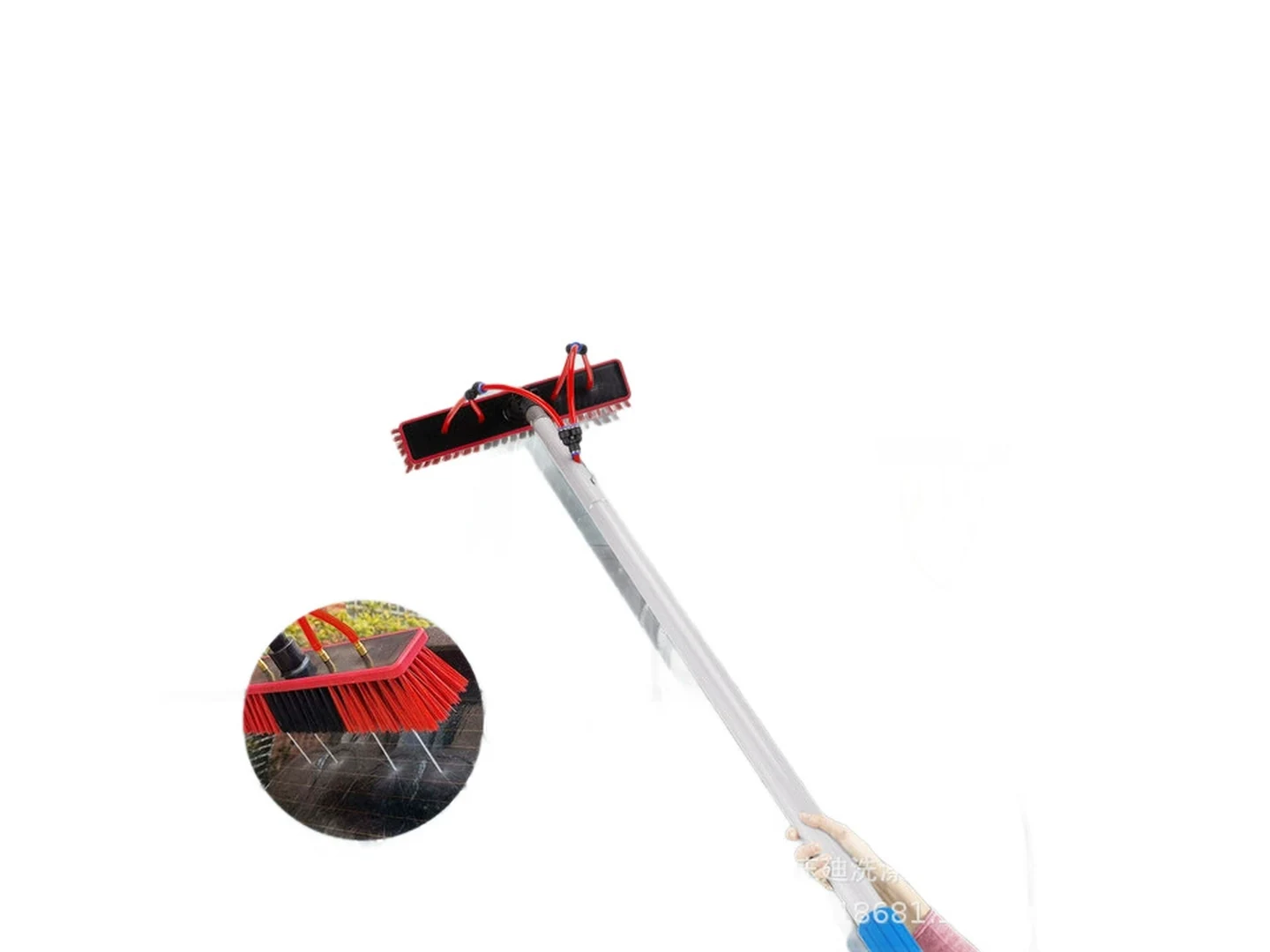
Medium brush
100 pcs
Minimum order
Worked with two hands or on a pole: chimney, gutter and pond-filter brushes, discs, cups and tank brushes.
Production lead time, once the specification is confirmed
- Up to 100 pcsWithin 7 days
- 101–5,000 pcsWithin 14 days
- 5,001–50,000 pcsWithin 21 days
- Over 50,000 pcsConfirmed with your quotation
Peak season can extend these times; the shipping date is confirmed in writing with your quotation. Sampling and shipping are quoted separately.
A hand-guided, non-abrasive cleaning brush for flat glass, coated sheets, panel edges, and conveyor transfer surfaces. The wide soft-foam or microfiber contact face lifts dust, glass fines, polishing slurry, oil film, and light process particles while protecting scratch-sensitive and coated surfaces during fabrication, inspection, and final cleaning.
What can this brush do for you?
Protect coated and polished glass from micro-scratching
The contact face uses soft open-cell foam or low-abrasion microfiber instead of stiff filament or abrasive pad material. Loose particles are caught in the foam cell structure or trapped between microfibers rather than wiped under pressure into the glass. This matters most on low-E, anti-reflective, mirror-backed, and display cover glass, where a single scratch can stop acceptance.
Cover large surfaces with fewer overlapping strokes
Head widths from 50 mm to 200 mm let one pass clean a broad band across the sheet or panel. A wider face distributes hand pressure more evenly, so there are fewer visible start-stop lines and fewer missed rows between passes during inspection or final wipe.
Work around edges, frames, and conveyor supports
The contact face can be profiled with a tapered nose or narrow side profile to reach edge shoulders, frame channels, and conveyor rails where glass fines and polishing slurry collect after seaming, grinding, or transfer. The flexible edge follows a shallow lip without forcing the operator to angle the handle sharply.
Handle wet slurry without uncontrolled dripping
An open-cell foam face holds just enough cleaning solution to emulsify oil film and suspend glass fines, then releases the loaded liquid when rinsed. Microfiber configurations handle dry dust and fine particles with low lint. The result is a controlled wipe that does not dump cleaner into seals, rollers, or adjacent areas during touch-up work.
Support repeat use with a replaceable contact face
Glass and coated-panel cleaning is a consumable-contact job. The brush can be configured with a replaceable foam or microfiber pad, so operators swap the loaded or worn face instead of the entire tool. The handle and head body remain in service across multiple contact-face replacements.
What is a Glass Cleaning Brush?
A Glass Cleaning Brush is a hand-managed cleaning tool built around a broad, non-abrasive contact face rather than conventional bristles. It is used between glass processing steps and before final inspection, wherever loose or lightly attached contamination must be removed from flat surfaces and edges without changing the surface. Typical contact areas include sheet faces, coated panels, edge shoulders after grinding or polishing, and transfer rails where dust, glass fines, polishing slurry, oil film, and process particles collect.
In use, the operator holds the handle and wipes the contact face flat against the surface, either dry or lightly loaded with a compatible cleaning solution. The flat face prevents point loading that can flex thin sheets or leave pressure marks on coated surfaces. The correct tool is defined less by panel size than by the width of the desired cleaning band, the residue type, whether the step is wet or dry, and how sensitive the coating is to contact.
This is not a scrub brush for cured adhesives, heavy mineral scale, burned-on deposits, or deep stains. It is a process and inspection cleaning tool: its job is to remove loose particles and film while leaving the glass or coating unchanged.
Technical Specifications
The table shows standard ranges for the glass cleaning brush. Dimensions, fill material, profile, and handle construction are adjusted to the panel and process when a project requires it.
| Parameter | Standard range / options |
|---|---|
| Head width | 50–200 mm; selected for panel width and access space |
| Contact face fill | Soft open-cell foam sponge or microfiber, chosen for residue and surface sensitivity |
| Contact face profile | Flat rectangular, tapered nose, beveled edge, or custom profile for edges and frame channels |
| Overall length | 150–400 mm including handle; extension or shorter grip configured for wide or recessed areas |
| Handle / head body material | Polypropylene (PP), PBT, or nylon (PA), selected for cleaning chemistry and workplace conditions |
| Wetting compatibility | Common aqueous and diluted alcohol glass cleaners; strong solvents or acid solutions require material confirmation |
| Debris range | Dust, glass fines, polishing slurry, oil film, and lightly adhered process particles |
| Intended contact action | Light, even wiping pressure; non-abrasive contact designed to avoid scratching glass and coated surfaces |
| Contact face replacement | Replaceable pad or fixed assembly, depending on process frequency and operator changeover needs |
| Brush type | Custom Handheld Detail Brushes |
| How it is driven | Supplied hand-guided or machine-mounted |
| Cleaning target | flat glass and coated sheet, display cover glass, and glass edge cleaning |
| Surface or part | glass, edges, panels, sheets, conveyors, coated sheets, flat glass, and rails |
| Residue or debris | particles, oil film, slurry, dust, fines, glass fines, process particles, and polishing slurry |
| Mounting / connection | Arbor-Hole Mount / Flange |
When selecting between foam and microfiber, the key difference is how each material handles wet and dry debris. Foam absorbs and holds liquid and works well for slurry and oil film; microfiber traps fine dry particles and leaves less residue on polished or coated surfaces. Both options are available in different densities, thicknesses, and backing constructions.
Where does this brush work best?
- Flat glass and coated sheets at inspection tables, where dust and glass fines need to be removed before lamination, coating, or IGU assembly.
- Display cover glass, architectural glazing, and mirror-backed panels that carry anti-reflective, low-emissivity, or other functional coatings and cannot tolerate abrasive contact.
- Glass edges after seaming, grinding, or polishing, where slurry and loose fines collect along the edge shoulder and bevel.
- Conveyor supports, transfer rails, and machine-side surfaces where oil film and process particles build up and can transfer back onto clean glass.
- Wet process stations where touch-up cleaning is required between washing and drying, and uncontrolled dripping must be avoided.
How do I choose the right one?
Match the contact width to the surface and the operator’s reach
Choose a head width that cleans a controllable band per stroke. For large sheets and panels, a 150–200 mm head reduces the number of passes. For edges, frame channels, or small access zones, a 50–100 mm head keeps pressure controlled and lets the operator see the contact line. A head that is too wide on a narrow edge will override the edge and load debris onto adjacent areas.
Choose the fill material by residue type and sensitivity
Use microfiber when the main contaminants are dry dust and fine particles and the surface is polished or coated. The fiber face holds particles without chasing them across the glass and leaves lower lint than many woven or abrasive options. Use open-cell foam when the job is wet: polishing slurry, oil film, or water-soluble process residue. The foam absorbs and suspends the liquid while the face wipes the surface. If the process runs both wet and dry stages, plan a dedicated contact face for each or an easily interchangeable pad.
Select handle and head-body material for the actual chemistry
PP works for mild aqueous and diluted alcohol cleaning solutions. PBT and PA offer higher stiffness and better resistance when the process includes stronger cleaners, warm wash water, or more mechanical handling. Provide the cleaning solution, concentration, temperature, and exposure method when specifying the brush. The fill material and pad backing need to meet the same chemical conditions as the handle.
Know when not to use this brush
If the surface carries cured adhesive, embedded scale, burned-on contamination, or particles that must be dislodged by aggressive mechanical action, this non-abrasive contact face is the wrong tool. Use a stiffer nylon, PBT, or wire brush for those cases, or move the panel to a mechanical cleaning stage. If strong solvents, acids, or high-temperature environments are present, confirm full material compatibility before ordering. For continuous automated lines, this hand brush works as a touch-up or inspection-station tool, not as a replacement for an automated contact roller or wash unit.
Can I customize this brush?
Glass cleaning brushes are configured around the panel, the station, and the residue. To define the right version, we need the sheet/panel dimensions, access width, coating type, contaminant description, wet or dry mode, cleaning solution and temperature, stroke direction, replacement frequency, and any operator ergonomics requirements. A sample, drawing, or photo of the cleaning position speeds the process.
We can adjust:
- Contact face — microfiber type, fiber blend, pile height, foam density, foam open-cell structure, face thickness, stiffness, and backing
- Head profile — rectangular, trapezoidal, tapered nose, angled face, edge notch, or custom profile for frame channels and corners
- Head width and working length — built to the cleaning band and accessible surface area
- Handle — length, grip shape, overmold, hanging hole, extension pole, color, and material
- Attachment — replaceable pad system (hook-and-loop, clip, or molded carrier), fixed bonding, or fully integrated head
- Marking and packaging — custom color, logo, batch identification, bulk pack, individual bag, or project-specific packing format
When project requirements call for material documentation, inspection support, or third-party testing, those items can be coordinated during customization. Contact the team with the operating conditions and the desired contact face material.
When is a glass cleaning brush worn out rather than just dirty?
How do I check that the brush is safe for coated glass?
Before production use, wipe a scrap panel with the same coating under the same lighting and inspection standard. Look for haze, micro-scratch lines, or coating removal. If the surface changes, reduce wiping pressure, switch from foam to a softer microfiber face, or check the face for embedded particles. A clean face and light pressure should leave no visible mark.
Should the contact face be used dry or wet?
Match the mode to the debris. Dry microfiber works for dust and fine glass particles; open-cell foam lightly dampened with cleaning solution works for polishing slurry and oil film. Never use a saturated foam face that can release solution into seals, rollers, or electronics. When moving between dry and wet work, use separate faces to avoid transferring abrasive slurry into the dry cleaning step.
How do I know when to replace the contact face?
Replace the foam or microfiber face when particles become embedded, the foam loses its open-cell rebound, the microfiber mats or starts leaving lint, or the contact face no longer sits flat against the panel. A loaded face will redeposit contamination and increase the risk of scratching, so the contact face is a consumable, not the handle.
Can this brush remove residue left by edge grinding?
It removes loosely attached slurry, fines, and oil film from the edge shoulder and bevel. It will not remove cured resin, heavy scale, or material that has hardened onto the glass. Those conditions belong in the grinding, polishing, or wash process upstream, not in touch-up cleaning.
What should operators inspect on the brush itself?
Check the face for tears, embedded particles, adhesive failure at the backing, and uneven wear. Check the handle and head body for cracks, chemical discoloration, or loosening of the pad attachment. If the face catches, releases debris, or leaves streaks, the contact surface is no longer doing its job and should be replaced immediately.
Guides that go deeper on this
Custom Manufacturing RFQ
Describe Your Application
An accurate custom quote starts with the dimensions, working surface, residue, material choice, connection, quantity, and reference files.
Drawing or photo optional — it speeds things up, it does not gate the enquiry.
Custom Brush RFQ
Send Your Brush Project
Upload a drawing, product photo, or sample photo and provide the core dimensions and cleaning conditions.
“We need a brush to remove wet residue from a stainless steel conveyor, about 800mm wide. The current brush wears quickly. We can send photos.”
“We sell drinkware and need a cleaning brush to include with the product. Quantity around 5,000 pieces.”