
Horsehair Precision Dusting Brush
OEM / ODM custom manufacturing · made to order
Soft natural horsehair dusting brush with fan-shaped head and beech wood handle for scratch-free removal of fine dust from electronics, optics.
- Brush type
- Custom Handheld Detail Brushes
- Material
- Horsehair
- Working length
- 80 mm
- Overall length
- Approx. 220 mm
- Application
- Dust RemovalOptical Lens Surface Dust RemovalTextile Dyeing, Printing & Finishing Brush UseAir Conditioner Filter, Vent & Fin Cleaning
- MOQ
- 100 pcs
- Lead time
- Within 7 days (up to 100 pcs)
- Sample
- Typically 3–7 days
What can this brush do for you?
Soft horsehair contact that lifts dust instead of pushing it
The fine, tapered tips of natural horsehair trap and hold loose particles through a combination of soft mechanical pickup and the microscopic scale structure of the fiber. Because the bristles flex easily, they follow surface contours without gouging or scratching polished plastic, coated metal, glass, or lacquered wood.
Fan shape gives broad coverage plus an edge for seams and recesses
The fan profile lets operators dust a wide area with one stroke while the narrowing tip works into grooves, keypad gaps, bezel edges, and other tight transitions. This reduces the need to switch between a wide brush and a detail brush.
Fixed set and balanced beech handle keep every stroke stable
The bristle bundle is fixed into the wooden head base, so there is no ferrule play or head rotation during fine work. A 140 mm beech handle with a 20 mm grip diameter provides a lightweight, comfortable hold that allows fingertip-level control around delicate assemblies.
Dry particulate removal without chemicals or moisture
The brush is used dry, so it adds no solvent film, water spotting, or cleaner residue to the surface. This matters on optical displays, instrument dials, and electronic housings where even a thin residue can attract new dust or interfere with coatings.
Technical Specifications
| Parameter | Standard Configuration | Notes |
|---|---|---|
| Head shape | Fan-shaped | Flat fan profile with tapered tip |
| Head width | 9–35 mm | Select to match access and coverage |
| Head length | 80 mm | Adjustable for longer or shorter heads |
| Bristle material | Natural horsehair | Fine, tapered natural fiber |
| Bristle trim | Straight or contoured edge | Trim style configurable per application |
| Handle/base material | Beech wood | Smooth, sealed finish |
| Handle length | 140 mm | Can be extended for deeper reach |
| Grip diameter | 20 mm | Comfortable hand-held grip |
| Connection | Fixed | Bristle head permanently set to handle |
| Overall length | Approx. 220 mm | Head + handle; dependent on selected lengths |
| Operating condition | Dry, ambient temperature | Not for wet or solvent use |
| Brush type | Custom Handheld Detail Brushes | |
| How it is driven | Hand-guided | |
| Cleaning target | Electronics, optics and precision instruments, dusted dry | |
| Surface or part | Scratch-sensitive components, instrument panels, screens and finished surfaces | |
| Residue or debris | Fine dust, lint, fibers and loose powder | |
| Mounting / connection | Fixed |
All dimensions are standard reference values and can be adjusted for your project. Natural horsehair color and bristle length may vary within normal production tolerance.
Medium brush
100 pcs
Minimum order
Worked with two hands or on a pole: chimney, gutter and pond-filter brushes, discs, cups and tank brushes.
Production lead time, once the specification is confirmed
- Up to 100 pcsWithin 7 days
- 101–5,000 pcsWithin 14 days
- 5,001–50,000 pcsWithin 21 days
- Over 50,000 pcsConfirmed with your quotation
Peak season can extend these times; the shipping date is confirmed in writing with your quotation. Sampling and shipping are quoted separately.
The Horsehair Precision Dusting Brush combines a fan-shaped head of natural horsehair with a beech wood handle to remove fine dust, lint, fibers, and loose powder from scratch-sensitive components, instrument panels, screens, and finished surfaces. It is a dry, low-pressure dusting tool for applications where compressed air, synthetic bristles, or wet wipes would be too aggressive or risk leaving residue.
What is a Horsehair Precision Dusting Brush?
A Horsehair Precision Dusting Brush is a hand-held dry cleaning tool built around a fan-shaped head of natural horsehair set in a wooden base and permanently attached to a beech handle. It is selected when the cleaning target is loose, dry particulate on a surface that requires careful contact—not when the job calls for wet wiping, solvent cleaning, or aggressive scrubbing.
In use, the operator draws the brush across the surface with light, controlled strokes. The fan shape creates a broad contact patch for open areas, while the tip and edges reach narrow seams and component boundaries. The natural bristle ends pick up fine dust through a combination of mechanical capture and the fiber’s natural surface texture, holding particles until the brush is tapped or blown clean.
Because horsehair is a natural fiber, color, thickness, and slight bend recovery vary between lots. This is normal and does not affect dusting performance. The brush is intended for ambient, dry environments; exposure to water, solvents, or heat can cause the bristles to lose their shape or the wooden parts to swell.
How do I choose the right one?
Match bristle softness to the surface. Horsehair is gentle relative to nylon or brass, but it is not a zero-risk contact. Test on a hidden area before full use. If you see micro-scratches or the surface is extremely soft, request a finer bristle trim or lower fill density. If the dust is stuck, oily, or baked on, horsehair will not remove it—switch to a solvent-compatible synthetic brush.
Choose head width by access and coverage. Narrow heads in the 9–15 mm range fit seams, keypad gaps, and tight component spacing. Wider heads up to 35 mm clear screens, panels, and broad housings faster. The fan shape splits the difference, offering a wide leading edge and a pointed tip for detail work.
Confirm handle length and grip. The standard 140 mm handle with 20 mm grip suits bench-level work where the operator’s hand stays close to the surface. If the brush must reach into deep enclosures or behind mounted panels, a longer handle can be specified.
Check static sensitivity. Horsehair is a natural insulator and does not dissipate static charge. If the components are ESD-sensitive or if static attraction would pull dust back onto the surface, use a static-dissipative filament or pair the brush with an ionizer. Do not treat a standard horsehair brush as an ESD-control tool.
Use a different brush when the job demands it. If the residue is wet, greasy, or bonded, select a synthetic brush that tolerates the cleaning chemical. If the area is too tight for a fan-shaped head, use a small round or pointed brush. If the concern is bulk powder or heavy debris, vacuum or blow off first, then finish with the dusting brush.
Can I customize this brush?
This brush is configurable around the geometry of your parts and the sensitivity of the surfaces. For a custom configuration, provide the surface material and finish, target area dimensions, access restrictions, particle type, ESD requirements if any, and preferred handle feel or reach.
Typical adjustable parameters include:
- Head geometry: width range 9–35 mm, head length, fan angle, and tip profile
- Bristle configuration: horsehair grade, trim length, fill density, and bristle edge shape
- Handle and base: length, grip diameter, wood species or finish, hanging hole, or ergonomic shaping
- Filament option: same head and handle geometry with anti-static or synthetic filament if the process requires it
- Identification: laser marking, pad printing, branded handle, or color coding for line-side differentiation
- Packaging: bulk, individual polybag, retail sleeve, or project-specific packing
Where does this brush work best?
- Electronics assembly and repair: removing dust from populated circuit boards, connectors, display surrounds, and instrument housings where a stiff brush could damage fine leads or coatings.
- Optical and display surfaces: dusting camera bodies, microscope stages, LCD panels, and viewfinders without the moisture of breath or the particle-driving force of compressed air.
- Precision instruments and measurement equipment: balances, dial gauges, calipers, and CMM fixtures where dust can interfere with movement, readability, or measurement repeatability.
- Finished and coated surfaces: lacquered wood, polished plastic, painted metal, and decorative housings that need dust removal without micro-scratching.
- Collections and restoration work: frames, artifacts, models, and delicate objects that require a soft, dry contact brush.
Which filament survives the cleaning and still lasts on a horsehair precision dusting brush?
How can I tell whether horsehair will scratch my surface?
Horsehair is generally softer than glass, anodized metal, and most coatings, but any brush can pick up hard particles that then scratch. Before full use, inspect the bristles for embedded debris and test on an inconspicuous area with light strokes. If the test area shows fine marks, reduce pressure or switch to a softer filament.
Can the brush be used with water, alcohol, or cleaning solvents?
No. Horsehair absorbs moisture and can soften, distort, or shed when wet. Alcohol and solvents strip the natural oils from the fiber and can make it brittle. Use this brush for dry dusting only; for wet or solvent cleaning, choose a synthetic-filament brush.
How do I clean the brush between uses?
Tap the head gently against a hard surface to knock loose trapped dust. Use low-pressure compressed air with the bristles pointing downward, then pass the head over a clean lint-free cloth. Avoid washing the brush when possible. If washing is unavoidable, use lukewarm water and mild soap, rinse quickly, shake out excess water, and dry with bristles facing down. Do not soak.
Does this brush prevent static charge buildup on electronics?
No. Horsehair is a natural insulator and provides no active static dissipation. If static discharge is a risk, use a static-dissipative brush or combine this brush with an ionizer. Standard horsehair dusting brushes should not be used as the sole ESD-control measure.
When should I replace the brush?
Replace it when you see visible bristle loss, permanently splayed or bent tips, reduced dust pickup, or bristles that feel stiff or greasy. A brush that begins shedding bristles onto the product should be removed from service immediately, because loose horsehair fibers can create contamination issues in sensitive assemblies.
Can this brush handle fine powder and heavy dust layers?
It removes light surface dust and fine powder from accessible surfaces, but it is not built for bulk powder or thick dust accumulation. For heavy material, vacuum or blow off the area first, then use the horsehair brush for the final surface pass. Trying to brush through thick dust just pushes particles into seams and gaps.
Guides that go deeper on this
We have not written a guide specific to this one yet. The material that covers selection, filament, dimensions, maintenance and sourcing is collected in the technical resources library.
Continue Exploring
Recommended Reading & Related Brush Resources
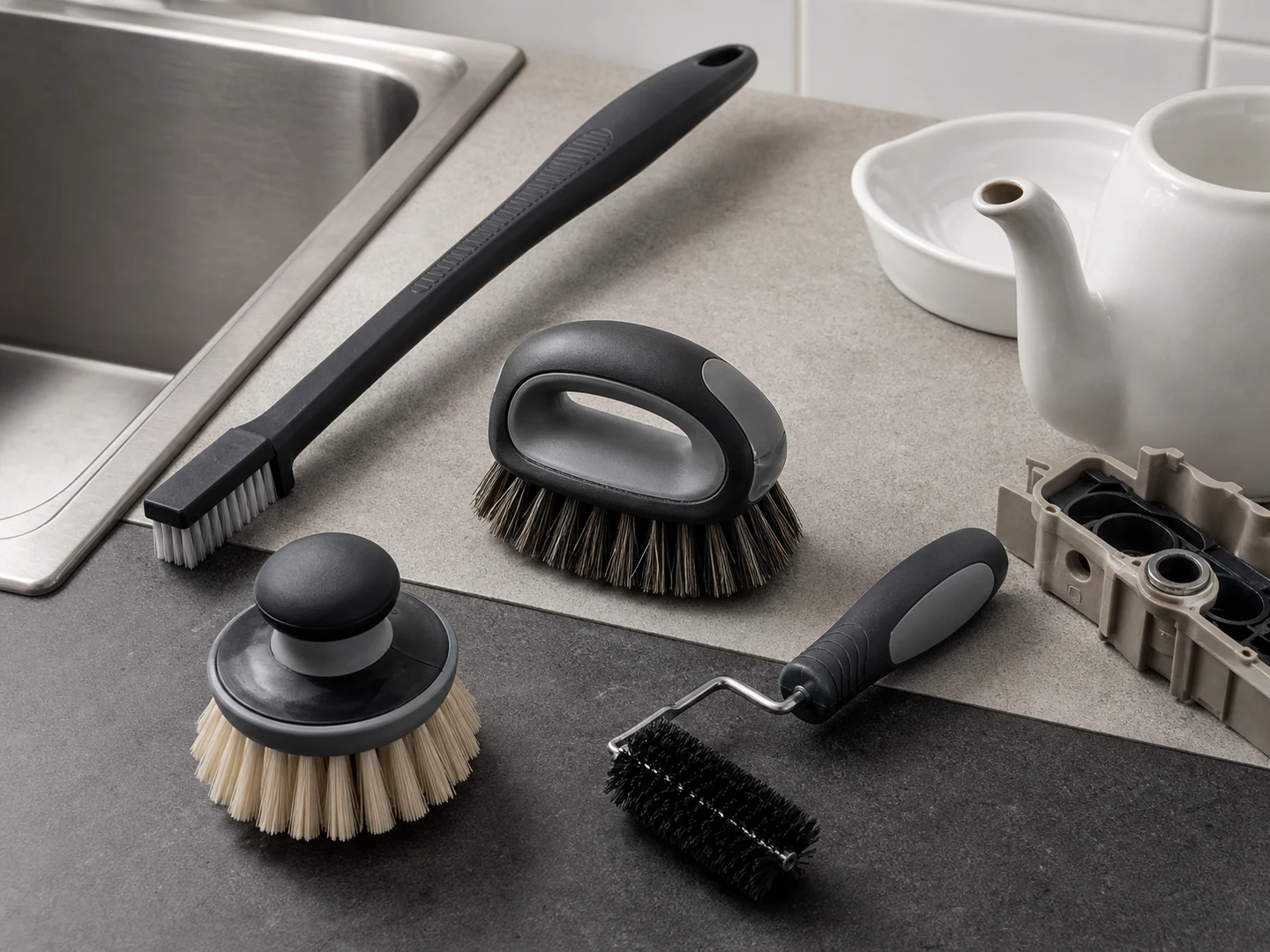
Custom Handheld Detail Brushes
A handheld detail brush puts the operator's hand pressure into a small place: a seam, a grout line, a vent, a connector, a mold vent or a grinder chute.
See how this type is built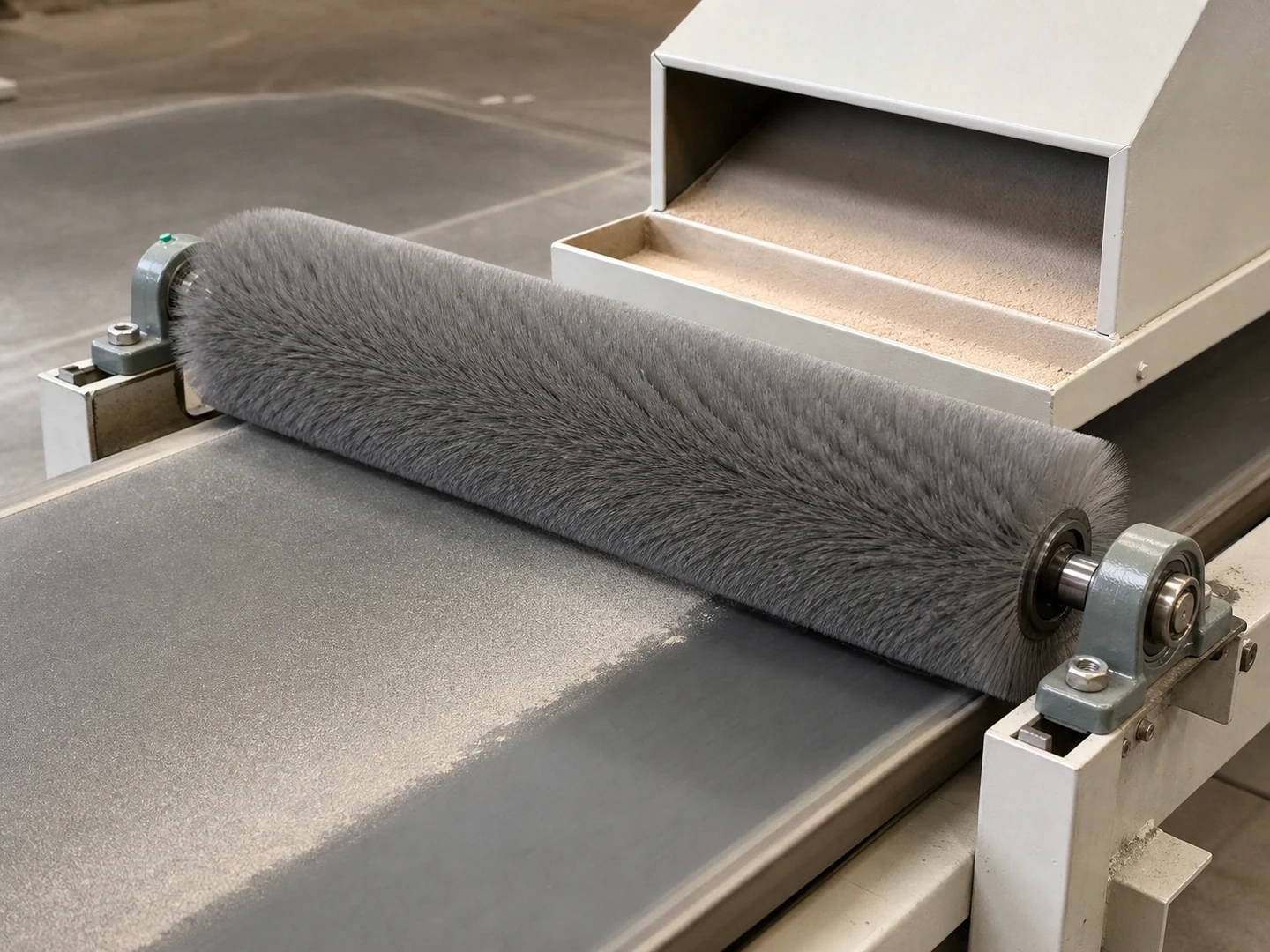
Dust Removal
Dust is moved, not dissolved, so the brush is chosen by what the dust is. Fine dense nylon or goat hair lifts fine dust without spreading it.
See the cleaning job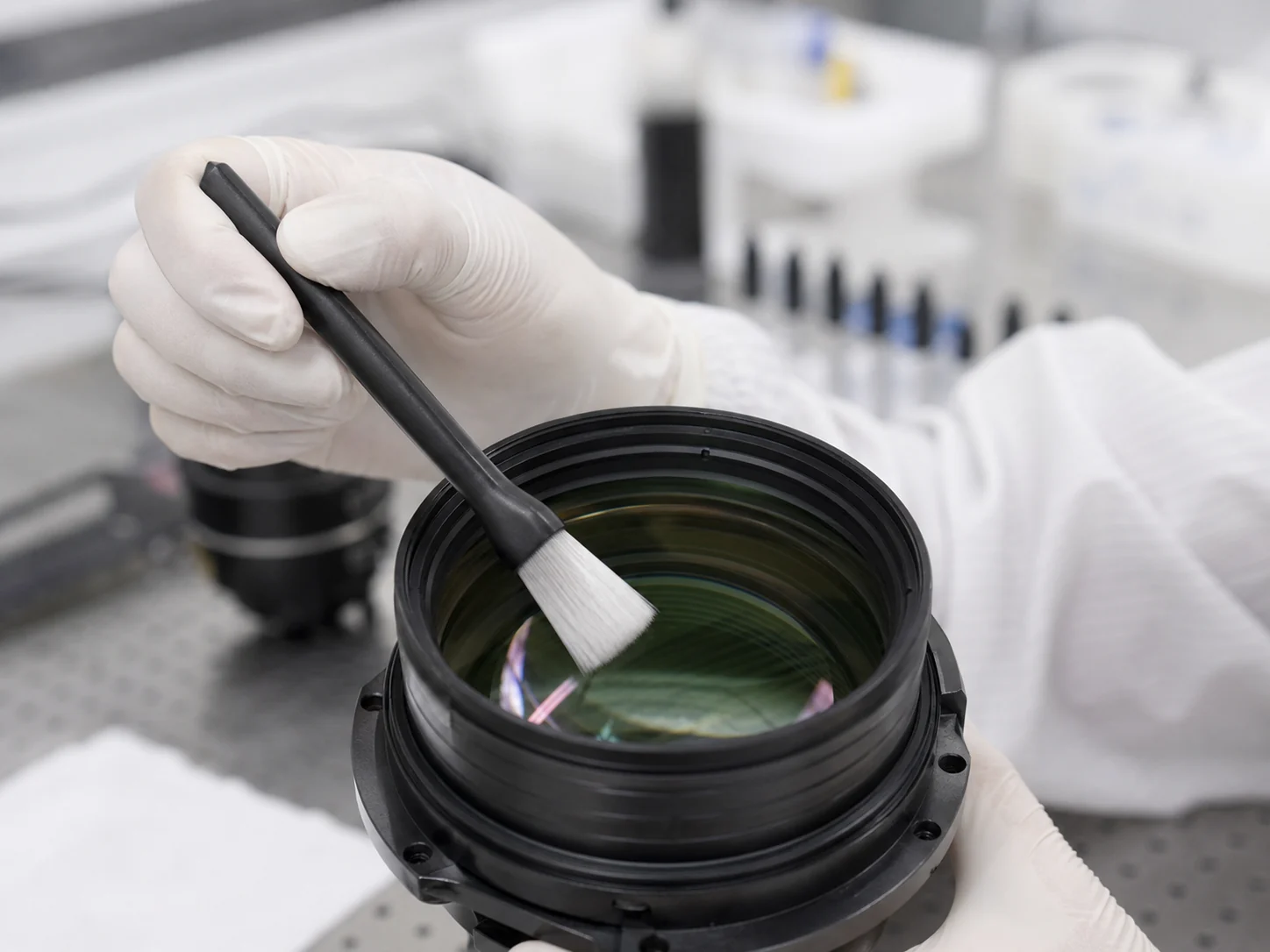
Optical Lens Surface Dust Removal
Lenses and optics are dusted with the softest brush there is, washed natural goat hair or fine PBT, 10–50 mm wide.
See the cleaning job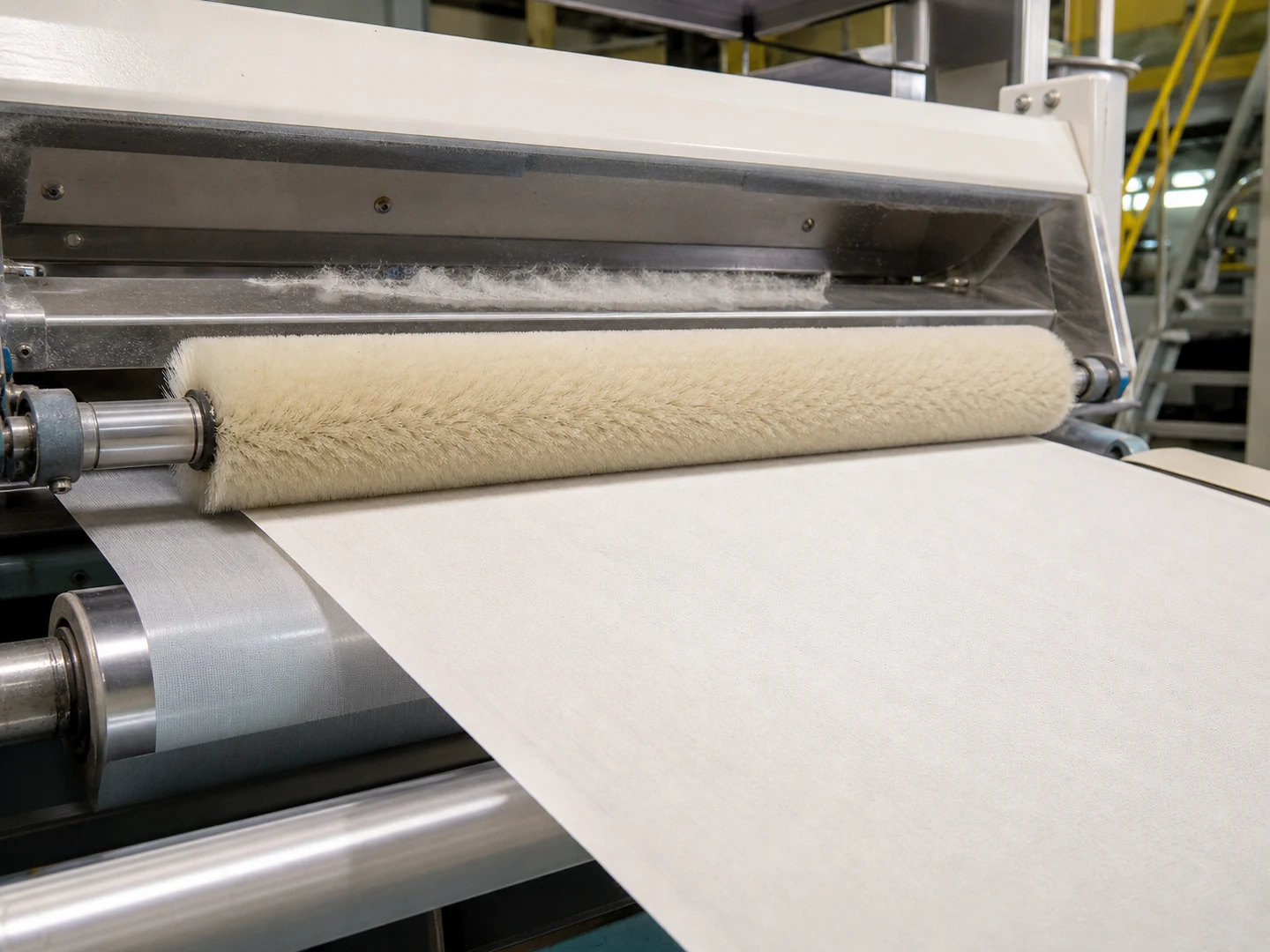
Textile Dyeing, Printing & Finishing Brush Use
On a textile line the brush works on a moving web, and the fill decides whether it finishes the cloth or keeps it clean.
See the finishing job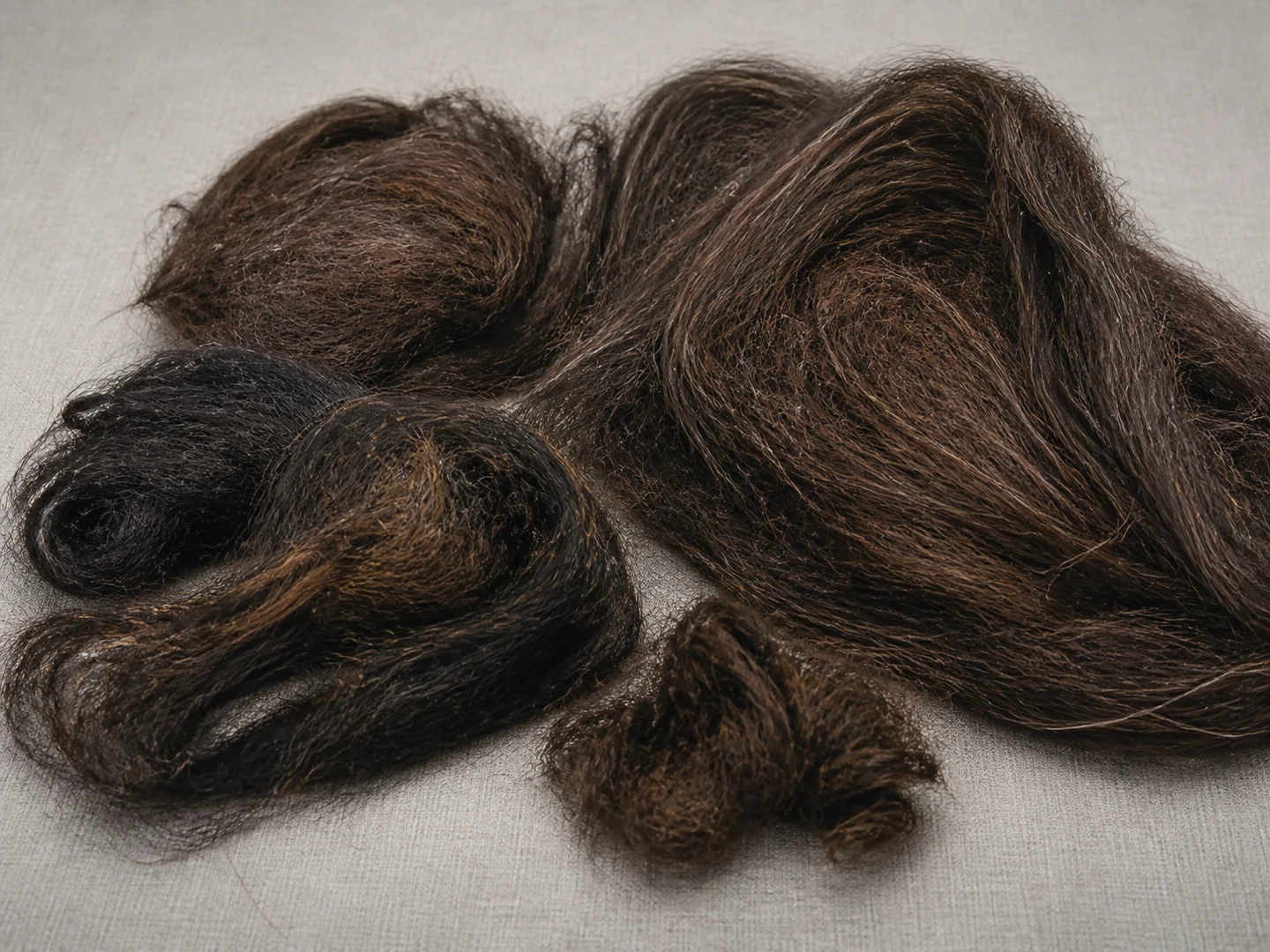
Horsehair
Horsehair is a natural animal hair that is soft to medium in feel, gentler than boar bristle and far softer than wire.
Compare this material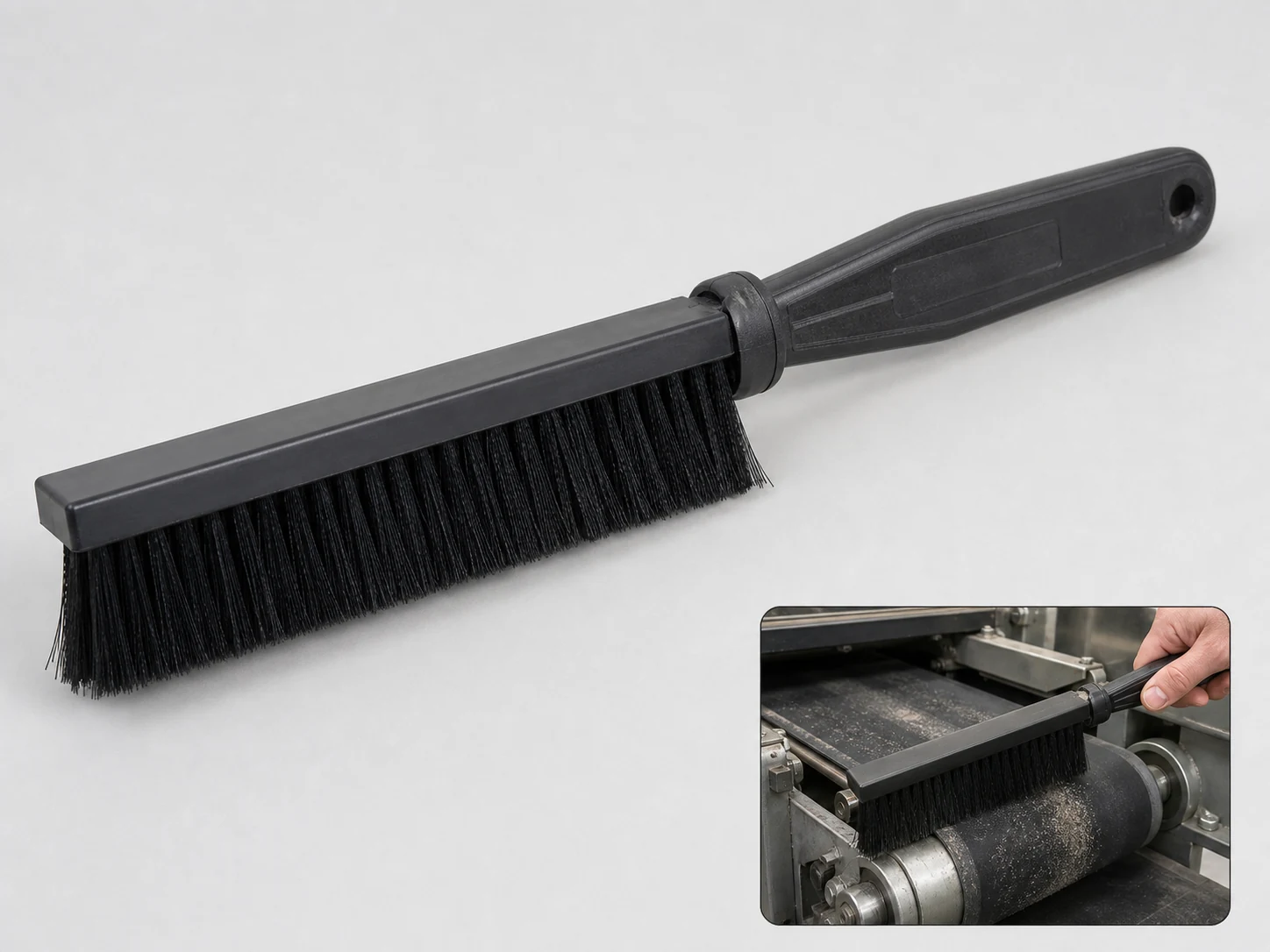
Dusting Brush
Custom dusting brush with nylon PA fill for dry dust, fiber, and fine-particle removal from equipment, conveyors, panels, and narrow machine zones.
Compare the specification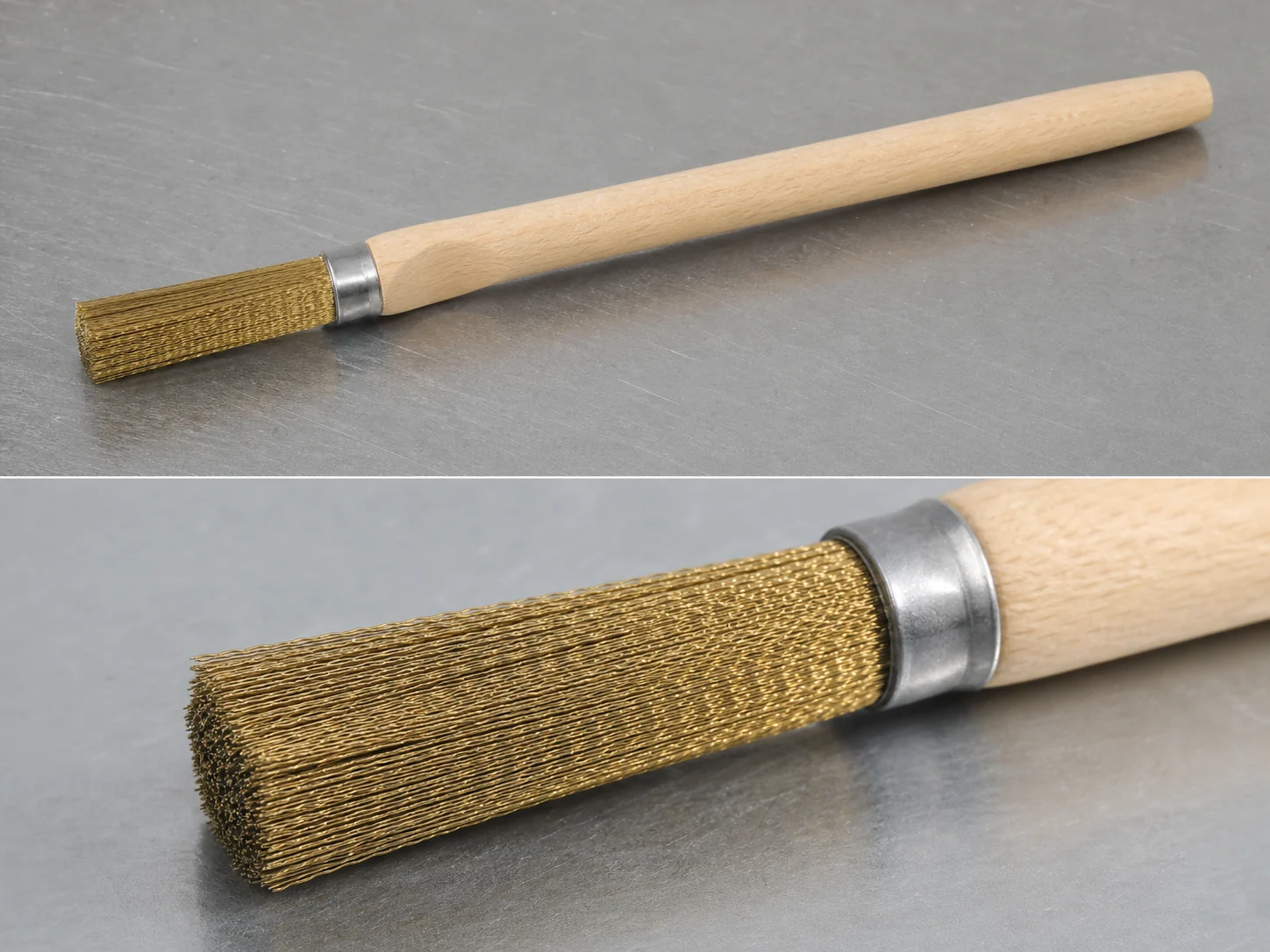
Brass Precision Parts Brush
Solid brass precision parts brush with an 18 x 80 mm rectangular head for removing chips, oil, and light residue from machined parts, guides, and tooling.
Compare the specification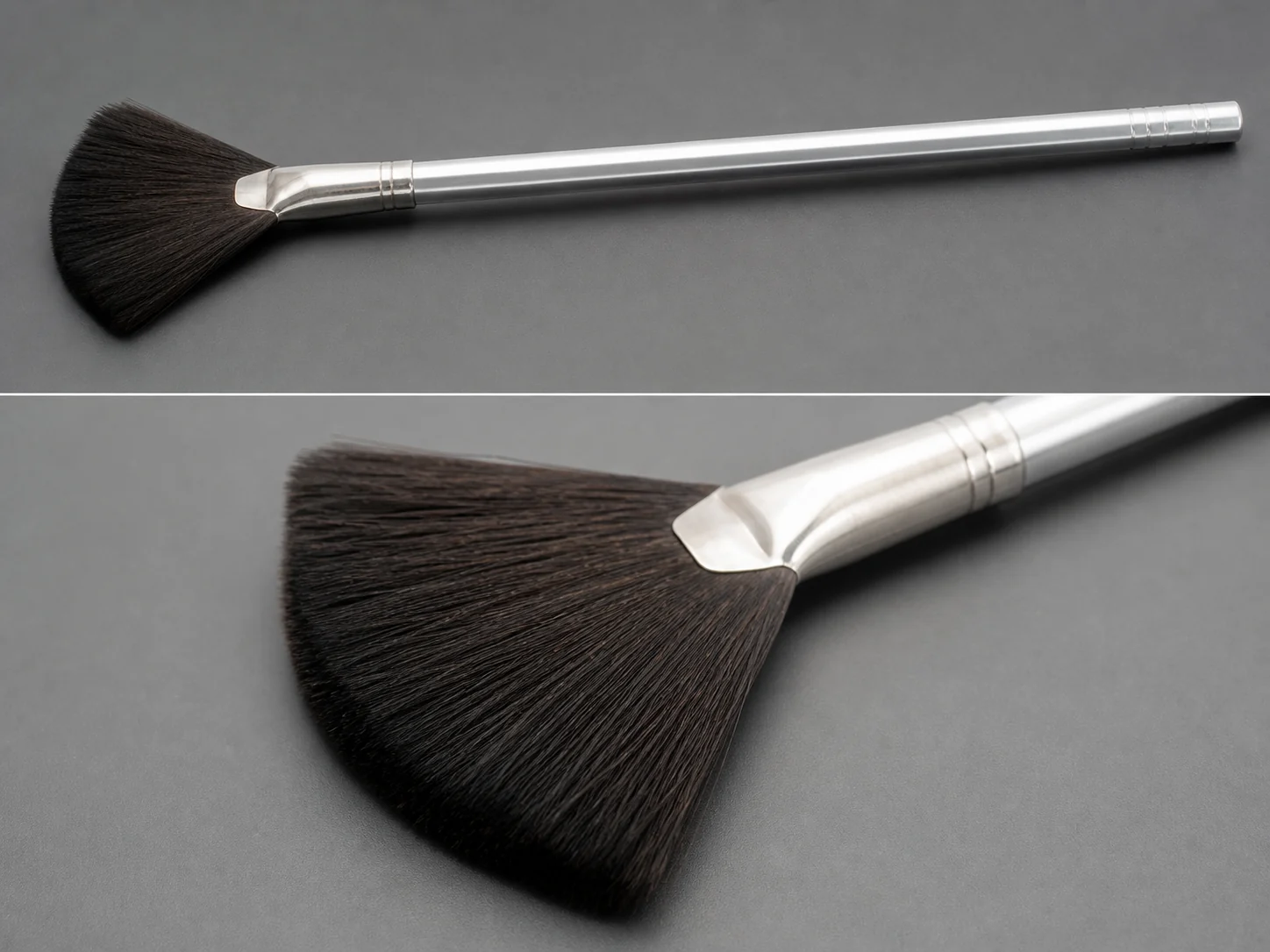
Goat Hair Optical Dusting Brush
Soft natural goat hair brush for dry dust removal on lenses, mirrors, prisms, and coated optics. Protects AR coatings, custom sizes, and ESD options.
Compare the specificationCustom Manufacturing RFQ
Describe Your Application
For an accurate quotation, please provide the main dimensions, material preference, working surface, residue, quantity, and a drawing or photo.
We reply to every request within 24 hours, with a quotation or with the questions we need answered first. If the brush can be made on our existing tooling, we make the sample directly. If it needs new tooling, we quote a sample fee and a tooling fee, and the sample fee is credited against the bulk order. Need an NDA first? We sign yours before you send drawings, and the files you send are never shown to other customers.
- MOQ500 pcs for small hand-held brushes, 100 pcs for medium and large ones
- SampleTypically 3–7 days
- ProductionFrom 7 days after sample approval, by size and quantity
- Payment30% deposit and 70% before shipment above US$10,000; smaller orders on agreed terms
Have the old brush? Send a photo on WhatsApp
Drawing or photo optional — it speeds things up, it does not gate the enquiry.
“We need a brush to remove wet residue from a stainless steel conveyor, about 800mm wide. The current brush wears quickly. We can send photos.”
“We sell drinkware and need a cleaning brush to include with the product. Quantity around 5,000 pieces.”